Tradition
Mesopotamian
Sumerian, Akkadian and Babylonian gods and demons: Tiamat, Ishtar, Nergal, Pazuzu, Lamashtu.
What is the Mesopotamian tradition?
The Mesopotamian material is the oldest continuously documented religion on the site, and the oldest evidence for the idea of a named, catalogued demon that a specialist can be paid to expel. Incantation texts against Lamashtu and Pazuzu predate the Hebrew Bible by a wide margin and are practical documents rather than theological ones.
The structural inheritance is considerable. A pantheon with an assembly of gods, a chaos-monster subdued at the founding of the world, a descent to an underworld with gates and gatekeepers, a demon that threatens women in childbirth — each recurs downstream, and each is attested here first.
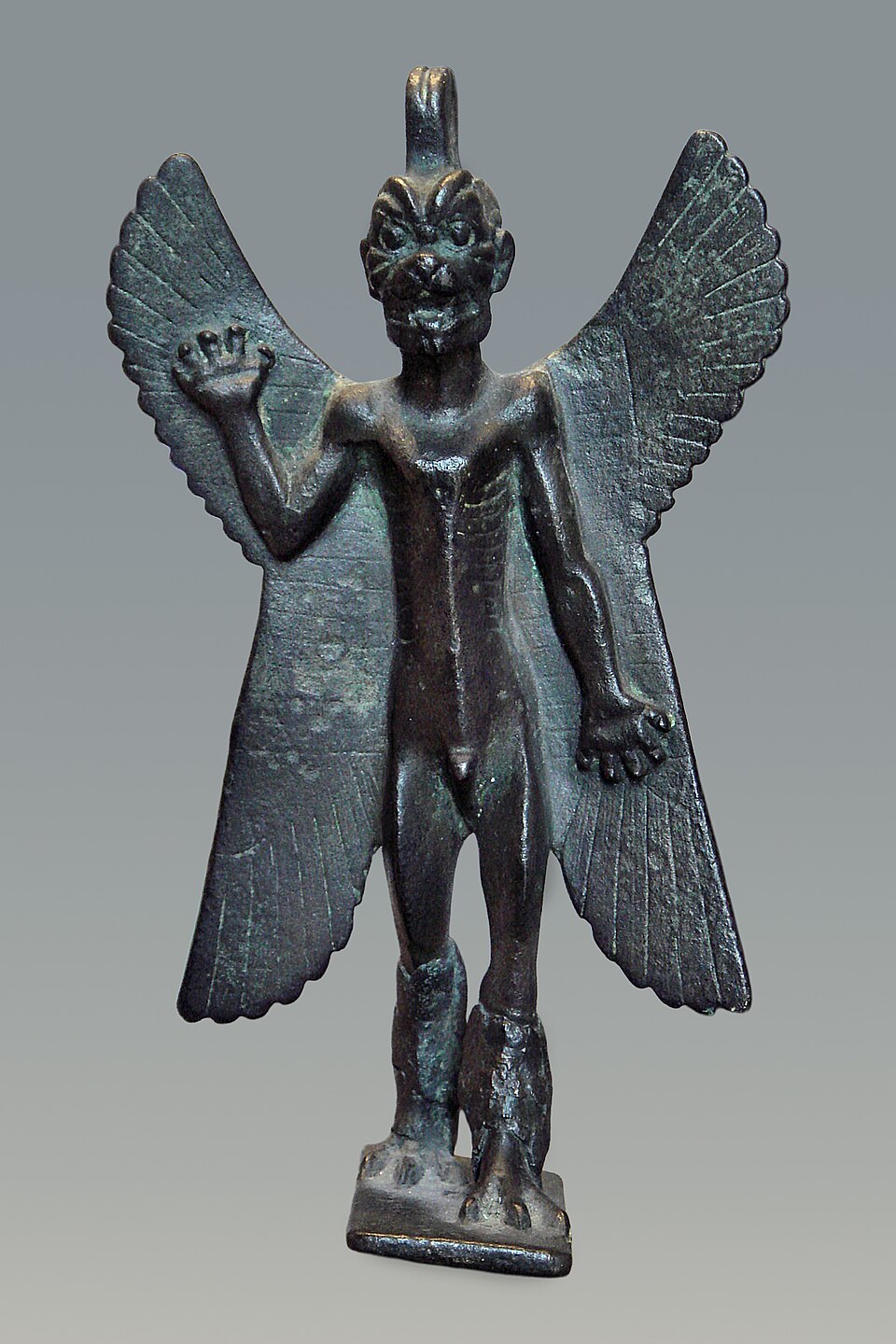
Pazuzu is worth singling out because it complicates the usual story. It is a demon invoked for protection: an evil thing whose evil is aimed at something worse. That moral shape does not survive into the later traditions, which sort spirits into two sides, and its loss is a real change rather than a clarification.
Which texts does this tradition rest on?
Lugal-e (Ninurta and the Asag)
Anonymous; Sumerian composition · c. 2100 BCE
Ninurta kills the demon Asag and its army of stones, then reorganises the world he has wrecked, assigning each kind of stone its fate according to whether it fought for him. A combat myth that ends in administration rather than in kingship.
3 entries contributed
The Sumerian King List
Anonymous; many recensions, the fullest being the Weld-Blundell prism · c. 2000 BCE
Kingship descends from heaven, and the reigns before the flood run to tens of thousands of years apiece before collapsing to human lengths afterwards. The list is a political document rather than a chronicle, and it is the closest Mesopotamian parallel to the long-lived patriarchs of Genesis 5.
1 entries contributed
The Descent of Inanna to the Netherworld
Anonymous; Sumerian composition · c. 1900 BCE, from older material
The Sumerian recension of the descent, and a substantially different text from the shorter Akkadian one the corpus already carried. It is longer, it names the substitute who takes her place, and the ending — Dumuzi sent below in her stead — has no counterpart in the Akkadian at all.
2 entries contributed
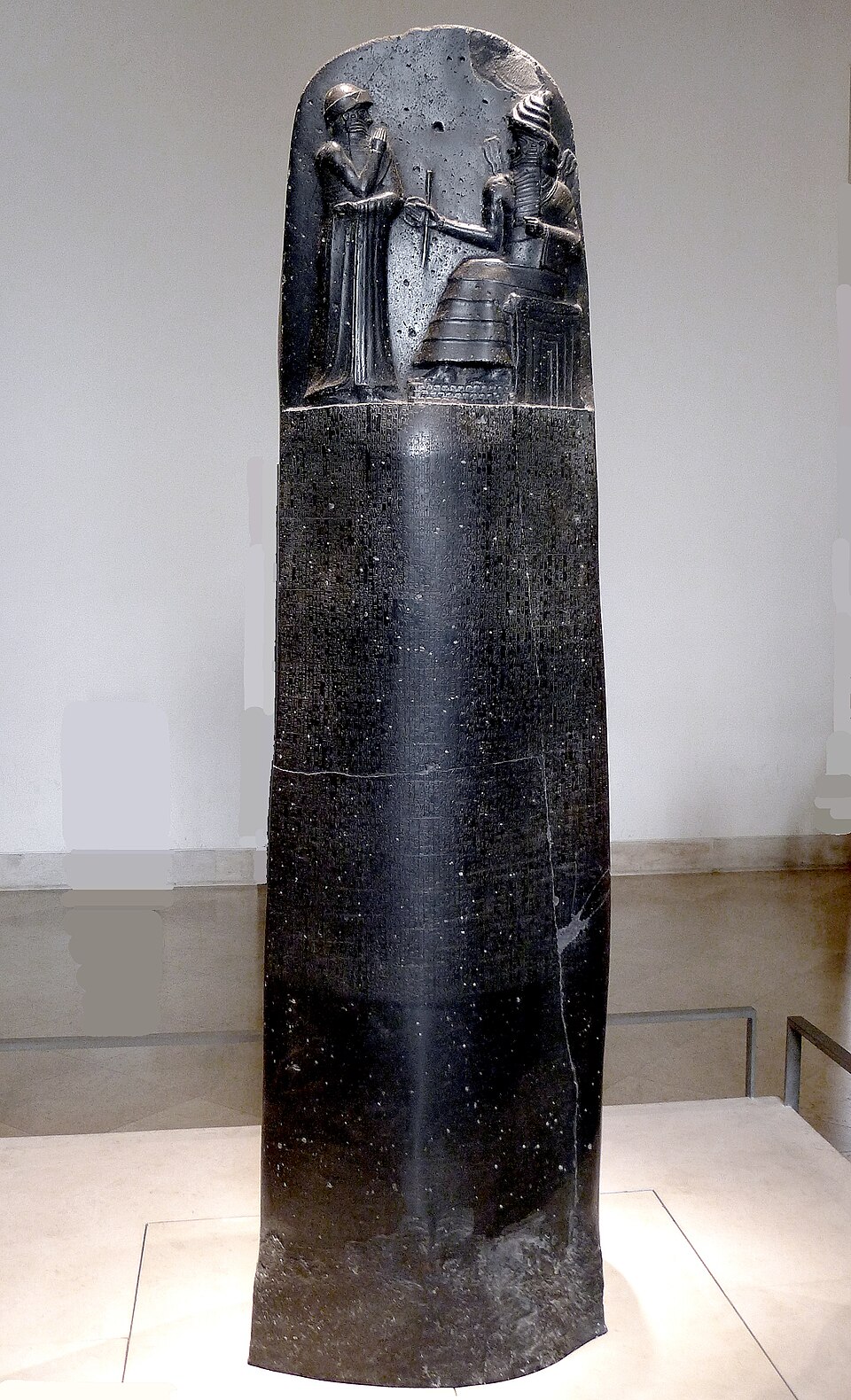
The Code of Hammurabi
Hammurabi of Babylon; tr. L. W. King · c. 1750 BCE
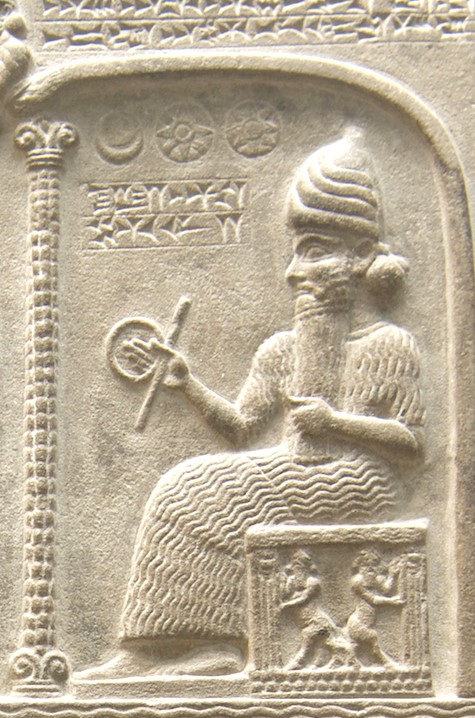
The stele shows the king receiving the law from an enthroned Shamash, which is the clearest surviving statement of why a sun god is also a god of judges: what sees everything is what can judge fairly.
1 entries contributed
The Atrahasis Epic
Anonymous; the fullest copy written by the scribe Ku-Aya · c. 1700 BCE
Why humanity exists and why it was nearly destroyed, in one text: people are made to carry the work the lesser gods refuse, then multiply until their noise keeps Enlil awake, and he sends the flood. Enki cannot countermand the decree and warns his man through a reed wall instead, which is the loophole rather than a breach of the oath.
2 entries contributed
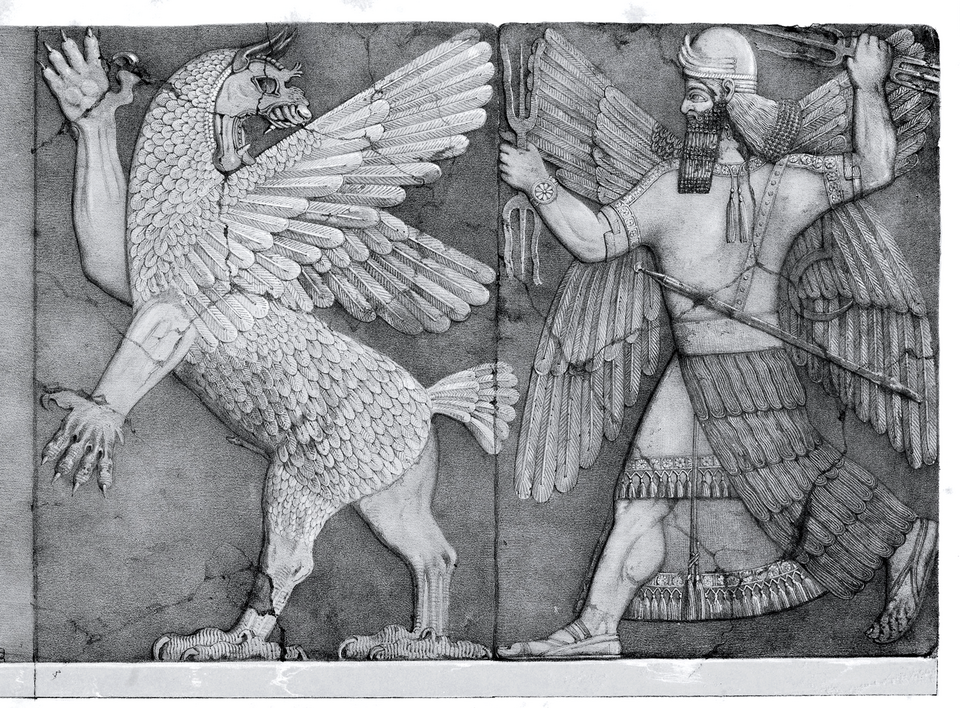
The Myth of Anzu
Anonymous Akkadian · c. 1500-1000 BCE
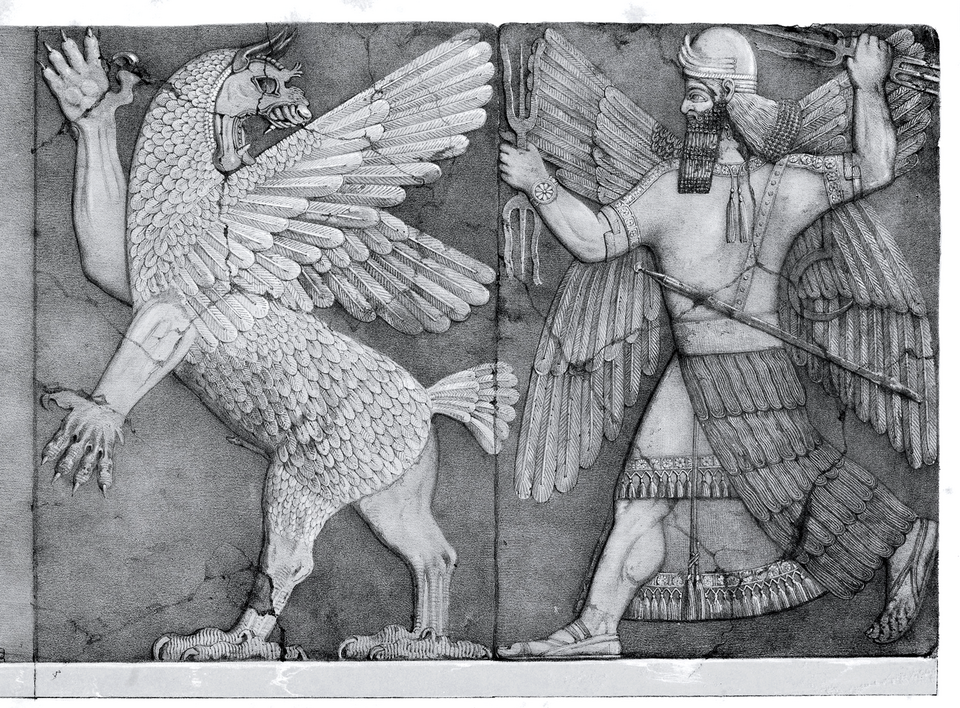
The lion-headed storm bird steals the Tablet of Destinies from Enlil and is hunted down by Ninurta. A rebellion against divine order with a named culprit, more than a thousand years before anything comparable in the biblical material.
2 entries contributed
The Epic of Gilgamesh
Standard Babylonian version, attributed to Sin-leqi-unninni · c. 1200 BCE, from older Sumerian material
The longest and best preserved narrative from the ancient Near East, and the one that keeps turning up inside other traditions. Its flood account is close enough to the Genesis one that the relationship has been argued over since the tablets were read in 1872.
5 entries contributed
Udug-hul (Evil Utukku)
Anonymous; canonical series of sixteen tablets · c. 1800–600 BCE
The largest surviving corpus of Mesopotamian material against harmful spirits, running to sixteen tablets in its canonical form and naming the classes of being it is aimed at — the utukku, the alu, the etemmu, the gallu. This project carries it as an object of study and quotes none of it: it is an operative text whose content is the procedure, and the standing rule at the foot of AGENTS.md applies whatever its copyright status. What it is, whom it names and how it is arranged are recorded here; how it is performed is not.
6 entries contributed
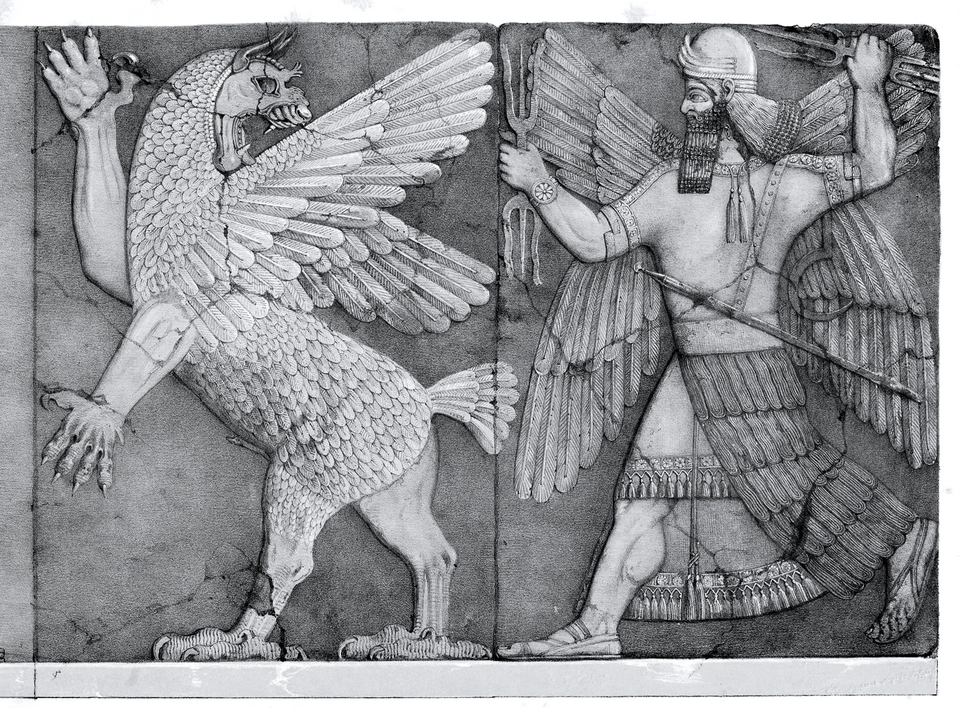
Enuma Elish
Anonymous Babylonian · c. 1100 BCE
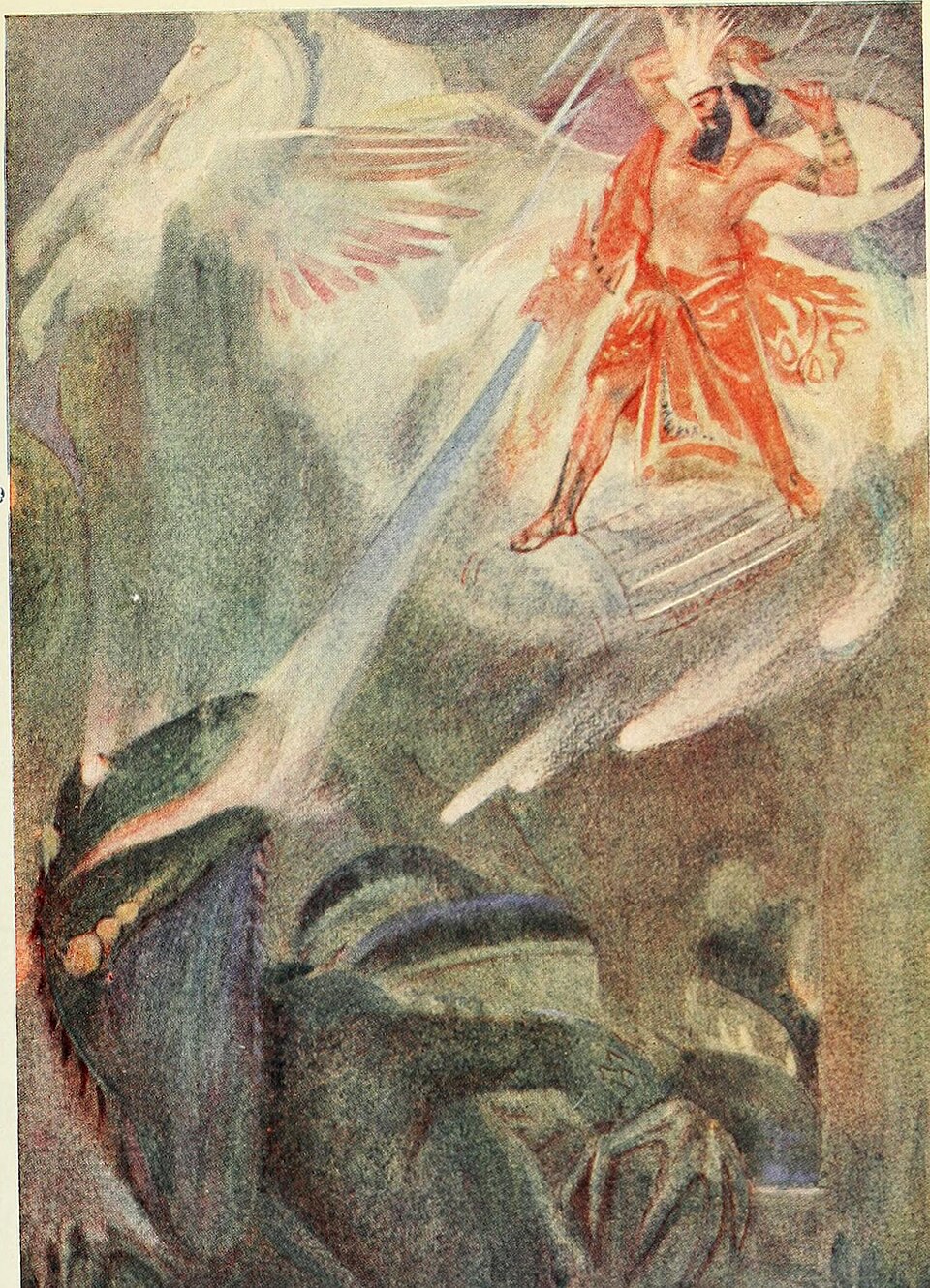
The Babylonian creation epic, in which Marduk splits the sea-dragon Tiamat and builds the world from her body — the template for every later combat between a sky god and a chaos serpent.
4 entries contributed
The Lamashtu Series
Anonymous; canonical series of three tablets · c. 1800–600 BCE
Three tablets directed at a single named spirit, which is itself the finding: no other figure in this corpus has a canonical series of its own devoted to keeping it away from mothers and infants. It also records the counter-figure, since Pazuzu is invoked against her rather than warded off himself. Carried as an object of study and never quoted, on the same footing as Udug-hul and for the same reason.
2 entries contributed
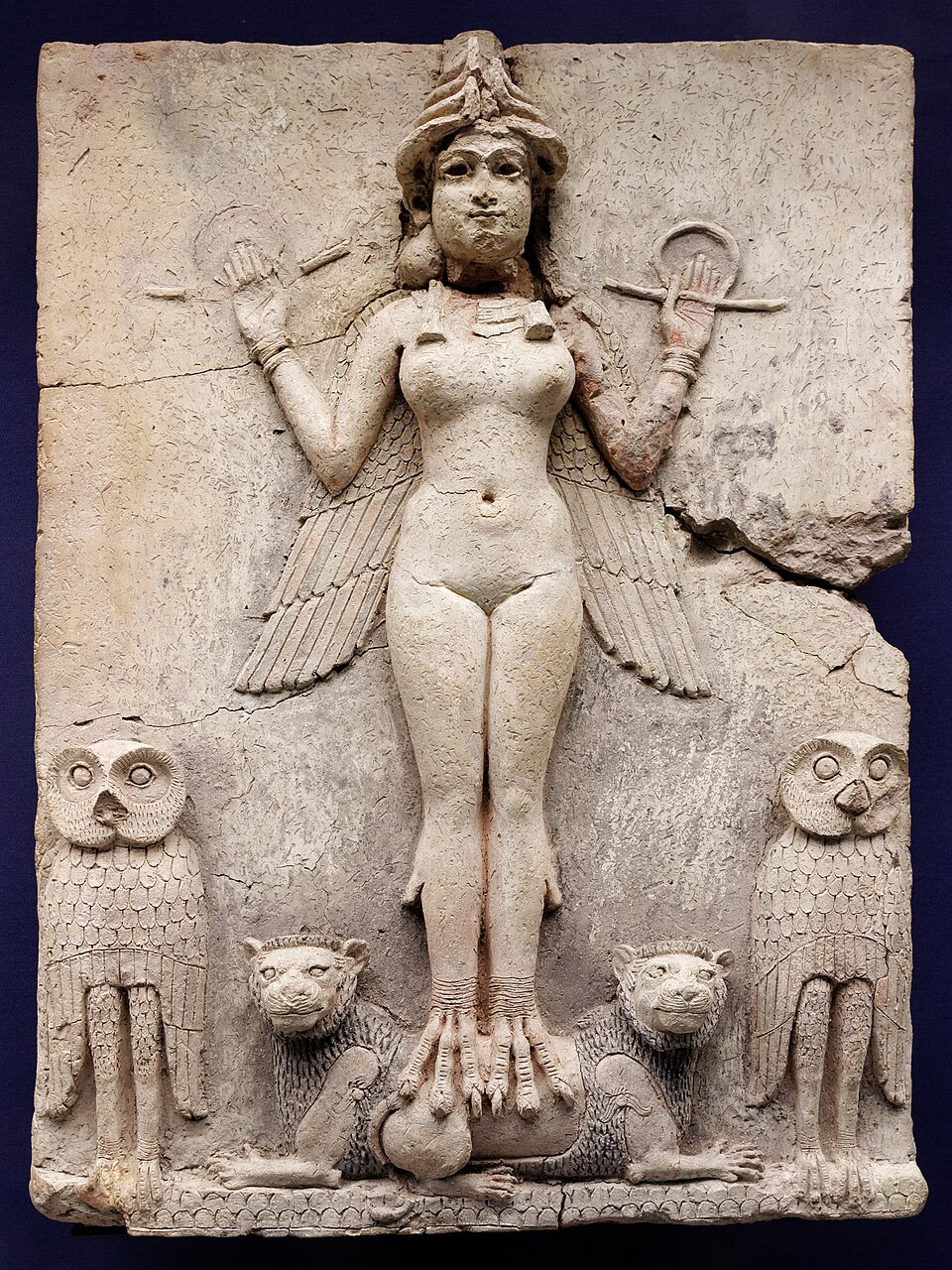
The Descent of Ishtar to the Netherworld
Anonymous Akkadian; earlier Sumerian recension of Inanna · c. 1000 BCE, from older Sumerian material
Ishtar passes the seven gates of the underworld, surrendering a garment at each, and is hung on a hook by her sister Ereshkigal. The world stops breeding while she is below. This, not the Enuma Elish, is where both goddesses are actually described.
3 entries contributed
Nergal and Ereshkigal
Anonymous; Amarna and later Assyrian recensions · c. 1300–800 BCE
How the underworld acquired a king, told as a diplomatic incident that goes wrong. Nergal offends Ereshkigal's messenger, is sent down to answer for it, and does not come back — the marriage is the settlement. It is the corpus's best evidence that Ereshkigal ruled alone first.
2 entries contributed

Akkadian Incantation Series & Amulet Inscriptions
Anonymous; recovered from Assyrian and Babylonian sites · c. 1800-600 BCE
Not a literary work but a working corpus: spells, bowls, plaques and amulets meant to keep specific demons out of specific houses. Pazuzu and Lamashtu belong to this material rather than to any epic, which is why they read as practical rather than mythological.
5 entries contributed
Erra and Ishum
Attributed in its own colophon to Kabti-ilani-Marduk · c. 800 BCE
The plague god talks Marduk into leaving his throne unattended and lays waste to Babylon while it is empty. Unusually, the poem states its own purpose: copies were displayed to ward off plague, so the text is both an account of a catastrophe and an object used against one.
1 entries contributed
The Babyloniaca of Berossus
Berossus, priest of Bel; surviving through Eusebius and Syncellus · c. 290 BCE
A Babylonian priest explaining Babylon to Greek readers, and the reason this corpus can cite the same cosmogony twice from two directions. Nothing of it survives directly: what is left are quotations inside later authors quoting each other, which makes it a witness at three removes and still an independent one.
1 entries contributed
Which marks belong to it?
Oldest first. A mark used by several traditions appears on each of their pages — which is the point: the shapes crossed these boundaries far more easily than the names did.
The Star of Ishtar
from c. 3000 BCE
Eight points for the planet Venus, and the standard way of writing a goddess into a scene without drawing her.
The Winged Disc
from c. 2500 BCE
A sun with wings, borrowed by every empire in the region in turn — and the direct ancestor of the Persian faravahar.
The Rod and Ring
c. 2100–1750 BCE
The objects a seated god hands to a standing king at the top of Hammurabi's stele — most likely a measuring rod and a coiled line.
The Spade of Marduk
from c. 1500 BCE
A builder's tool as a god's signature — Marduk is identified on boundary stones by a spade, not by a weapon.
The Mušḫuššu Dragon
c. 2000–500 BCE
A scaled dragon with a lion's forelegs and an eagle's hind claws, set in glazed brick along the processional way into Babylon.
The Lamassu
c. 900–600 BCE
A human-headed winged bull carved at palace gates, up to five metres high, and given a fifth leg so it reads correctly from two angles.
The Pazuzu Head
c. 800–550 BCE
A demon's face worn to keep a demon out — the clearest surviving case of a malevolent spirit hired as a doorman.
The Incantation Bowl
c. 400–700 CE
A plain clay bowl with writing spiralling inward across the inside, buried upside down under the floor of a house. Around two thousand survive, and they name demons by name.
Who is filed under Mesopotamian?
Ordered by attestation score — how early and how independent the texts that name each figure are, rather than how famous the figure has since become.
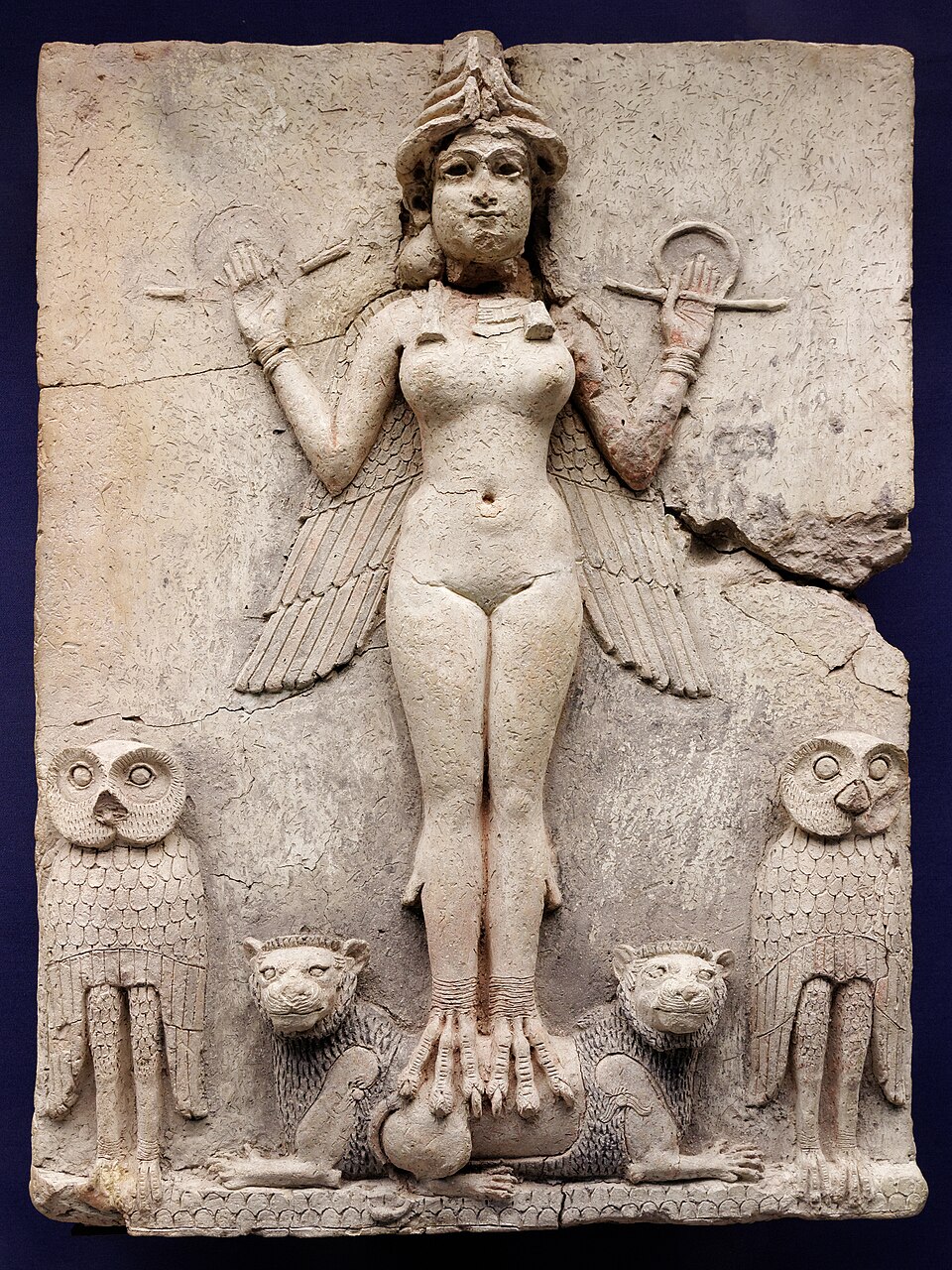
Ereshkigal
Queen of the Great Below · Mesopotamian
Sovereign of the underworld who strips Ishtar of a garment at each of the seven gates and hangs her on a hook.
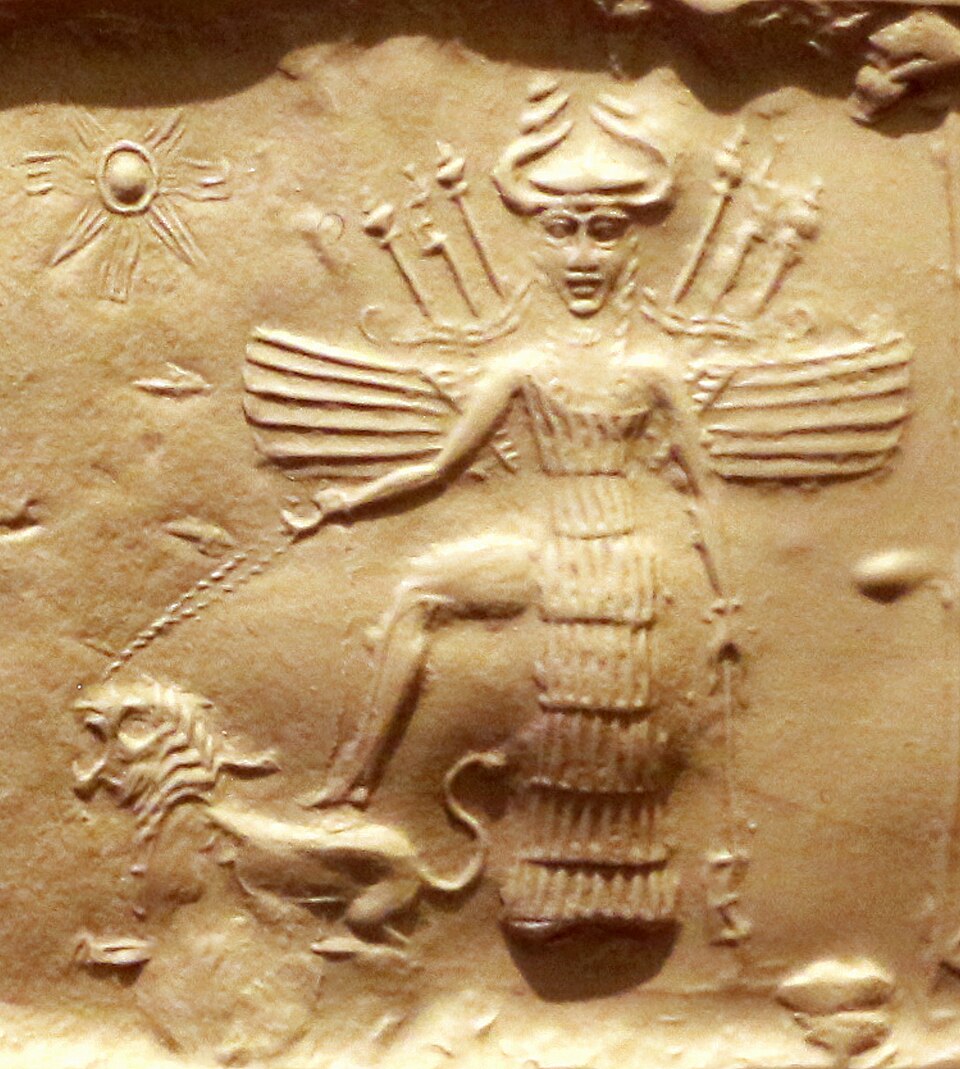
Ishtar
Queen of Heaven · Mesopotamian
Goddess of love, war and the planet Venus, whose descent into the underworld is among the oldest recorded narratives.
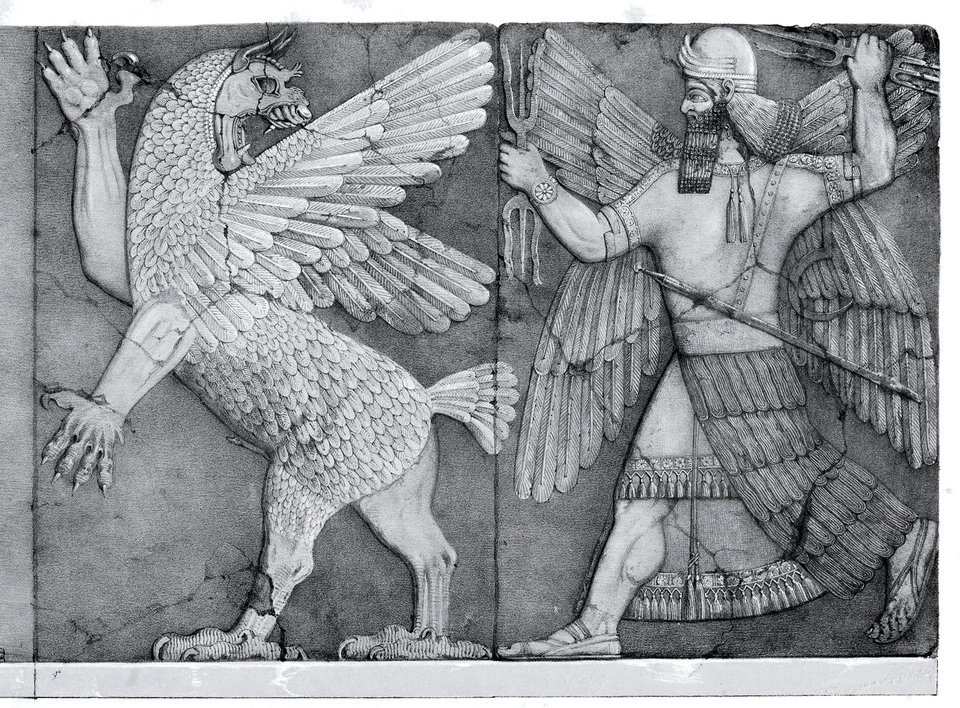
Marduk
King of the Gods · Mesopotamian
Splits Tiamat and builds the world from her body, and is voted fifty names and supreme authority for doing it.
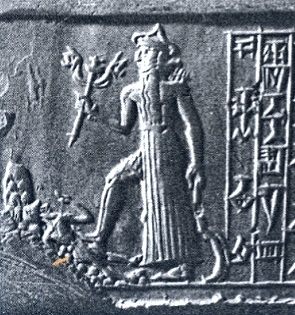
Nergal
God of the Underworld · Mesopotamian
God of plague, war and the underworld, consort of Ereshkigal — and one of the few Mesopotamian gods the Bible names directly.
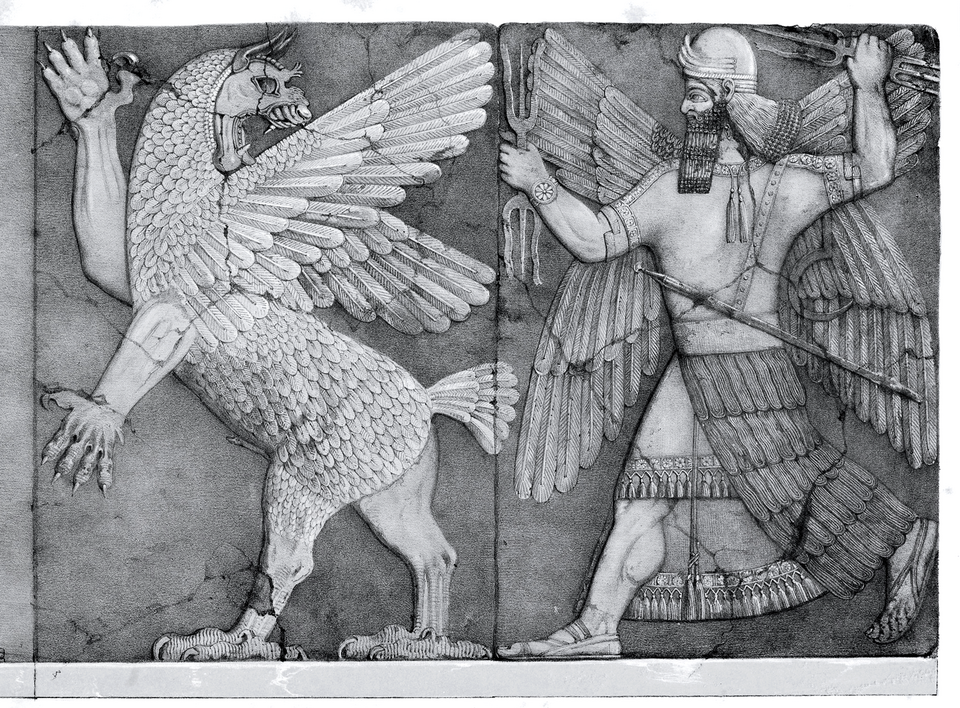
Anzu
Storm Bird · Mesopotamian
The lion-headed eagle who steals the Tablet of Destinies and is shot down for it — a rebellion against divine order predating any biblical account by a millennium.
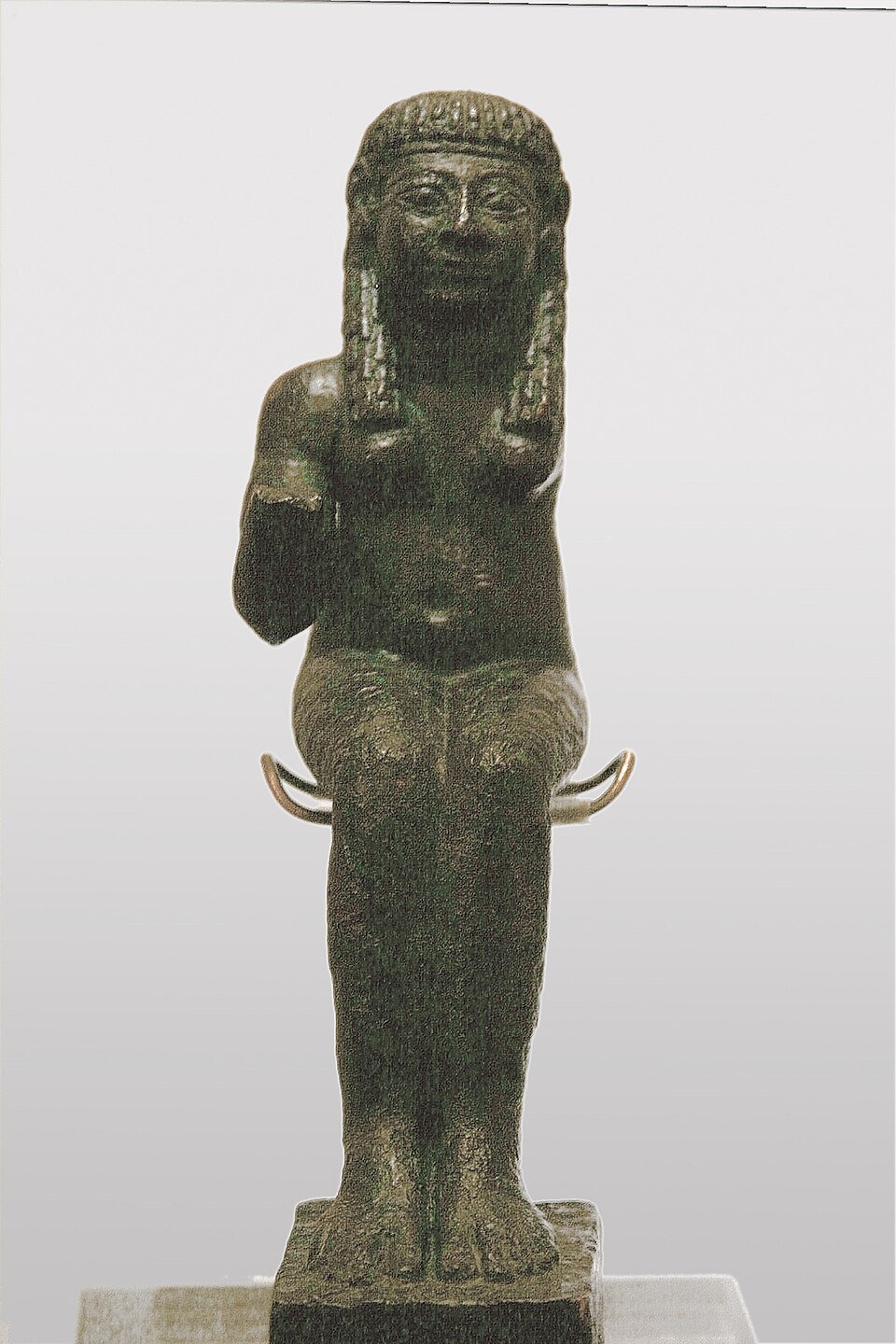
Astarte
Goddess of Love and War · Canaanite
The West Semitic goddess of love and war, cognate with Ishtar — and the direct ancestor of the Goetic duke Astaroth, who kept the name and lost the gender.
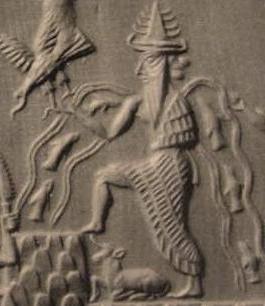
Enki
Lord of the Sweet Waters · Mesopotamian
God of the abzu and of cunning, who repeatedly saves humanity by finding the loophole in another god's decree.
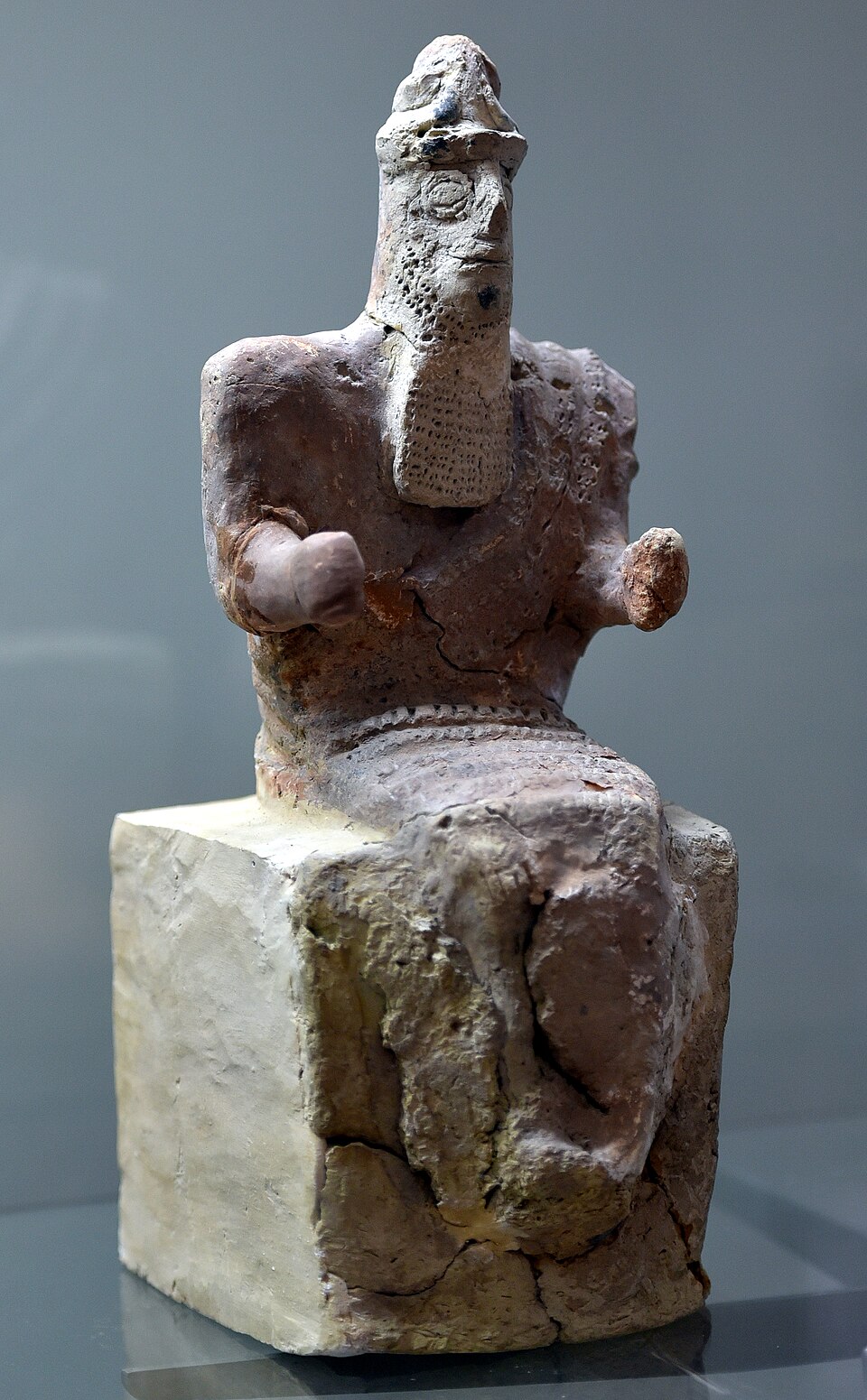
Enlil
Lord of the Air · Mesopotamian
Holder of the Tablet of Destinies, and the god who decrees the flood. He was supreme until Marduk's Babylonian promotion displaced him.
Gilgamesh
King of Uruk · Mesopotamian
Two-thirds god and one-third man, king of Uruk in the Sumerian King List and the subject of the longest narrative surviving from the ancient Near East — a story about failing to escape death.
Lamashtu
Demoness · Mesopotamian
A daughter of the sky god who preys on pregnant women and newborns. She is the closest parallel to Lilith, and most likely the actual ancestor.
Lamassu
Guardian Spirit · Mesopotamian
The protective spirit set at a palace gate, and the standing counter-example to the assumption that a Mesopotamian spirit is something to be warded off.
Ninurta
Champion of the Gods · Mesopotamian
The god sent against what the other gods will not face — the Asag, and the Anzu bird that stole the Tablet of Destinies — and the one who reorganises the world afterwards.
Pazuzu
Demon King of the Wind · Mesopotamian
A wind demon of the first millennium BCE, worn as an amulet. He was invoked *against* Lamashtu, which makes him that rare thing: a protective evil.
Shamash
Sun and Judge · Mesopotamian
The sun sees everything, so the sun is the god of judges. Hammurabi's law code is carved beneath an image of the king receiving it from him.
The Ardat Lili
Night Spirit · Mesopotamian
A Mesopotamian night spirit: a young woman who died before marriage, returning to the sleeping — and the earliest end of a report that later runs under the names incubus, mara and Old Hag.
The Asag
Demon of Sickness and Stone · Mesopotamian
A demon that fathers an army out of the mountain stones and makes fish boil in the rivers — and whose name becomes the ordinary Akkadian word for a class of illness.
The Etemmu
The Dead Who Return · Mesopotamian
The Mesopotamian ghost of a person, and a problem of neglect rather than of malice: the etemmu that troubles the living is usually a spirit nobody buried and nobody remembers.
The Gallu
Enforcers of the Netherworld · Mesopotamian
Bailiffs of the Mesopotamian netherworld, who take a person below because the law of that place requires a substitute — the corpus's clearest case of harm done by officials rather than by monsters.
The Utukku
A Class of Harmful Spirit · Mesopotamian
The class the largest surviving body of Mesopotamian protective material is named for, and a spirit defined almost entirely by what it does rather than by who it is.
Tiamat
Primordial Sea · Mesopotamian
The saltwater ocean personified as the mother of the gods, split in two by Marduk to make heaven and earth.
Enkidu
The Wild Man · Mesopotamian
Formed from clay to be Gilgamesh's match and made human by a week with a woman, he is the corpus's clearest statement that civilisation is a loss as well as a gain.