Deity · Mesopotamian · c. 2500 BCE
Enki
Also called Ea, Nudimmud · also recorded as En‐ki (per Wikidata)
God of the abzu and of cunning, who repeatedly saves humanity by finding the loophole in another god's decree.
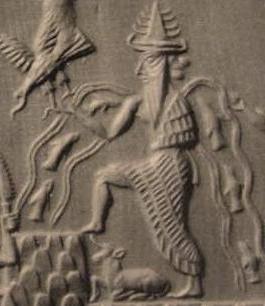
Well sourced
Enki is the trickster as benefactor, and he is consistently on humanity's side against the rest of the assembly. When Enlil decrees the flood, Enki cannot countermand it and instead speaks the warning through a reed wall, which technically breaks no oath — the loophole is the point, and it is the same manoeuvre repeated across several myths. His domain is the abzu, the fresh water under the earth, and with it wisdom, craft and incantation, which makes him the god the exorcistic material appeals to: an Akkadian incantation against a demon typically ends by referring the matter to him. That is a structural role Christian and Jewish rites would later give to the highest authority available, and the shape of the appeal is recognisably the same.
Identity
Where does the name come from?
Where it was actually worshipped
Eridu, at the E-abzu — the temple over the freshwater deep he was held to live in. Among the oldest cult sites in southern Mesopotamia.
A figure with temples and a figure that only ever existed on a page are different kinds of thing, and the difference is easy to lose once both are entries in a list.
At a glance
Vitals
Vitals
Also known as
- First attested
- The Atrahasis Epic · c. 1700 BCE
- Rank
- Lord of the Sweet Waters
- Pantheon
- Mesopotamian
- Order
- Mesopotamian pantheon
- Base of operations
- Eridu, at the E-abzu — the temple over the freshwater deep he was held to live in. Among the oldest cult sites in southern Mesopotamia.
- Era
- c. 2500 BCE
- Traditions
- Mesopotamian
- Placed in
- The Assembly of the Gods
Traits
- Domain
- Fresh water, wisdom, craft, incantation
- Traditional form
- Bearded, with streams of water flowing from his shoulders
1 site
Where was it worshipped?
Attested cult sites, located against the Pleiades gazetteer of the ancient world where it reaches and against Wikidata everywhere else. An absence here is not evidence that no cult existed: a good number of figures never had one, and the entry above says so where that is the case.
now Abu Shahrein
Held by the Sumerians to be the first city, and the seat of the E-abzu.
30.820, 45.996 · Pleiades 912845
5 attributed
What is it said to do?
Where these powers cluster
The 5 offices attributed to Enki, grouped by kind. Segment width is the share of powers falling in each category.
A bar dominated by one colour means a specialist; an even spread means a figure the sources credit with almost anything.
- knowledge1
- divination1
- martial1
- malefic1
- material1
knowledge
divination
martial
malefic
material
2 texts
Which texts say so, and where do they disagree?
When these texts were written
Each dot is one of the 2 texts that names Enki, placed at that text's approximate date.
A wide spread means the figure was carried across many centuries and traditions; a tight cluster means a single period produced the whole record.
2 texts spanning roughly 600 years
Where the texts differ
- Name: given as Enki, Ea
Cannot countermand Enlil's decree of the flood and warns his man through a reed wall instead, addressing the wall rather than the person — which keeps the oath intact on a technicality. The loophole is the characteristic move rather than an exception to it.
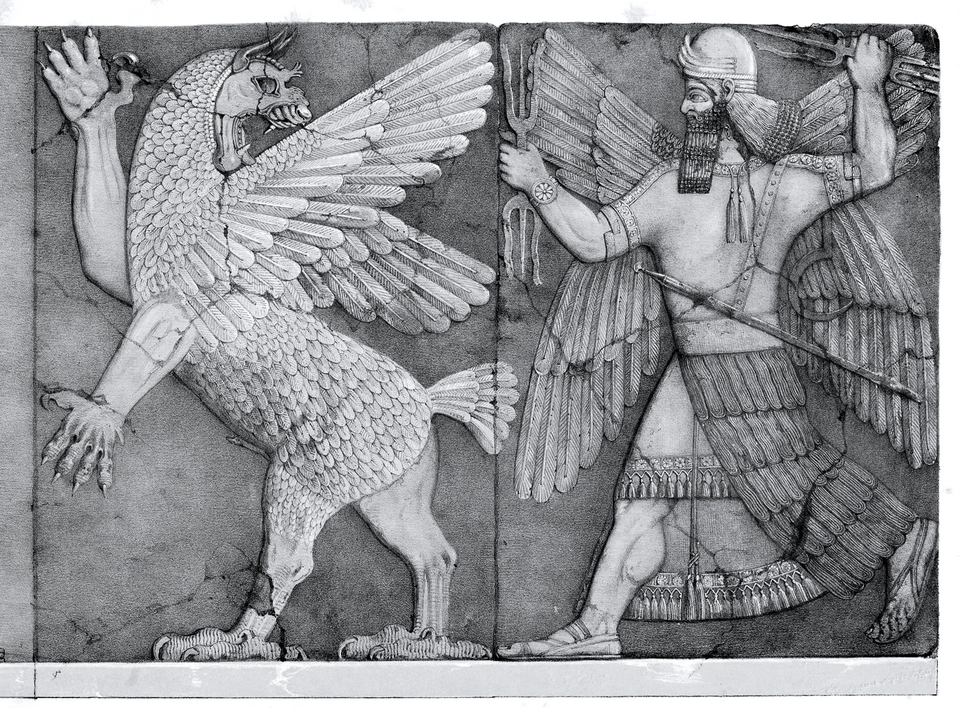
Defeats Apsu by incantation and fathers Marduk; the god of exorcists and of the incantation formula.
Connections
What is it connected to?

Placement
Where does it sit in the hierarchies?
Answered from the sources
Common questions
Which texts mention Enki?
Is Enki the same as Nüwa?
What rank is Enki?
How else is Enki spelled?
What is Enki said to do?
How old is Enki?
Nearest in the corpus
If Enki is what you came for, these are next
Chosen by proximity rather than by popularity: the same pantheon first, then the same rank, then the same kind of figure.
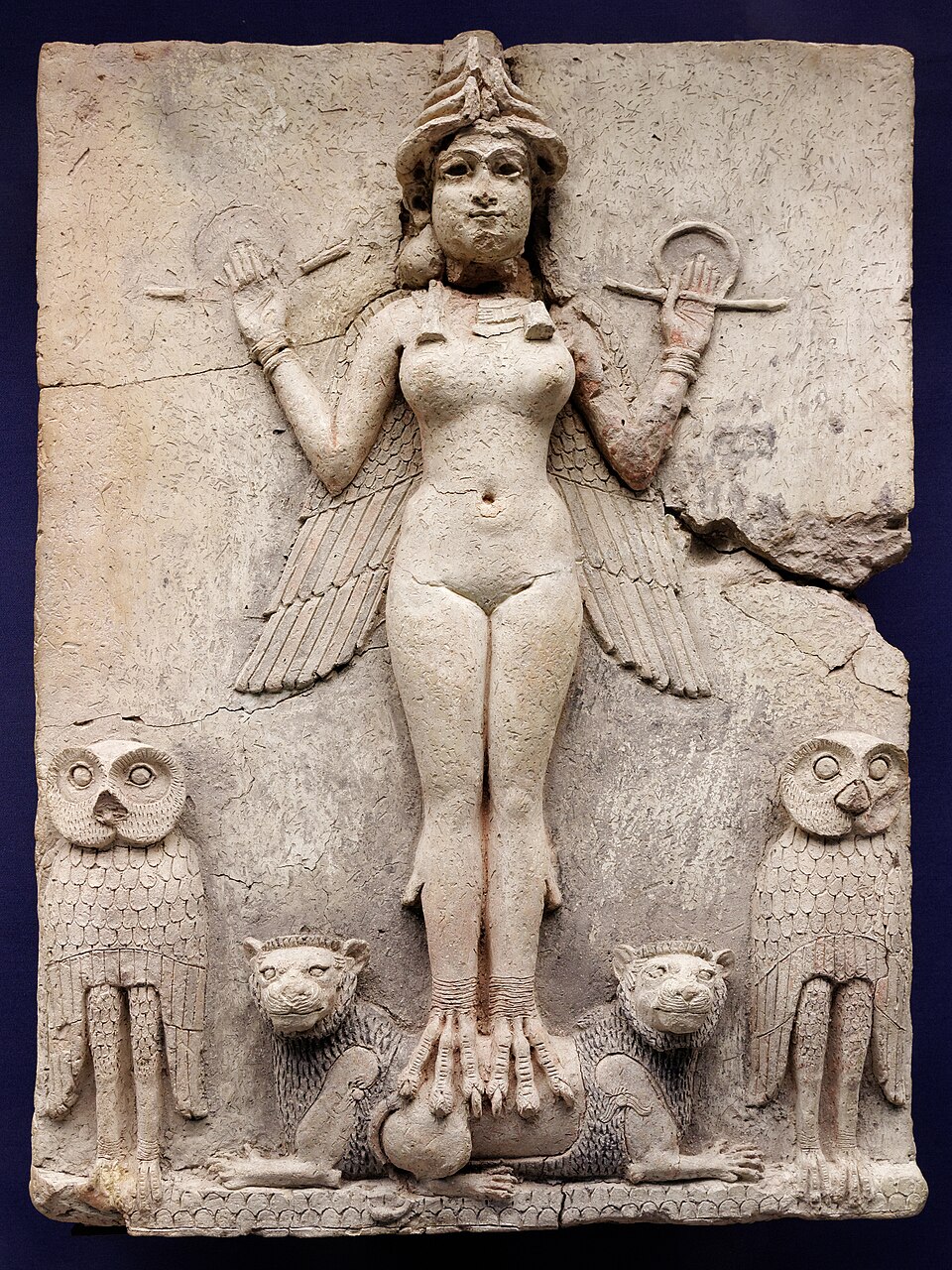
Ereshkigal
Queen of the Great Below · Mesopotamian
Sovereign of the underworld who strips Ishtar of a garment at each of the seven gates and hangs her on a hook.
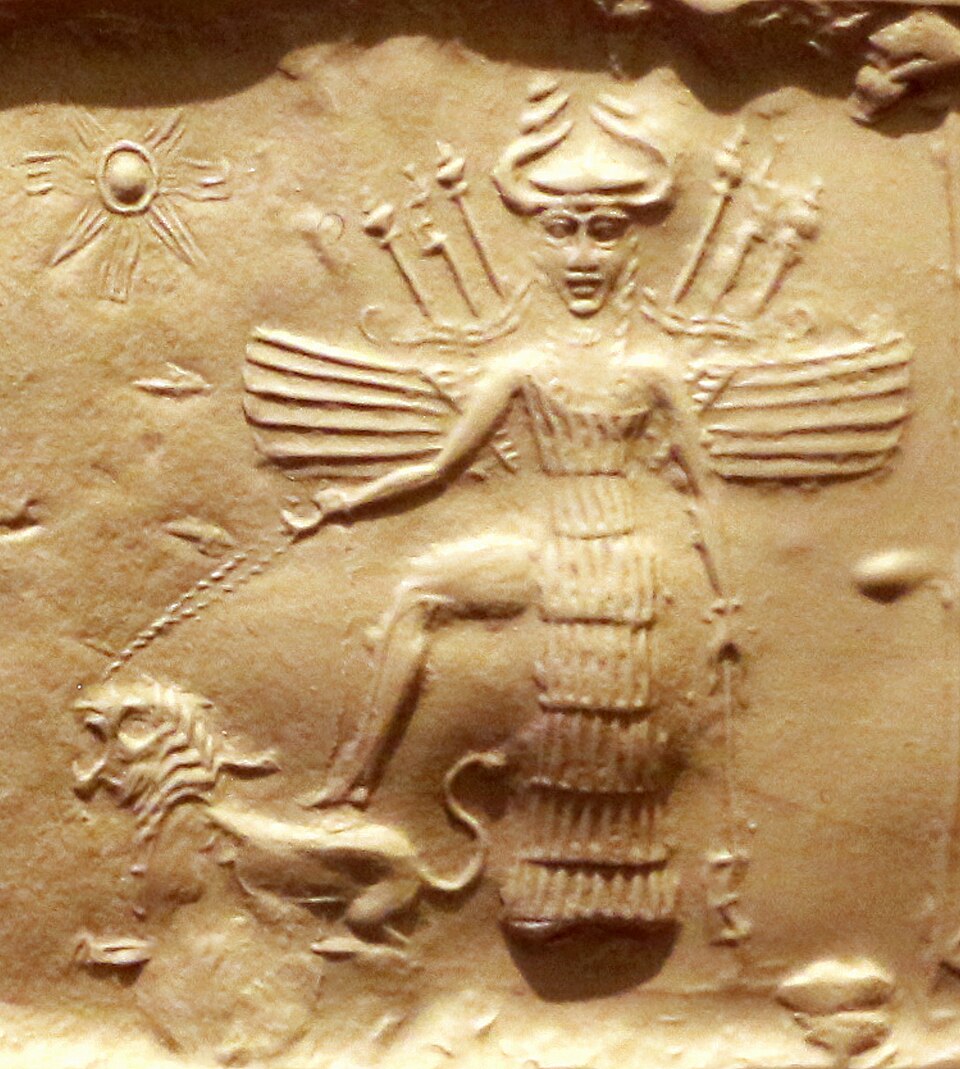
Ishtar
Queen of Heaven · Mesopotamian
Goddess of love, war and the planet Venus, whose descent into the underworld is among the oldest recorded narratives.
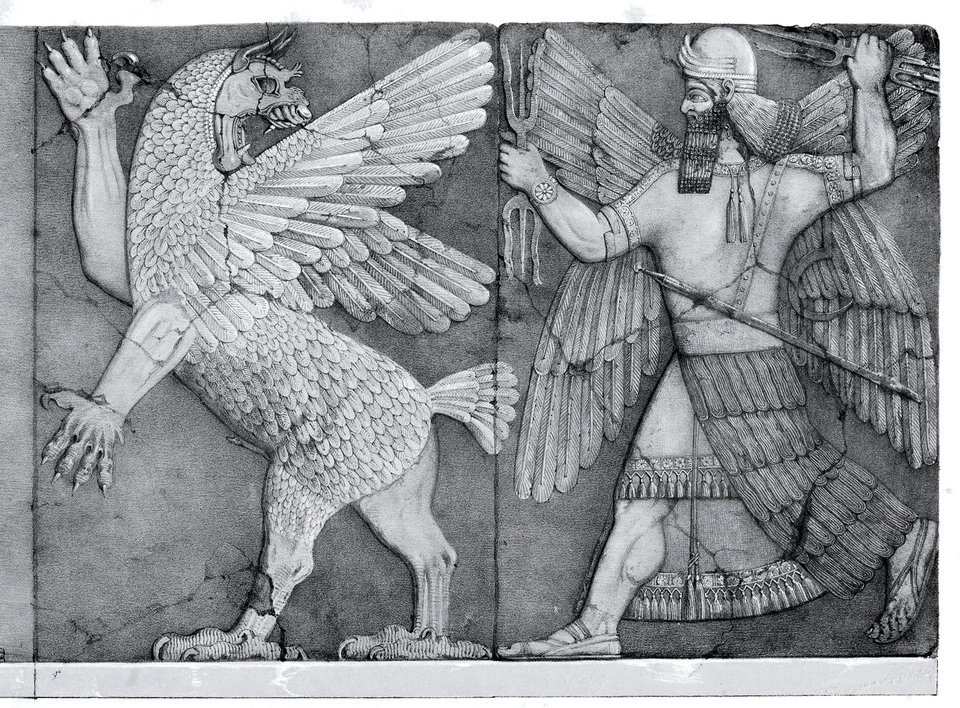
Marduk
King of the Gods · Mesopotamian
Splits Tiamat and builds the world from her body, and is voted fifty names and supreme authority for doing it.
Nergal
God of the Underworld · Mesopotamian
God of plague, war and the underworld, consort of Ereshkigal — and one of the few Mesopotamian gods the Bible names directly.
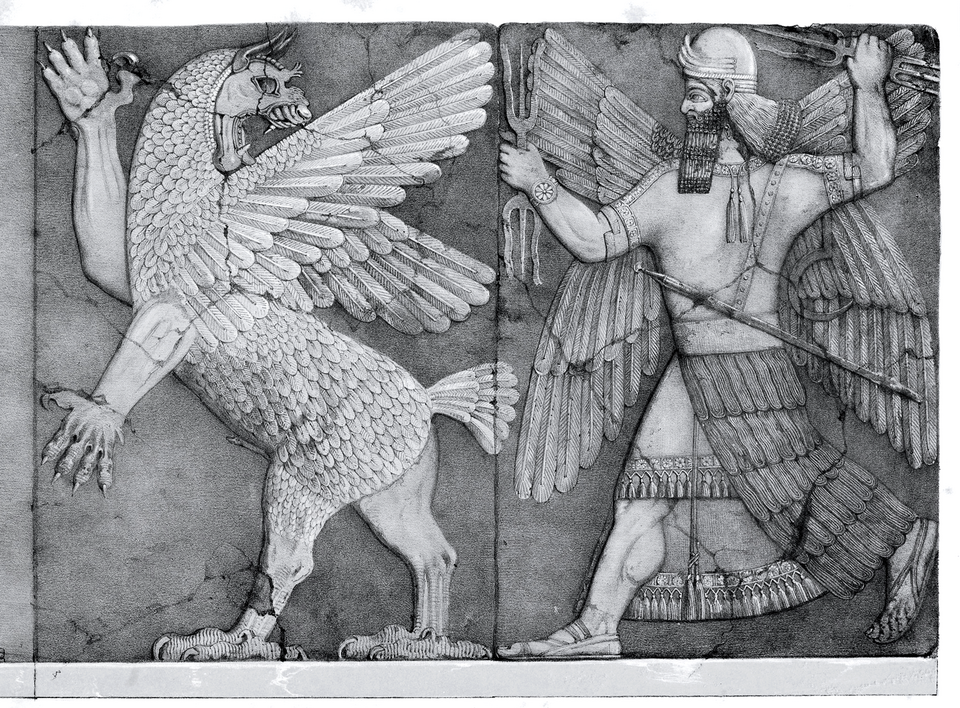
Anzu
Storm Bird · Mesopotamian
The lion-headed eagle who steals the Tablet of Destinies and is shot down for it — a rebellion against divine order predating any biblical account by a millennium.
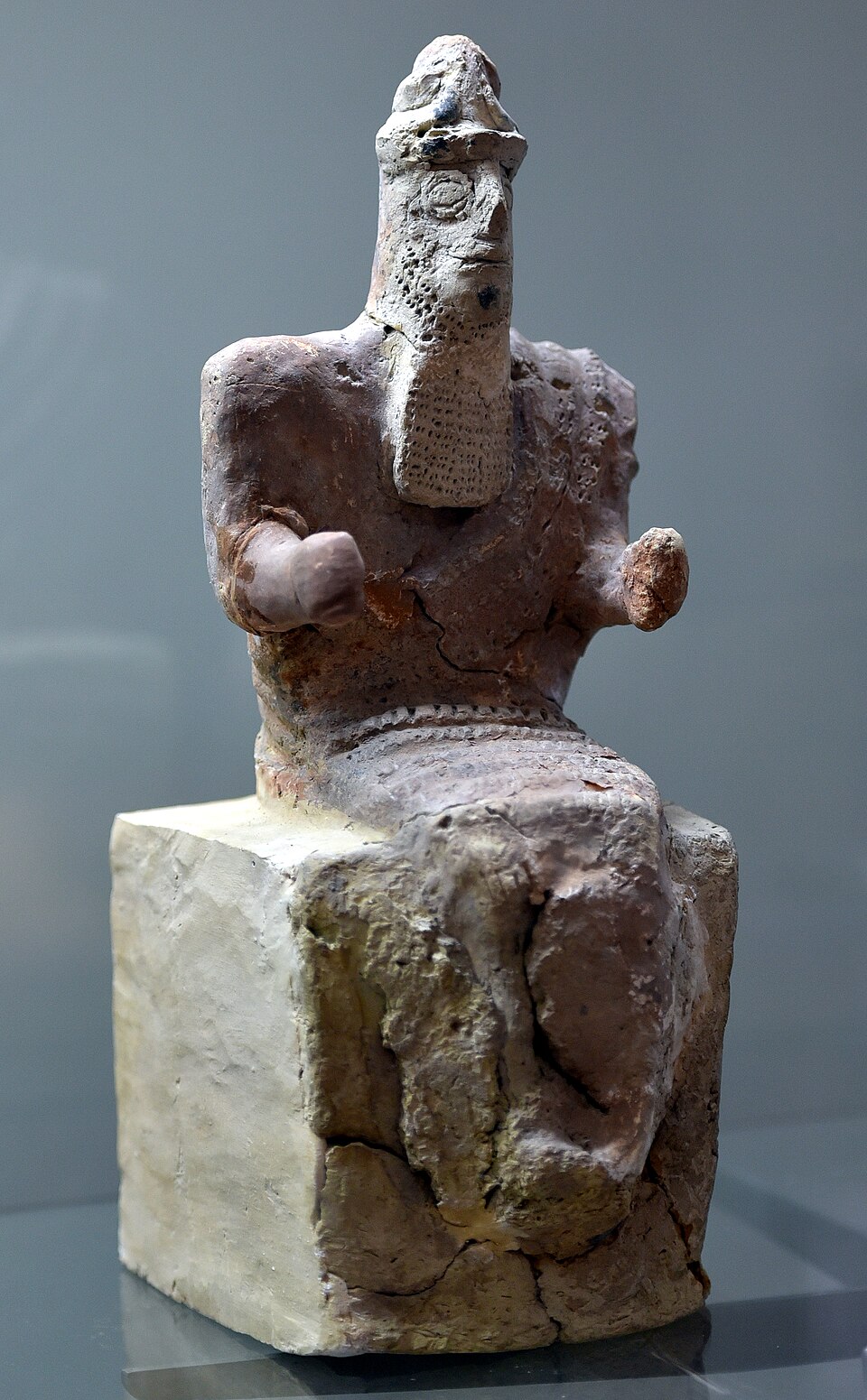
Enlil
Lord of the Air · Mesopotamian
Holder of the Tablet of Destinies, and the god who decrees the flood. He was supreme until Marduk's Babylonian promotion displaced him.
The books behind Enki
Every claim on this profile is attributed to one of these. They are public domain, listed oldest first, and each links to a full text where one is freely available.
The Atrahasis Epic
Anonymous; the fullest copy written by the scribe Ku-Aya · c. 1700 BCE · Akkadian
Read The Atrahasis Epic in full ↗Enuma Elish
Anonymous Babylonian · c. 1100 BCE · Akkadian
Read Enuma Elish in full ↗Cover: Public domain · editor Austen Henry Layard , drawing by L. Gruner · Wikimedia file page
Corpus last revised 29 August 2026. A reference site’s credibility rests on being maintained, so this is the date the sourced records last changed — not the date the page was rebuilt.