Deity · Mesopotamian · c. 2000 BCE
Anzu
Also called Imdugud, Zu
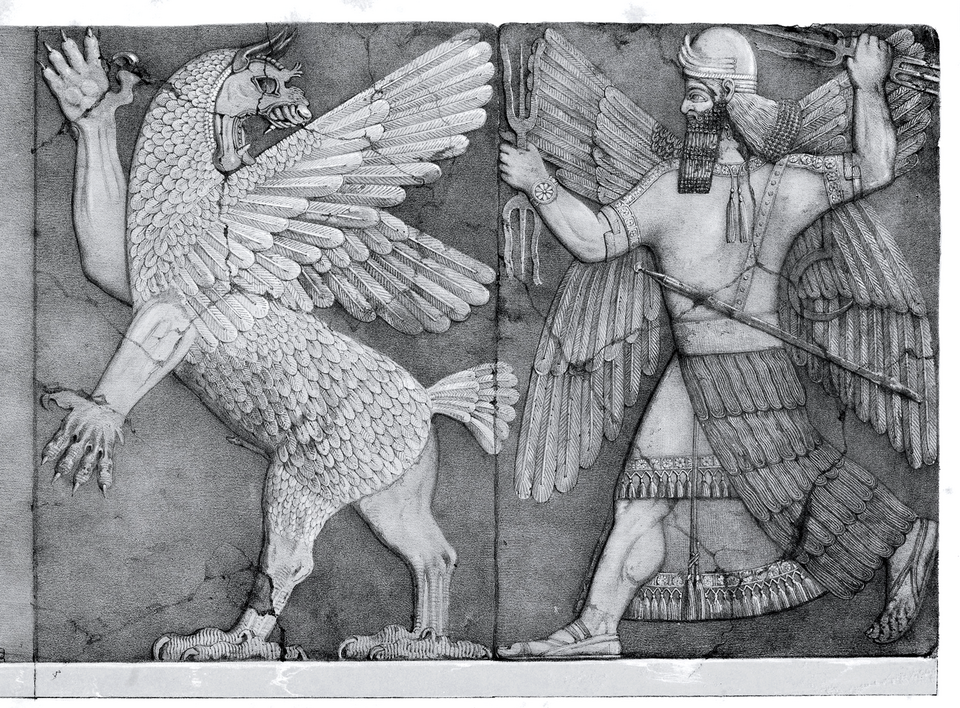
The lion-headed eagle who steals the Tablet of Destinies and is shot down for it — a rebellion against divine order predating any biblical account by a millennium.
Well sourced
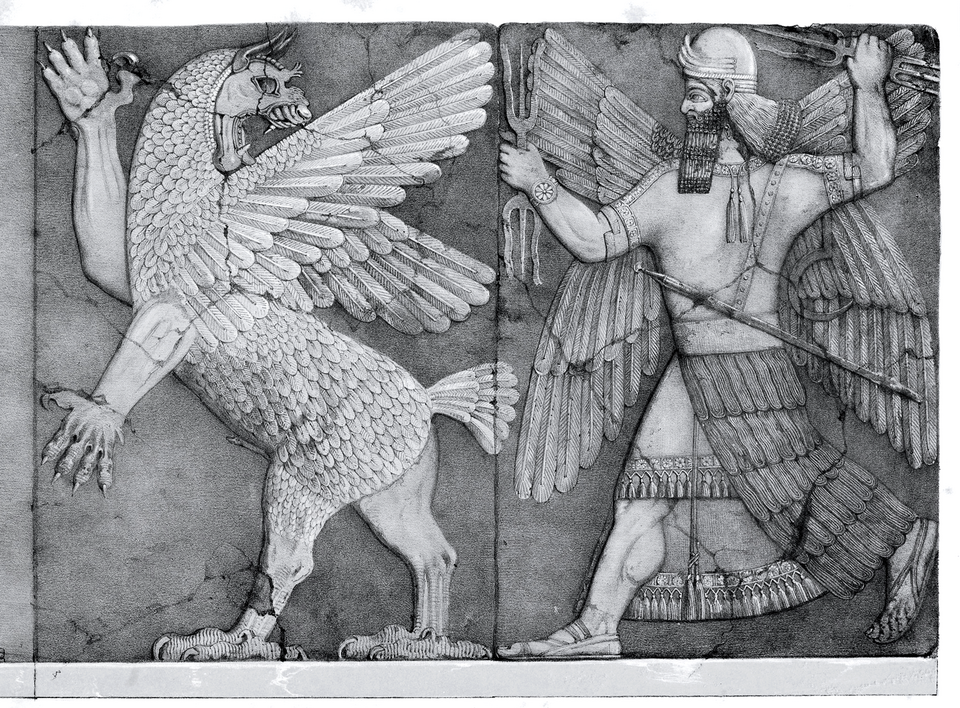
Anzu is a rebellion against divine order written down a thousand years before any biblical account of one. The lion-headed eagle is entrusted with the Tablet of Destinies, steals it, and seizes power by holding the thing that makes decrees binding — a theft of authority rather than of treasure — and is shot down by Ninurta after the first gods sent against him refuse. The pattern is the one the Watchers, the fall of the morning star and Revelation's dragon all later run: a subordinate power reaches for what it was set to guard. Nothing here is borrowed directly by those texts. What the corpus can show is that the shape was available very early and in the region the later material comes from.
Identity
Where does the name come from?
Where it was actually worshipped
None. A monster of the Ninurta and Anzu narratives, defeated rather than propitiated.
A figure with temples and a figure that only ever existed on a page are different kinds of thing, and the difference is easy to lose once both are entries in a list.
At a glance
Vitals
Vitals
Also known as
- First attested
- Lugal-e (Ninurta and the Asag) · c. 2100 BCE
- Rank
- Storm Bird
- Pantheon
- Mesopotamian
- Order
- Mesopotamian pantheon
- Base of operations
- None. A monster of the Ninurta and Anzu narratives, defeated rather than propitiated.
- Era
- c. 2000 BCE
- Traditions
- Mesopotamian
- Placed in
- The Assembly of the Gods
Traits
- Domain
- Theft of the Tablet of Destinies, the storm
- Traditional form
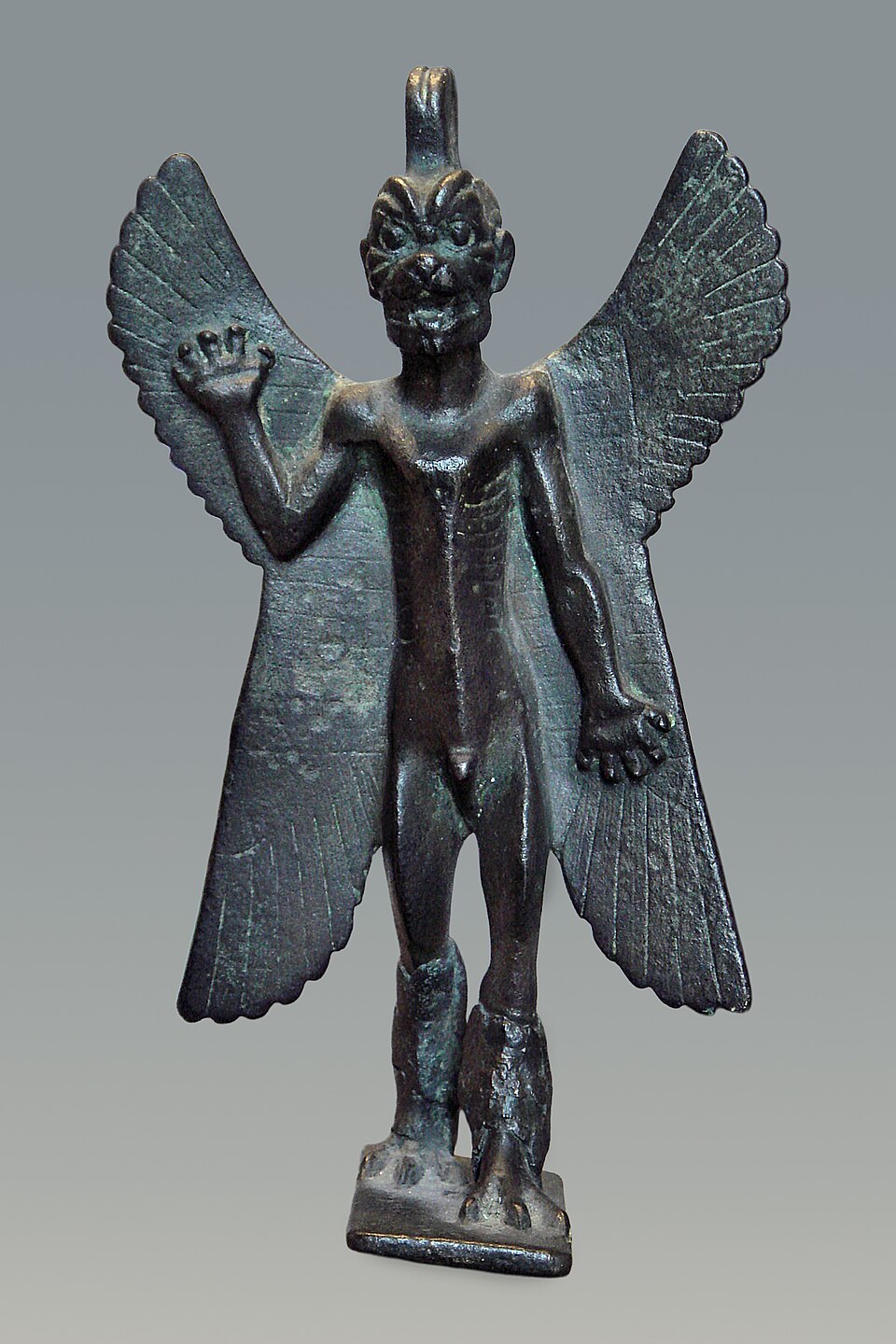
- A lion-headed eagle
3 attributed
What is it said to do?
Where these powers cluster
The 3 offices attributed to Anzu, grouped by kind. Segment width is the share of powers falling in each category.
A bar dominated by one colour means a specialist; an even spread means a figure the sources credit with almost anything.
- divination1
- malefic2
2 texts
Which texts say so?
When these texts were written
Each dot is one of the 2 texts that names Anzu, placed at that text's approximate date.
A wide spread means the figure was carried across many centuries and traditions; a tight cluster means a single period produced the whole record.
2 texts spanning roughly 900 years
Listed among the enemies Ninurta has already destroyed, in a poem about a different victory. The corpus keeps it because that is how a defeated monster becomes a credential: the bird is no longer a story here, it is an item in the hero's record.
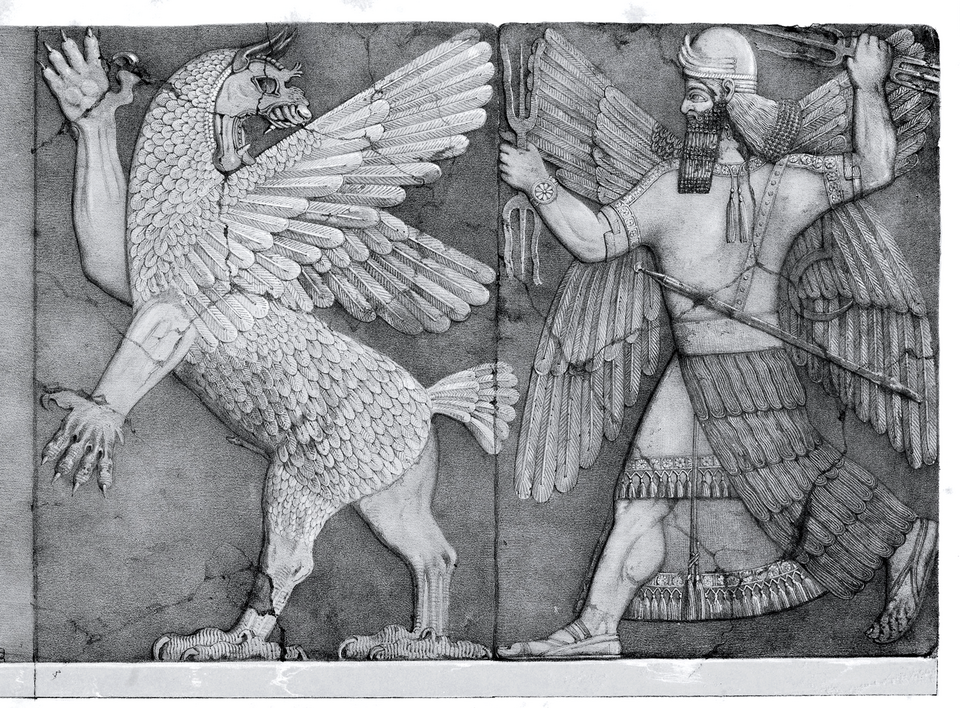
Seizes the Tablet of Destinies from Enlil while he bathes, and is hunted down and defeated by Ninurta.
Connections
What is it connected to?
Placement
Where does it sit in the hierarchies?
Answered from the sources
Common questions
Which texts mention Anzu?
Is Anzu the same as Azazel?
What rank is Anzu?
How else is Anzu spelled?
What is Anzu said to do?
How old is Anzu?
Nearest in the corpus
If Anzu is what you came for, these are next
Chosen by proximity rather than by popularity: the same pantheon first, then the same rank, then the same kind of figure.
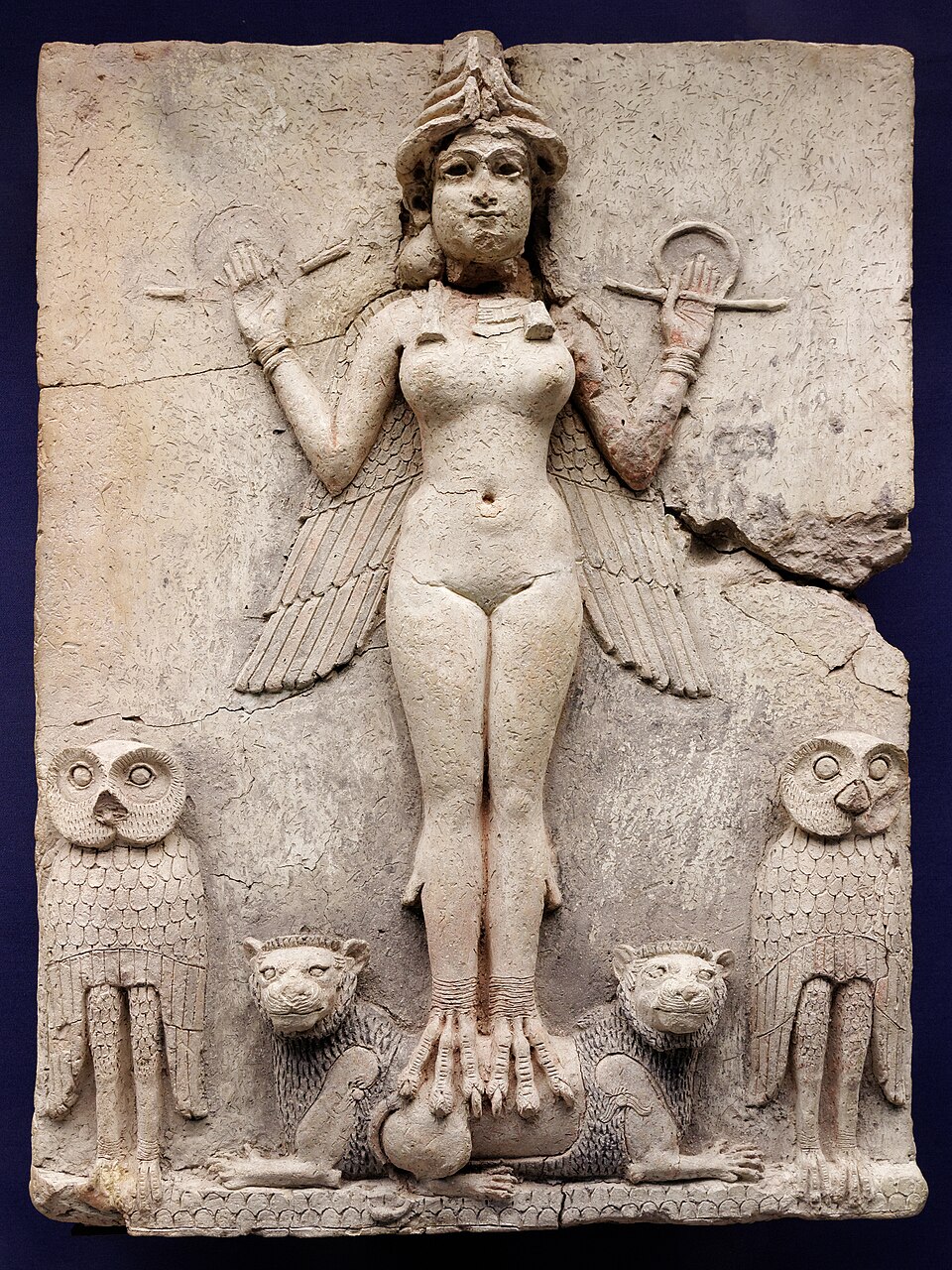
Ereshkigal
Queen of the Great Below · Mesopotamian
Sovereign of the underworld who strips Ishtar of a garment at each of the seven gates and hangs her on a hook.
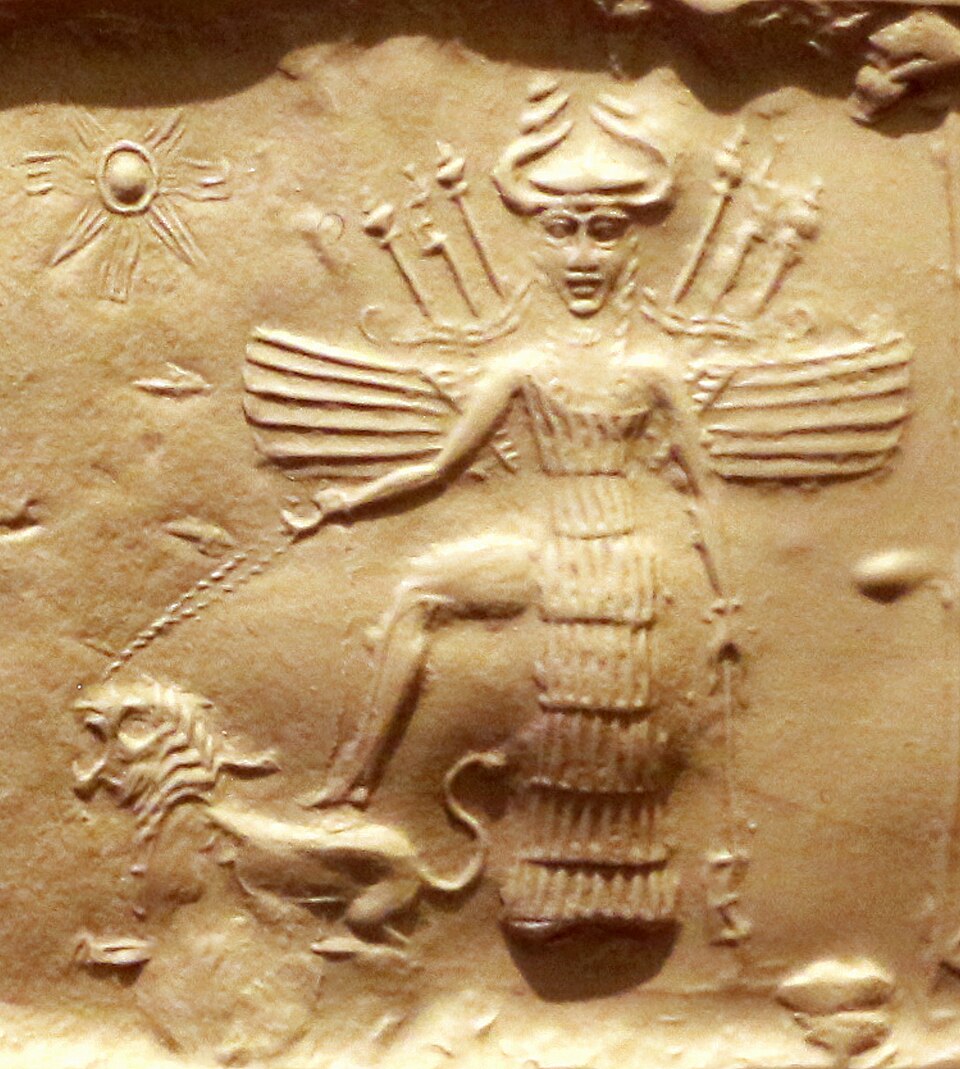
Ishtar
Queen of Heaven · Mesopotamian
Goddess of love, war and the planet Venus, whose descent into the underworld is among the oldest recorded narratives.
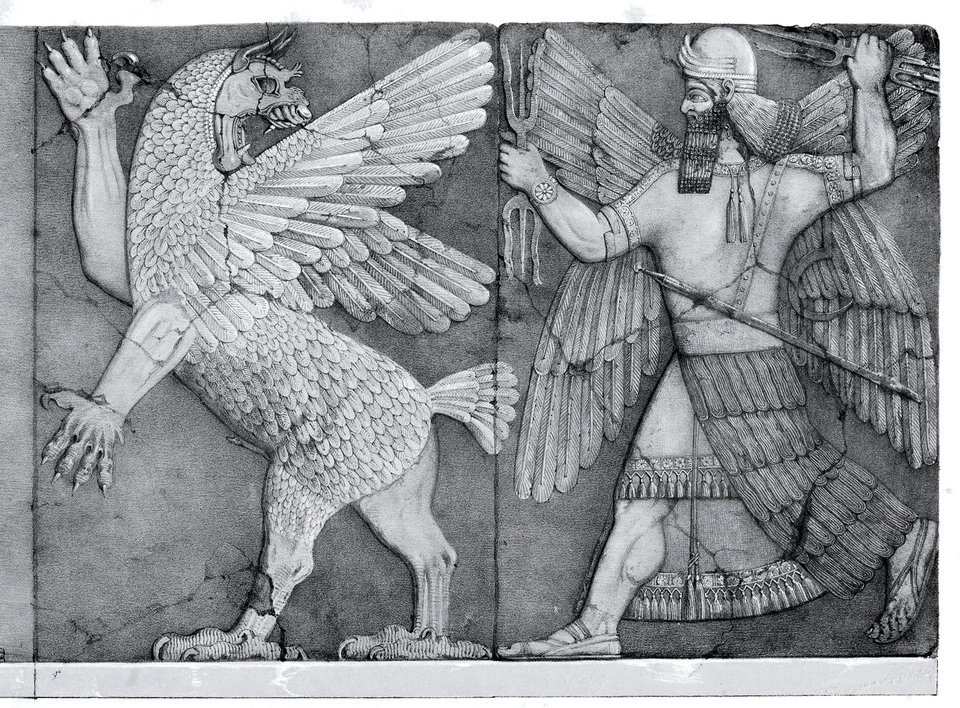
Marduk
King of the Gods · Mesopotamian
Splits Tiamat and builds the world from her body, and is voted fifty names and supreme authority for doing it.
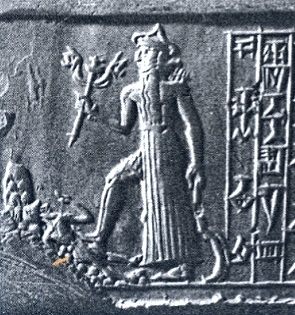
Nergal
God of the Underworld · Mesopotamian
God of plague, war and the underworld, consort of Ereshkigal — and one of the few Mesopotamian gods the Bible names directly.
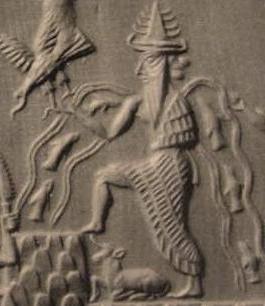
Enki
Lord of the Sweet Waters · Mesopotamian
God of the abzu and of cunning, who repeatedly saves humanity by finding the loophole in another god's decree.
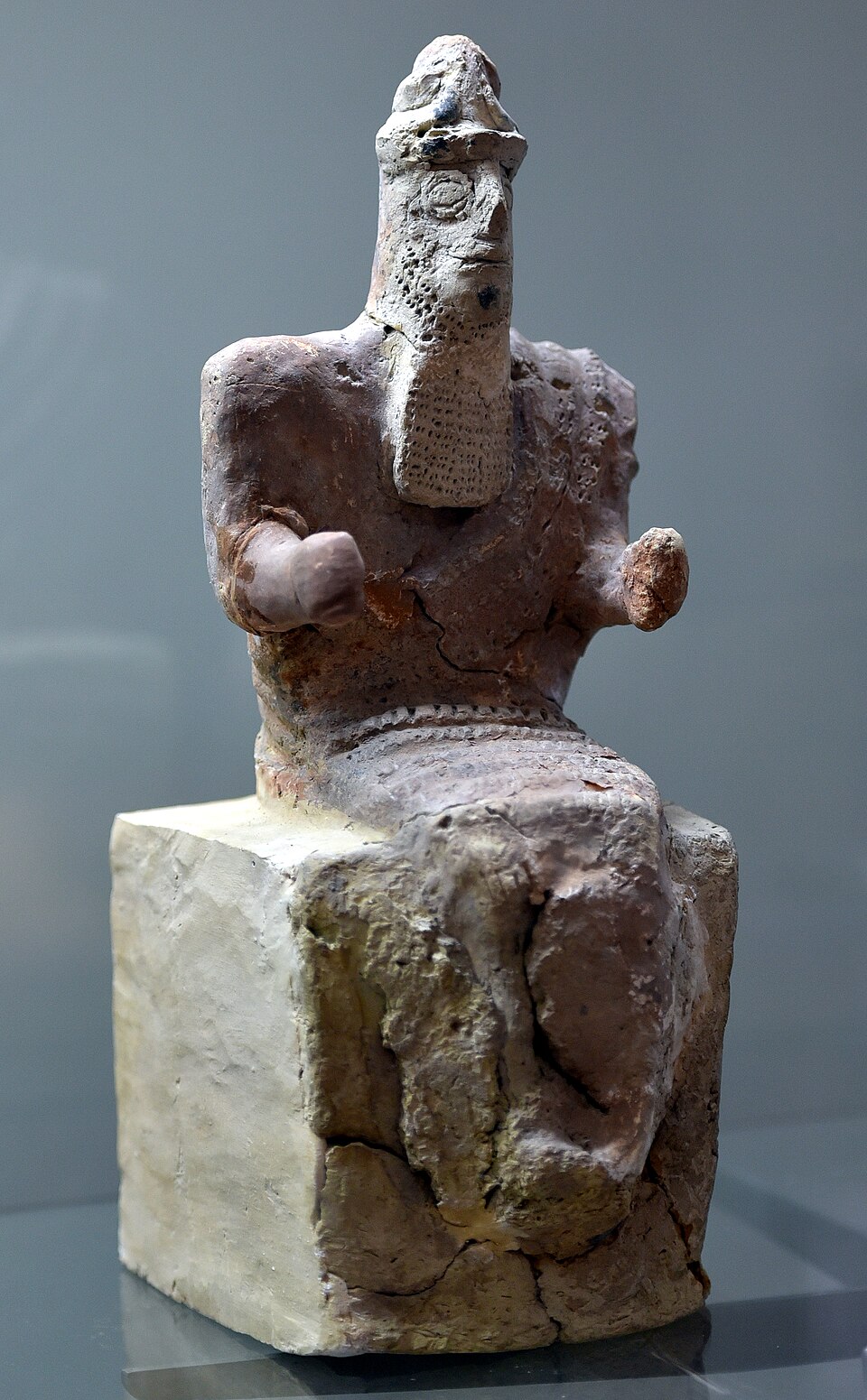
Enlil
Lord of the Air · Mesopotamian
Holder of the Tablet of Destinies, and the god who decrees the flood. He was supreme until Marduk's Babylonian promotion displaced him.
The books behind Anzu
Every claim on this profile is attributed to one of these. They are public domain, listed oldest first, and each links to a full text where one is freely available.
Lugal-e (Ninurta and the Asag)
Anonymous; Sumerian composition · c. 2100 BCE · Sumerian
Read Lugal-e (Ninurta and the Asag) in full ↗The Myth of Anzu
Anonymous Akkadian · c. 1500-1000 BCE · Akkadian
Read The Myth of Anzu in full ↗Cover: Public domain · editor Austen Henry Layard , drawing by L. Gruner · Wikimedia file page
Corpus last revised 29 August 2026. A reference site’s credibility rests on being maintained, so this is the date the sourced records last changed — not the date the page was rebuilt.