Deity · Chinese · c. 200 BCE
Nüwa
Also called Nyuwa, Nuwa, Nü-wa, Nu-wa, Nügua, Nugua, Nvwa, Niu Koua, the Woman Kua, Nu Kua, Nin-na, Niu-ua, Noe-hoa, Nœ-hoa, Niu-oua (per Wikidata)
She makes people from yellow earth and patches the broken sky with five-coloured stones. A creator whose defining act is repair.
![Historical depiction of Nüwa, Chinese deity — Xiao Yuncong, 1596-1673 — http://163.13.175.7/105js/105jsa01/sea.php[dead link]](/entities/nuwa.png)
Well sourced
A creator whose defining act is repair. After the pillar of heaven is broken she smelts five-coloured stones to patch the sky and cuts the legs from a great turtle to prop up its corners, and the job is not quite successful — the heavens still lean, which is why the sun and stars move as they do and the rivers run the other way. She is also credited with making the first people from yellow earth, working carefully at first and then, tiring, by dragging a cord through mud and flicking the drops. The distinction between the two batches is a story about class that the corpus records as it stands, since the text offers it without embarrassment.
Identity
Where does the name come from?
Where it was actually worshipped
The Nüwa Palace at Shexian in Hebei, built into a cliff, where she is still petitioned for children.
A figure with temples and a figure that only ever existed on a page are different kinds of thing, and the difference is easy to lose once both are entries in a list.
At a glance
Vitals
Vitals
Also known as
- Rank
- Creator Goddess
- Pantheon
- Chinese
- Order
- Chinese pantheon
- Base of operations
- The Nüwa Palace at Shexian in Hebei, built into a cliff, where she is still petitioned for children.
- Era
- c. 200 BCE
- Traditions
- Chinese
Traits
- Domain
- Creation of humanity, repair of the sky
- Traditional form
- A woman with a serpent's lower body
1 site
Where was it worshipped?
Attested cult sites, located against the Pleiades gazetteer of the ancient world where it reaches and against Wikidata everywhere else. An absence here is not evidence that no cult existed: a good number of figures never had one, and the entry above says so where that is the case.
now Shexian, Hebei
Built into a cliff face, and still petitioned for children.
36.643, 113.617 · Wikidata Q10943928
3 attributed
What is it said to do?
Where these powers cluster
The 3 offices attributed to Nüwa, grouped by kind. Segment width is the share of powers falling in each category.
A bar dominated by one colour means a specialist; an even spread means a figure the sources credit with almost anything.
- knowledge1
- material2
2 texts
Which texts say so?
When these texts were written
Each dot is one of the 2 texts that names Nüwa, placed at that text's approximate date.
A wide spread means the figure was carried across many centuries and traditions; a tight cluster means a single period produced the whole record.
2 texts, all inside a single century
Forms humanity from clay and mends the pillar of heaven after it is broken.
The repair of the world: after the pillar of heaven is broken she smelts five-coloured stones to patch the sky and cuts the legs from a great turtle to prop up its corners, and the sky still tilts, which is why the sun and stars move as they do. A creator whose defining act is maintenance rather than creation is unusual enough to be worth citing twice.
Connections
What is it connected to?
Answered from the sources
Common questions
Which texts mention Nüwa?
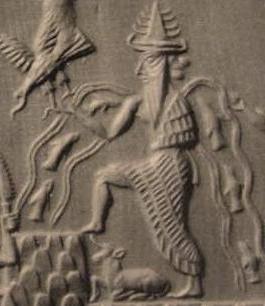
Is Nüwa the same as Enki?
What rank is Nüwa?
How else is Nüwa spelled?
What is Nüwa said to do?
How old is Nüwa?
Nearest in the corpus
If Nüwa is what you came for, these are next
Chosen by proximity rather than by popularity: the same pantheon first, then the same rank, then the same kind of figure.
Gonggong
The Water Lord · Chinese
The Chinese water god who loses a fight and knocks down the pillar holding up the sky — which is why the heavens tilt one way, the rivers run the other, and Nüwa has repairs to make.
Xiwangmu
Queen Mother of the West · Chinese
The Chinese goddess who begins as a tiger-toothed sender of plagues in the Classic of Mountains and Seas and ends as the serene keeper of the peaches of immortality — a demotion running backwards.
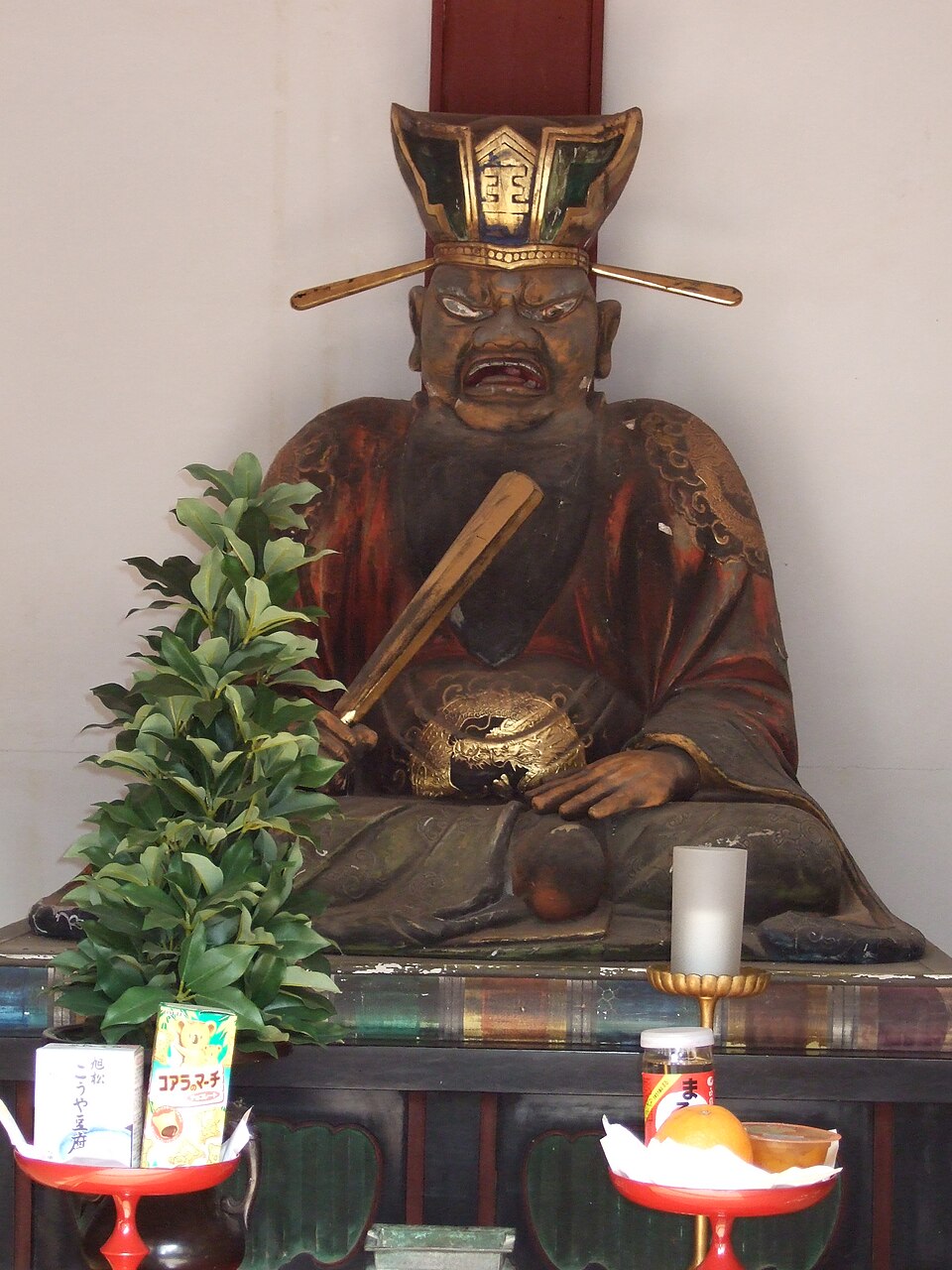
Yanluo Wang
Judge of the Dead · Chinese
Chief judge of the Chinese underworld — a civil servant with a ledger, in a hell organised as a court system rather than a torture chamber.
The Ten Kings
Court of the Dead · Chinese
The Chinese court of the dead — ten magistrates who each hear a case at a fixed interval after death, with clerks, registers and a right of appeal, and Yanluo Wang sitting fifth.
Artemis
Mistress of Animals · Greek
Huntress and protector of the young, whose Ephesian cult statue looks nothing like her and whose temple gave the ancient world one of its most durable protective formulas.
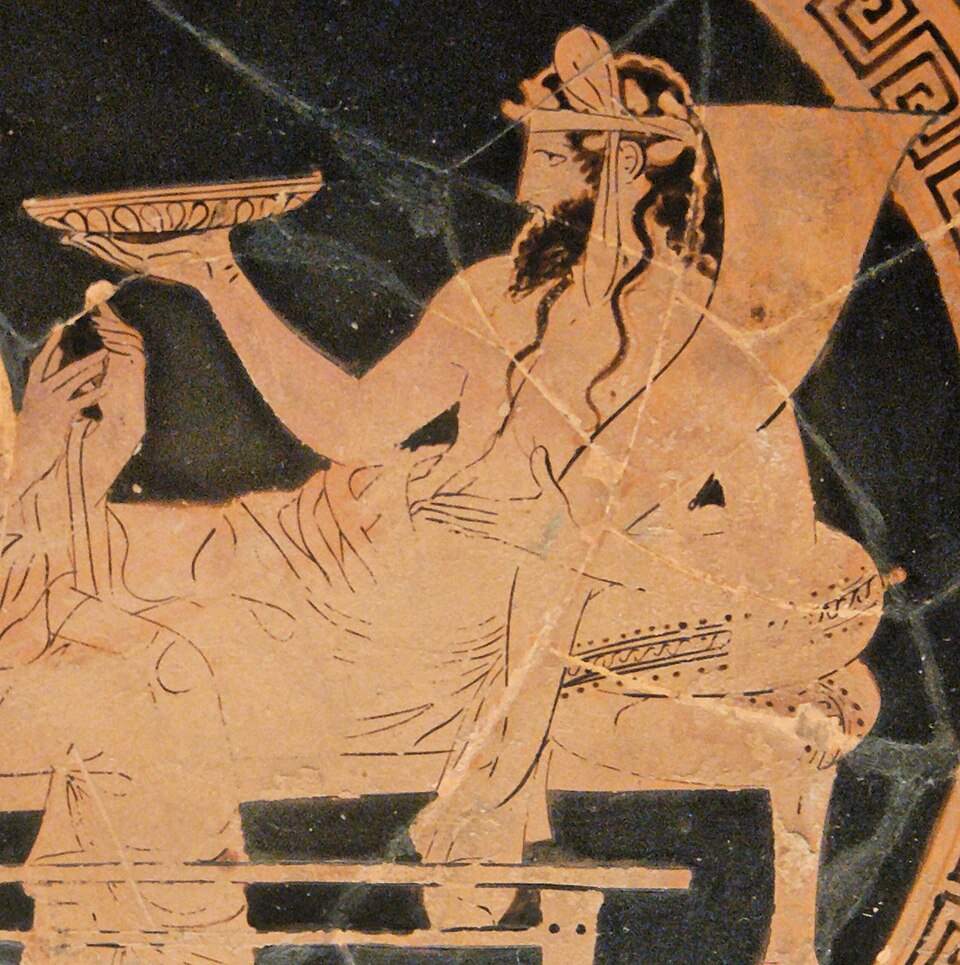
Hades
Lord of the Underworld · Greek
Ruler of the dead by lot rather than by punishment — a god of the underworld who is not evil, a distinction Christian cosmology cannot express.
The books behind Nüwa
Every claim on this profile is attributed to one of these. They are public domain, listed oldest first, and each links to a full text where one is freely available.
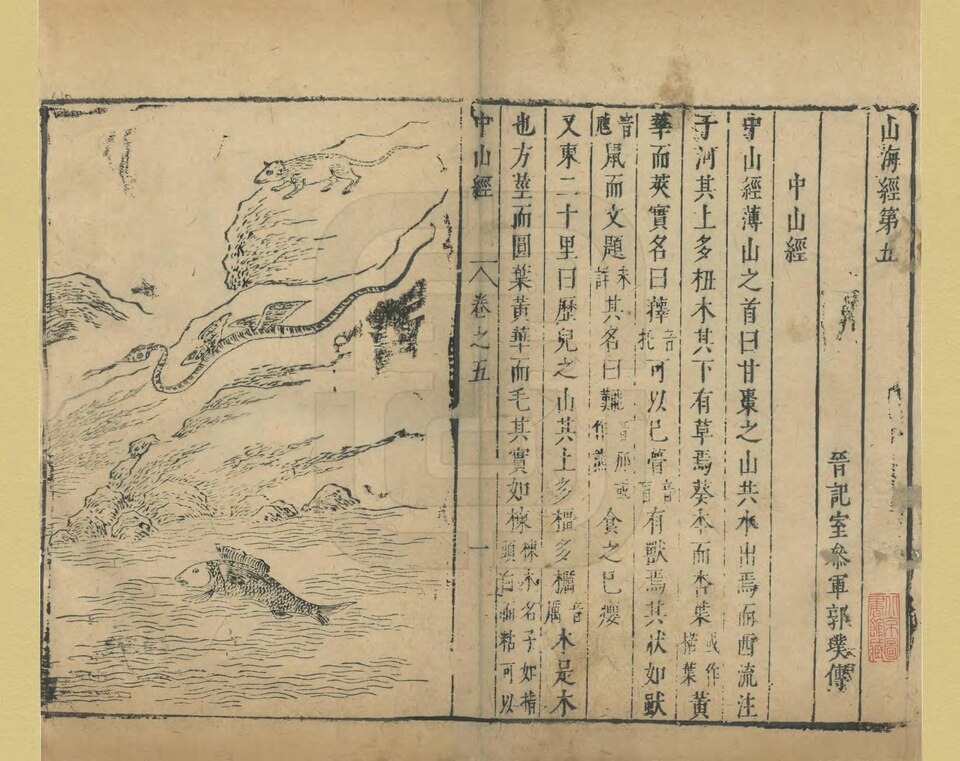
Shanhaijing (Classic of Mountains and Seas)
Anonymous · 4th c. BCE - 2nd c. CE · Classical Chinese
Read Shanhaijing (Classic of Mountains and Seas) in full ↗Cover: Public domain · National Library of China · Wikimedia file page
The Huainanzi
Compiled under Liu An, King of Huainan · c. 139 BCE · Classical Chinese
Read The Huainanzi in full ↗
Corpus last revised 29 August 2026. A reference site’s credibility rests on being maintained, so this is the date the sourced records last changed — not the date the page was rebuilt.