Deity · Chinese · c. 200 BCE
Yanluo Wang
Also called Yama (Buddhist origin), King Yan · also recorded as Yanwang (per Wikidata)
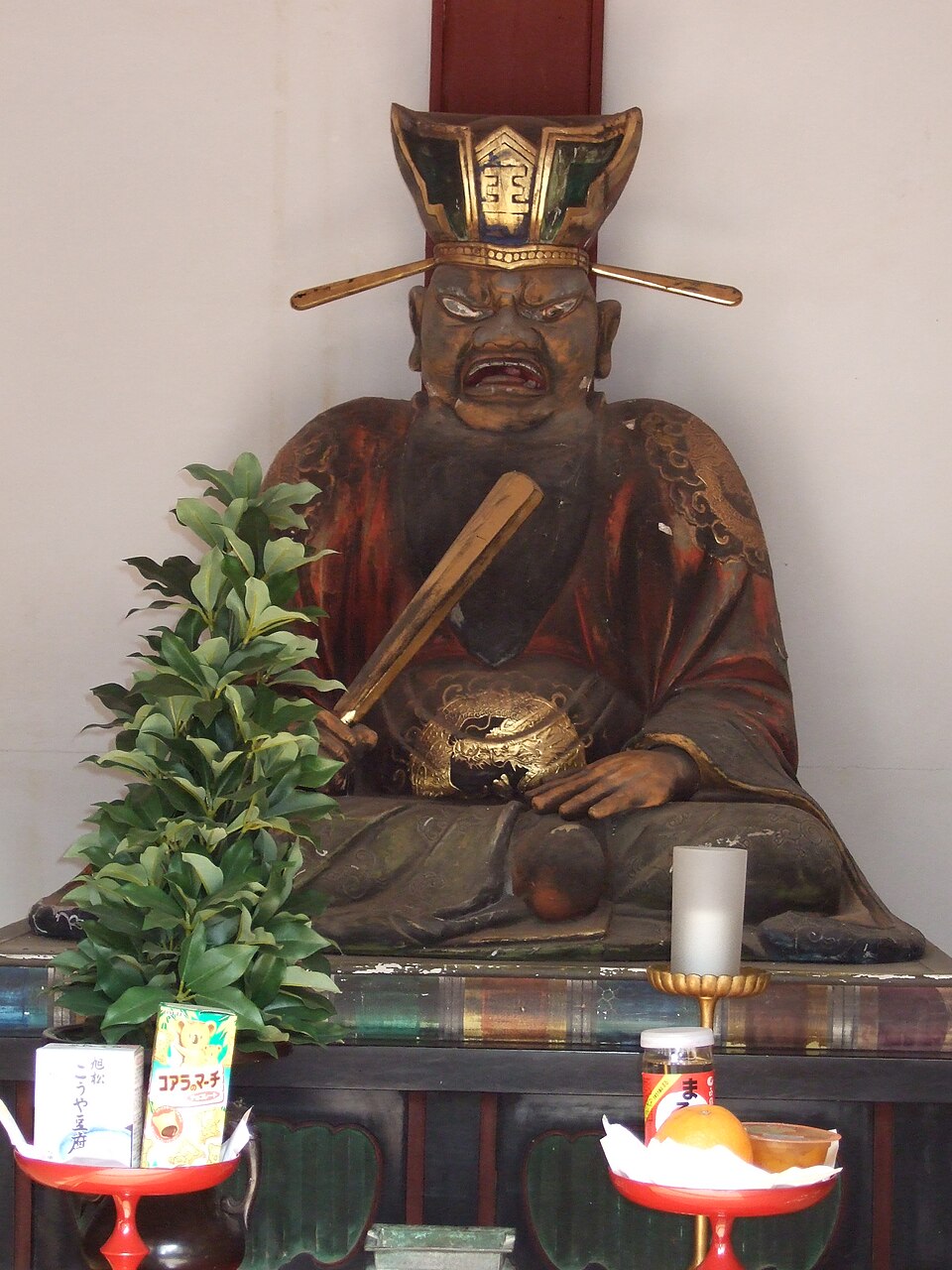
Chief judge of the Chinese underworld — a civil servant with a ledger, in a hell organised as a court system rather than a torture chamber.
Narrow source base
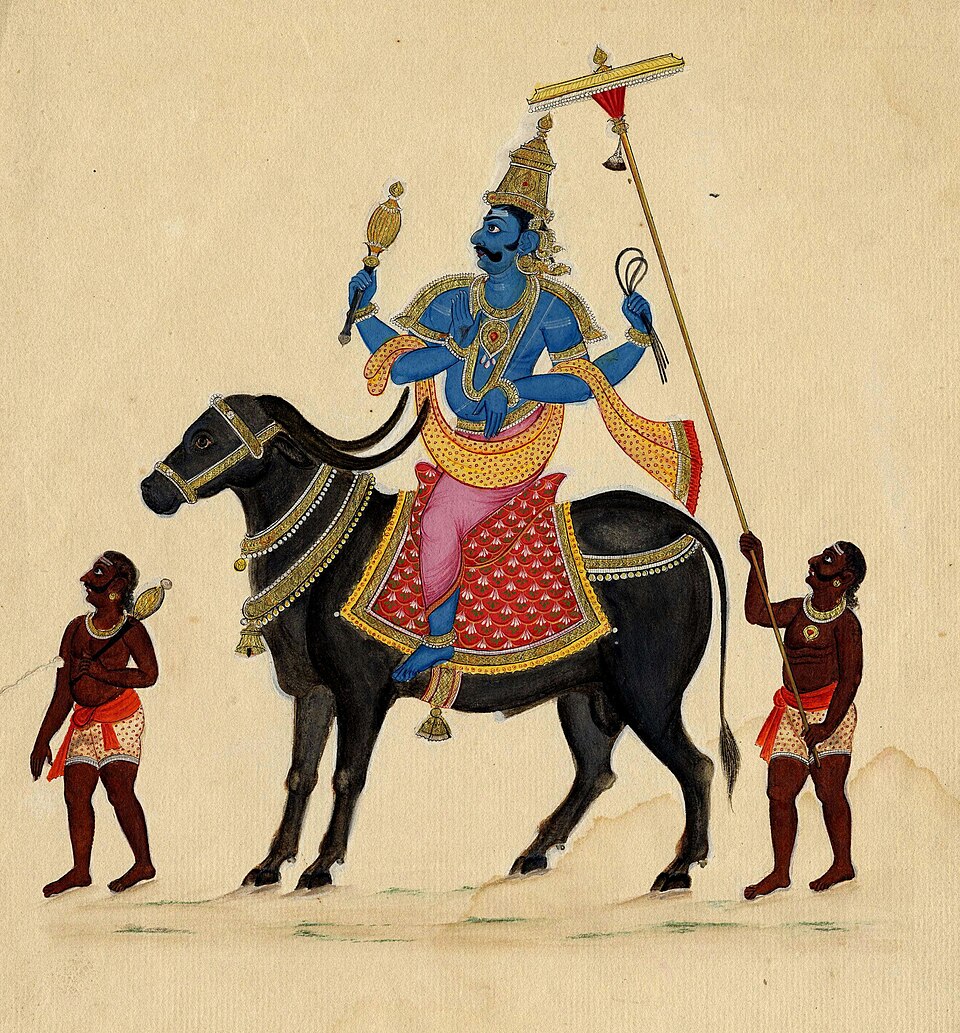
The Chinese underworld is a bureaucracy, and this is not a metaphor: Yanluo presides over ten courts, each handling a category of offence, with clerks, registers, terms of sentence and the possibility of appeal. Souls are processed and then returned to rebirth. The idea entered China with Buddhism, carrying the Indian Yama, and was promptly reorganised along the lines of the imperial civil service. The contrast with a Christian hell of permanent punishment without review is close to total.
Identity
Where does the name come from?
Where it was actually worshipped
Fengdu on the Yangtze, the ghost city, whose temples stage the courts of the underworld as an administrative process to be walked through.
A figure with temples and a figure that only ever existed on a page are different kinds of thing, and the difference is easy to lose once both are entries in a list.
At a glance
Vitals
Vitals
Also known as
- First attested
- The Sutra of the Great Vows of Ksitigarbha · c. 700 CE
- Named there as
- Yama, King of the Law
- Rank
- Judge of the Dead
- Pantheon
- Chinese
- Order
- Chinese pantheon
- Base of operations
- Fengdu on the Yangtze, the ghost city, whose temples stage the courts of the underworld as an administrative process to be walked through.
- Era
- c. 200 BCE
- Traditions
- Chinese, Buddhist
- Placed in
- The Ten Courts of Diyu
Traits
- Domain
- Judgment of the dead, the registers of life and death
- Traditional form
- A stern magistrate in official robes
Stats
Known connections
Chain of command
Identified with
1 site
Where was it worshipped?
Attested cult sites, located against the Pleiades gazetteer of the ancient world where it reaches and against Wikidata everywhere else. An absence here is not evidence that no cult existed: a good number of figures never had one, and the entry above says so where that is the case.
Temples on the Yangtze staging the courts of the underworld as an administrative process to be walked through.
29.890, 107.722 · Wikidata Q5443419
4 attributed
What is it said to do?
Where these powers cluster
The 4 offices attributed to Yanluo Wang, grouped by kind. Segment width is the share of powers falling in each category.
A bar dominated by one colour means a specialist; an even spread means a figure the sources credit with almost anything.
- martial2
- knowledge1
- transformation1
1 mark
Which marks is it attached to?
A mark a figure carries and a mark used against a figure are opposite claims, so each link says which it is.
3 texts
Which texts say so, and where do they disagree?
When these texts were written
Each dot is one of the 3 texts that names Yanluo Wang, placed at that text's approximate date.
A wide spread means the figure was carried across many centuries and traditions; a tight cluster means a single period produced the whole record.
3 texts spanning roughly 892 years
Where the texts differ
- Name: given as Yama, King of the Law, Yanluo, King Yama
In the sutra the king of the dead is a functionary within a Buddhist order rather than its master: he assembles with the other spirit-kings before the Buddha and defers. The corpus's Chinese underworld is a bureaucracy, and this is the text that shows the bureaucracy having a superior.
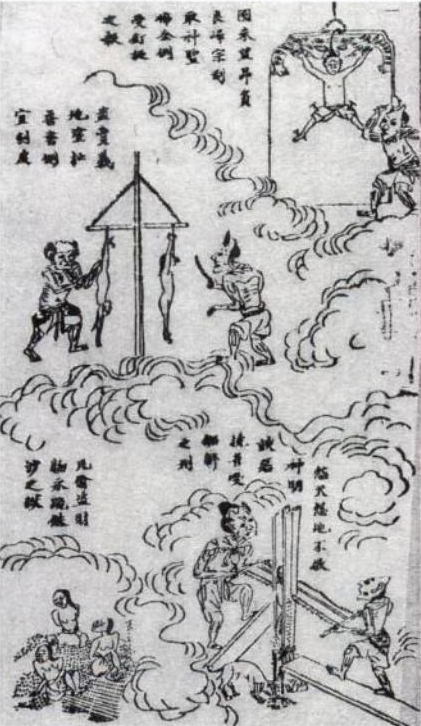
Presides over one of the ten courts of Diyu, each with its own magistrate, clerks and registers of every soul's allotted span and deeds.
The court as everyone imagines it, and a joke at its expense: Monkey is dragged down by the summoners, demands the register of lives, and strikes out his own name and the names of every monkey on his mountain. A novel that can play the underworld's paperwork for laughs is evidence of how thoroughly the system was understood by ordinary readers.
Connections
What is it connected to?
Placement
Where does it sit in the hierarchies?
Answered from the sources
Common questions
Which texts mention Yanluo Wang?
Is Yanluo Wang the same as Yama?
What rank is Yanluo Wang?
How else is Yanluo Wang spelled?
What is Yanluo Wang said to do?
How old is Yanluo Wang?
Nearest in the corpus
If Yanluo Wang is what you came for, these are next
Chosen by proximity rather than by popularity: the same pantheon first, then the same rank, then the same kind of figure.
Gonggong
The Water Lord · Chinese
The Chinese water god who loses a fight and knocks down the pillar holding up the sky — which is why the heavens tilt one way, the rivers run the other, and Nüwa has repairs to make.

Nüwa
Creator Goddess · Chinese
She makes people from yellow earth and patches the broken sky with five-coloured stones. A creator whose defining act is repair.
Xiwangmu
Queen Mother of the West · Chinese
The Chinese goddess who begins as a tiger-toothed sender of plagues in the Classic of Mountains and Seas and ends as the serene keeper of the peaches of immortality — a demotion running backwards.
The Ten Kings
Court of the Dead · Chinese
The Chinese court of the dead — ten magistrates who each hear a case at a fixed interval after death, with clerks, registers and a right of appeal, and Yanluo Wang sitting fifth.
Artemis
Mistress of Animals · Greek
Huntress and protector of the young, whose Ephesian cult statue looks nothing like her and whose temple gave the ancient world one of its most durable protective formulas.
Hades
Lord of the Underworld · Greek
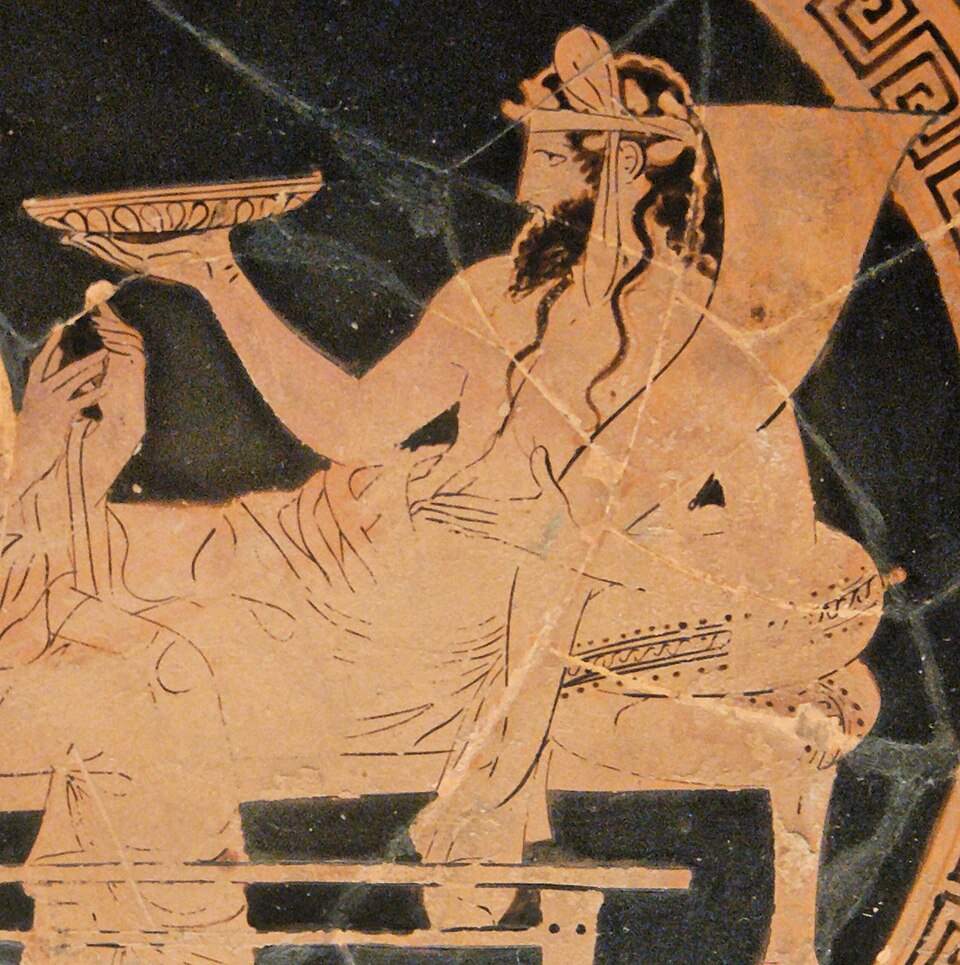
Ruler of the dead by lot rather than by punishment — a god of the underworld who is not evil, a distinction Christian cosmology cannot express.
The books behind Yanluo Wang
Every claim on this profile is attributed to one of these. They are public domain, listed oldest first, and each links to a full text where one is freely available.
The Sutra of the Great Vows of Ksitigarbha
Anonymous; known through the Chinese translation attributed to Siksananda · c. 700 CE · Chinese, from a Sanskrit original
Read The Sutra of the Great Vows of Ksitigarbha in full ↗The Scripture of the Ten Kings
Anonymous Chinese Buddhist · 9th-10th c. CE · Classical Chinese
Read The Scripture of the Ten Kings in full ↗Cover: Public domain · Jonathan D. Spence. God's Chinese Son. New York 1996. Page 40. Copied without permission from · Wikimedia file page
Journey to the West
Attributed to Wu Cheng'en · c. 1592 · Vernacular Chinese
Read Journey to the West in full ↗
Corpus last revised 29 August 2026. A reference site’s credibility rests on being maintained, so this is the date the sourced records last changed — not the date the page was rebuilt.