Buddhist · Chinese, from a Sanskrit original · c. 700 CE
The Sutra of the Great Vows of Ksitigarbha
Anonymous; known through the Chinese translation attributed to Siksananda
The text that fixed the East Asian picture of the afterlife: a bodhisattva who vows to empty the hells before accepting buddhahood, a survey of those hells and their durations, and a court of kings who assess the dead. It is the bridge between the Indian material and the Chinese one — the hungry ghosts of the Pali suttas and the magistrates of the Ten Kings are in the same book here, addressed by the same vow.
Read The Sutra of the Great Vows of Ksitigarbha in full at the linked edition →What this text attests · 4
| Name here | Rank given | # | Powers described |
|---|---|---|---|
The kings of the underworld = The Ten Kings | Assembled before the Buddha | — | The spirit-kings and magistrates of the hells assembled and deferring to the vow of the bodhisattva, which is the court shown to have a superior. |
Yaksas = The Yakkha | Of the assembly | — | Included among the classes of beings assembled to hear the vow, alongside the ghosts and the kings of the hells. |
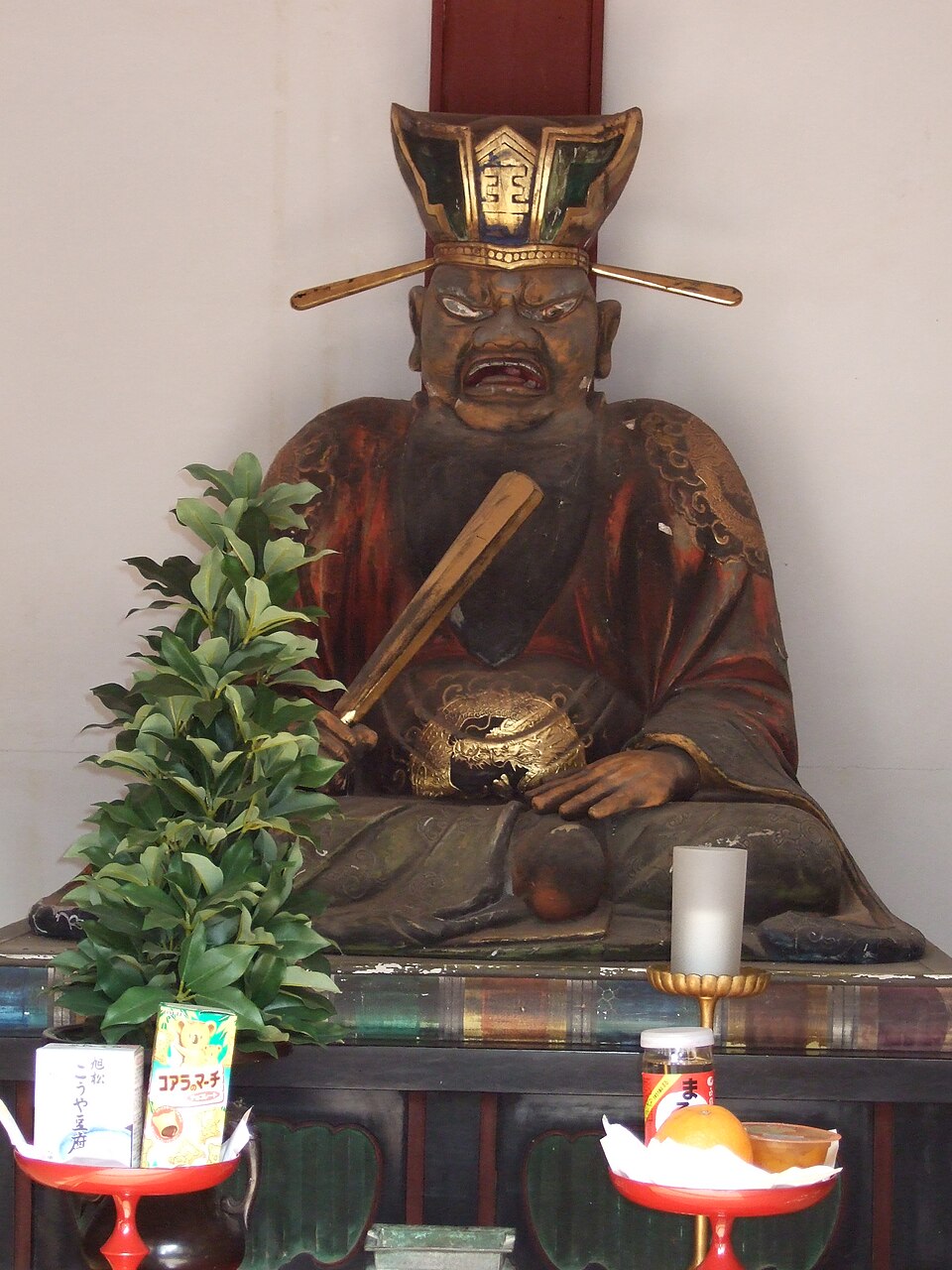 Yama, King of the Law = Yanluo Wang | — | — | In the sutra the king of the dead is a functionary within a Buddhist order rather than its master: he assembles with the other spirit-kings before the Buddha and defers. The corpus's Chinese underworld is a bureaucracy, and this is the text that shows the bureaucracy having a superior. |
hungry ghosts = The Preta | — | — | The hungry ghosts placed inside a mapped afterlife with hells, durations and a bodhisattva vowing not to leave until they are emptied. It is the bridge text for this corpus: the Indian category of the Pali suttas and the Chinese court of magistrates appear in the same book, addressed by the same vow, which is how the idea travelled east. |