seal · from c. 200 CE
The Fu Talisman
A strip of yellow paper carrying characters that are not quite characters — a written order to the spirit bureaucracy, issued under seal.
What the sources claim for it
A written order with legal force in the spirit bureaucracy, valid because of the seal on it.
History
Where does the Fu Talisman come from?
A fu is a talisman written in cinnabar ink on paper, in a script that resembles Chinese writing without being readable as ordinary text. It is issued by an ordained priest, stamped with a seal of office, and then pasted at a door, burned, or dissolved in water and drunk.
The framing is administrative, and deliberately so. Chinese religion organises the other world as a civil service — the same assumption that produces the ten courts of the underworld elsewhere in this corpus — and a fu is a warrant within it. The priest is not coercing a spirit personally; he is exercising a delegated office, which is precisely the claim the Solomonic operator makes with a very different vocabulary.
1 figure
Who is it attached to?
Figures it is used against
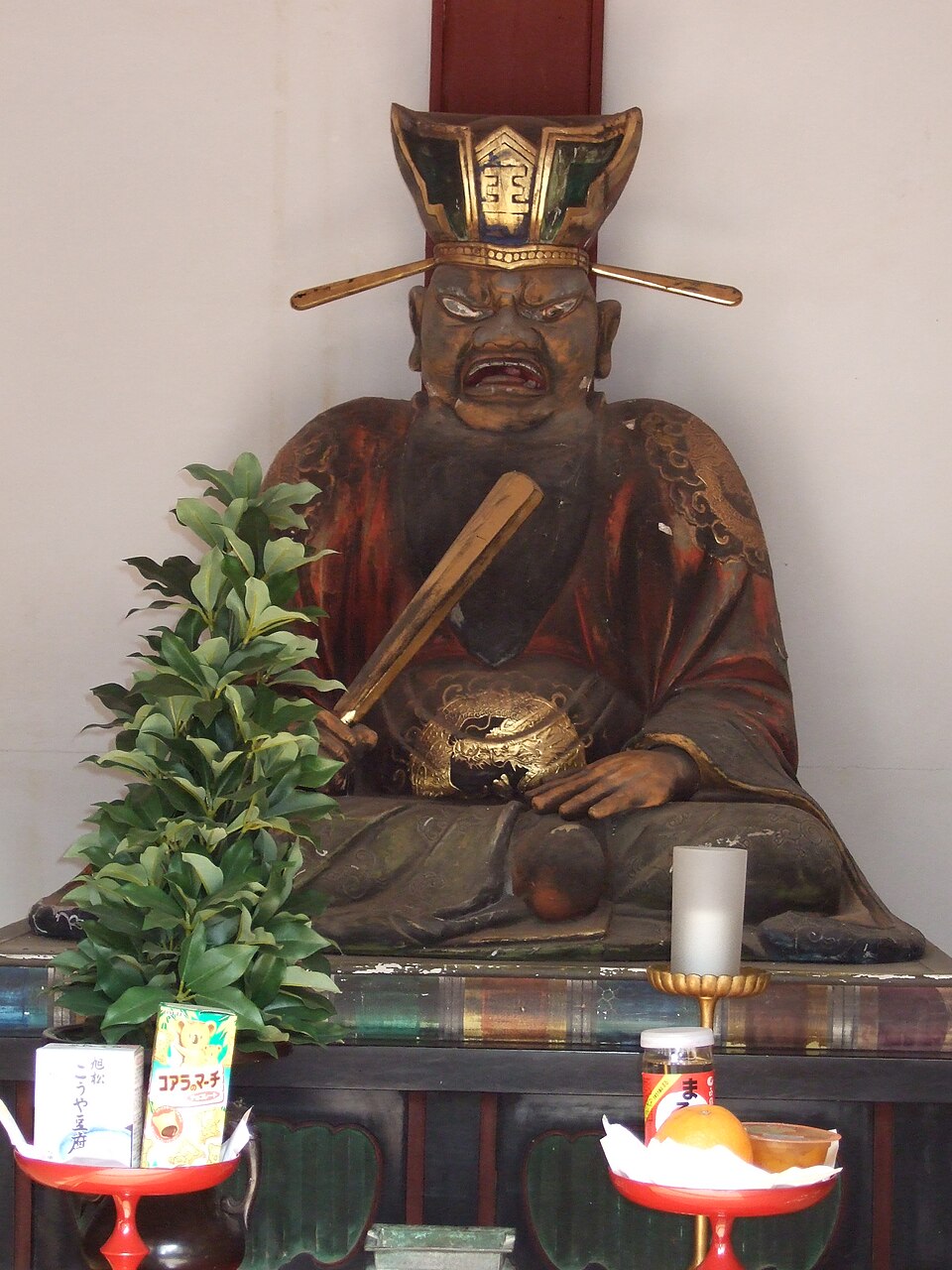
The mark is aimed at them. A ward names its target, which makes these the sharpest attributions on the page.
Afterwards
What did it turn into?
Instantly recognisable worldwide from the jiangshi hopping-vampire films of the 1980s, where the paper strip on the forehead is a fu doing exactly its traditional job.
Which texts describe it?
Oldest first, with what each one does with the mark. A mark described in a Bronze Age incantation and a mark first drawn in a seventeenth-century manuscript are different kinds of claim, whatever the shape has in common.
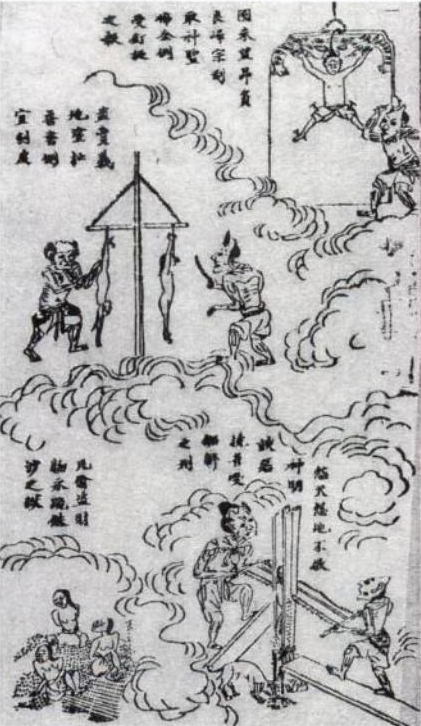
The Scripture of the Ten Kings
Anonymous Chinese Buddhist · 9th-10th c. CE · Classical Chinese
The bureaucratic underworld a talisman of this kind is an instrument within.
Read The Scripture of the Ten Kings in full ↗Cover: Public domain · Jonathan D. Spence. God's Chinese Son. New York 1996. Page 40. Copied without permission from · Wikimedia file page
Nearby
Related marks
The Eight Trigrams
Eight stacks of three broken or unbroken lines — a complete three-bit notation, arranged in a ring and hung over doorways.
The Taijitu
Two interlocking halves, each carrying a dot of the other — a Song-dynasty diagram of a much older idea, not an ancient emblem.
The Was Sceptre
A straight staff with a forked foot and an animal head — and the animal, on the best reading, is Set's.
The Rod and Ring
The objects a seated god hands to a standing king at the top of Hammurabi's stele — most likely a measuring rod and a coiled line.
The Delphic Tripod
A three-legged bronze stand and the seat of the Pythia — the piece of furniture that authorised more Greek political decisions than any assembly.
The Seal of Solomon
A signet ring, not a shape. The Testament of Solomon makes it the instrument by which every demon in the book is compelled to give its name.