seal · c. 2100–1750 BCE
The Rod and Ring
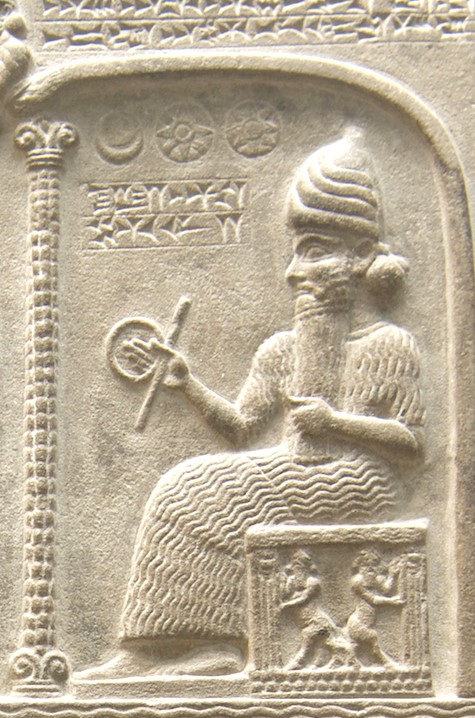
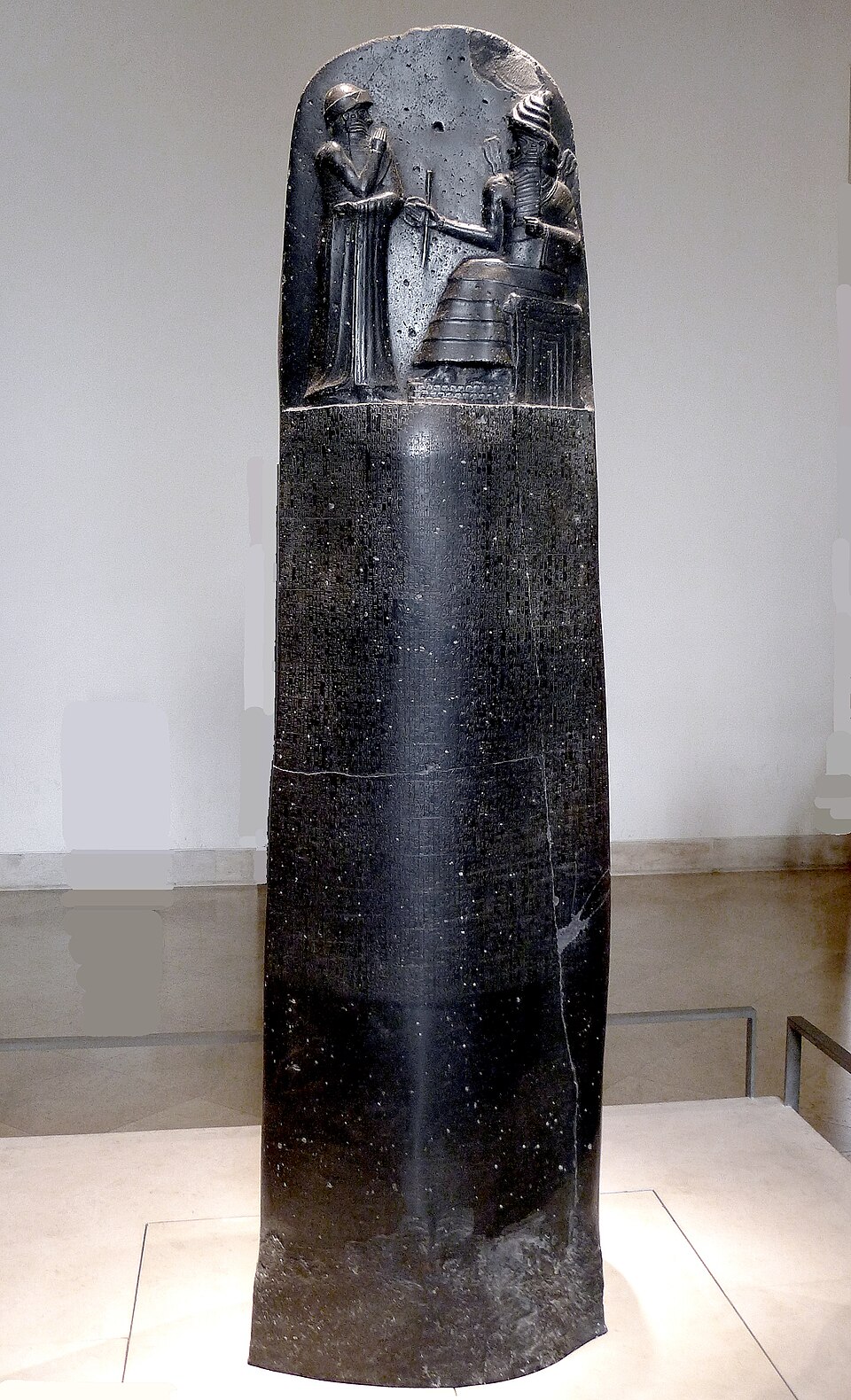
The objects a seated god hands to a standing king at the top of Hammurabi's stele — most likely a measuring rod and a coiled line.
What the sources claim for it
Authority to measure, and therefore to judge. The king receives the instruments; he does not own them.
History
Where does the Rod and Ring come from?
The motif is fixed and formal: an enthroned deity extends a short rod and a ring or coil toward a ruler. It is the top register of the Code of Hammurabi's stele, where Shamash presents them to the king, and it recurs on the Ur-Nammu stele and on seals for six centuries.
What they are is settled enough to state and not settled entirely. The best-supported reading is surveyor's equipment — a measuring rod and a coiled measuring line — which makes the gesture a delegation of the power to lay out, apportion and judge. Older interpretations as a sceptre and a ring of office say much the same thing in different equipment.
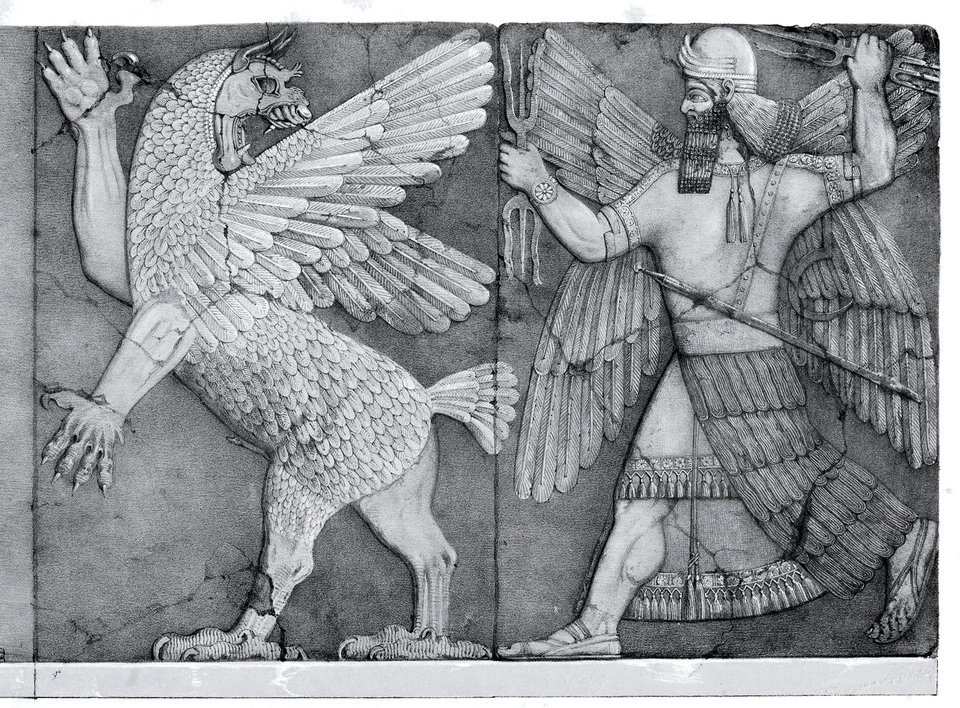
2 figures
Who is it attached to?
Figures who carry it
An attribute rather than a signature — held, worn or associated in the texts and the images.
Afterwards
What did it turn into?
Reproduced constantly in textbooks as the image of divine kingship, and regularly captioned as a sceptre and ring, which understates the specificity of the tools.
Which texts describe it?
Oldest first, with what each one does with the mark. A mark described in a Bronze Age incantation and a mark first drawn in a seventeenth-century manuscript are different kinds of claim, whatever the shape has in common.
The Code of Hammurabi
Hammurabi of Babylon; tr. L. W. King · c. 1750 BCE · Akkadian
The stele's relief: Shamash hands the rod and ring to the king above the laws.
Read The Code of Hammurabi in full ↗Cover: CC BY 3.0 · Mbzt · Wikimedia file page
Nearby
Related marks
The Star of Ishtar
Eight points for the planet Venus, and the standard way of writing a goddess into a scene without drawing her.
The Winged Disc
A sun with wings, borrowed by every empire in the region in turn — and the direct ancestor of the Persian faravahar.
The Spade of Marduk
A builder's tool as a god's signature — Marduk is identified on boundary stones by a spade, not by a weapon.
The Mušḫuššu Dragon
A scaled dragon with a lion's forelegs and an eagle's hind claws, set in glazed brick along the processional way into Babylon.
The Lamassu
A human-headed winged bull carved at palace gates, up to five metres high, and given a fifth leg so it reads correctly from two angles.
The Pazuzu Head
A demon's face worn to keep a demon out — the clearest surviving case of a malevolent spirit hired as a doorman.