protective · c. 2000–500 BCE
The Mušḫuššu Dragon
A scaled dragon with a lion's forelegs and an eagle's hind claws, set in glazed brick along the processional way into Babylon.
What the sources claim for it
Guardianship at a threshold, performed by something that was once on the other side.
History
Where does the Mušḫuššu Dragon come from?
The mušḫuššu is a composite: serpent's head and neck, lion's forelimbs, bird's hind limbs, scorpion tail. It appears in Babylonian art for a millennium and a half, and its most famous setting is the Ishtar Gate, where rows of dragons and bulls in glazed brick line the route into the city.
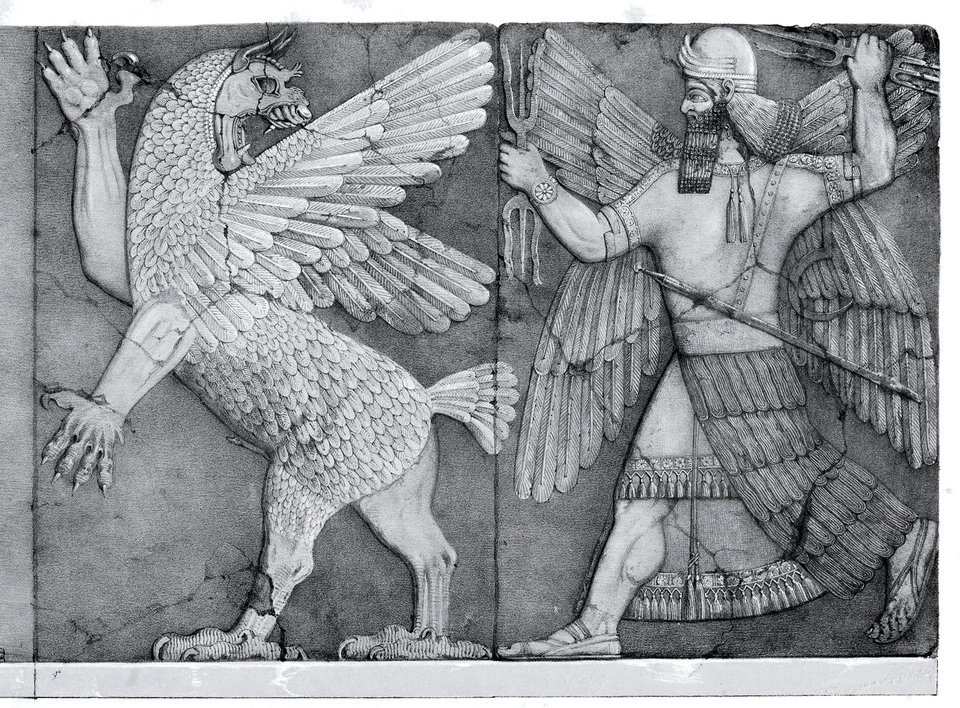
Its allegiance moves with political fortune. It belongs to the god Ninazu, then to Tishpak, and finally to Marduk once Babylon is supreme — a defeated monster taken into service as its conqueror's attendant. That pattern, the enemy retained as an attribute, runs through this corpus repeatedly.
2 figures
Who is it attached to?
Figures who carry it
An attribute rather than a signature — held, worn or associated in the texts and the images.
Figures it is used against
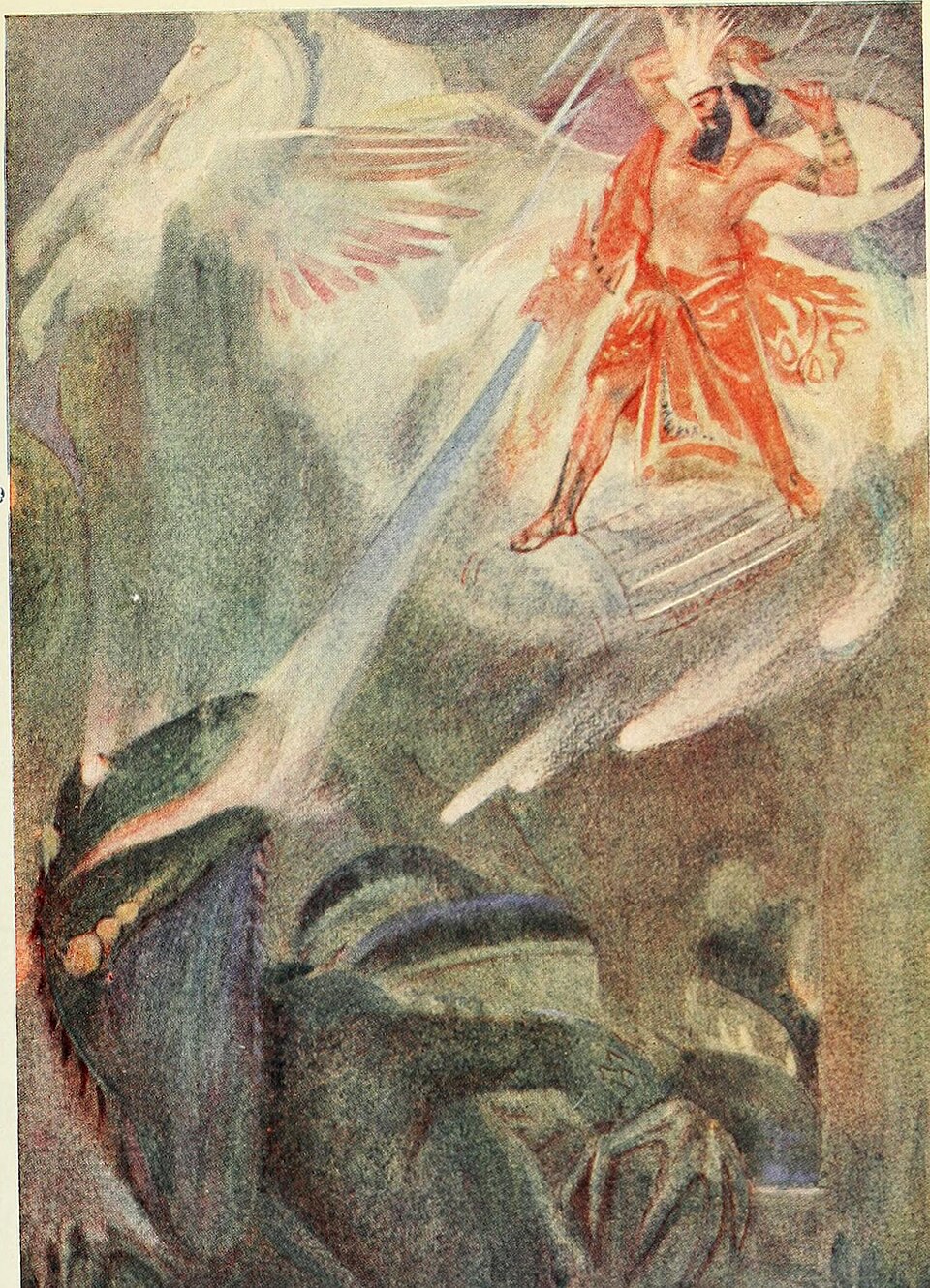
The mark is aimed at them. A ward names its target, which makes these the sharpest attributions on the page.
Afterwards
What did it turn into?
Read in the nineteenth century as evidence for the dragon of Bel in the deuterocanonical Daniel material, and occasionally cited by cryptozoologists as a surviving sauropod, which the composite anatomy rules out on its own terms.
Which texts describe it?
Oldest first, with what each one does with the mark. A mark described in a Bronze Age incantation and a mark first drawn in a seventeenth-century manuscript are different kinds of claim, whatever the shape has in common.
Enuma Elish
Anonymous Babylonian · c. 1100 BCE · Akkadian
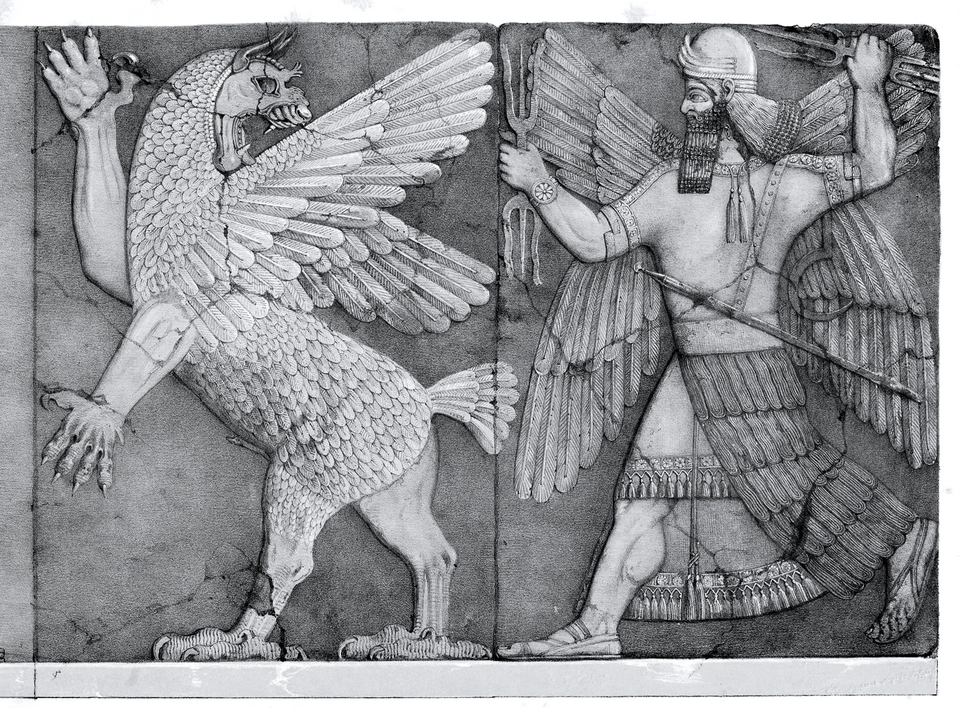
Belongs to the class of monsters the poem has Tiamat bear and Marduk defeat.
Read Enuma Elish in full ↗Cover: Public domain · editor Austen Henry Layard , drawing by L. Gruner · Wikimedia file page
Nearby
Related marks
The Star of Ishtar
Eight points for the planet Venus, and the standard way of writing a goddess into a scene without drawing her.
The Winged Disc
A sun with wings, borrowed by every empire in the region in turn — and the direct ancestor of the Persian faravahar.
The Rod and Ring
The objects a seated god hands to a standing king at the top of Hammurabi's stele — most likely a measuring rod and a coiled line.
The Spade of Marduk
A builder's tool as a god's signature — Marduk is identified on boundary stones by a spade, not by a weapon.
The Lamassu
A human-headed winged bull carved at palace gates, up to five metres high, and given a fifth leg so it reads correctly from two angles.
The Pazuzu Head
A demon's face worn to keep a demon out — the clearest surviving case of a malevolent spirit hired as a doorman.