seal · c. 800 BCE – 390 CE
The Delphic Tripod
A three-legged bronze stand and the seat of the Pythia — the piece of furniture that authorised more Greek political decisions than any assembly.
What the sources claim for it
Oracular authority, tied to one place. The object means what it means because of where it sits.
History
Where does the Delphic Tripod come from?
The tripod was a standard Greek prize and dedication, and at Delphi it became the specific seat on which the Pythia sat to deliver oracles. Depictions of Apollo regularly include it, and disputes over the sanctuary were disputes over who controlled it — Herakles' attempt to steal the tripod is a set piece in vase painting.
Its inclusion here is a reminder that not every symbol in this corpus is drawn. A tripod is a piece of equipment whose meaning came from where it stood, and reproducing the shape elsewhere conveyed a claim on Delphi's authority rather than on anything the shape itself contained.
1 figure
Who is it attached to?
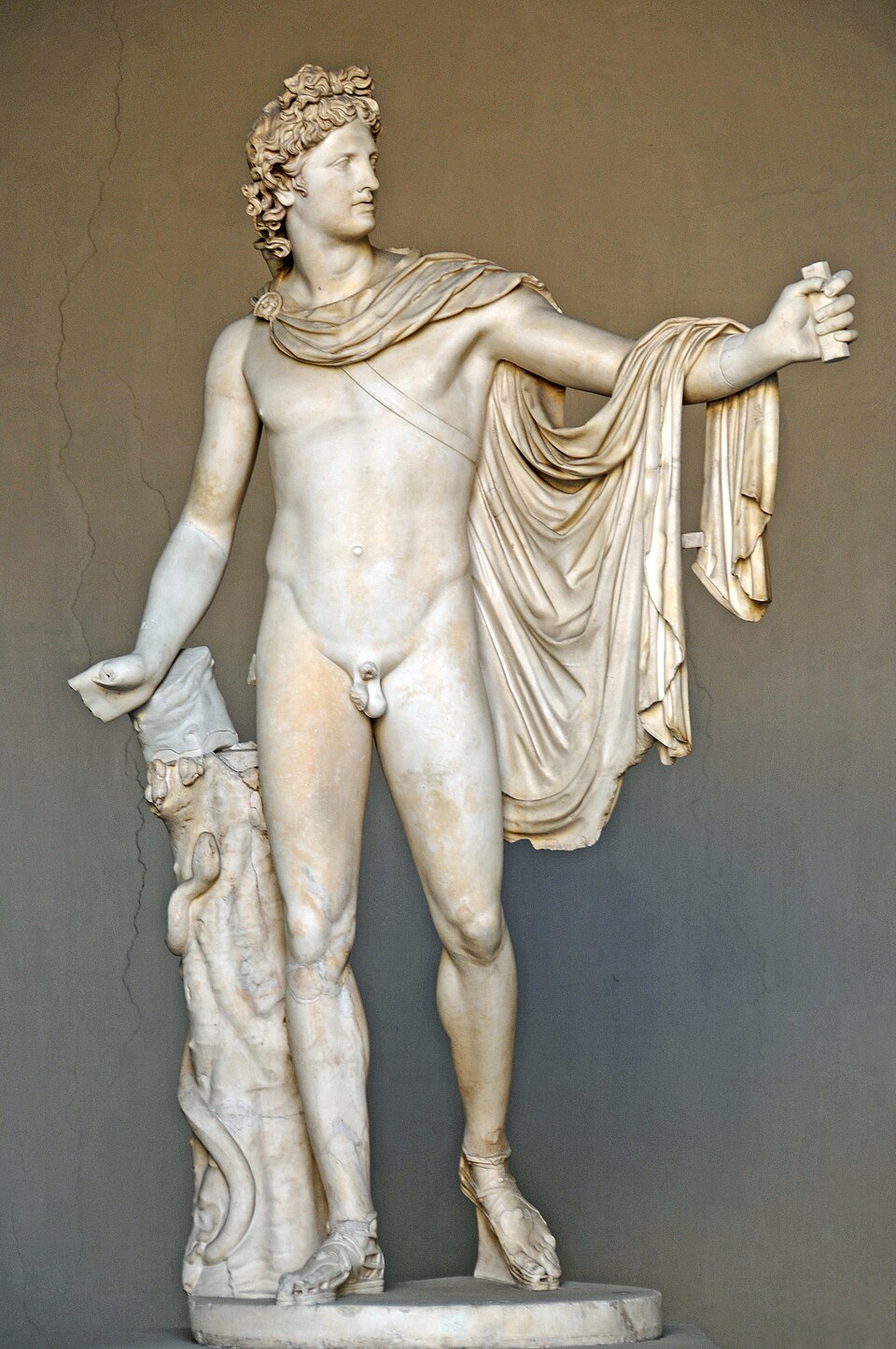
Figures who carry it
An attribute rather than a signature — held, worn or associated in the texts and the images.
Afterwards
What did it turn into?
The three-legged form persists in the language — a 'tripod' of support — and in the neoclassical decorative vocabulary of the eighteenth century, drained of the oracle.
Which texts describe it?
Oldest first, with what each one does with the mark. A mark described in a Bronze Age incantation and a mark first drawn in a seventeenth-century manuscript are different kinds of claim, whatever the shape has in common.
The Oresteia
Aeschylus; tr. E. D. A. Morshead · 458 BCE · Ancient Greek
Apollo's Delphic authority is the hinge of the trilogy's resolution.
Read The Oresteia in full ↗Cover: CC BY-SA 4.0 · Zde · Wikimedia file page
The Histories, Book II
Herodotus; tr. G. C. Macaulay · c. 430 BCE · Ancient Greek
Delphic consultations and dedications run through the Histories as a political instrument.
Read The Histories, Book II in full ↗Cover: Public domain · Unknown · Wikimedia file page
Nearby
Related marks
The Pentagram
A five-pointed star drawn in one unbroken line — an accounting mark, a Pythagorean password, a Christian emblem of the five wounds, and only recently a sign of evil.
The Swastika
An auspicious mark used continuously for four and a half thousand years across most of the world, and destroyed as a public sign in the West by twelve years of one European party's use of it.
The Ouroboros
A serpent swallowing its own tail, first drawn around the sun god in an Egyptian tomb and still in use three thousand years later as a diagram of a closed system.
The Nazar
Blue glass with a white and black eye at its centre, worn on the theory that a look can be sent back.
The Gorgoneion
A severed monster's face on a shield, a roof tile, an oven and a coin — the most-produced apotropaic image of the ancient Mediterranean.
The Caduceus
Two snakes twined on a winged staff — the badge of a herald under safe conduct, and, through a filing error, the emblem of American military medicine.