protective · from c. 700 BCE
The Gorgoneion
A severed monster's face on a shield, a roof tile, an oven and a coin — the most-produced apotropaic image of the ancient Mediterranean.
What the sources claim for it
A face that turns harm back on the one who looks. Protection by making the viewer the target.
History
Where does the Gorgoneion come from?
The gorgon's head appears in Greek art before the myth that explains it is fully formed: a frontal face, tusks, protruding tongue, snakes for hair, staring straight out at the viewer. It goes on temple pediments, shields, armour, drinking cups, ovens and coins, and its frontality is the whole mechanism — almost all Greek figures are shown in profile, and this one looks back.
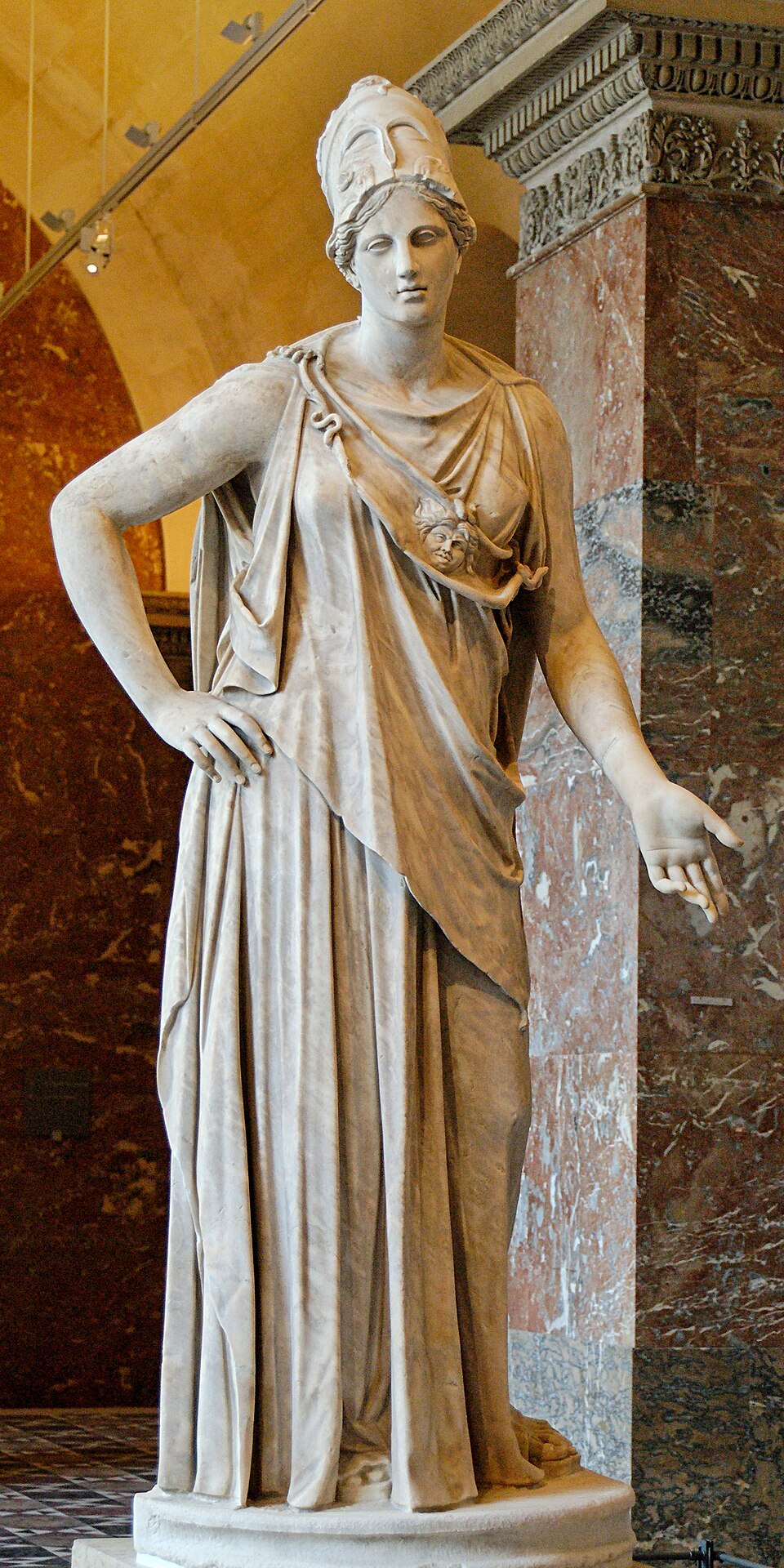
Athena wears it on her aegis, which the myth explains by having Perseus give her the head after killing Medusa. The logic is the same as the Pazuzu head: a thing that petrifies whoever meets its gaze is useful precisely to whoever is standing behind it.
2 figures
Who is it attached to?
Figures who carry it
An attribute rather than a signature — held, worn or associated in the texts and the images.
Figures it is used against
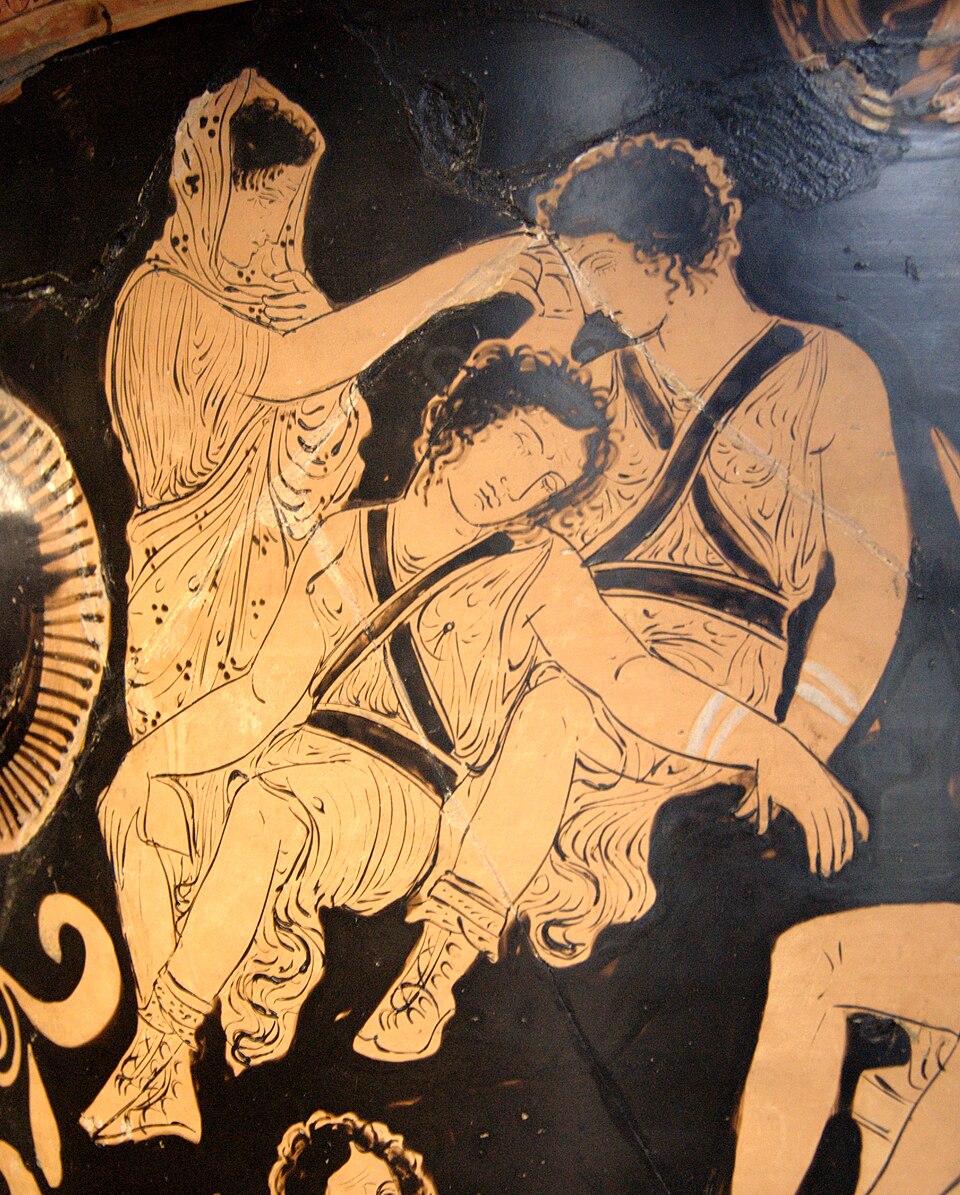
The mark is aimed at them. A ward names its target, which makes these the sharpest attributions on the page.
Afterwards
What did it turn into?
Revived as an aristocratic and then a fashion emblem — most visibly by Versace since 1978 — and reclaimed in feminist art and criticism as an image of rage rather than of monstrosity.
Which texts describe it?
Oldest first, with what each one does with the mark. A mark described in a Bronze Age incantation and a mark first drawn in a seventeenth-century manuscript are different kinds of claim, whatever the shape has in common.
Theogony & Works and Days
Hesiod · c. 700 BCE · Ancient Greek
Hesiod gives the Gorgons their genealogy and Medusa her mortality.
Read Theogony & Works and Days in full ↗Cover: Public domain · Hesiod · Wikimedia file page
The Oresteia
Aeschylus; tr. E. D. A. Morshead · 458 BCE · Ancient Greek
Gorgon-like imagery is used of the Furies when they are described on stage.
Read The Oresteia in full ↗Cover: CC BY-SA 4.0 · Zde · Wikimedia file page
Nearby
Related marks
The Ephesia Grammata
Six meaningless Greek words, said to have been written on the statue of Artemis at Ephesus, and spoken or worn as protection for a thousand years.
The Hand of Sabazios
A bronze right hand raised in blessing, crowded with small figures — a pine cone, a snake, a frog, a lizard — mounted on a pole and carried in the rites of a Thracian god at Rome.
The Pentagram
A five-pointed star drawn in one unbroken line — an accounting mark, a Pythagorean password, a Christian emblem of the five wounds, and only recently a sign of evil.
The Swastika
An auspicious mark used continuously for four and a half thousand years across most of the world, and destroyed as a public sign in the West by twelve years of one European party's use of it.
The Nazar
Blue glass with a white and black eye at its centre, worn on the theory that a look can be sent back.
The Caduceus
Two snakes twined on a winged staff — the badge of a herald under safe conduct, and, through a filing error, the emblem of American military medicine.