What the sources claim for it
Safe passage and negotiation. The bearer may cross a boundary that would otherwise kill him.
History
Where does the Caduceus come from?
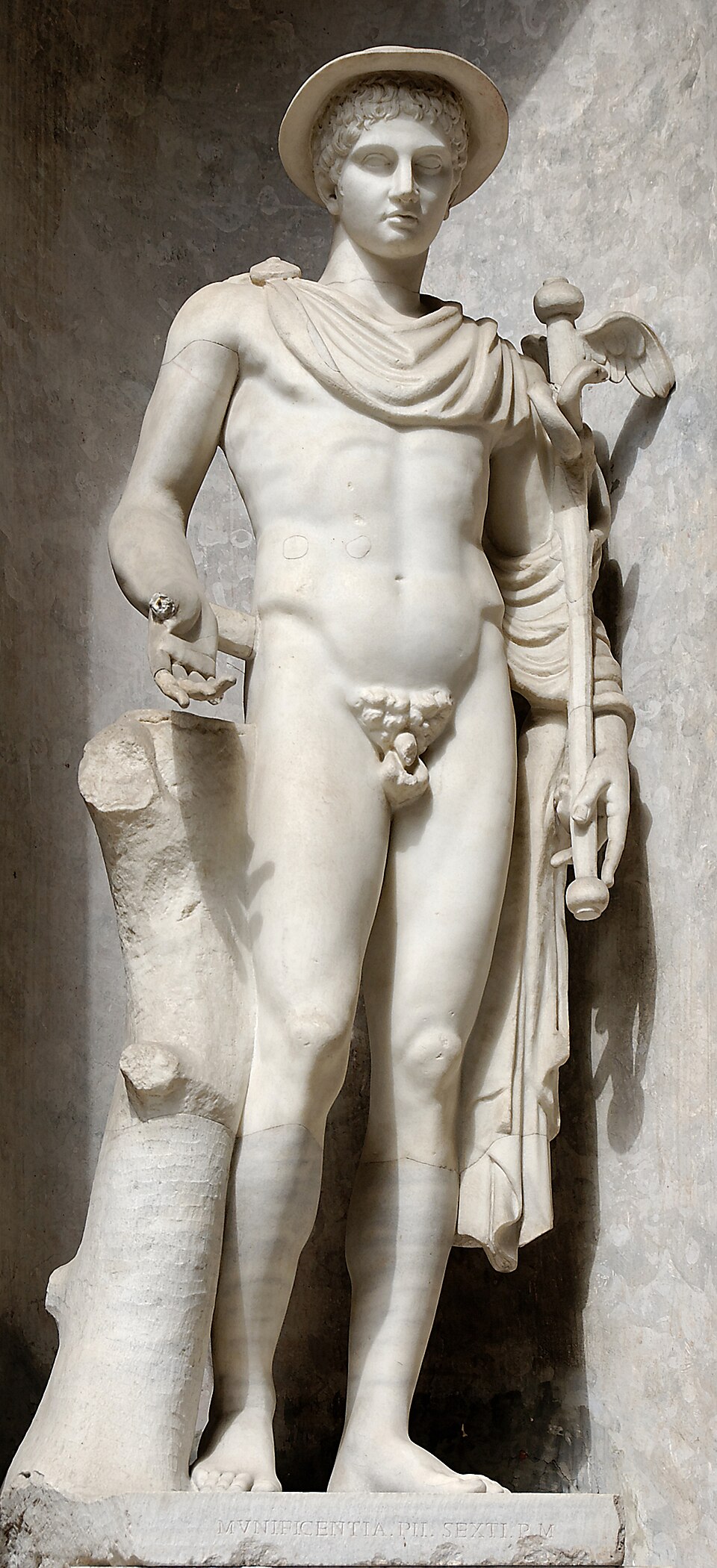
The kerykeion is the staff carried by heralds, and Hermes carries it because he is the gods' herald. A herald bearing it could pass through hostile territory unharmed, which makes it a mark of inviolable passage rather than of healing. Comparable twined-serpent staffs are attested much earlier in Mesopotamia.
The medical association is a mistake with a date. The Rod of Asclepius — one snake, no wings — is the genuine healing emblem. In 1902 the US Army Medical Corps adopted the caduceus instead, apparently on one officer's preference, and American medical branding has been split between the two ever since. Elsewhere the single-snake rod remains standard.
2 figures
Who is it attached to?
Figures who carry it
An attribute rather than a signature — held, worn or associated in the texts and the images.
Figures it is used against
The mark is aimed at them. A ward names its target, which makes these the sharpest attributions on the page.
Afterwards
What did it turn into?
Now read almost everywhere as 'medicine', and also, entirely appropriately to its origin, as an emblem of commerce and printing, both of which are Hermes' business.
Which texts describe it?
Oldest first, with what each one does with the mark. A mark described in a Bronze Age incantation and a mark first drawn in a seventeenth-century manuscript are different kinds of claim, whatever the shape has in common.
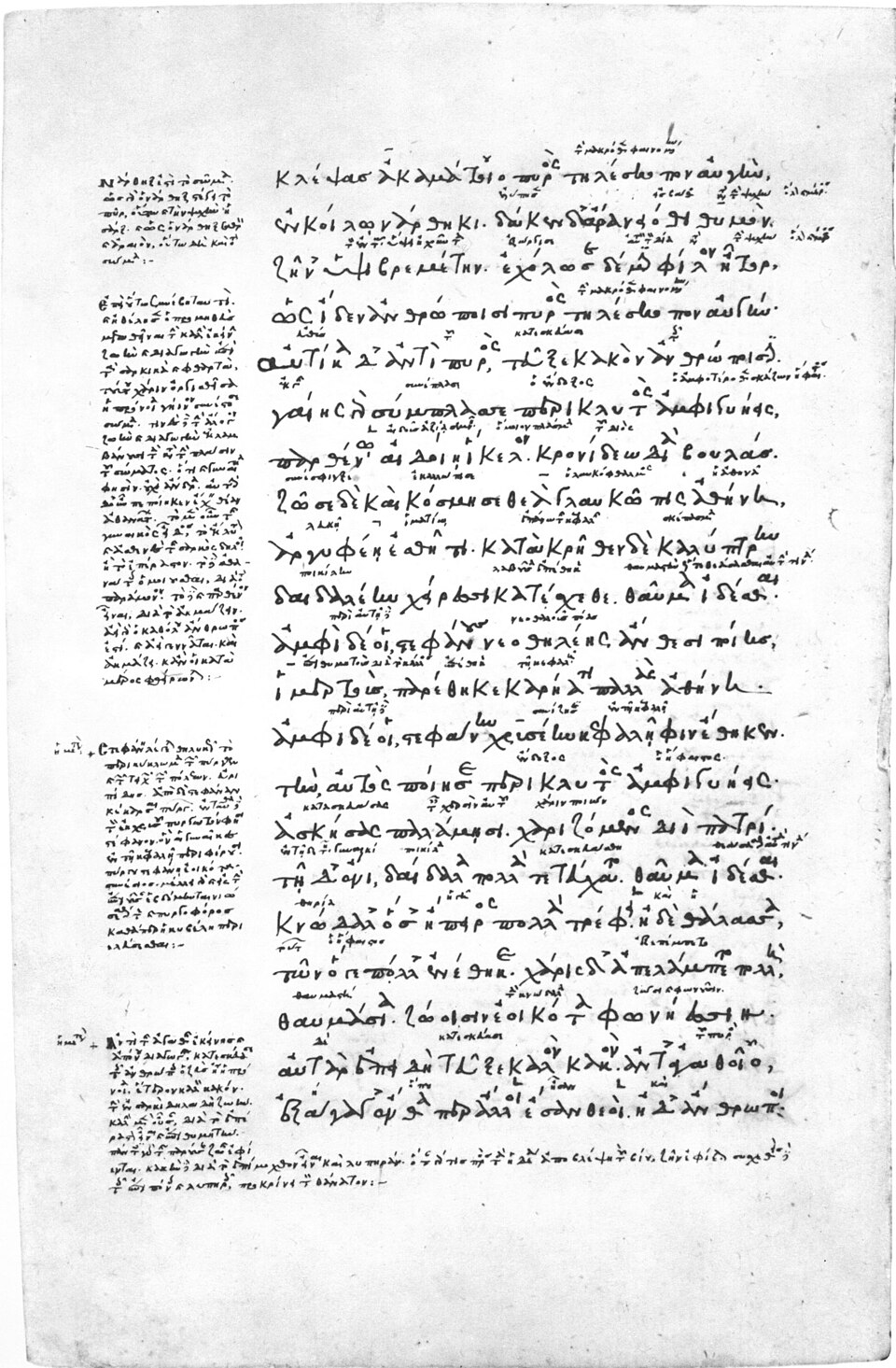
Theogony & Works and Days
Hesiod · c. 700 BCE · Ancient Greek
Hermes in his own pantheon, as messenger and boundary-crosser.
Read Theogony & Works and Days in full ↗Cover: Public domain · Hesiod · Wikimedia file page
Nearby
Related marks
The Gorgoneion
A severed monster's face on a shield, a roof tile, an oven and a coin — the most-produced apotropaic image of the ancient Mediterranean.
The Ephesia Grammata
Six meaningless Greek words, said to have been written on the statue of Artemis at Ephesus, and spoken or worn as protection for a thousand years.
The Hand of Sabazios
A bronze right hand raised in blessing, crowded with small figures — a pine cone, a snake, a frog, a lizard — mounted on a pole and carried in the rites of a Thracian god at Rome.
Saturn
The scythe. Slowest planet, heaviest metal, and the authority a grimoire invokes for work involving binding, decay and the dead.
Jupiter
A stylised Greek zeta for Zeus. The sign of increase, favour and judgment in one's favour — the grimoires' preferred authority for asking.
Mars
Shield and spear, iron, Tuesday — and, since Linnaeus, the biological sign for male, which is a much later and quite separate job.