What the sources claim for it
Increase and favour. The authority under which something is granted.
History
Where does Jupiter come from?
The glyph most likely began as a ligature of zeta, the first letter of Zeus, and the planet keeps the god's brief: rule, expansion, patronage. Its metal is tin, its day Thursday, and its operations are the ones that ask for something rather than prevent something.
Where Saturn's pentacles bind, Jupiter's obtain — riches, honours, the goodwill of the powerful. The pairing of the two is the clearest illustration of how the planetary system encodes intent: choosing a planet is choosing what kind of request is being made.
1 figure
Who is it attached to?
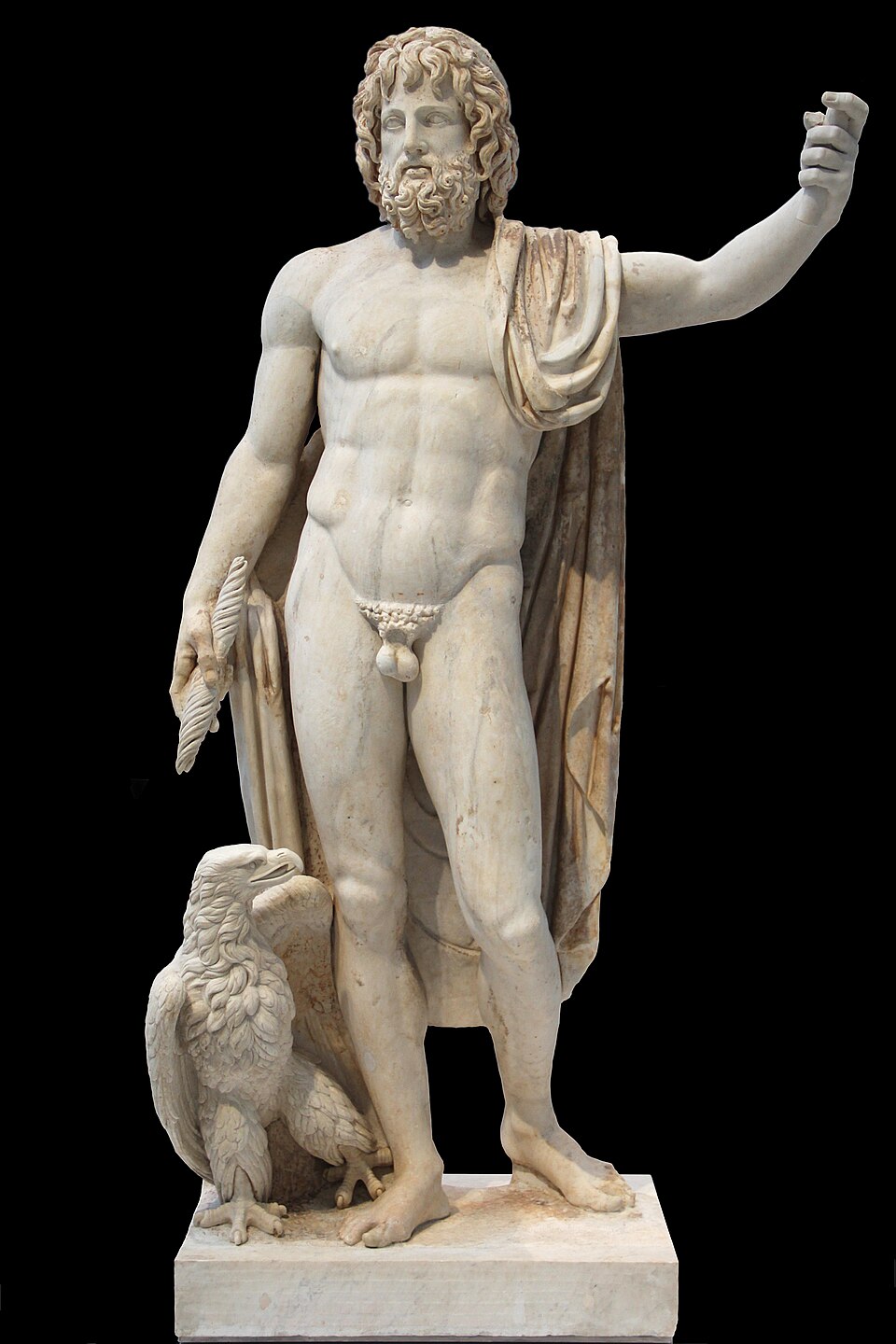
Figures who carry it
An attribute rather than a signature — held, worn or associated in the texts and the images.
Afterwards
What did it turn into?
Standard astronomical notation for the planet, and the alchemical sign for tin.
Which texts describe it?
Oldest first, with what each one does with the mark. A mark described in a Bronze Age incantation and a mark first drawn in a seventeenth-century manuscript are different kinds of claim, whatever the shape has in common.
Renaissance & Early-Modern Occult Angelology
Agrippa, Barrett, and their compilers · 16th-19th c. · Latin and English
Given with its square, its metal and its hours.
Read Renaissance & Early-Modern Occult Angelology in full ↗Cover: Public domain · Otto Rietmann · Wikimedia file page
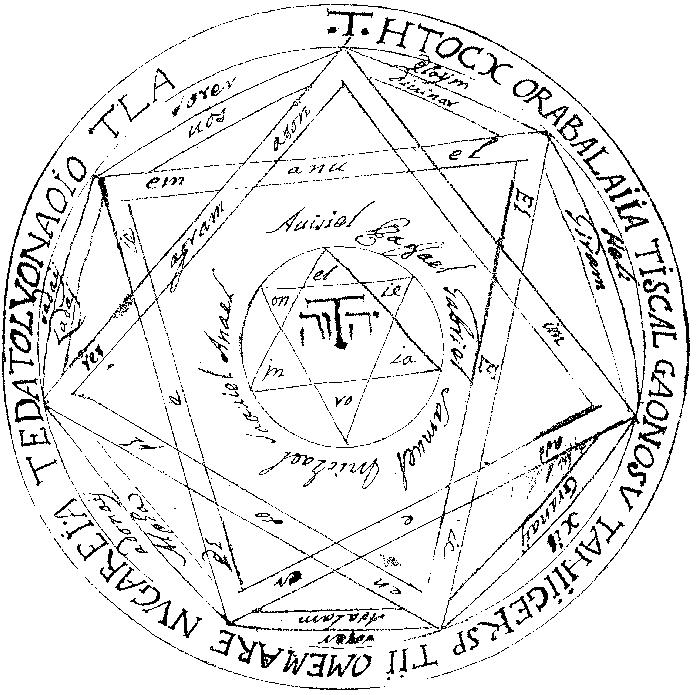
The Key of Solomon (Clavicula Salomonis)
Anonymous; ed. S. L. MacGregor Mathers · 15th-16th c. · Latin and Italian
Pentacles of Jupiter for riches, honours and favour, made in tin.
Read The Key of Solomon (Clavicula Salomonis) in full ↗Cover: Public domain · Unknown author · Wikimedia file page
Nearby
Related marks
Saturn
The scythe. Slowest planet, heaviest metal, and the authority a grimoire invokes for work involving binding, decay and the dead.
Mars
Shield and spear, iron, Tuesday — and, since Linnaeus, the biological sign for male, which is a much later and quite separate job.
The Sun
A circle with a point at its centre — the oldest form in the set, and the one the alchemists used for gold without further explanation.
Venus
Copper, Friday, and every operation to do with love and favour — the counterpart to Mars in the grimoires long before it was in biology.
Mercury
A caduceus drawn as a glyph — the one sign in the set that names a metal, a planet and a god that all behave the same way.
The Moon
A crescent, silver, Monday — the planetary authority for anything involving dreams, water, change and things done at night.