What the sources claim for it
Self-enclosure and renewal — an end joined to its own beginning.
What is it made of?
One creature and one act: the tail in the mouth is the entire content of the symbol.
The closed circle
The serpent
The legend
hen to pan
Ouroboros
- 01
The closed circle — The body joined to itself — no beginning left to point at.
- 02
The serpent — Snake or dragon depending on the manuscript. Egyptian first, drawn around the sun's nightly circuit in the netherworld books.
- 03
The legend · hen to pan — 'All is one', written round the figure in the Chrysopoeia of Cleopatra — the earliest surviving drawing of it with a caption.
History
Where does the Ouroboros come from?
The earliest examples are Egyptian: a serpent encircling the sun god in the Enigmatic Book of the Netherworld and on the shrines of Tutankhamun, marking the boundary of the ordered world and the moment of nightly renewal. Greek and Greco-Egyptian alchemical manuscripts take it up, and the Chrysopoeia of Cleopatra pairs it with the phrase hen to pan — the all is one.
It is the corpus's clearest case of a shape whose meaning stayed stable across cultures that shared very little else: everywhere it appears, it means a cycle that closes on itself. That is unusual. Most marks here changed meaning far more readily than this one did.
2 figures
Who is it attached to?
Figures who carry it
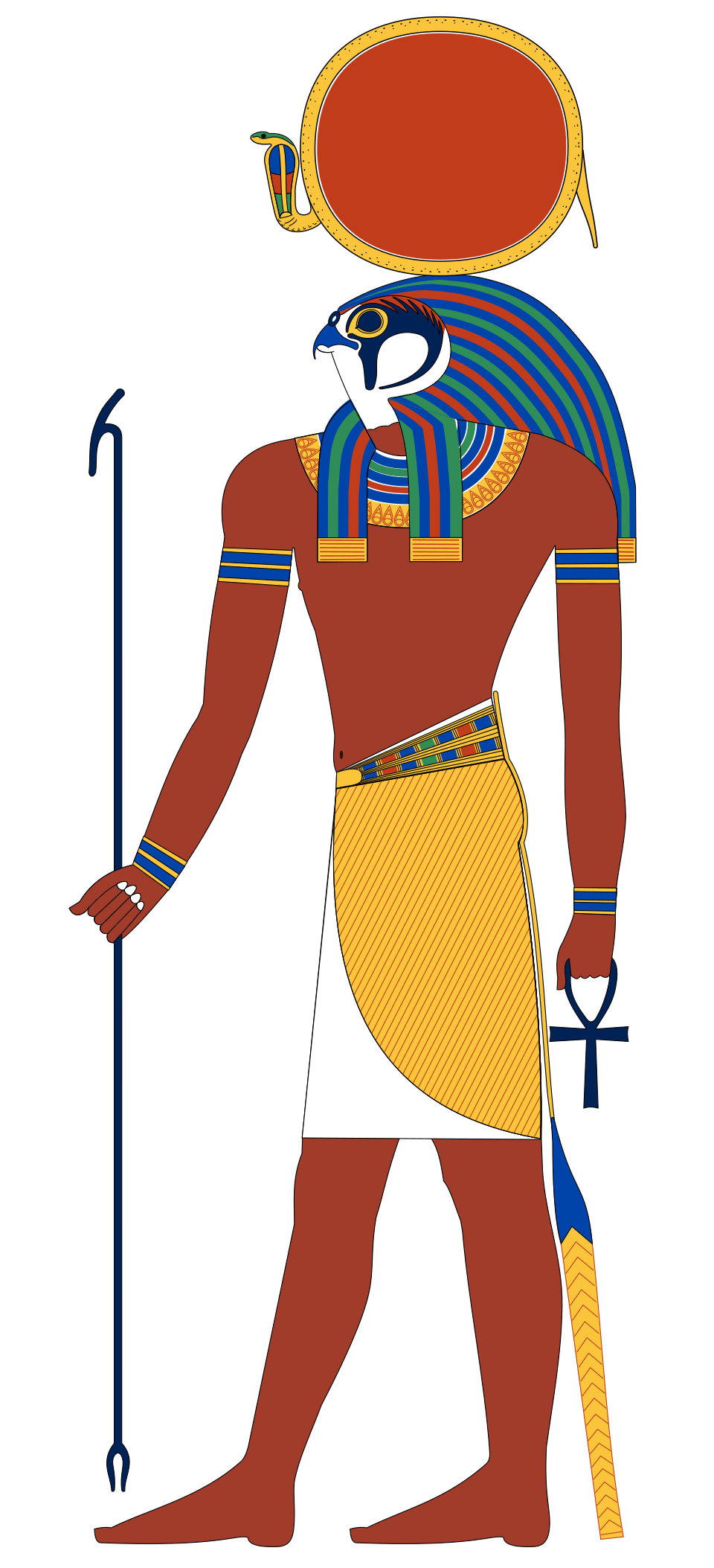
An attribute rather than a signature — held, worn or associated in the texts and the images.
Figures it is used against
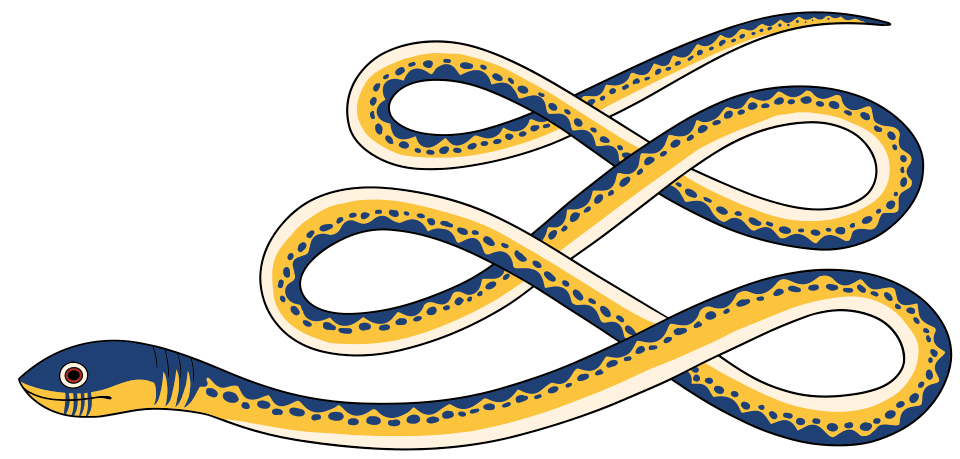
The mark is aimed at them. A ward names its target, which makes these the sharpest attributions on the page.
The larger argument
Why is it in a corpus about spirits?
The ouroboros belongs to the alchemical rather than the operative side, and it is here to keep that boundary visible. The grimoire tradition borrows freely from alchemical notation without borrowing its aims: signs used to write about matter and signs used to act on spirits end up in the same manuscripts and are not the same kind of claim.
Afterwards
What did it turn into?
Standard in alchemical illustration, adopted by Jung as an image of psychic self-integration, and now common in fiction and tattooing wherever a closed loop is the point.
Which texts describe it?
Oldest first, with what each one does with the mark. A mark described in a Bronze Age incantation and a mark first drawn in a seventeenth-century manuscript are different kinds of claim, whatever the shape has in common.
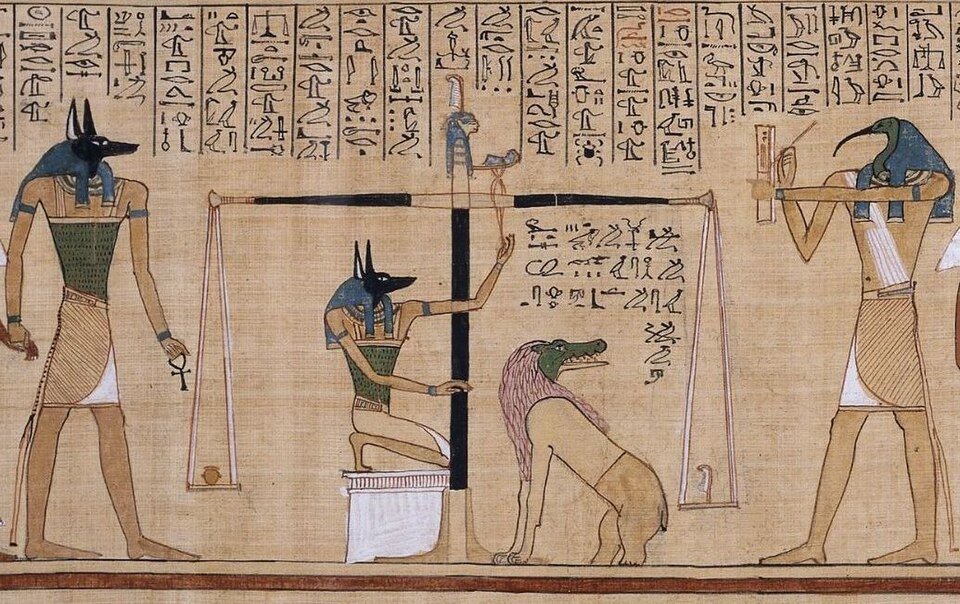
The Egyptian Book of the Dead
Anonymous; tr. E. A. Wallis Budge · c. 1550 BCE onward · Egyptian
Belongs to the same New Kingdom funerary corpus; the encircling serpent guards the boundary of the sun's night journey.
Read The Egyptian Book of the Dead in full ↗Cover: Public domain · Hunefer · Wikimedia file page
Nearby
Related marks
The Abraxas Gem
A rooster-headed figure with snakes for legs, cut into jasper by the thousand, and the numerological reason a magic word means 365.
The Ankh
The sign for 'life', held to the nose of a king by a god. Not an amulet first — a hieroglyph that got carried into three dimensions.
The Djed Pillar
A four-tiered column meaning stability, later read as the backbone of Osiris and raised upright at festival as a resurrection.
The Pentagram
A five-pointed star drawn in one unbroken line — an accounting mark, a Pythagorean password, a Christian emblem of the five wounds, and only recently a sign of evil.
The Was Sceptre
A straight staff with a forked foot and an animal head — and the animal, on the best reading, is Set's.
The Uraeus
A cobra rearing at the front of a crown, understood as the eye of the sun placed where it can spit at whatever approaches the wearer's face.