Tradition
Egyptian
The Egyptian pantheon and its chaos-serpent Apep, a direct parallel to the Semitic sea-dragon.
What is the Egyptian tradition?
Egyptian religion contributes to this corpus in two distinct ways, and conflating them produces most of the nonsense written about it. The first is direct: Apep, the chaos-serpent attacked nightly by the sun and never permanently destroyed, is a genuine parallel to the Semitic sea-dragon and to Leviathan, and the parallel is structural rather than borrowed.
The second is the decans. Thirty-six ten-degree divisions of the sky, each with a governing spirit, pass into Hellenistic astrology and from there into the grimoire tradition wholesale. A significant number of the spirits in later Solomonic lists are decan spirits several transmissions removed from Egypt, with the astronomy stripped out.
What Egyptian religion does not supply is a hell, a devil, or a hierarchy of demons under a single ruler. Those are read back into it by later writers who wanted an antiquity for their own cosmology, and this site keeps the attribution straight.
Which texts does this tradition rest on?
The Pyramid Texts
Anonymous; carved for the kings and queens of the Fifth and Sixth Dynasties · c. 2350–2100 BCE
The oldest religious literature of any length from anywhere, cut into the walls of royal burial chambers at Saqqara and meant for one dead king at a time. Nearly every major figure the later funerary books use is already here, eight centuries before the Book of the Dead, which is the plainest available answer to the suspicion that the Egyptian pantheon is a late tidy-up: the Ennead, the sons of Horus and the opener of the ways are all in place before the Middle Kingdom begins.
23 entries contributed
The Coffin Texts
Anonymous; painted on the coffins of officials and their families · c. 2100–1800 BCE
The middle term between the Pyramid Texts and the Book of the Dead, and the point at which the afterlife stops being a royal privilege: the same apparatus, painted on the coffins of people who were not kings. Around eleven hundred spells survive, including the corpus's earliest sustained account of Heka as a god rather than a force, and the Book of Two Ways, which is the oldest mapped underworld we have.
5 entries contributed
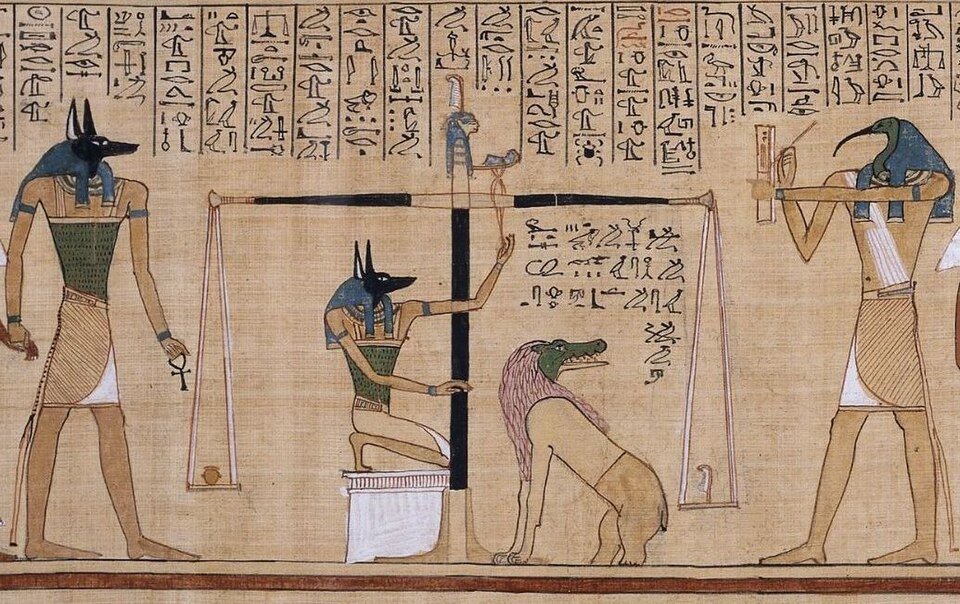
The Egyptian Book of the Dead
Anonymous; tr. E. A. Wallis Budge · c. 1550 BCE onward
Funerary spells for the passage of the dead, including the nightly repulsion of Apep and the weighing of the heart before Osiris.
30 entries contributed
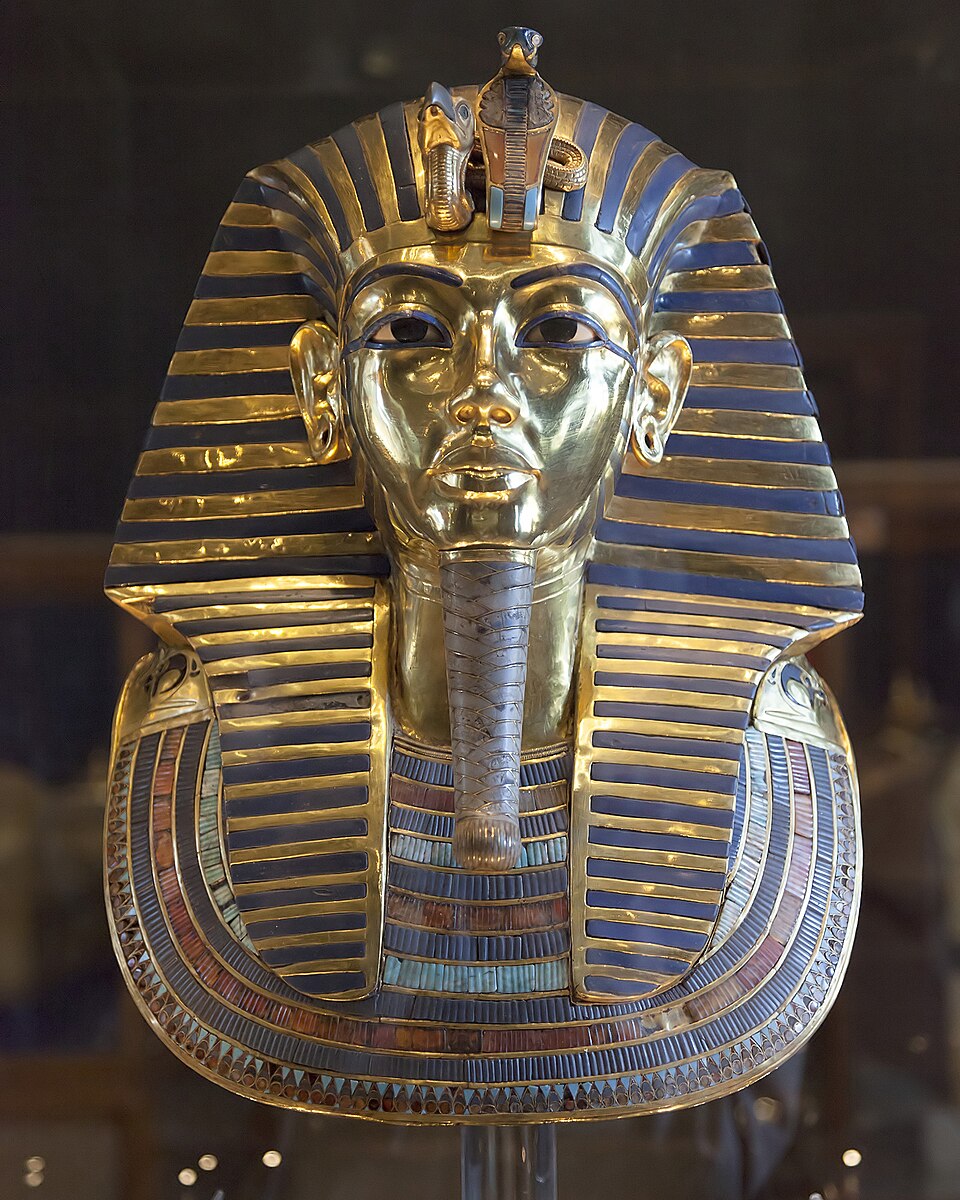
Egyptian Amulets & Domestic Objects
Anonymous; recovered from settlements and burials · c. 2000 BCE onward
Bes and Taweret are barely present in the funerary literature and everywhere in the archaeology of ordinary houses — painted on beds and headrests, worn as pendants. A pantheon reconstructed from temple walls and coffin texts misses the gods people actually lived with.
5 entries contributed
The Book of the Heavenly Cow
Anonymous; from the royal tombs of the Nineteenth and Twentieth Dynasties · c. 1320 BCE
Humanity plots against an ageing Ra, and he sends his Eye against them as Hathor; she kills until the killing is its own appetite, and is stopped only by a flooded field of beer dyed red, which she drinks in mistake for blood. The text is the corpus's best evidence that the Egyptian pantheon knew perfectly well what it had made — a protective goddess and a slaughtering one are the same goddess, and the myth exists to explain how she is turned back.
2 entries contributed
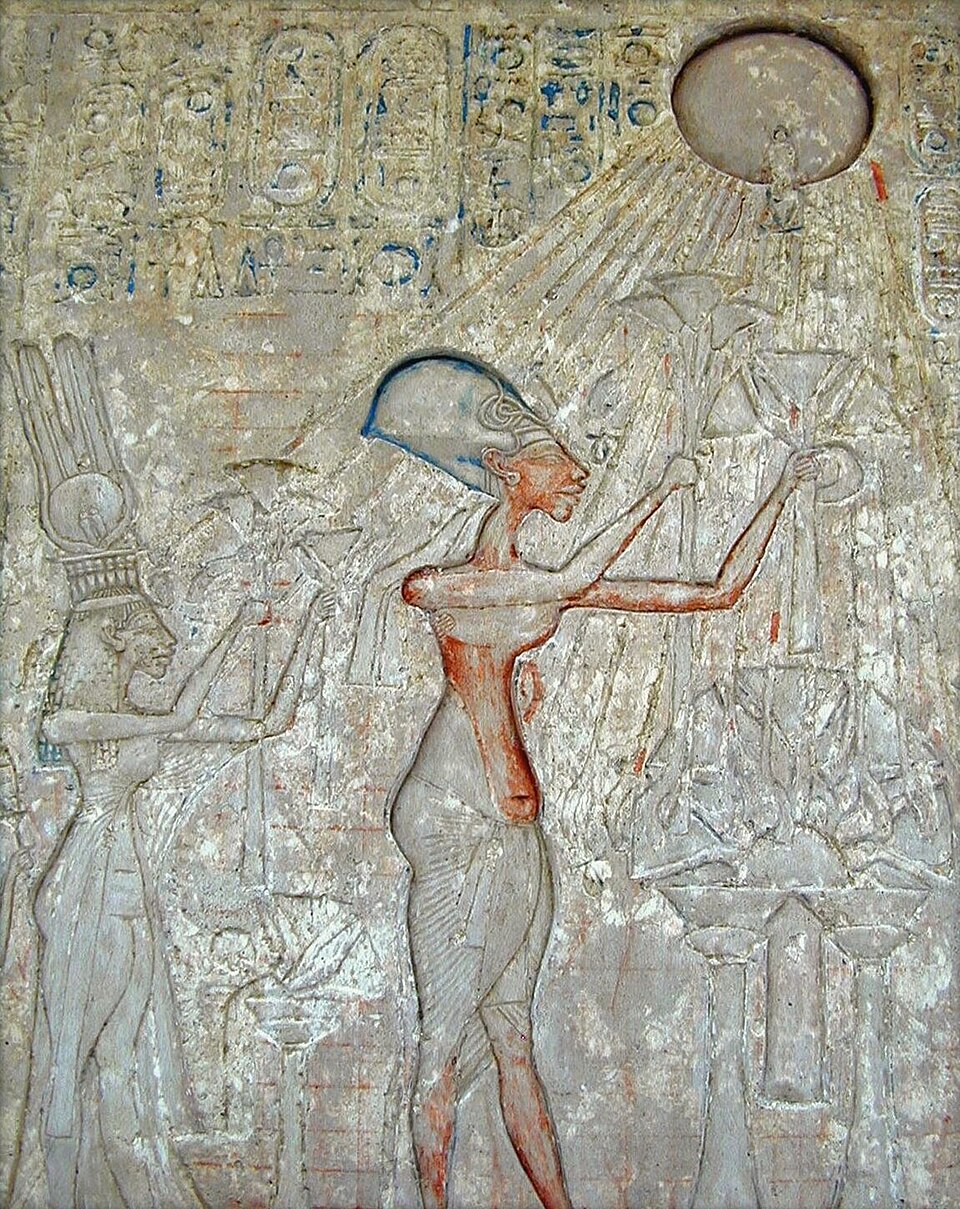
Egyptian Hymns, Stelae & Temple Inscriptions
Various; tr. E. A. Wallis Budge and others · c. 2000 BCE - 300 BCE
Temple hymns, royal stelae and monumental inscriptions — where the Theban triad actually lives. Budge notes in his own edition that Amun, Mut and Khonsu 'have nothing whatever to do with the Book of the Dead', which is a useful reminder that one famous text is not a whole religion.
10 entries contributed
The Contendings of Horus and Set
Anonymous; Chester Beatty Papyrus I · c. 1160 BCE
Eighty years of litigation between Horus and Set, told with a broad comic streak. The tribunal cannot decide, writes to Neith for a ruling, and abides by her answer.
1 entries contributed
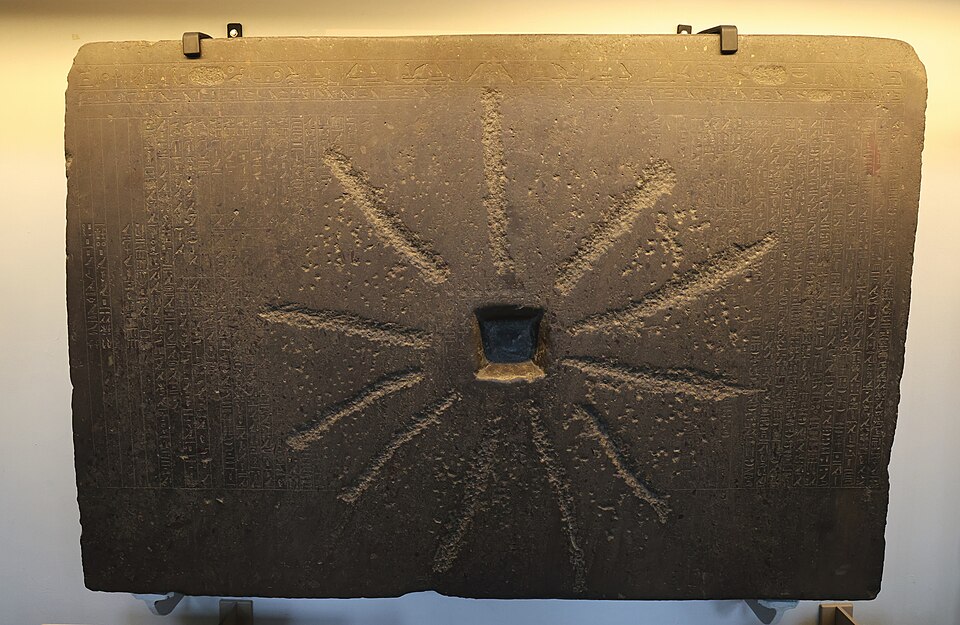
The Shabaka Stone (Memphite Theology)
Anonymous; carved for Shabaka · c. 700 BCE, copying older material
Ptah conceives the world in his heart and brings it into being with his tongue. A theology of creation by naming, carved on a block later reused as a millstone, which is why the middle of the text is destroyed.
1 entries contributed
On Isis and Osiris (De Iside et Osiride)
Plutarch of Chaeronea; tr. from the Moralia · c. 100 CE
A Greek priest of Delphi explaining Egyptian religion to a Greek priestess, and the single most consequential misunderstanding in this corpus's reception history. Plutarch preserves the only continuous ancient narrative of the Osiris myth — the chest, the dismemberment, the search — which no Egyptian text ever tells straight through. He also files Set under the Greek name Typhon and reads him as the principle of evil in a dualist scheme, and that reading, not any Egyptian one, is what Europe inherited and what eventually makes Set available to demonology at all.
8 entries contributed
Which marks belong to it?
Oldest first. A mark used by several traditions appears on each of their pages — which is the point: the shapes crossed these boundaries far more easily than the names did.
The Ankh
from c. 3000 BCE
The sign for 'life', held to the nose of a king by a god. Not an amulet first — a hieroglyph that got carried into three dimensions.
The Djed Pillar
from c. 3000 BCE
A four-tiered column meaning stability, later read as the backbone of Osiris and raised upright at festival as a resurrection.
The Was Sceptre
from c. 3000 BCE
A straight staff with a forked foot and an animal head — and the animal, on the best reading, is Set's.
The Uraeus
from c. 3000 BCE
A cobra rearing at the front of a crown, understood as the eye of the sun placed where it can spit at whatever approaches the wearer's face.
The Wedjat Eye
from c. 2500 BCE
The eye Set tore out and Thoth made whole. Wedjat means 'the sound one' — the amulet is named for the repair, not the injury.
The Winged Disc
from c. 2500 BCE
A sun with wings, borrowed by every empire in the region in turn — and the direct ancestor of the Persian faravahar.
The Feather of Ma'at
from c. 2400 BCE
A single ostrich plume — the counterweight the heart is measured against, and the lightest object in the corpus to carry that much weight.
The Tyet
from c. 2000 BCE
A looped knot cut in red jasper and laid at the throat of the dead, with a spell that puts the protection of Isis around the body.
The Bull
from c. 3000 BCE
The standard way of saying a god is strong — and, at Sinai and at Bethel, the standard way of getting it wrong.
The Heart Scarab
from c. 1700 BCE
A stone beetle laid over the heart, inscribed with an instruction to that heart: do not testify against me.
The Ouroboros
from c. 1600 BCE
A serpent swallowing its own tail, first drawn around the sun god in an Egyptian tomb and still in use three thousand years later as a diagram of a closed system.
The Cippus of Horus
c. 700–100 BCE
A small stela of the child Horus standing on crocodiles, gripping snakes and scorpions, covered front and back in spells — and designed so that water poured over it could be drunk.
The Abraxas Gem
2nd–4th century CE
A rooster-headed figure with snakes for legs, cut into jasper by the thousand, and the numerological reason a magic word means 365.
Who is filed under Egyptian?
Ordered by attestation score — how early and how independent the texts that name each figure are, rather than how famous the figure has since become.
Khepri
The Morning Sun · Egyptian
The sun at dawn, in the form of a scarab beetle rolling it up over the horizon — one of the three daily aspects of the sun, and a pun on the word for coming into being.
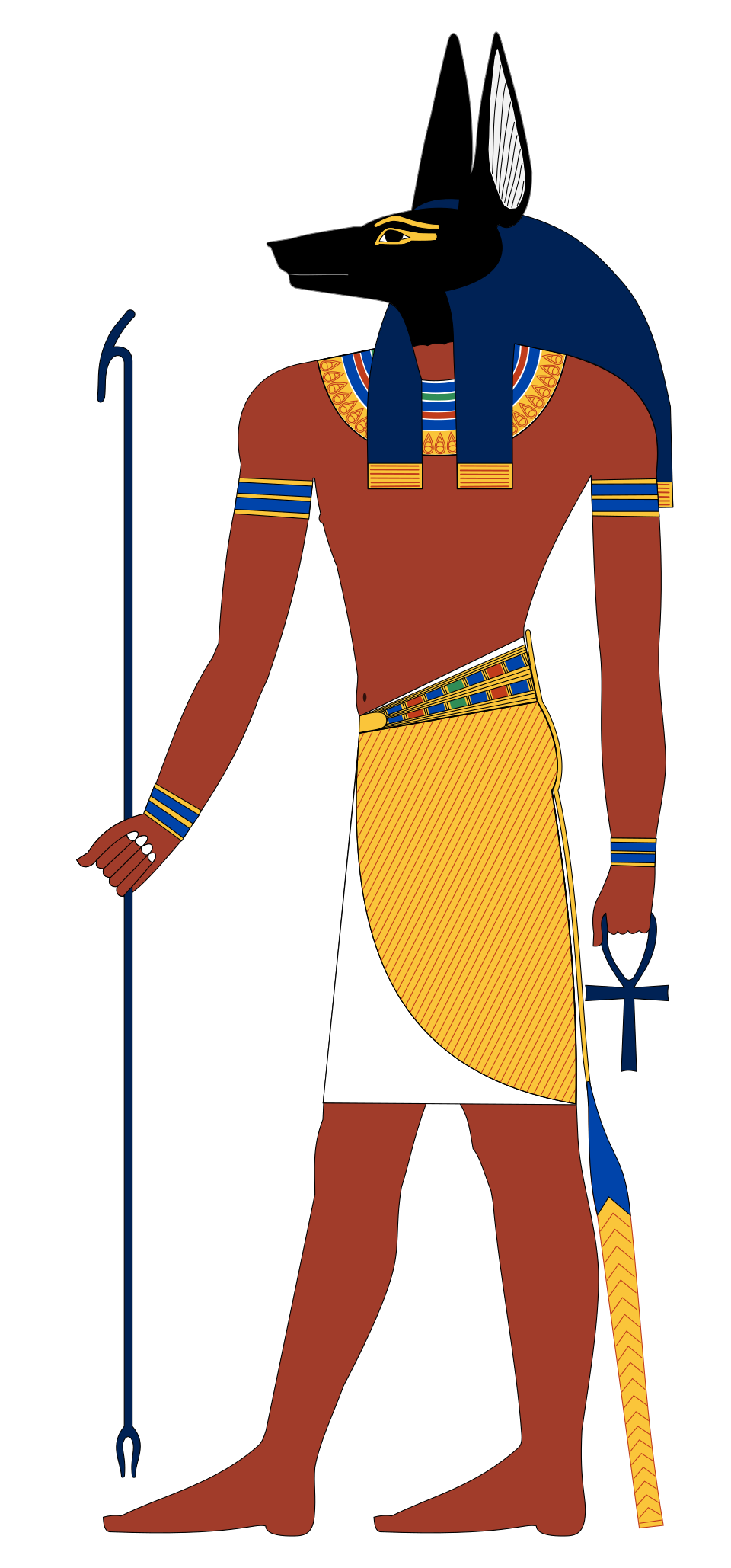
Anubis
Guide of the Dead · Egyptian
Embalmer and psychopomp, who leads the dead to the scales — the office Western tradition eventually gives to Michael and to Azrael.
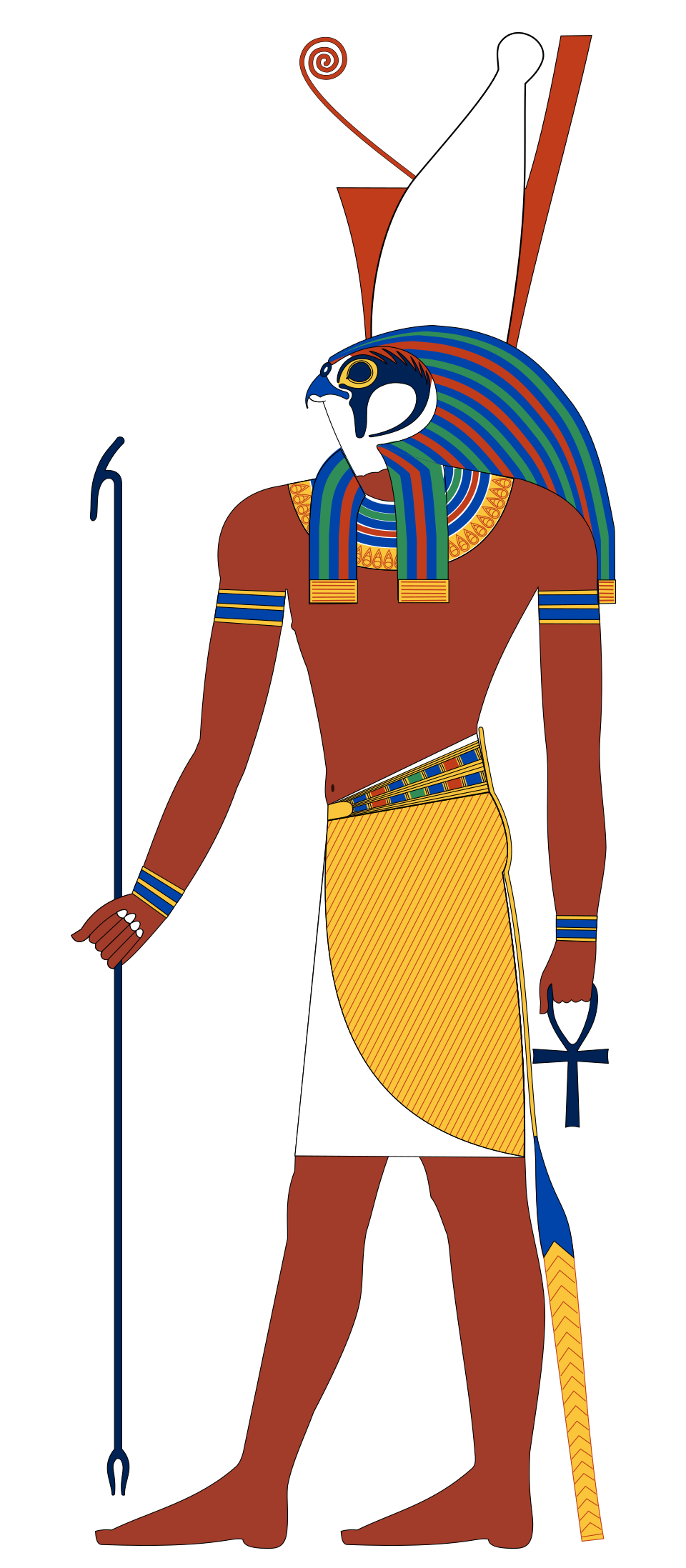
Horus
Falcon King · Egyptian
Son of Osiris, who contends eighty years with Set for the throne. Every living pharaoh was understood to be his incarnation.
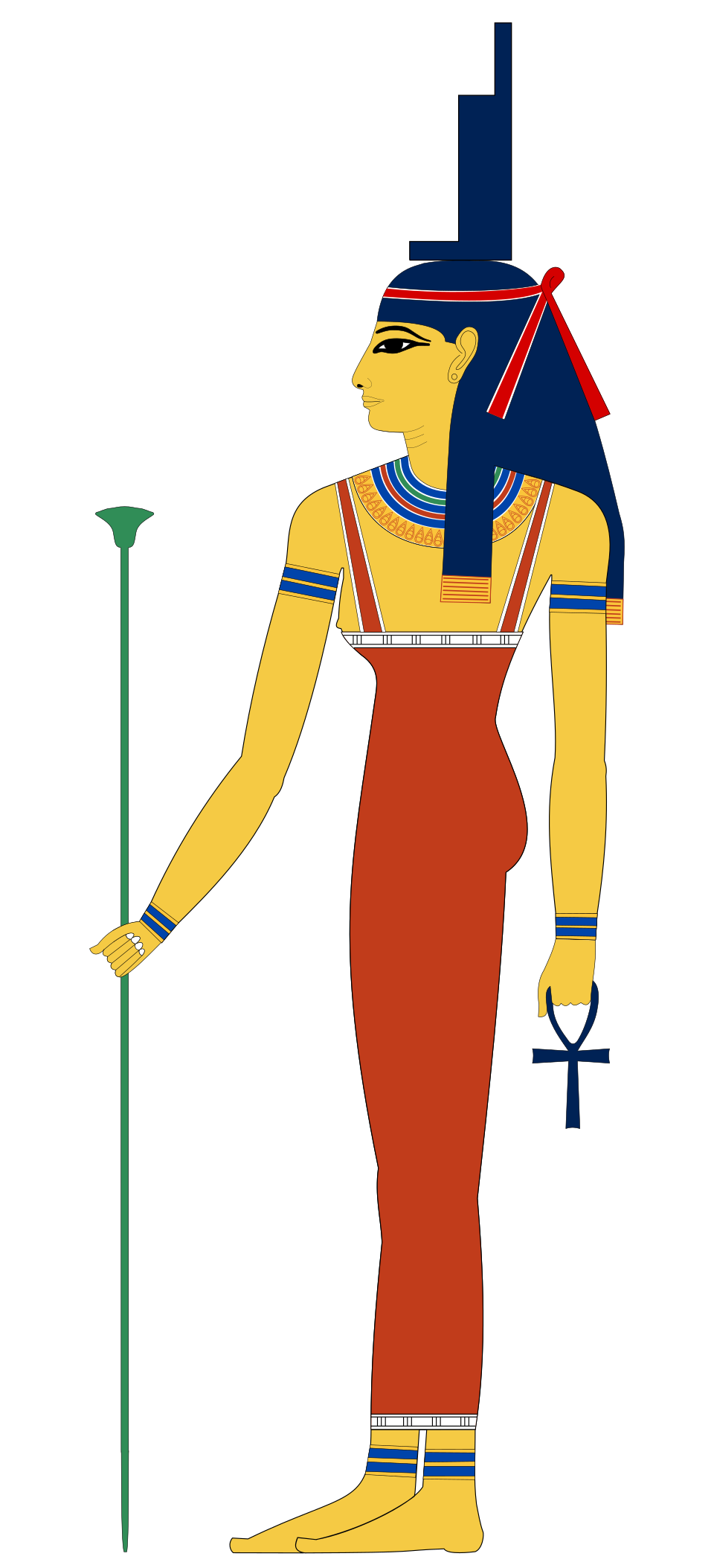
Isis
Great of Magic · Egyptian
The great magician who reassembles Osiris and tricks Ra into surrendering his secret name. Her cult eventually reached as far as Roman Britain.
Nephthys
Lady of the House · Egyptian
Set's wife who sides with her sister Isis against him, and mourns Osiris at the head of the bier.
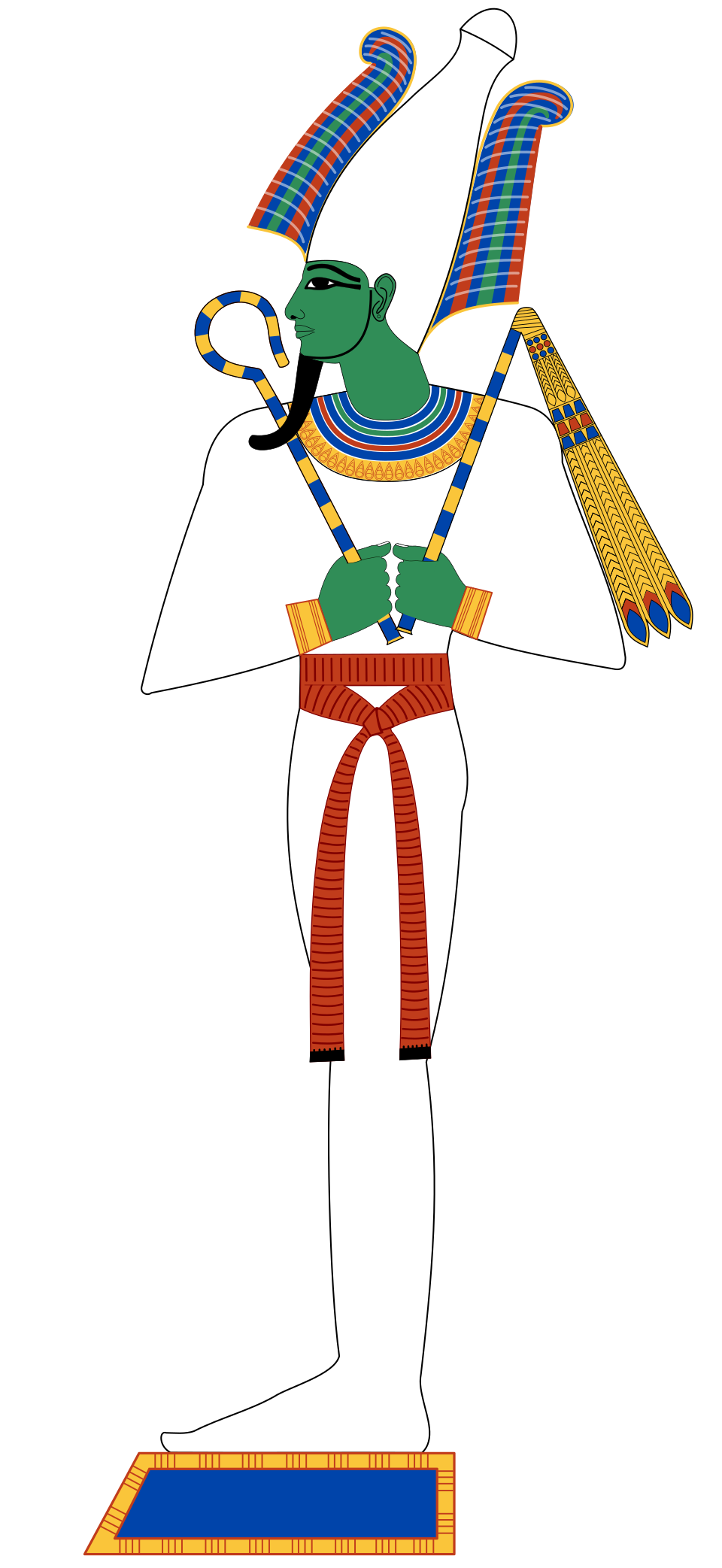
Osiris
Lord of the Dead · Egyptian
Murdered by Set, reassembled by Isis, and installed as judge of the dead. He is the earliest fully developed dying-and-rising sovereign we have.
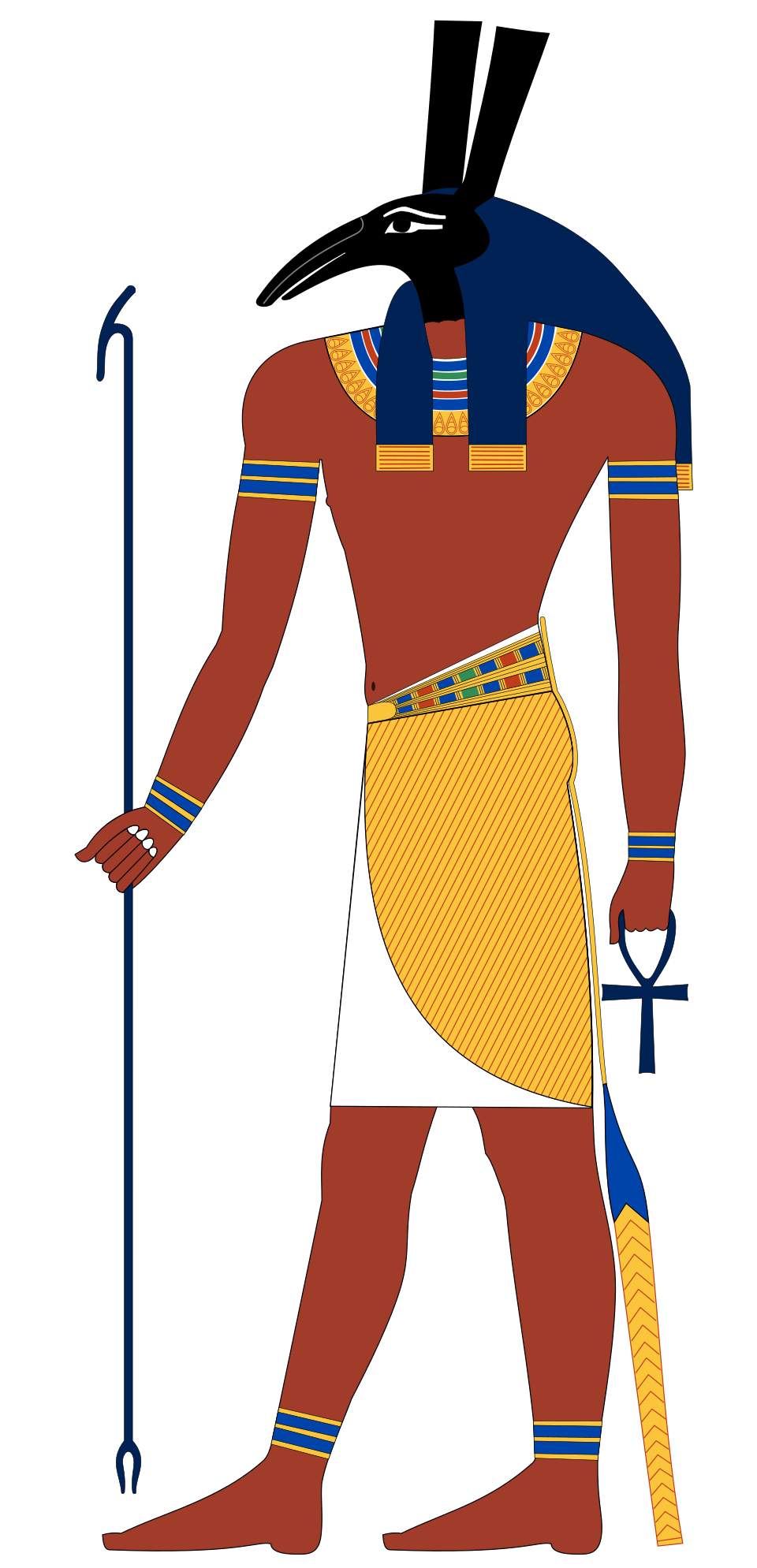
Set
God of Storms and Disorder · Egyptian
Murderer of Osiris and defender of the sun-barque — a god who was worshipped as a royal patron for two millennia before being recast as the enemy.
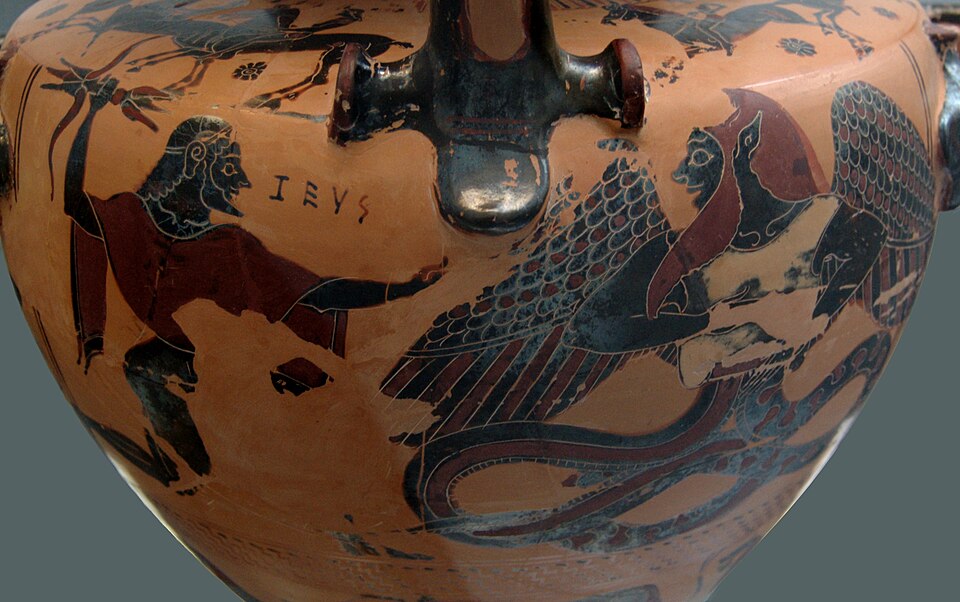
Typhon
Titan of Storms · Greek
The hundred-headed monster who nearly unseats Zeus, identified by the Greeks with Set and echoed in Revelation's dragon.
Aker
Guardian of the Horizon · Egyptian
Two Egyptian lions facing opposite ways — yesterday and tomorrow — with the sun passing between them each night.
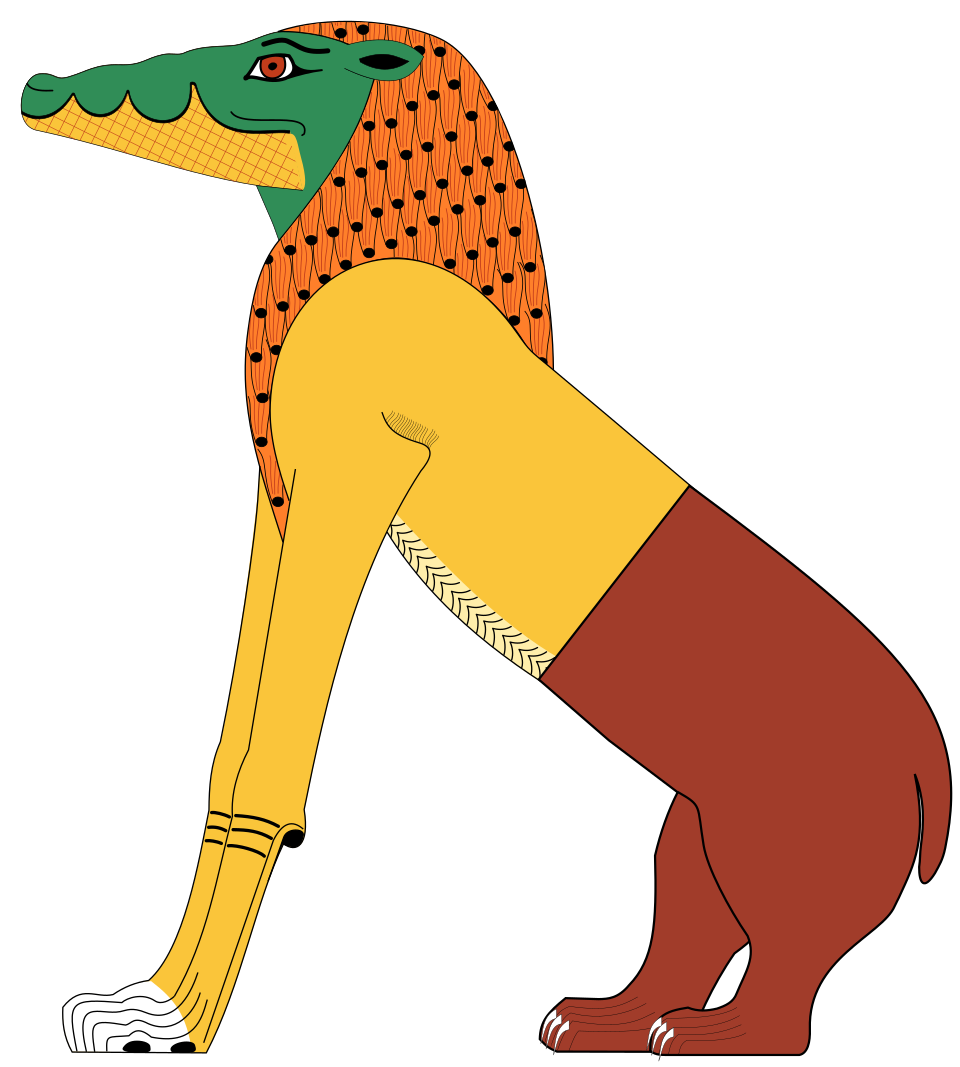
Ammit
Devourer · Egyptian
Waits beside the scales in the Egyptian judgment to eat the hearts that fail the weighing — annihilation rather than torment, which is not the same as hell.
Amun
The Hidden One · Egyptian
His name means 'the hidden' — a god defined by being concealed, who nonetheless became the supreme state deity of the New Kingdom.
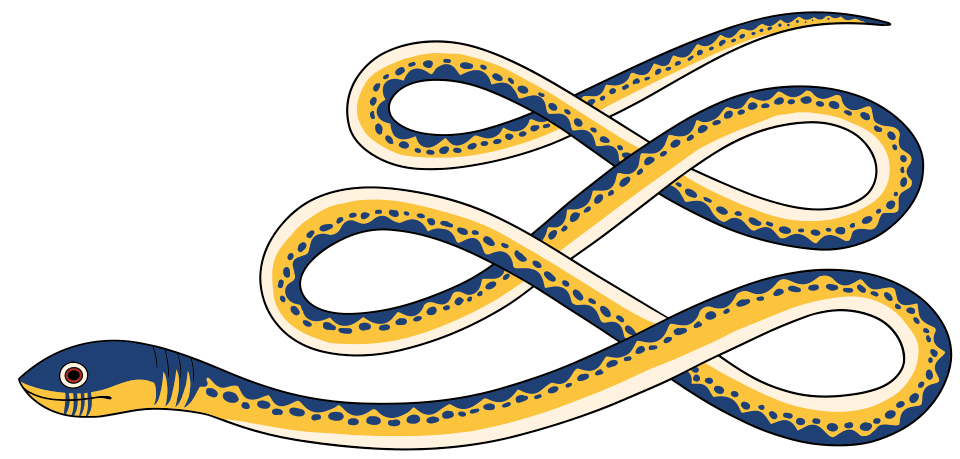
Apep
Serpent of Chaos · Egyptian
The Egyptian chaos-serpent, who attacks the solar barque every night and every night has to be driven off again. Chaos here is a permanent condition, not a defeated enemy.
Atum
The Complete One · Egyptian
The god who made himself out of the waters and then sneezed and spat the next two gods into being.
Bastet
Lady of Bubastis · Egyptian
The gentler face of the lioness — Sekhmet's rage domesticated into a household guardian, and the object of the rowdiest festival in Egypt.
Bes
Household Protector · Egyptian
A grotesque dwarf god who guards bedrooms and births by pulling faces and making noise — shown facing the viewer, which Egyptian art almost never does.
Geb
The Earth · Egyptian
The earth as a male god lying on his back — an inversion of the usual arrangement, since in Egypt the sky is female and the ground is not.
Hapi
The Inundation · Egyptian
The annual Nile inundation as a god: a fat, breasted figure who is neither male nor female because he is not a person but a season that fed a country.
Hathor
Lady of the Sycamore · Egyptian
Goddess of love and music who is also the one who meets the dead at the desert edge — and who, in the Sekhmet story, is the same goddess pacified.
Heka
Magic Personified · Egyptian
Magic itself as a god — the power that makes the gods effective, present at creation before anything was made.
Heqet
Goddess of Birth · Egyptian
The frog-headed goddess of childbirth, whose amulets were worn by pregnant women and whose animal multiplied across Egypt every year as the water went down.
Khnum
The Potter · Egyptian
The Egyptian god who shapes each child and its ka on a potter's wheel before birth — creation as a manual trade rather than a word or an act of will.
Khonsu
The Traveller · Egyptian
Moon god of the Theban triad, sent abroad in one famous text to drive a spirit out of a foreign princess.
Ma'at
Truth and Order · Egyptian
Both a goddess and the principle of order itself — the feather against which every heart is weighed.
Min
Lord of the Eastern Desert · Egyptian
One of the oldest gods in Egypt, patron of fertility and of the desert roads out of Coptos, whose festival opened the harvest with the king cutting the first sheaf.
Neith
Lady of Sais · Egyptian
One of the oldest deities attested in Egypt, a weaver and a warrior who is called on to arbitrate when the gods themselves cannot agree.
Nun
The Primeval Waters · Egyptian
The featureless water that was there before anything, still lying outside the created world and underneath it.
Nut
The Sky · Egyptian
The Egyptian sky-goddess, who swallows the sun each evening and gives birth to it each dawn, so the inside of her body is the night sky the dead travel through.
Ptah
Creator of Memphis · Egyptian
Creates by thinking a thing and then speaking its name — a theology of creation by word that predates Genesis by a long way.
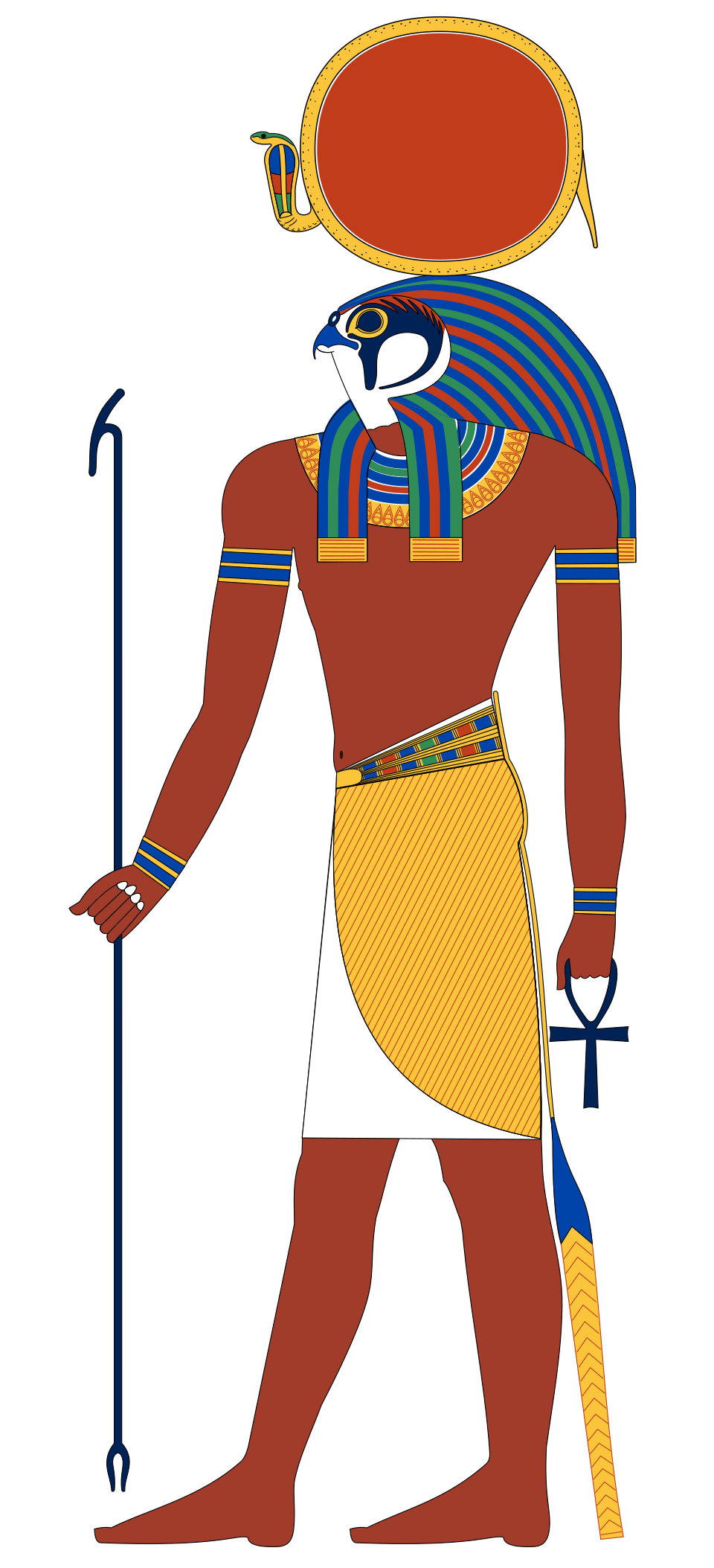
Ra
Sun God · Egyptian
The sun, who sails the sky by day and the underworld by night, fighting off Apep at every crossing.
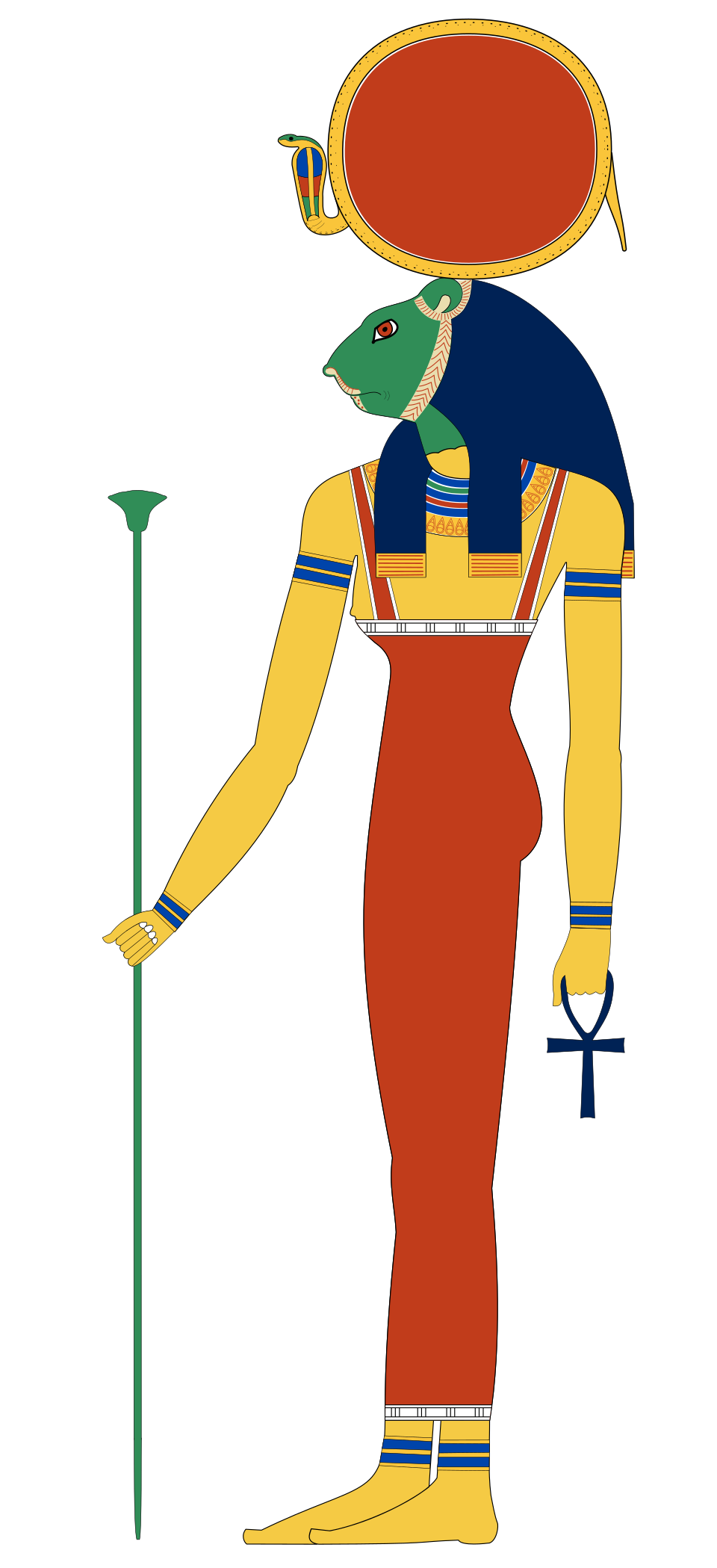
Sekhmet
The Powerful One · Egyptian
Sent by the Egyptian sun-god to destroy humanity, and stopped only by being tricked into drinking beer dyed red. Her priests were physicians: she sends pestilence and she lifts it.
Serqet
Lady of the Scorpion · Egyptian
Goddess of venom and therefore of its cure — her priests were the physicians who treated stings and bites.
Shu
God of Air · Egyptian
The Egyptian god of air, who holds Nut off Geb with his own body — the reason there is a gap between sky and earth at all.
Sobek
Lord of the Waters · Egyptian
The crocodile as a god — feared as a killer and honoured as the power of the river that made Egypt possible.
Tefnut
Goddess of Moisture · Egyptian
Shu's twin and counterpart in the Egyptian ennead, moisture to his air. When she left Egypt in a rage the land dried out until she was coaxed home.
The Forty-Two Assessors
Tribunal of the Duat · Egyptian
Forty-two Egyptian judges of the dead, each responsible for exactly one offence, addressed by name and told 'I have not done it'.
The Four Sons of Horus
Guardians of the Viscera · Egyptian
Four gods, four jars, four organs: liver, lungs, stomach and intestines, each with its own guardian and its own compass direction.
Wadjet
Lady of Lower Egypt · Egyptian
The cobra goddess of Lower Egypt, worn on the king's forehead as the uraeus that spits fire at his enemies, and half of the pairing that made a king ruler of both lands.
Wepwawet
Opener of the Ways · Egyptian
'Opener of the ways' — goes ahead of the army and ahead of the dead, clearing the road before either has to walk it.
Apis
The Living Bull · Egyptian
A single living bull, identified by its markings, kept at Memphis as the visible body of Ptah and buried in a granite sarcophagus with royal honours when it died.
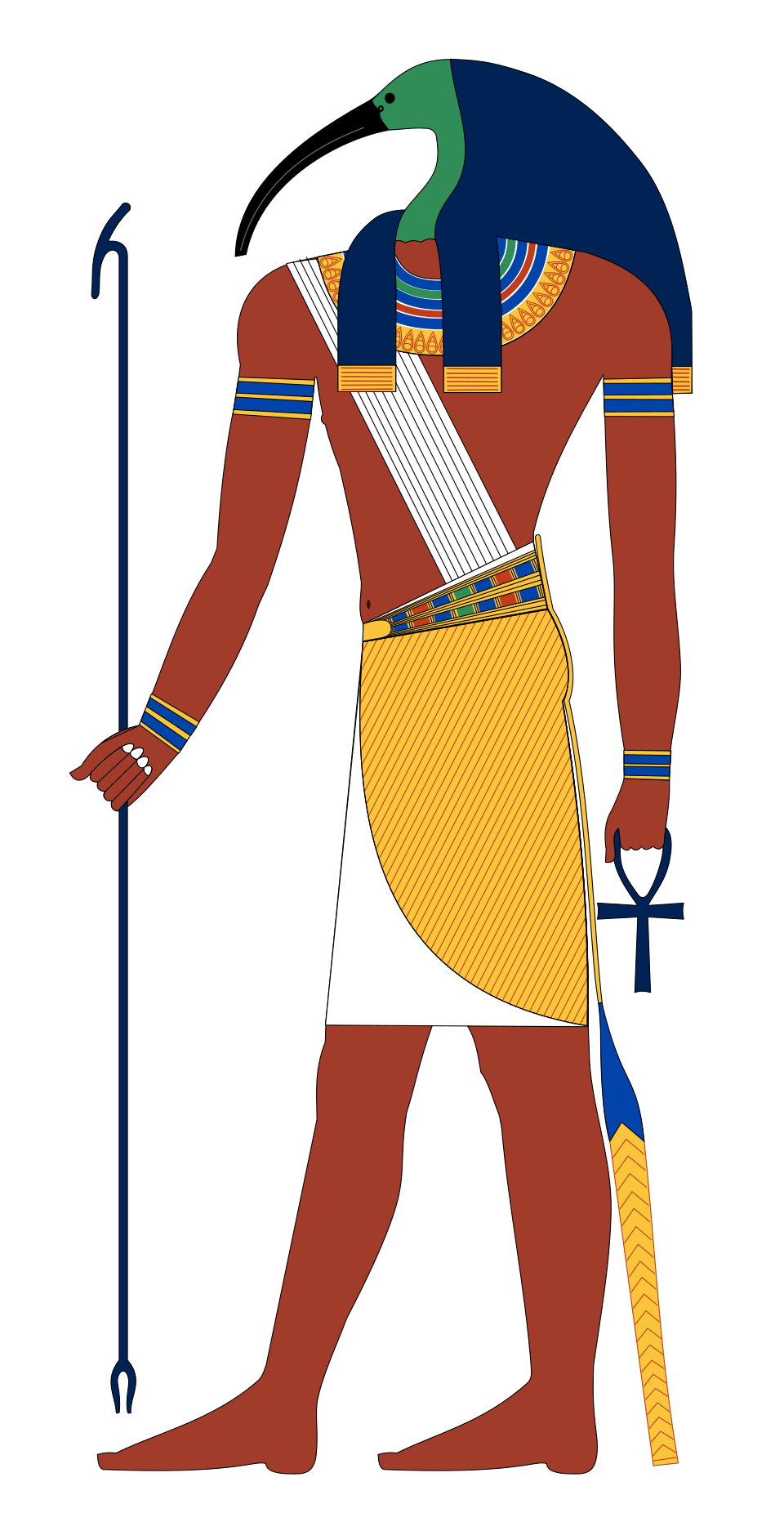
Thoth
God of Writing and Judgment · Egyptian
Scribe of the gods, who records the weighing of the heart — an office matching Metatron's almost exactly, and the seed of the whole Hermetic tradition.
Aten
The Disc · Egyptian
The sun-disc of Akhenaten's reform: for about twenty years the only god Egypt was permitted, worshipped without an image, and erased almost completely afterwards.
Mut
Mother of Thebes · Egyptian
Consort of Amun and mother of Khonsu, completing the triad that ruled Thebes at the height of Egyptian power.
Renenutet
Lady of the Harvest · Egyptian
The cobra goddess of the harvest, honoured at the threshing floor and the granary, who also gives a newborn its name and its share of fortune.
Taweret
The Great One · Egyptian
A composite of the three most dangerous animals in Egypt, arranged to frighten off whatever threatens a woman in labour.