Egyptian · Middle Egyptian · c. 2100–1800 BCE
The Coffin Texts
Anonymous; painted on the coffins of officials and their families
The middle term between the Pyramid Texts and the Book of the Dead, and the point at which the afterlife stops being a royal privilege: the same apparatus, painted on the coffins of people who were not kings. Around eleven hundred spells survive, including the corpus's earliest sustained account of Heka as a god rather than a force, and the Book of Two Ways, which is the oldest mapped underworld we have.
Read The Coffin Texts in full at the linked edition →What this text attests · 5
| Name here | Rank given | # | Powers described |
|---|---|---|---|
| — | — | Already the standing nightly enemy of the sun in the Middle Kingdom material, and already handled as recurring work rather than as a defeat that holds. The serpent is repelled and returns the following night for the whole of Egyptian history, which is a theology of evil quite unlike a fall. | |
| — | — | The corpus's earliest sustained treatment of Heka as a person rather than a property. One spell has the god speak in the first person and claim to have existed before the lord of all, which makes magic older than the creator in its own account of itself — a claim no other tradition here quite makes about the same faculty. | |
Maat = Ma'at | — | — | Order as the thing the dead are measured by, in the layer of the funerary literature that first extends the afterlife beyond the king. The Book of the Dead's weighing scene is the settled form of an idea already doing this work on the coffins of officials. |
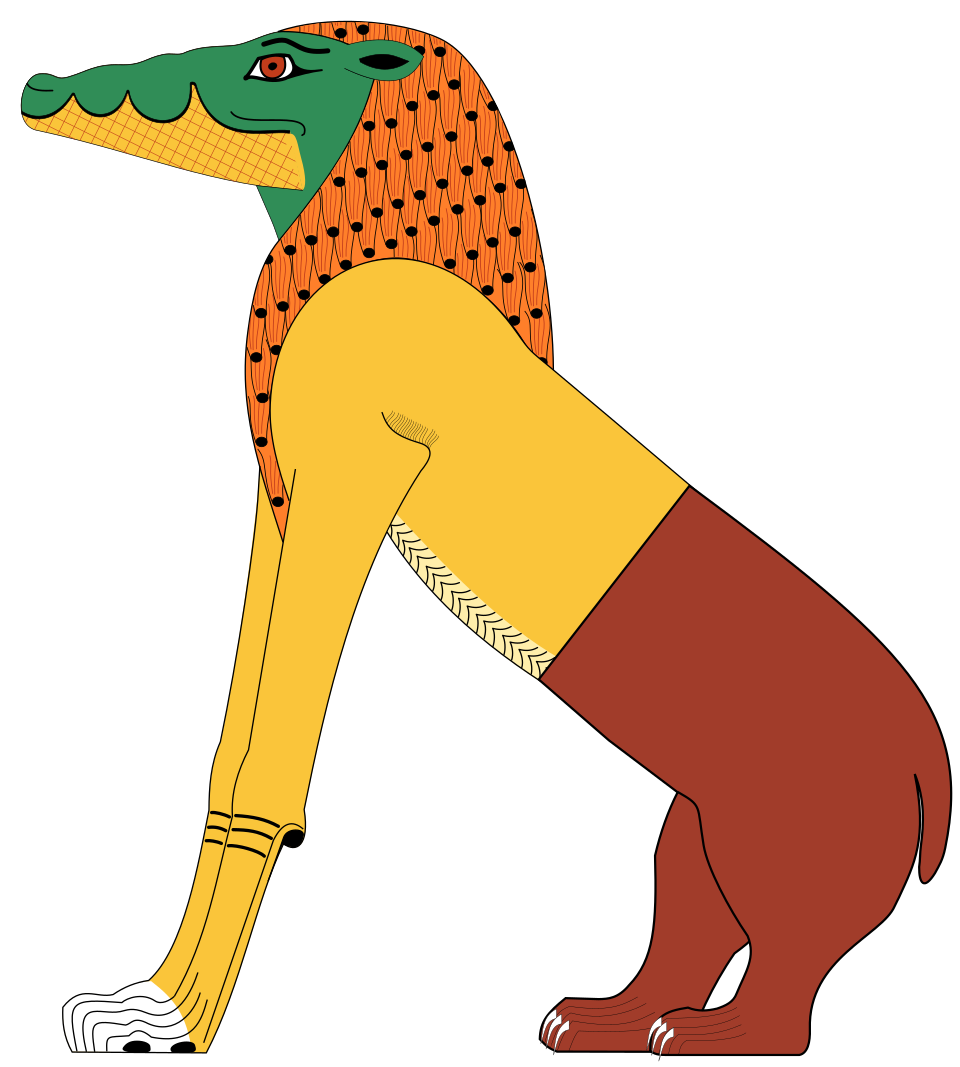 the devourer = Ammit | — | — | The swallowing power that waits on the judgment, present in the Middle Kingdom material before the Book of the Dead gives it the composite crocodile-lion-hippopotamus body and the name. The corpus files this as a precursor and says so: what is attested here is the function, and the figure is assembled afterwards. |
the tribunal = The Forty-Two Assessors | — | — | The declarations of innocence before a court of the dead, in the layer that first extends the afterlife beyond the king — before the number is fixed at forty-two and before each judge is given a name and a town. Cited as the stage the Book of the Dead's list develops out of, not as the same text at an earlier date. |