protective · from c. 3000 BCE
The Ankh
The sign for 'life', held to the nose of a king by a god. Not an amulet first — a hieroglyph that got carried into three dimensions.
What the sources claim for it
Life as something conferred. The sign is given, not owned.
What is it made of?
Two shapes that exist separately in Egyptian writing, joined into one hieroglyph.
The loop
The tau
The whole sign
ꜥnḫ
Ankh
- 01
The loop — A closed head. Read variously as a sandal strap, a mirror or a knot — Egyptology has never settled it.
- 02
The tau — The cross-bar and stem below. Held out to the nose of a king in reliefs, which is the gesture the sign records.
- 03
The whole sign · ꜥnḫ — The triliteral for 'life'. It is a word first and an amulet second.
History
Where does the Ankh come from?
The ankh begins as writing. It is the hieroglyph for ankh, life, and its constant use in temple relief is a grammatical statement made visually: a deity extends the sign toward the king's face, giving him life, and the caption normally says exactly that. What the loop originally depicted is unsettled — a sandal strap and a stylised knot are the two long-standing proposals, and neither is secured.
As an object it appears in mirrors, offering equipment and amulets, and it is regularly held by figures with the capacity to give life rather than by figures who need it. That is the distinction the reliefs are careful about: gods hold it, kings receive it, and ordinary people appear with it mainly in funerary contexts.
4 figures
Who is it attached to?
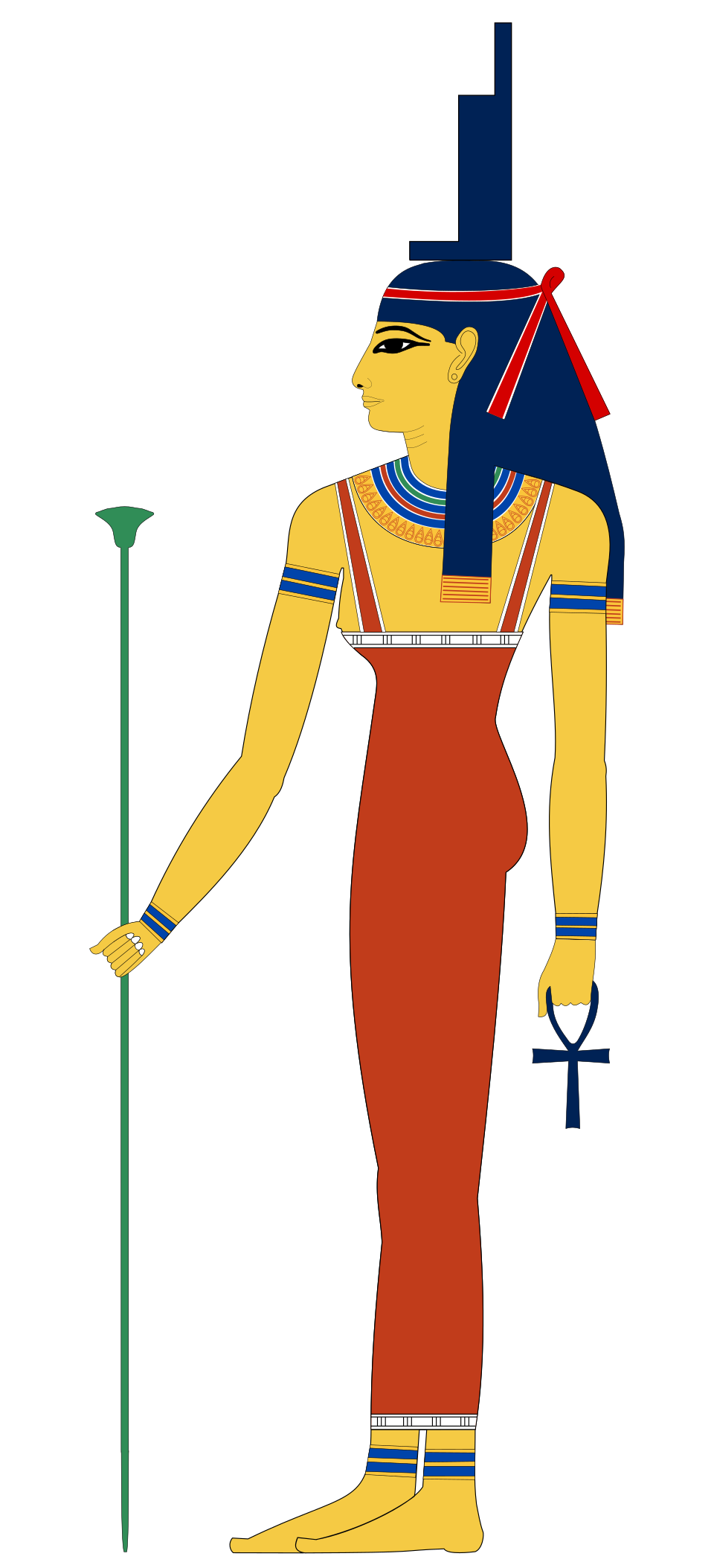
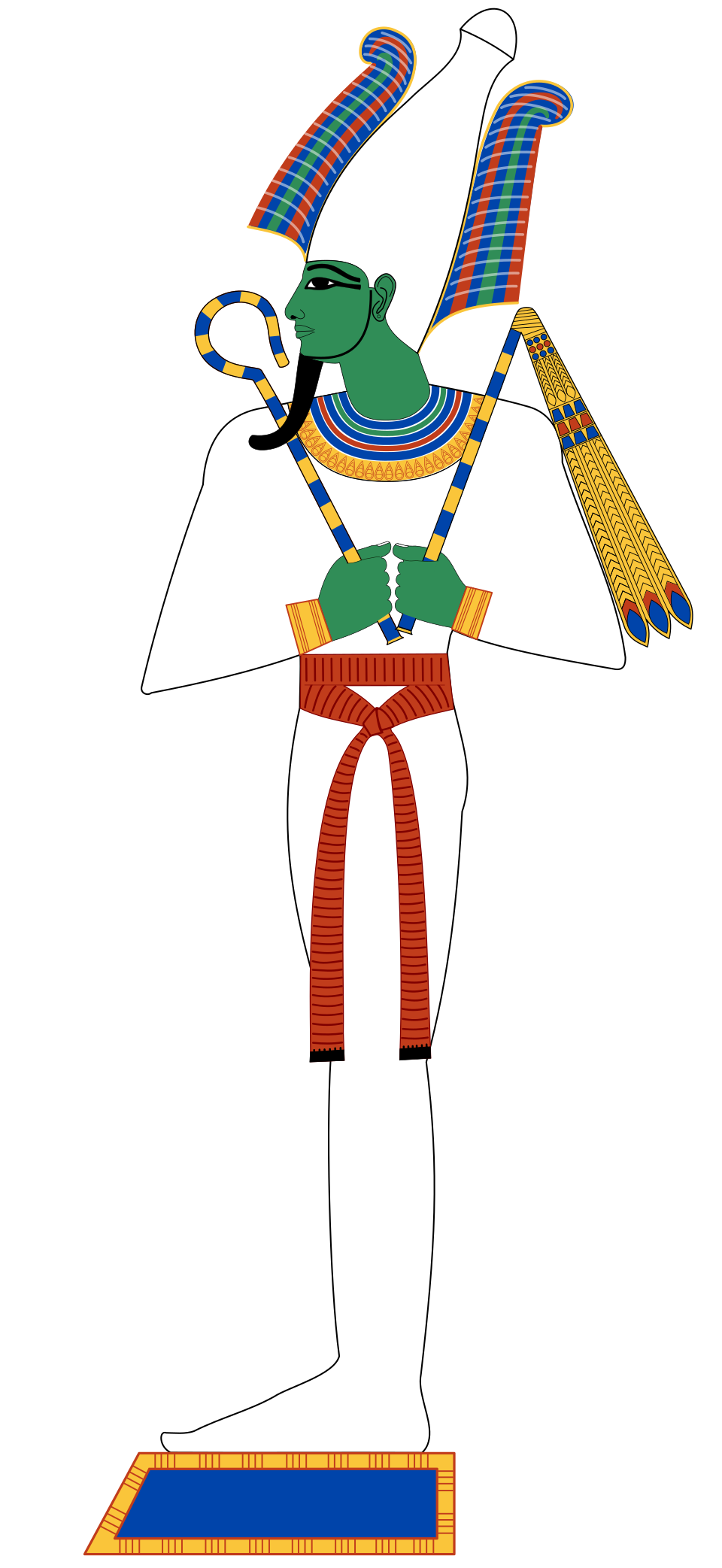
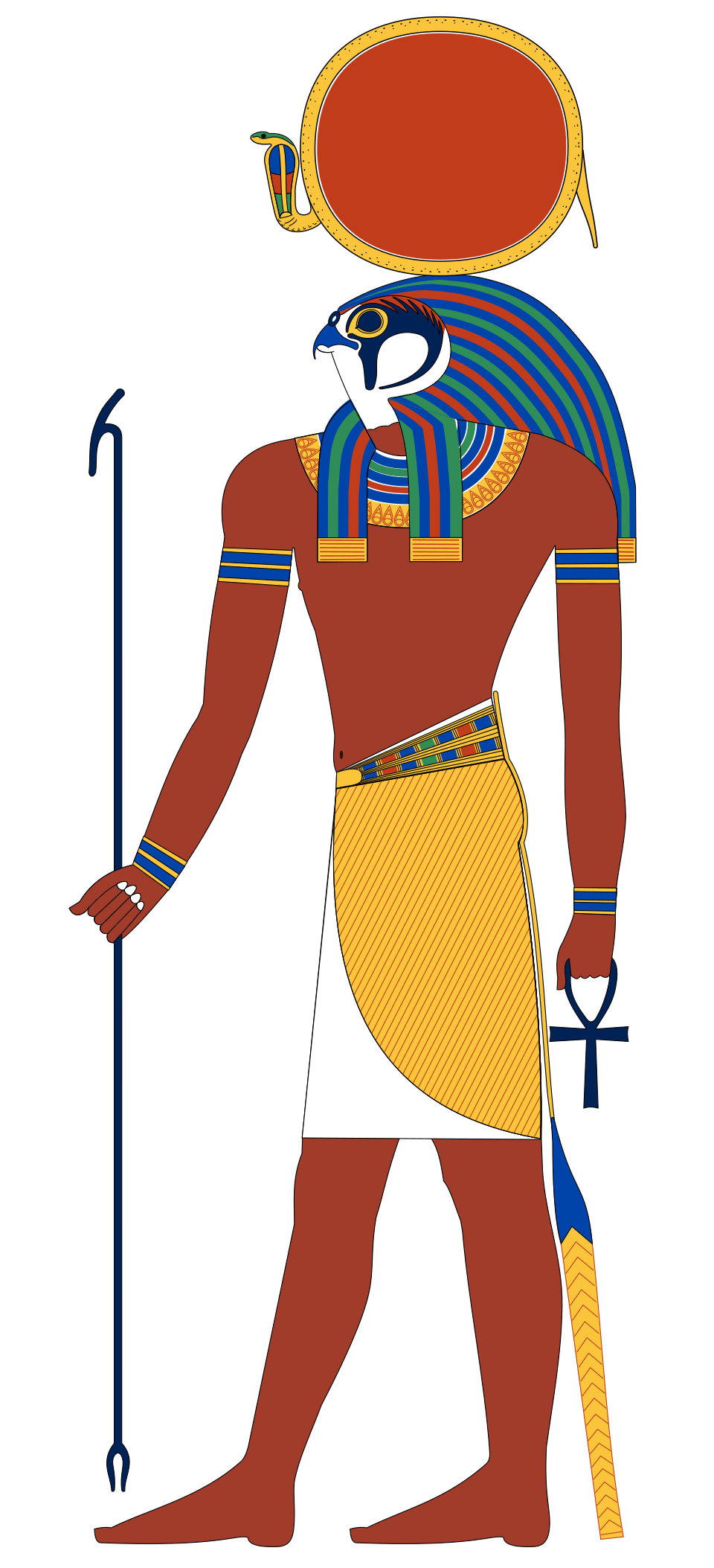
Figures who carry it
An attribute rather than a signature — held, worn or associated in the texts and the images.
The larger argument
Why is it in a corpus about spirits?
The ankh is a reminder that a great many marks in this corpus started as writing. The Egyptian material reaches the Greek magical papyri, and from there the Solomonic manuscripts, in exactly that condition — as characters whose original language nobody in the receiving tradition can read, which is precisely the moment a word turns into a power.
Afterwards
What did it turn into?
Taken up by Coptic Christianity as a form of the cross, then by twentieth-century occult and countercultural movements as a general emblem of vitality — the one Egyptian sign in wide modern use that kept roughly its original meaning.
Which texts describe it?
Oldest first, with what each one does with the mark. A mark described in a Bronze Age incantation and a mark first drawn in a seventeenth-century manuscript are different kinds of claim, whatever the shape has in common.
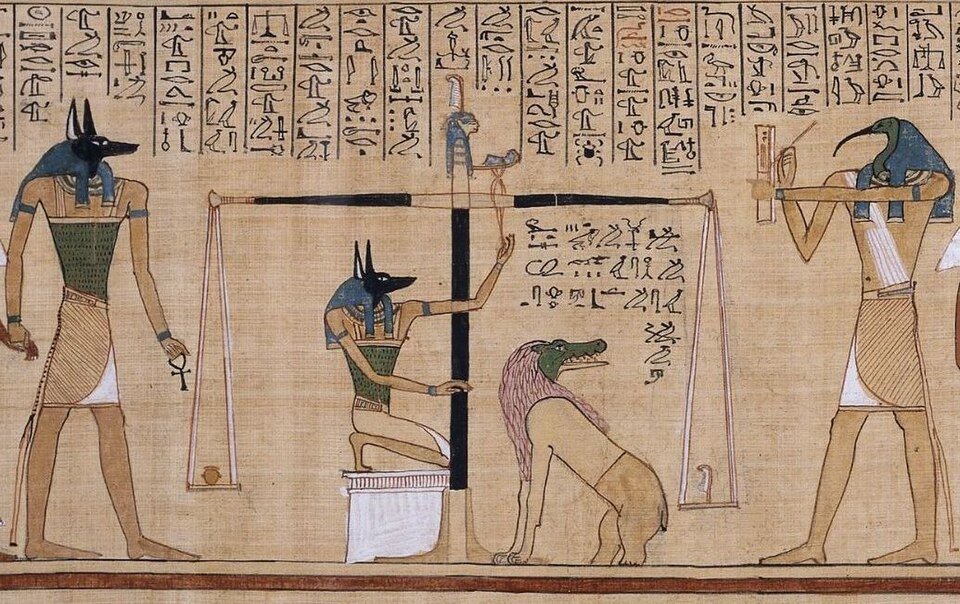
The Egyptian Book of the Dead
Anonymous; tr. E. A. Wallis Budge · c. 1550 BCE onward · Egyptian
Present throughout the funerary vignettes, held by the deities receiving the deceased.
Read The Egyptian Book of the Dead in full ↗Cover: Public domain · Hunefer · Wikimedia file page
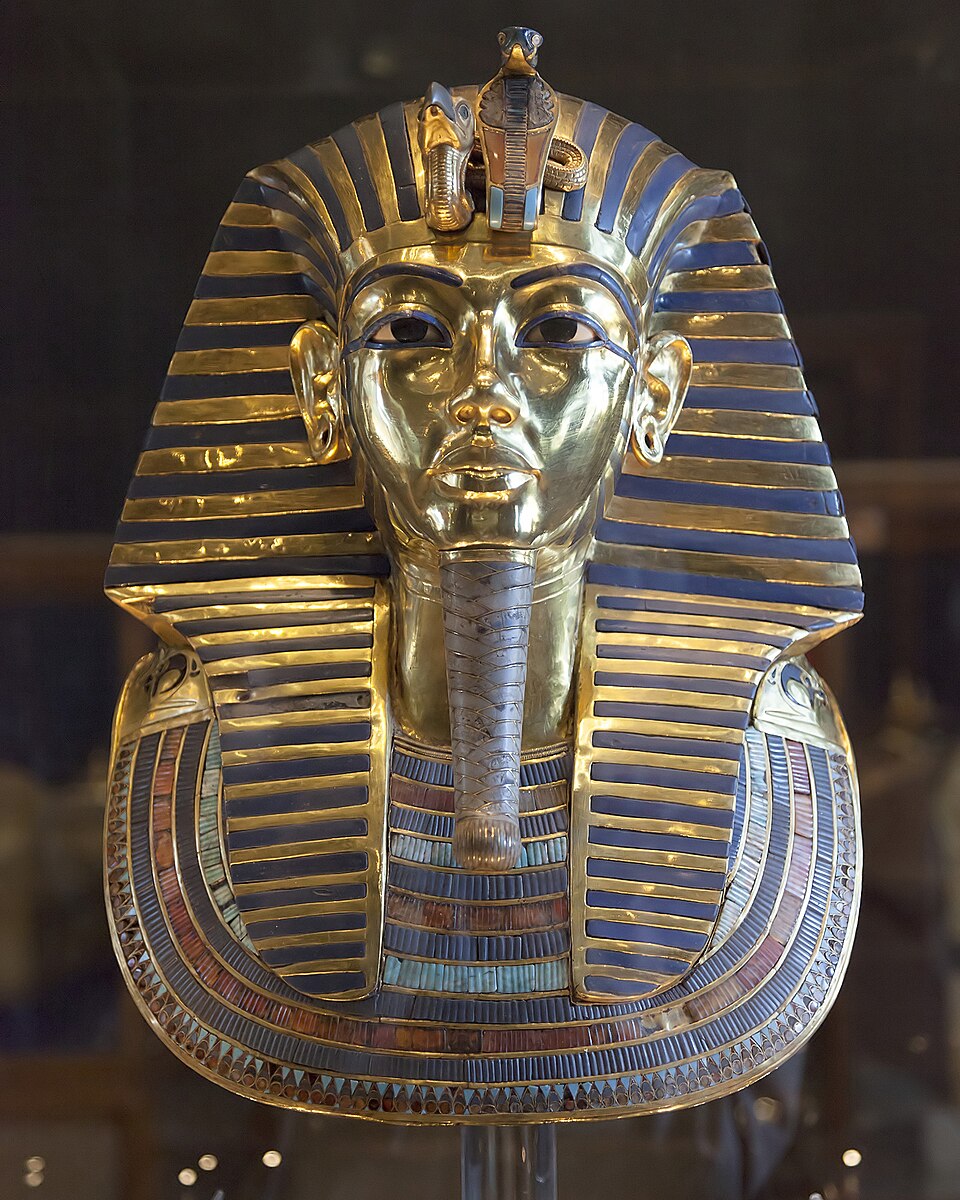
Egyptian Amulets & Domestic Objects
Anonymous; recovered from settlements and burials · c. 2000 BCE onward · Material evidence
Produced as amulets in every material from gold to glazed composition.
Read Egyptian Amulets & Domestic Objects in full ↗Cover: Public domain · Roland Unger · Wikimedia file page
Nearby
Related marks
The Djed Pillar
A four-tiered column meaning stability, later read as the backbone of Osiris and raised upright at festival as a resurrection.
The Was Sceptre
A straight staff with a forked foot and an animal head — and the animal, on the best reading, is Set's.
The Uraeus
A cobra rearing at the front of a crown, understood as the eye of the sun placed where it can spit at whatever approaches the wearer's face.
The Wedjat Eye
The eye Set tore out and Thoth made whole. Wedjat means 'the sound one' — the amulet is named for the repair, not the injury.
The Winged Disc
A sun with wings, borrowed by every empire in the region in turn — and the direct ancestor of the Persian faravahar.
The Feather of Ma'at
A single ostrich plume — the counterweight the heart is measured against, and the lightest object in the corpus to carry that much weight.