seal · from c. 3000 BCE
The Was Sceptre
A straight staff with a forked foot and an animal head — and the animal, on the best reading, is Set's.
What the sources claim for it
Dominion — power held, with the disorder it is exercised over built into the object.
History
Where does the Was Sceptre come from?
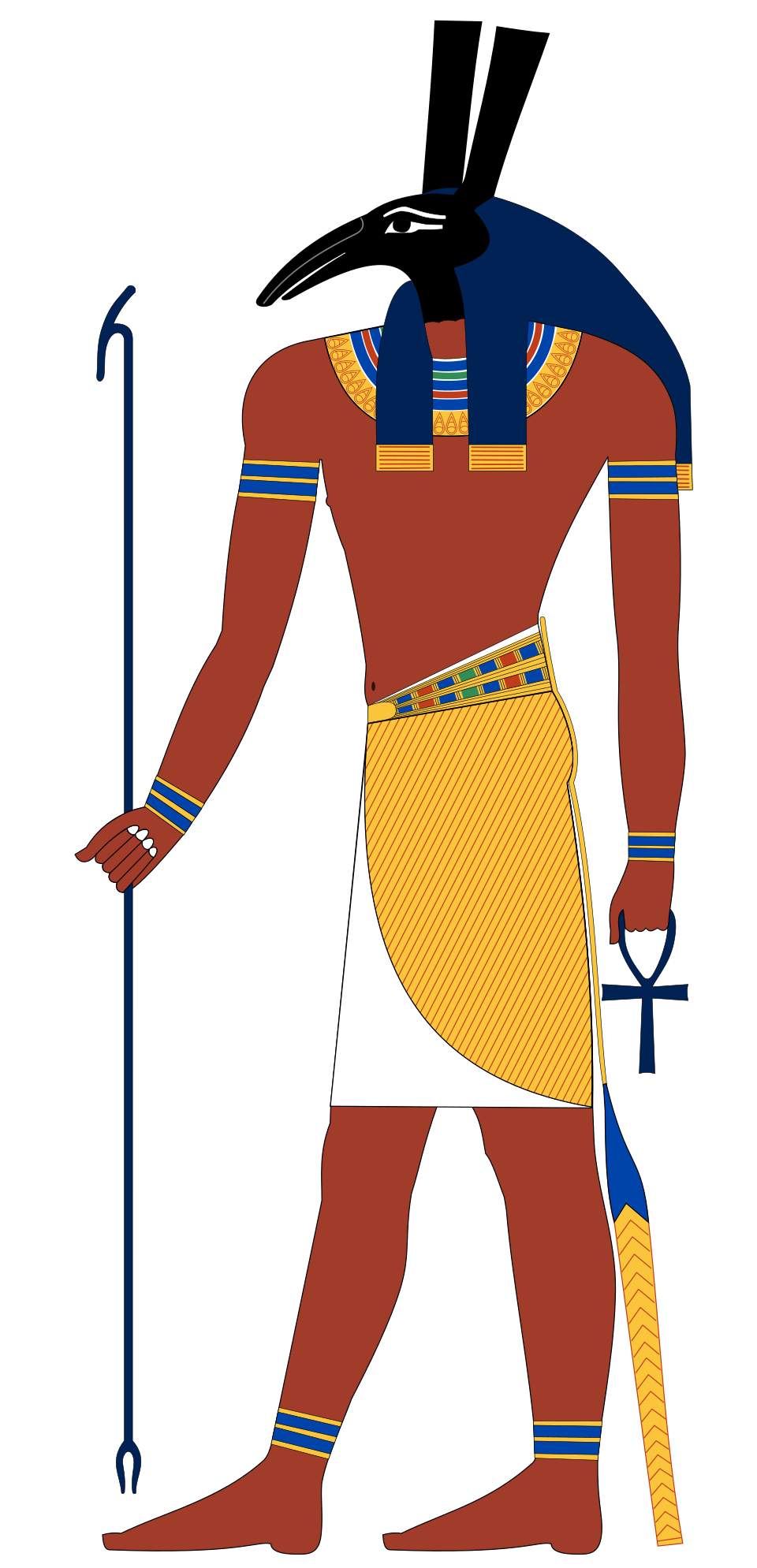
The was is the standard sign for power or dominion, carried by gods in nearly every temple relief, and combined with the ankh and the djed in the composite staff Ptah holds. Its head is canine-ish with square-cut ears and a curved snout, and the most persuasive identification is the Set-animal, the same unidentifiable creature that stands for the god of storm and disorder.
If that is right, the arrangement is characteristic of Egyptian theology: the sign of legitimate power is topped with the head of the god of illegitimate violence, held by the gods whose order depends on containing him. Egyptian art is comfortable with that in a way later traditions in this corpus are not.
2 figures
Who is it attached to?
Figures who carry it
An attribute rather than a signature — held, worn or associated in the texts and the images.
Afterwards
What did it turn into?
Rarely borrowed outside Egyptology, and usually mislabelled as a simple sceptre when it is.
Which texts describe it?
Oldest first, with what each one does with the mark. A mark described in a Bronze Age incantation and a mark first drawn in a seventeenth-century manuscript are different kinds of claim, whatever the shape has in common.
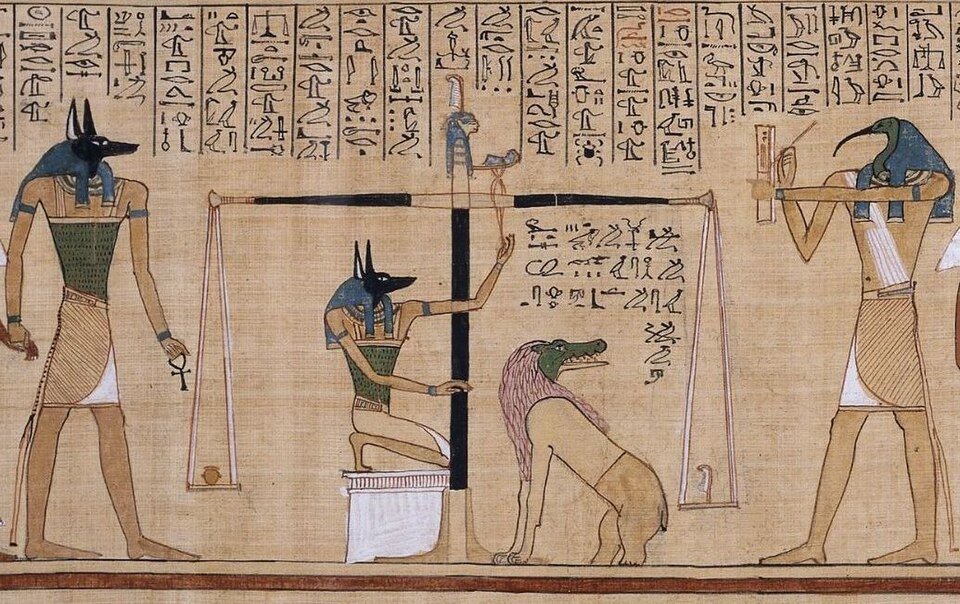
The Egyptian Book of the Dead
Anonymous; tr. E. A. Wallis Budge · c. 1550 BCE onward · Egyptian
Held by deities throughout the funerary vignettes.
Read The Egyptian Book of the Dead in full ↗Cover: Public domain · Hunefer · Wikimedia file page
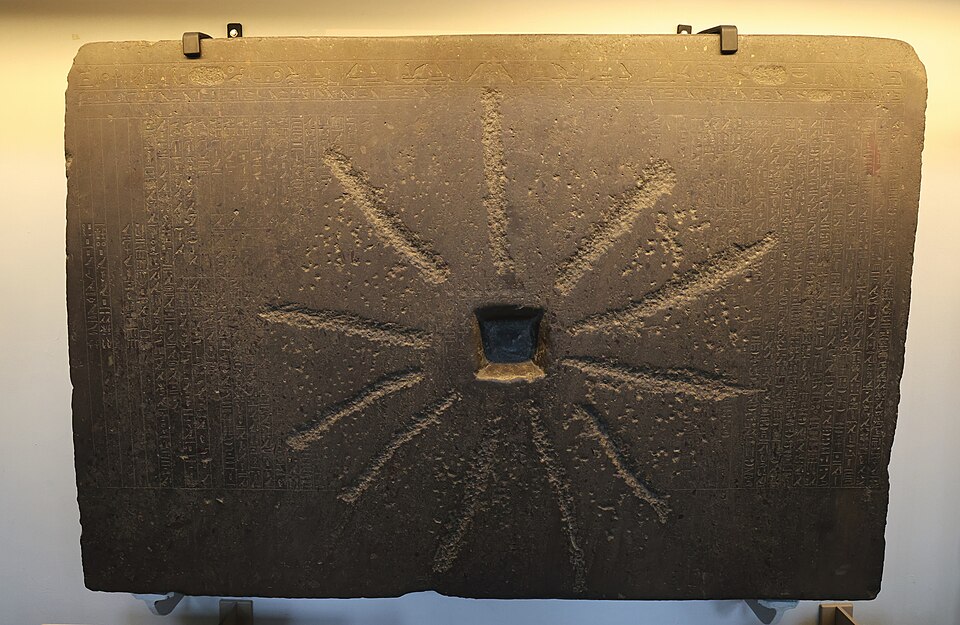
The Shabaka Stone (Memphite Theology)
Anonymous; carved for Shabaka · c. 700 BCE, copying older material · Egyptian
Belongs to the Memphite theology's apparatus of divine authority.
Read The Shabaka Stone (Memphite Theology) in full ↗Cover: CC BY-SA 4.0 · Sanjay ach · Wikimedia file page
Nearby
Related marks
The Ankh
The sign for 'life', held to the nose of a king by a god. Not an amulet first — a hieroglyph that got carried into three dimensions.
The Djed Pillar
A four-tiered column meaning stability, later read as the backbone of Osiris and raised upright at festival as a resurrection.
The Uraeus
A cobra rearing at the front of a crown, understood as the eye of the sun placed where it can spit at whatever approaches the wearer's face.
The Wedjat Eye
The eye Set tore out and Thoth made whole. Wedjat means 'the sound one' — the amulet is named for the repair, not the injury.
The Winged Disc
A sun with wings, borrowed by every empire in the region in turn — and the direct ancestor of the Persian faravahar.
The Feather of Ma'at
A single ostrich plume — the counterweight the heart is measured against, and the lightest object in the corpus to carry that much weight.