Egyptian · Egyptian · c. 2000 BCE - 300 BCE
Egyptian Hymns, Stelae & Temple Inscriptions
Various; tr. E. A. Wallis Budge and others
Temple hymns, royal stelae and monumental inscriptions — where the Theban triad actually lives. Budge notes in his own edition that Amun, Mut and Khonsu 'have nothing whatever to do with the Book of the Dead', which is a useful reminder that one famous text is not a whole religion.
Read Egyptian Hymns, Stelae & Temple Inscriptions in full at the linked edition →What this text attests · 10
| Name here | Rank given | # | Powers described |
|---|---|---|---|
| Guardian of the gate of the Duat | — | The doubled lion of the horizons, through whose gate the sun enters the underworld at dusk and leaves it at dawn. He belongs to the funerary iconography and the Amduat rather than to the Book of the Dead, where the name does not occur. | |
Amen = Amun | King of the gods | — | The hidden one, joined to Ra as Amen-Ra and supreme at Thebes through the New Kingdom. Budge notes in his own edition that Amen, Mut and Khonsu have nothing whatever to do with the Book of the Dead — they belong to the temple hymns and inscriptions instead. |
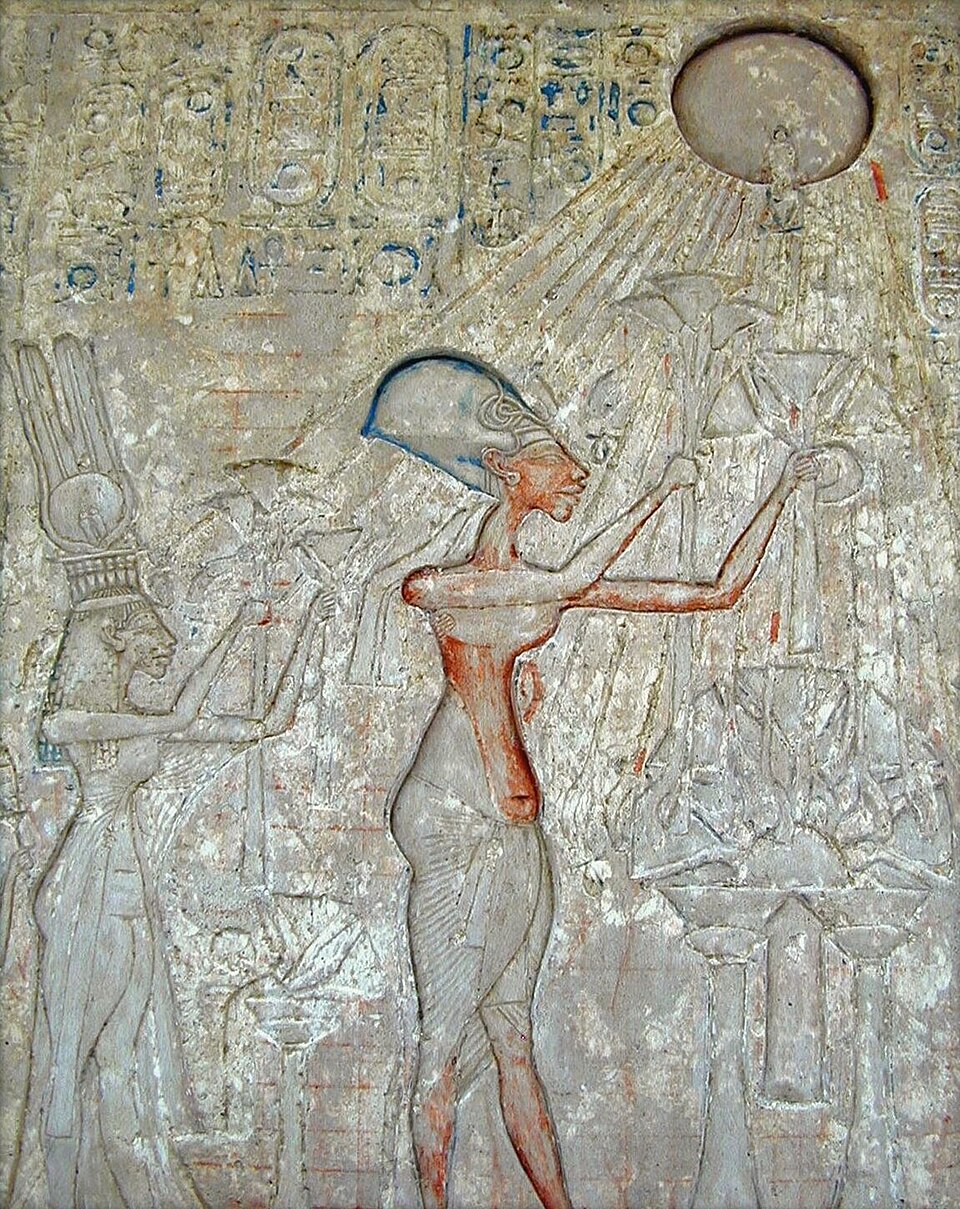
| The living disc | — | Sole creator in the Amarna hymns: makes the seasons, fills the land with beauty at dawn, and is addressed without an image because the disc itself is the god. | |
| — | — | The birth houses of the late temples, where the household god of the amulets and bed-frames appears on temple walls in the rooms concerned with the birth of the divine child. A figure known otherwise from domestic archaeology turning up in state architecture is the corpus's evidence that the two registers of Egyptian religion were not separate systems. | |
| Lord of the flood | — | Praised as the bringer of the inundation that feeds Egypt, arriving without a temple, an image or a fixed season anyone can command. The hymns ask for a flood neither too low nor too high, and treat both failures as equally ruinous. | |
| — | — | The Esna temple inscriptions, where the potter god who forms bodies on his wheel is the local creator rather than a specialist craftsman under someone else's authority. Egyptian theology is regional, and a figure the funerary books treat as a maker of flesh is a supreme god a few hundred miles upriver. | |
| Son of Amen and Mut | — | Measures time by the moon. The Bentresh stela has his image sent to Bakhtan to drive a spirit out of a princess, which is an exorcism narrative in all but name. | |
| Lord of Coptos | — | Praised as the generative power of the land and the protector of those who go out into the eastern desert; his festival opens the harvest. | |
| Lady of Asher | — | With Amen and Khonsu she forms the Theban triad, attested in temple inscriptions rather than in the funerary literature. Her name is written with the vulture sign that also writes 'mother'. | |
| — | — | Hymned in the temple material of the Faiyum and at Kom Ombo, where the crocodile shares a double sanctuary with Horus the Elder — two gods, two axes, one building. The arrangement is the clearest architectural statement in Egypt that a dangerous god is housed rather than driven out. |