Egyptian · Old Egyptian · c. 2350–2100 BCE
The Pyramid Texts
Anonymous; carved for the kings and queens of the Fifth and Sixth Dynasties
The oldest religious literature of any length from anywhere, cut into the walls of royal burial chambers at Saqqara and meant for one dead king at a time. Nearly every major figure the later funerary books use is already here, eight centuries before the Book of the Dead, which is the plainest available answer to the suspicion that the Egyptian pantheon is a late tidy-up: the Ennead, the sons of Horus and the opener of the ways are all in place before the Middle Kingdom begins.
Read The Pyramid Texts in full at the linked edition →What this text attests · 23
| Name here | Rank given | # | Powers described |
|---|---|---|---|
| — | — | The earth as a gate rather than as a surface: a double lion, or two joined lions facing away from each other, between whose backs the sun passes at night. The corpus's other Aker attestation is late temple material; this shows the conception is as old as the funerary literature itself. | |
| — | — | The dominant funerary god of the oldest layer, before Osiris takes over the role — the counter of hearts, the one who presides over the burial and over the desert edge where the cemeteries are. Later material demotes him to Osiris' assistant, and the demotion is only visible if the earlier text is in the corpus. | |
| — | — | The self-created one on the primeval mound, producing Shu and Tefnut from his own body without a partner. The Heliopolitan cosmogony the corpus files under the Book of the Dead is already complete here, eight hundred years earlier, which makes it the oldest state theology on record rather than a New Kingdom arrangement. | |
| — | — | Named in the oldest royal material, seventeen centuries before Herodotus watched the boatloads of pilgrims going to her festival at Bubastis. The corpus holds the two attestations at either end of her documented life, and the cat she is now identified with is a late development in between — the earliest form is a lioness. | |
| — | — | The earth as the court that settles the quarrel: the king's claim is put before Geb, who divides the land between Horus and Set. The Egyptian earth god is a magistrate before he is a landscape, and that is his oldest recorded function. | |
| — | — | The inundation named among the powers the dead king commands, which puts the personified flood in the oldest layer of the literature. Egypt's most consequential natural event having a god at all is not obvious — the Nile's rise is annual and reliable, and reliable things are not usually deified. | |
| — | — | The frog goddess of birth, named among the powers assisting the king's passage. She is otherwise known to this corpus through amulets, and an amulet on its own cannot show whether a figure was official or domestic; the royal burial chamber can. | |
| — | — | The heir who takes the throne and whose eye, torn out and restored, is the standard image of a thing made whole. The living king is Horus and the dead king is Osiris, which is a doctrine of succession before it is a mythology. | |
| — | — | Mourner and searcher, paired with Nephthys as the two kites who find the body and keep watch over it. The mother of Horus and the widow of Osiris are already one figure here, which is the load-bearing joint of the entire later cult. | |
| — | — | The sun at the moment of coming into being, named from the verb for becoming. The scarab that pushes its ball into existence is already the model here, which dates the pun and the theology together. | |
| — | — | The Cannibal Hymn, which is the most startling passage in Egyptian religious literature and gives this god the worst of it: Khonsu is named as the one who kills the lords for the king to consume, in a text about a dead king eating the gods to take their power. The Theban moon god of the corpus's other attestation is the same figure a millennium later and completely domesticated. | |
| — | — | Present in the oldest royal material, which matters for a god whose surviving iconography made later collectors squeamish enough to damage the images. The corpus's other attestation for him is temple inscription; this one shows the cult is not a late provincial survival. | |
| — | — | The second mourner, and never anything else in the oldest material — she is the sister who is present at every stage of the recovery and has no myth of her own. Set's wife siding wholly against Set is stated, not explained, from the beginning. | |
| — | — | The waters that were there before anything, out of which the mound rose and into which the sun goes at night. Nun is not created and never stops surrounding the created world, which is why the texts can appeal to a state older than the gods. | |
| — | — | The sky as a mother who takes the dead king into herself and sets him among the imperishable stars. The image later painted on the inside of coffin lids is here as a spoken claim before there is a lid to paint it on. | |
| — | — | The oldest surviving evidence of the myth, and it survives sideways: the texts never narrate the murder, they address a king who is now Osiris and speak around it — the body gathered, the son who avenges, the enemy who must not prevail. A story everyone present knew well enough that it never needed telling. | |
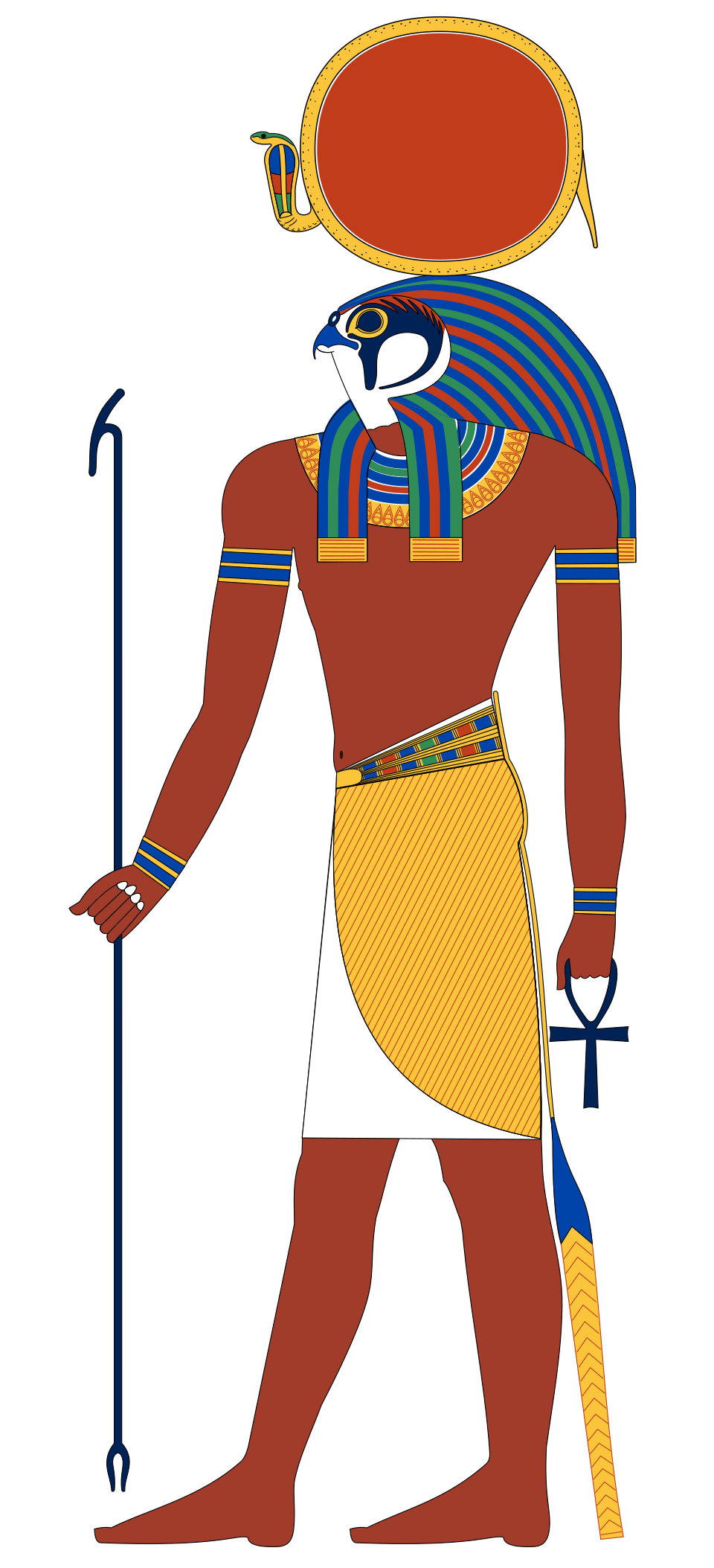 Re = Ra | — | — | The sun the dead king joins, ferried across the sky and rowing in the day boat. The solar afterlife and the Osirian one are both here and are not reconciled — the same walls promise the king a place with Re and a place as Osiris, and Egyptian priests saw no need to choose. |
| — | — | The scorpion goddess invoked to close the throat of the venomous thing rather than to open it, which is the direction of travel throughout: she is named where a bite is being prevented. One of the four canopic guardians in the same body of material. | |
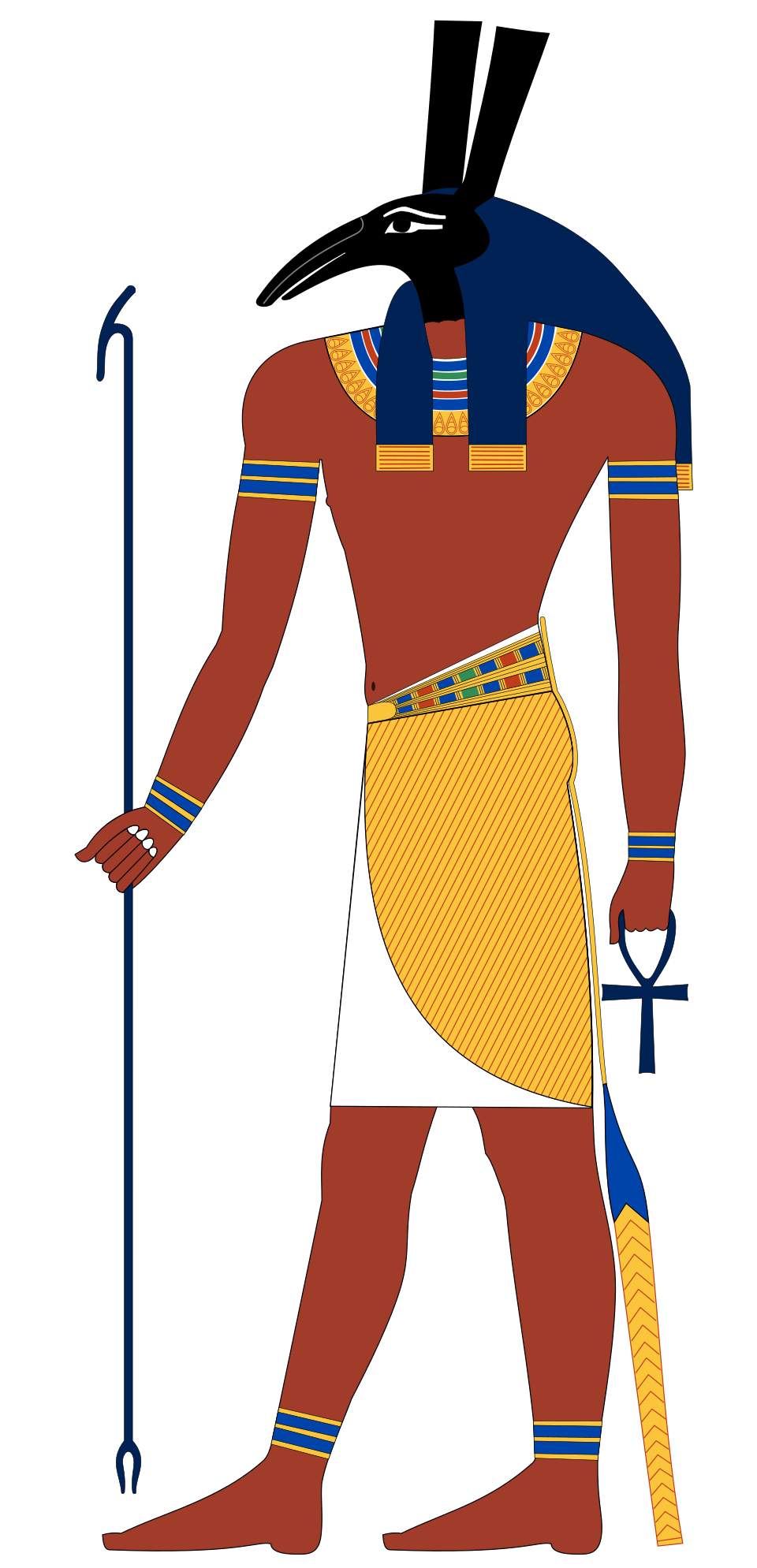 Seth = Set | — | — | The adversary in the succession dispute, and not yet the enemy of the world. He is judged, he loses, and he is also invoked for his strength on the king's behalf — a god who can be both is precisely what Plutarch's later dualism has no room for. This corpus holds the two attestations side by side. |
| — | — | Air and the space it occupies, and the god the dead king is repeatedly said to climb on: the texts have him ascend on the arms of Shu, which treats the separation of sky from earth as a structure with a route up it rather than as a one-off event. | |
| — | — | Named with Shu as the first pair, and — unusually for a goddess this corpus otherwise knows only through her twin — named in her own right in the ascent spells. Her attestation and his are the same age, which is a fact the later material obscures by mentioning her mainly to explain him. | |
The children of Horus = The Four Sons of Horus | — | — | Named as a body — the children of Horus, whom Horus is made to count, and who help the king ascend — rather than individually: Mercer's translation does not give Imsety, Hapy, Duamutef and Qebehsenuef by name, and the corpus records the text's own wording instead. The set exists here before the canopic jars it later stands on, which is the point; the jar lids and the organ assignments are the innovation. |
| — | — | The opener of the ways, clearing the road ahead of the king in the ascent spells. His standard goes in front of the procession in the earliest royal ceremonial, which makes him one of the very few figures in this corpus whose job description has not changed at all in three thousand years. |