infernal hierarchy
The Ten Courts of Diyu
The Chinese underworld is a bureaucracy, and not as a metaphor: ten courts, each handling a category of offence, with magistrates, clerks, registers, fixed terms and the possibility of appeal. Souls are processed and returned to rebirth.
Entries per grouping
Source base of members
- 25–491
1 of 7 nodes link to a profile; the rest are structural labels from the source text.
7 nodes
the whole structure as one tree
Reading this tree
Nodes with a coloured dot and an underline link to a full profile. Structural nodes — spheres, ranks, offices — are labels from the source text itself and have no separate entry. Where a figure appears in more than one hierarchy, its profile lists every placement.
The book this structure comes from
A hierarchy is one text's arrangement, not a consensus. This is the text.
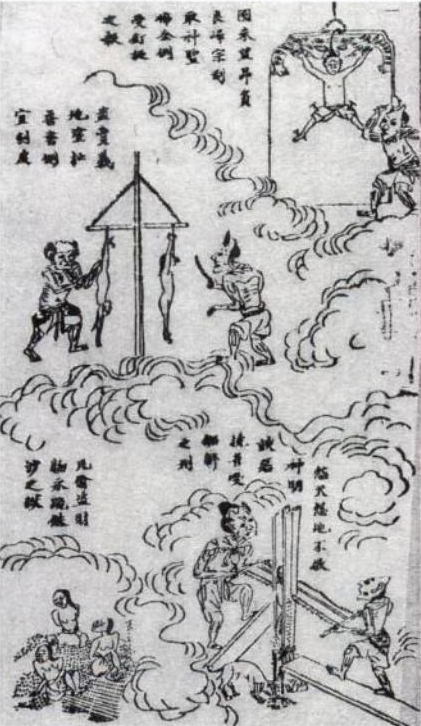
The Scripture of the Ten Kings
Anonymous Chinese Buddhist · 9th-10th c. CE · Classical Chinese
Read The Scripture of the Ten Kings in full ↗Cover: Public domain · Jonathan D. Spence. God's Chinese Son. New York 1996. Page 40. Copied without permission from · Wikimedia file page