Tradition
Buddhist
Mara the tempter, the wrathful protectors, and the hell-realms — a tradition that treats demons as psychological states with unusual explicitness.
What is the Buddhist tradition?
Buddhist demonology is unusual in this corpus for treating its demons as psychological with unusual explicitness. Mara, who tempts the Buddha under the tree, is both a named being with a biography and a name for craving itself, and the tradition does not treat that doubleness as a contradiction to be resolved.
The wrathful protectors complicate the good-and-evil sorting the Western material assumes. A figure with fangs, flames and a necklace of skulls is not an adversary here; the ferocity is directed at obstacles to liberation, and the iconography reads as terrifying by design and benign by function.
The hell-realms are numerous, vividly described, and — importantly — temporary. A cosmology in which the worst destination is a very long stay rather than a permanent state is making a different claim from the one most of this site's other traditions make.
Which texts does this tradition rest on?
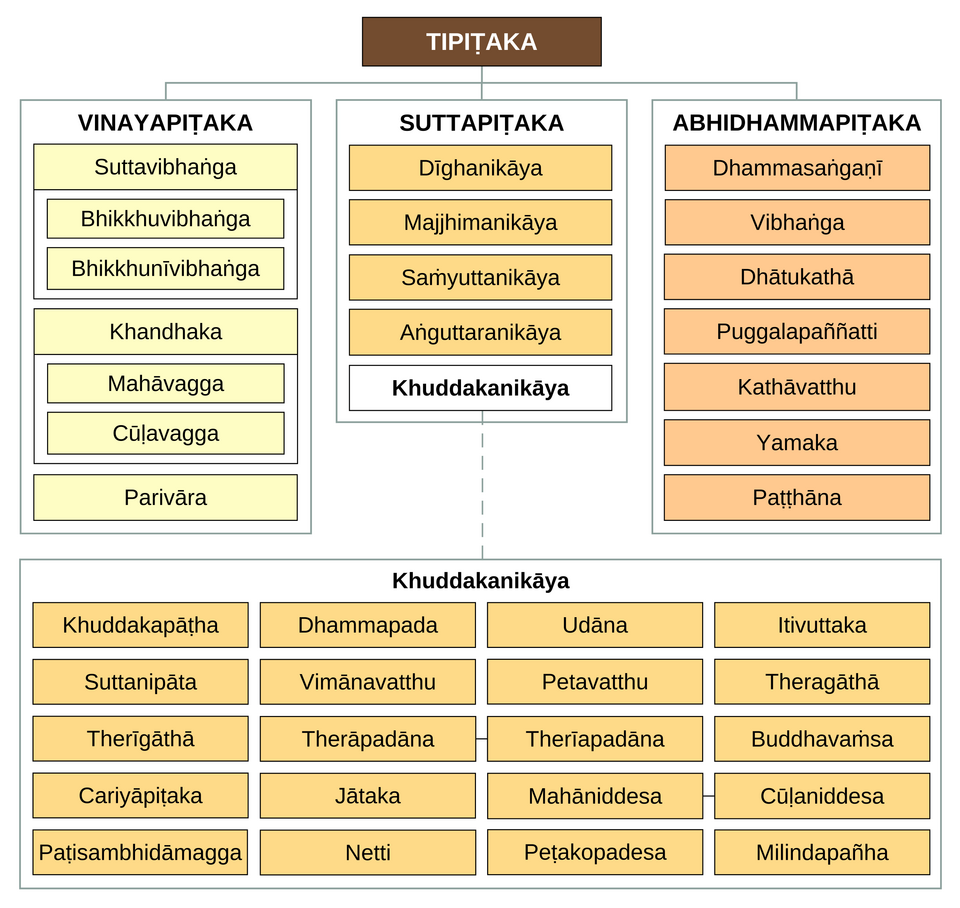
The Pali Canon
Anonymous; attributed to the Buddha and his disciples · c. 100 BCE, from oral tradition
Mara appears here as the tempter at the Bodhi tree, but the texts repeatedly gloss him as craving and death rather than as a being — demonology and psychology held together on purpose.
4 entries contributed
The Lalitavistara Sutra
Anonymous; Mahayana compilation · c. 200–300 CE, from older material
A life of the Buddha up to the first sermon, and the fullest account of the assault under the tree: Mara arrives with an army, then with his daughters, then with the argument that no one can witness the claim being made, and is answered by the earth. The corpus holds it because the temptation is won by testimony rather than by force, which is a different resolution from every exorcism on this site.
2 entries contributed
The Sutra of the Great Vows of Ksitigarbha
Anonymous; known through the Chinese translation attributed to Siksananda · c. 700 CE
The text that fixed the East Asian picture of the afterlife: a bodhisattva who vows to empty the hells before accepting buddhahood, a survey of those hells and their durations, and a court of kings who assess the dead. It is the bridge between the Indian material and the Chinese one — the hungry ghosts of the Pali suttas and the magistrates of the Ten Kings are in the same book here, addressed by the same vow.
4 entries contributed
Which marks belong to it?
Oldest first. A mark used by several traditions appears on each of their pages — which is the point: the shapes crossed these boundaries far more easily than the names did.
The Swastika
from c. 2500 BCE
An auspicious mark used continuously for four and a half thousand years across most of the world, and destroyed as a public sign in the West by twelve years of one European party's use of it.
Om
from c. 1200 BCE
A syllable before it was ever a shape — recited at the opening and close of Vedic utterance, and only much later written as the mark everyone recognises.
The Vajra
from c. 1200 BCE
Indra's thunderbolt, forged from a sage's bones, and later the ritual sceptre of Tibetan Buddhism — a weapon that changed sides.
The Dharmachakra
from c. 250 BCE
An eight-spoked wheel for an eightfold path — the emblem Buddhism used for its founder for four centuries before it would depict him at all.
The Wheel of Becoming
from c. 500 CE
Six realms in one circle, held in the jaws of the lord of death — a cosmological diagram painted at monastery entrances so that everyone entering has read it.
Who is filed under Buddhist?
Ordered by attestation score — how early and how independent the texts that name each figure are, rather than how famous the figure has since become.
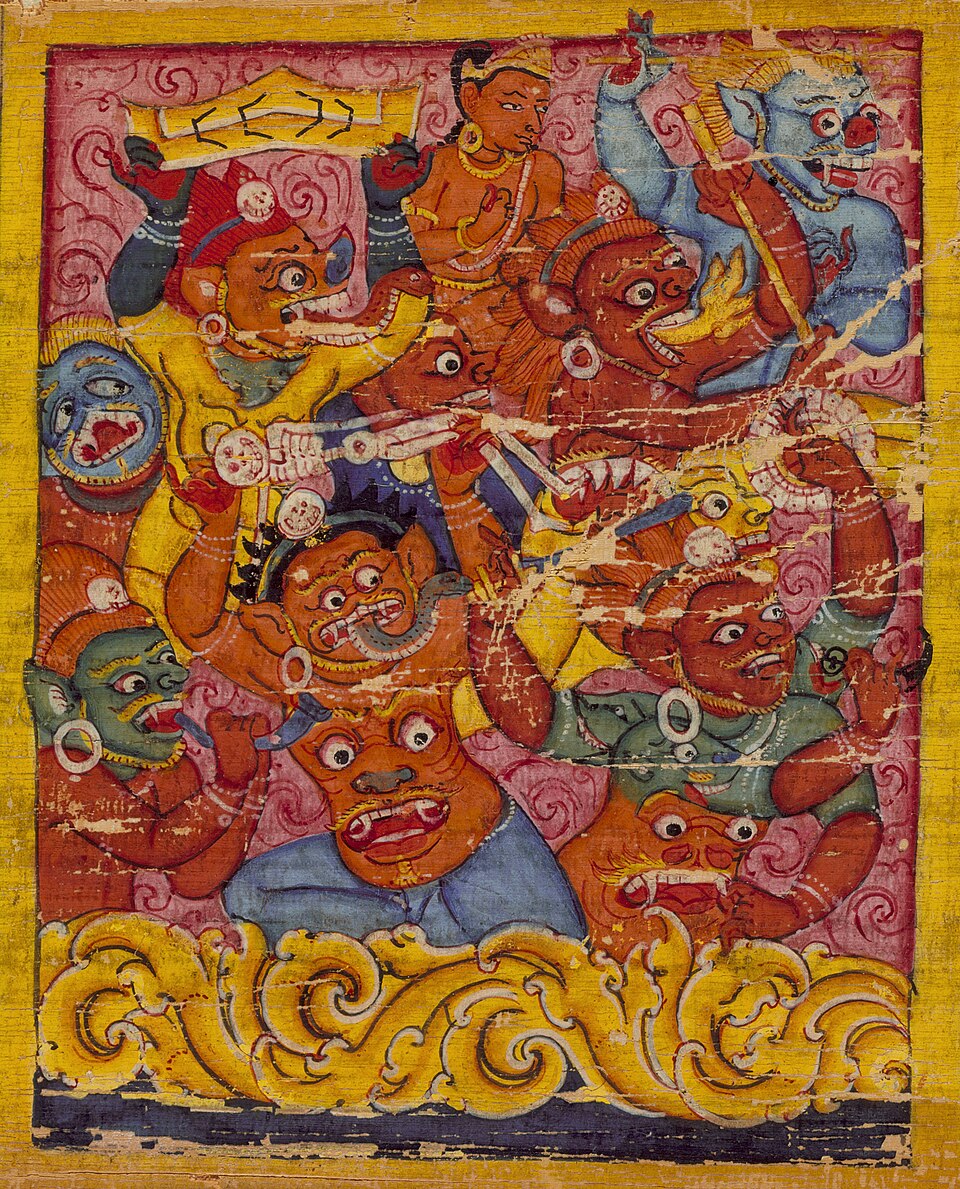
Mara
The Tempter · Buddhist
He assaults the Buddha under the Bodhi tree, first with armies and then with his daughters. The canon keeps glossing him as craving itself rather than as a being.
The Naga
Serpent Powers · Buddhist
The serpent powers of the Buddhist material — rain-bringers and treasure-keepers who shelter the Buddha under their hoods rather than opposing him, which is what a dragon does almost nowhere else in this corpus.
The Preta
Class of Beings · Buddhist
Beings with enormous stomachs and throats too narrow to swallow. Not a species of demon: a condition you can be reborn into, and eventually leave.
The Yakkha
Class of Spirits · Buddhist
A Buddhist class of spirits that are neither good nor evil by nature — tree-dwellers and gate-keepers who can eat travellers or take refuge in the Buddha, and frequently do the second after threatening the first.
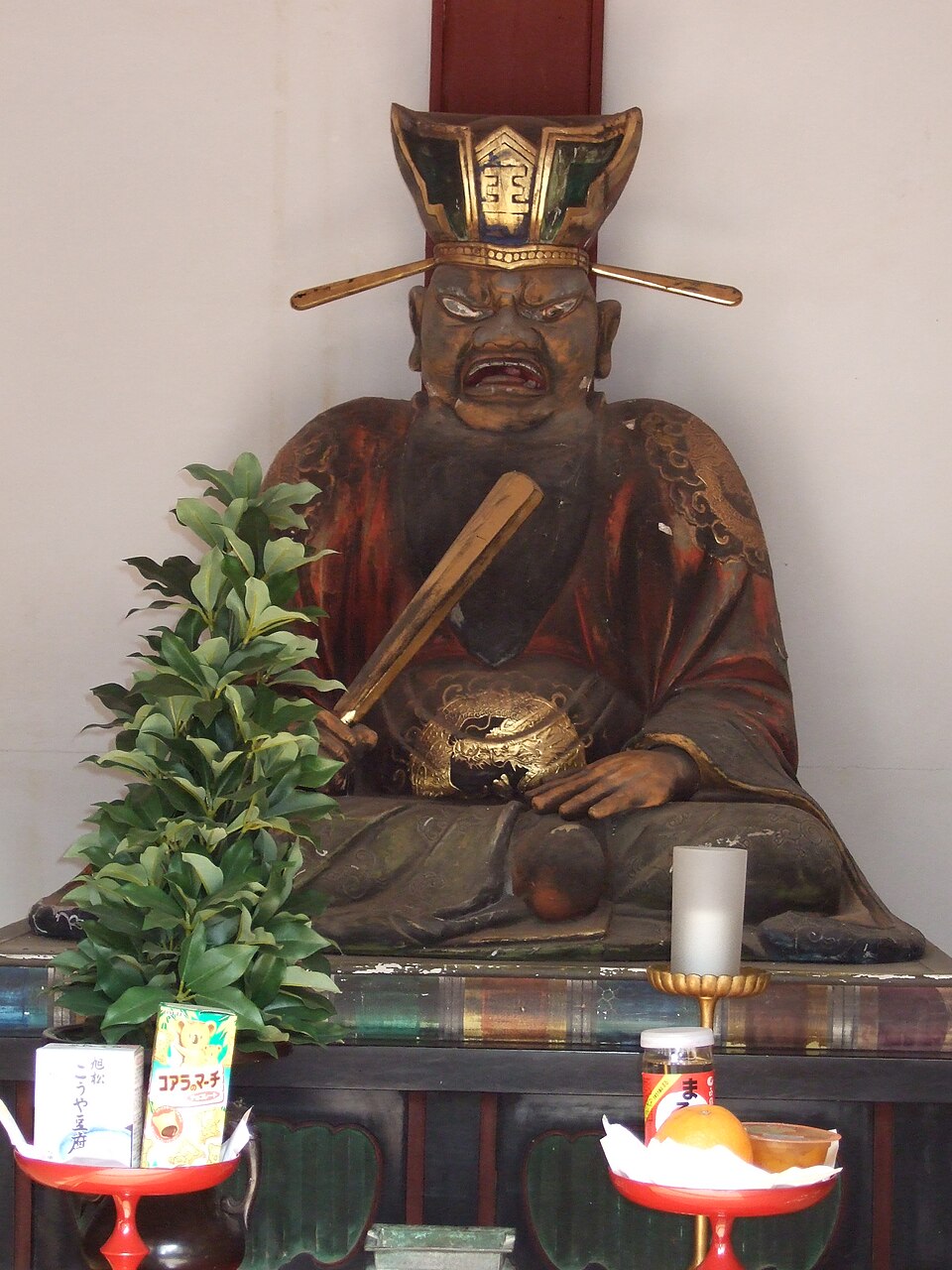
Yanluo Wang
Judge of the Dead · Chinese
Chief judge of the Chinese underworld — a civil servant with a ledger, in a hell organised as a court system rather than a torture chamber.
The Ten Kings
Court of the Dead · Chinese
The Chinese court of the dead — ten magistrates who each hear a case at a fixed interval after death, with clerks, registers and a right of appeal, and Yanluo Wang sitting fifth.