protective · from c. 1200 BCE
The Vajra
Indra's thunderbolt, forged from a sage's bones, and later the ritual sceptre of Tibetan Buddhism — a weapon that changed sides.
What the sources claim for it
Irresistible force, and then indestructibility — the same hardness described as attack and as endurance.
History
Where does the Vajra come from?
In the Rigveda the vajra is Indra's weapon, the instrument with which he kills Vritra and releases the waters. Its manufacture is unusual enough to matter: it is made from the bones of the ascetic Dadhichi, who gives up his body for the purpose, so the god's decisive weapon is a gift from a human being.
Buddhism takes the object and inverts its use. As the dorje it becomes a hand-held ritual implement standing for the indestructible, paired with the bell, and gives its name to the Vajrayana — the thunderbolt vehicle. A weapon of storm becomes an emblem of what cannot be destroyed, which is the same property read from the other side.
2 figures
Who is it attached to?
Figures who carry it
An attribute rather than a signature — held, worn or associated in the texts and the images.
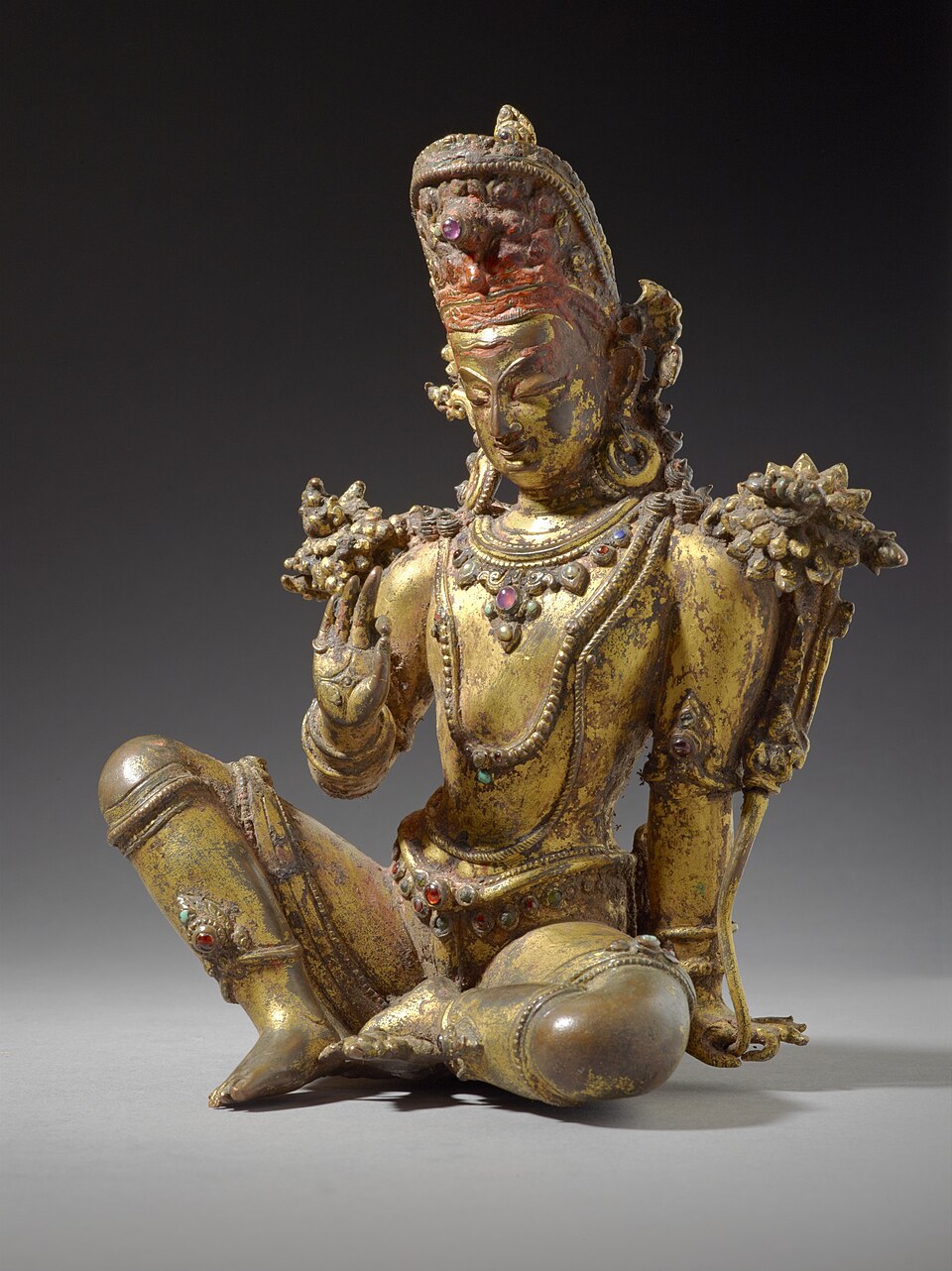
Figures it is used against
The mark is aimed at them. A ward names its target, which makes these the sharpest attributions on the page.
Afterwards
What did it turn into?
Central to Tibetan and Japanese Buddhist ritual, and the source of the personal name and the term Vajrayana.
Which texts describe it?
Oldest first, with what each one does with the mark. A mark described in a Bronze Age incantation and a mark first drawn in a seventeenth-century manuscript are different kinds of claim, whatever the shape has in common.
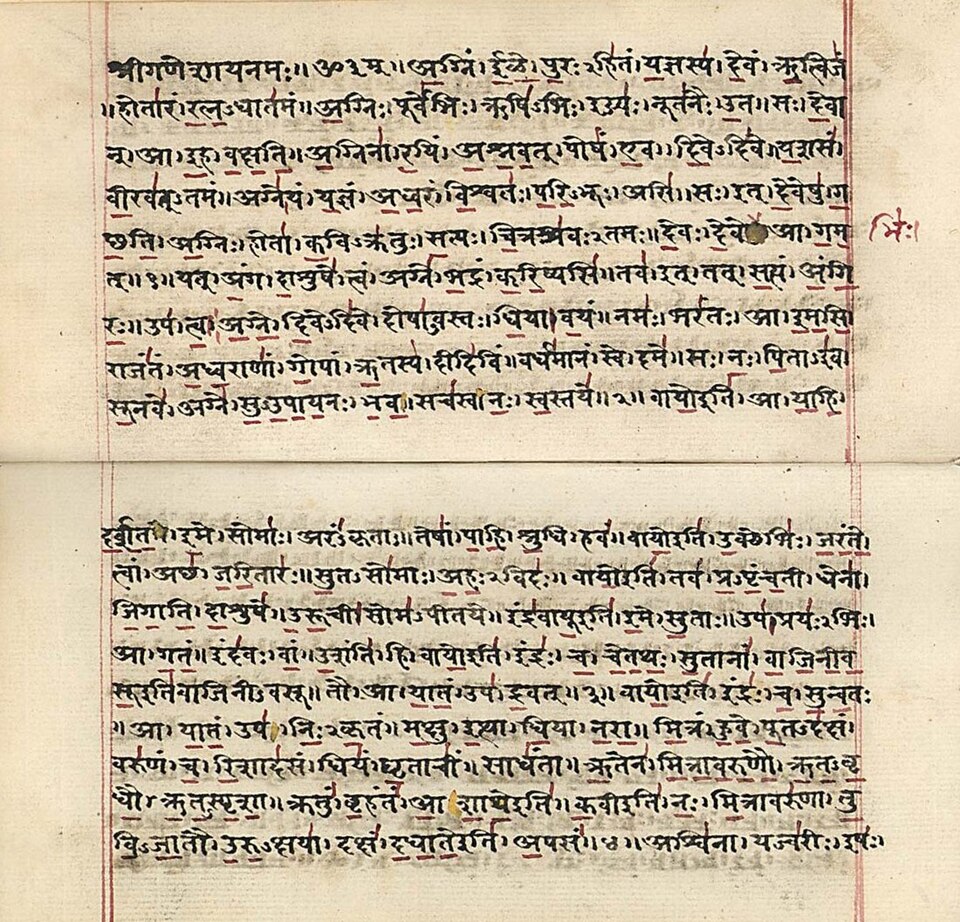
Rigveda
Anonymous; multiple rishi families · c. 1500-1200 BCE · Vedic Sanskrit
Indra's weapon against Vritra, in the hymn cycle that is the tradition's oldest layer.
Read Rigveda in full ↗Cover: Public domain · Unknown author · Wikimedia file page
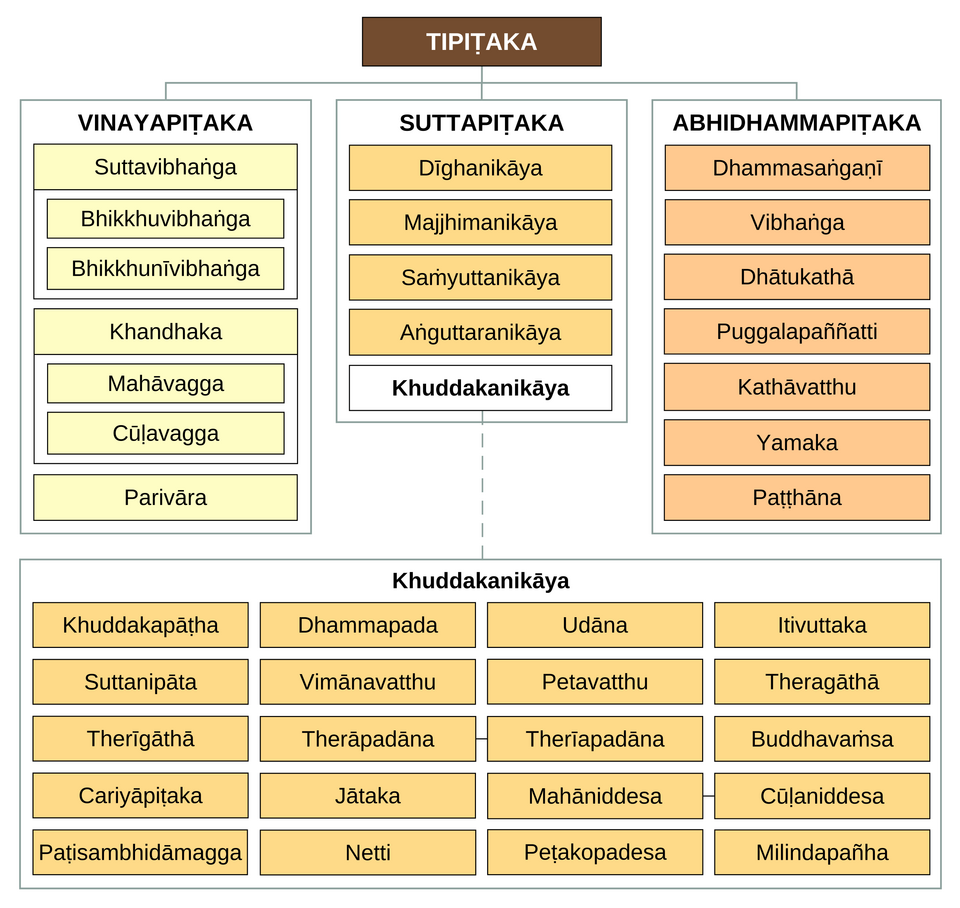
The Pali Canon
Anonymous; attributed to the Buddha and his disciples · c. 100 BCE, from oral tradition · Pali
The Buddhist material that repurposes the implement.
Read The Pali Canon in full ↗Cover: CC0 · Faredoka · Wikimedia file page
Nearby
Related marks
The Swastika
An auspicious mark used continuously for four and a half thousand years across most of the world, and destroyed as a public sign in the West by twelve years of one European party's use of it.
Om
A syllable before it was ever a shape — recited at the opening and close of Vedic utterance, and only much later written as the mark everyone recognises.
The Dharmachakra
An eight-spoked wheel for an eightfold path — the emblem Buddhism used for its founder for four centuries before it would depict him at all.
The Trishula
A three-pronged spear carried by Shiva and by the goddess in her killing aspect, with the three points read as everything that comes in threes.
The Wheel of Becoming
Six realms in one circle, held in the jaws of the lord of death — a cosmological diagram painted at monastery entrances so that everyone entering has read it.
The Ankh
The sign for 'life', held to the nose of a king by a god. Not an amulet first — a hieroglyph that got carried into three dimensions.