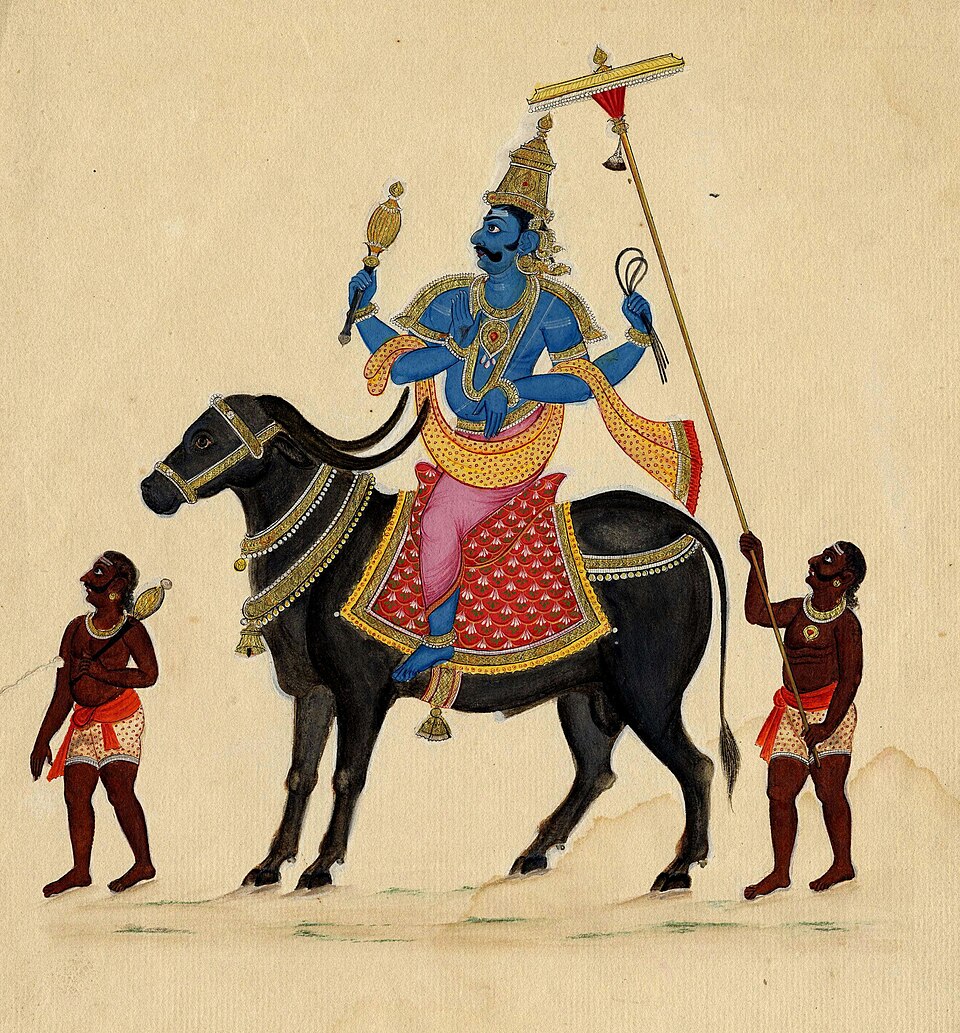
Vedic & Hindu · Vedic Sanskrit · c. 1500-1200 BCE
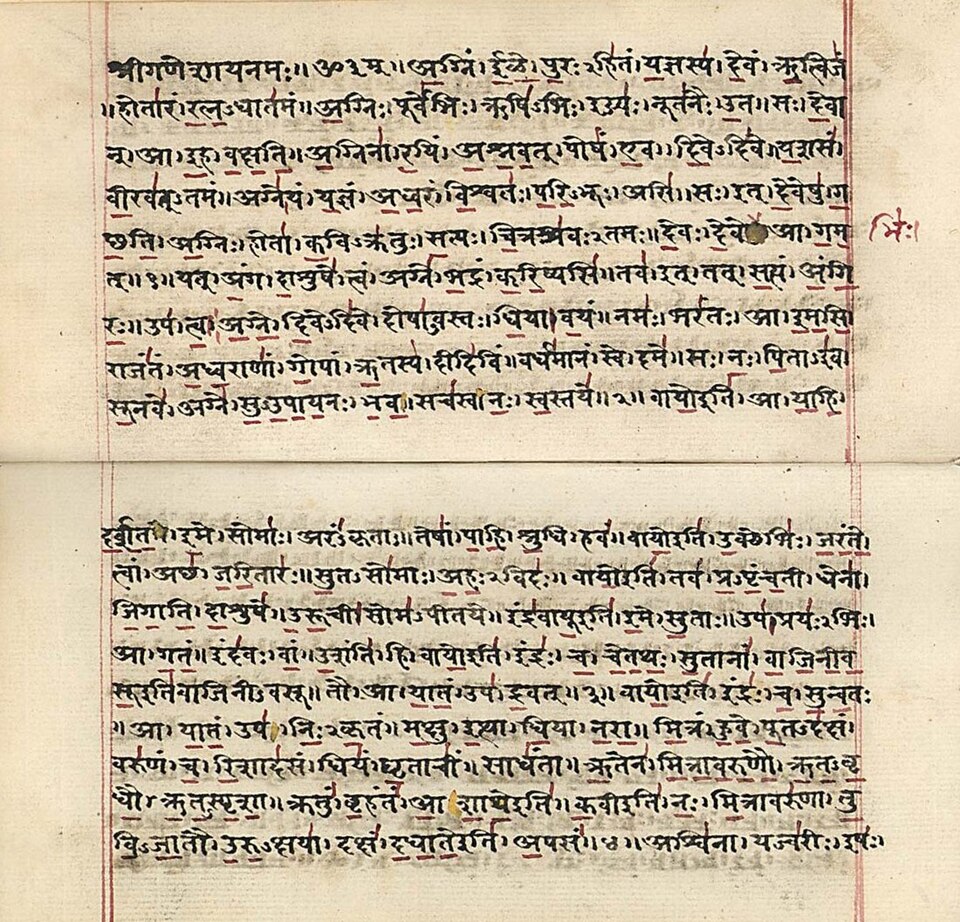
Rigveda
Anonymous; multiple rishi families
The oldest Indo-Aryan text. Its asuras and devas are cognate with the Avestan ahuras and daevas — but with the valuations swapped, which is the single sharpest illustration of how a god becomes a demon.
Read Rigveda in full at the linked edition →Hierarchies from this text
What this text attests · 8
| Name here | Rank given | # | Powers described |
|---|---|---|---|
| Priest of the gods | — | The first word of the Rigveda; conveys the sacrifice to the gods and the gods to the sacrifice. | |
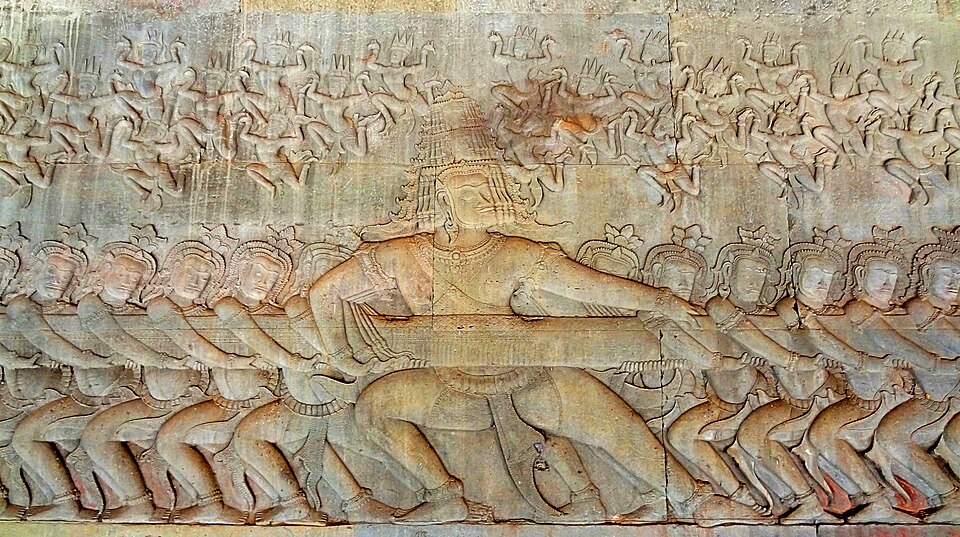 Asura = The Asuras | Lord — in the earliest layers, an honorific | — | Applied to Varuna and Mitra as a title of sovereign power before the sense reverses. |
| King of the gods | — | Slays Vritra with the vajra and releases the pent waters — the central Rigvedic act. | |
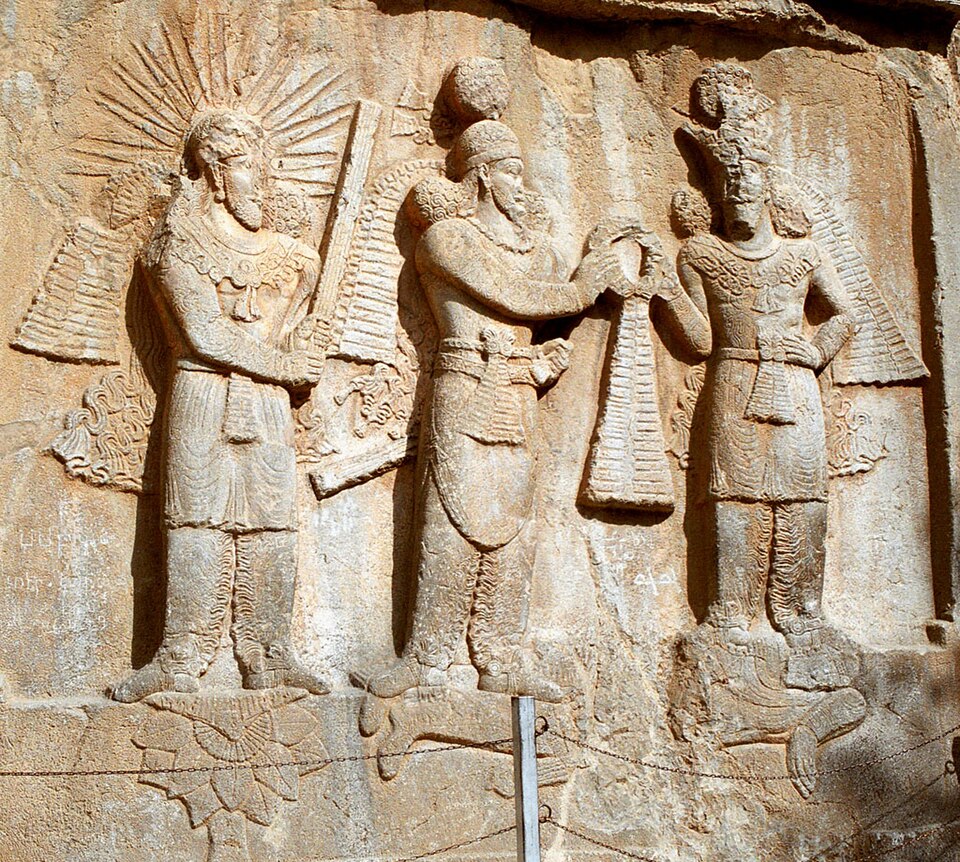 Mitra = Mithra | Asura | — | Paired with Varuna as guarantors of cosmic and social order. |
| The howler | — | Petitioned to turn his arrows aside; both the sender of illness and the possessor of a thousand remedies. | |
| Asura, upholder of rita | — | Sees all deceit; binds the guilty with his noose. The honorific asura applied to him predates the word's demonic sense. | |
| The encloser | — | Holds back the waters until Indra splits him open. | |
| King of the departed | — | The first to find the path to the other world, and so the one who receives the dead. |