Tradition
Vedic & Hindu
The devas and asuras, whose names are cognate with the Iranian daevas and ahuras — with the moral polarity exactly reversed.
What is the Vedic & Hindu tradition?
The Vedic material sits on this site for a specific reason: it preserves the other half of a split. The devas and asuras of Indian religion are cognate with the daevas and ahuras of Iranian religion — the same words, the same inheritance — with the moral polarity reversed. What is divine in one is demonic in the other.
That single fact does more to demonstrate how demonisation works than any amount of argument. It is not that one tradition discovered the truth about a class of beings; it is that two branches of one linguistic community diverged, and each classified the other's gods as the enemy.
Indra, Agni and the rest are attested in some of the oldest religious poetry that survives anywhere, which makes them valuable as an early comparison point for the storm-god and fire-god types that recur across the Near East.
Which texts does this tradition rest on?
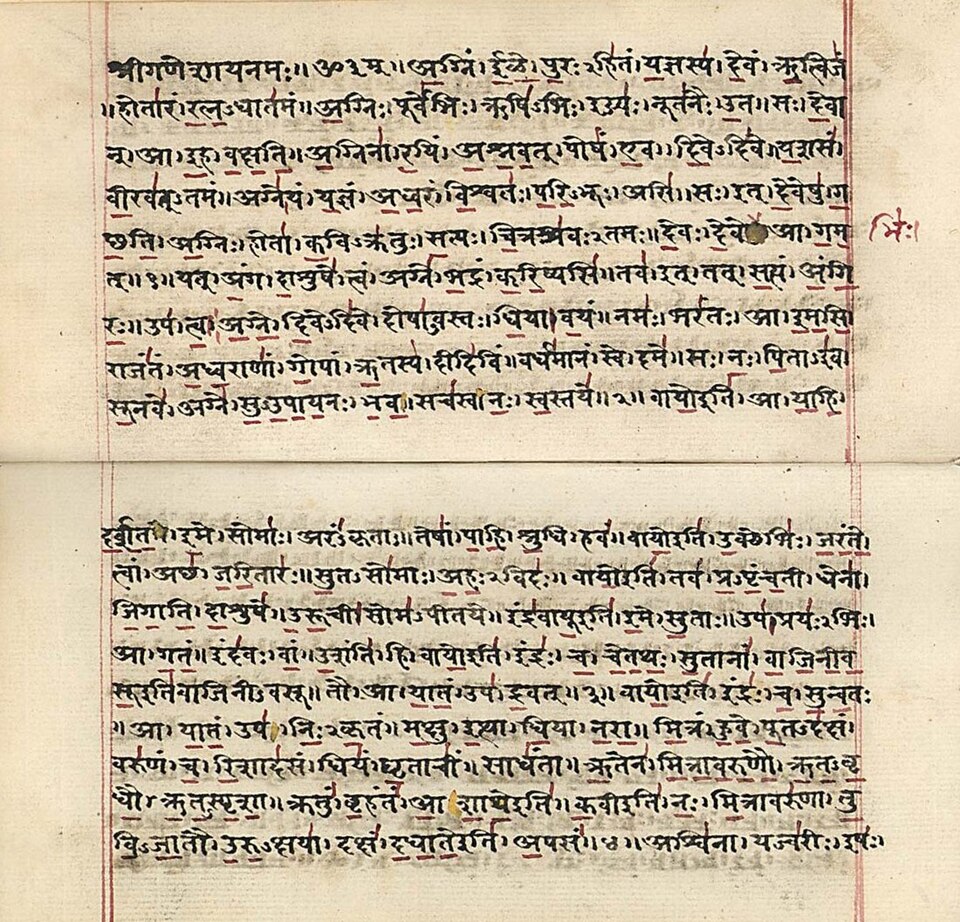
Rigveda
Anonymous; multiple rishi families · c. 1500-1200 BCE
The oldest Indo-Aryan text. Its asuras and devas are cognate with the Avestan ahuras and daevas — but with the valuations swapped, which is the single sharpest illustration of how a god becomes a demon.
8 entries contributed
The Atharvaveda
Anonymous; attributed to the seers Atharvan and Angiras · c. 1000 BCE
The fourth Veda, and the one that took longest to be accepted as one. Where the Rigveda is public liturgy addressed to great gods, this is the domestic and medical layer underneath it — fever, snakebite, childbirth, rivals, kings. It is the best evidence in the corpus that the same religion which produced the sovereign hymns also had an everyday apparatus for handling misfortune, and it names the same gods in both registers. Described here and not quoted: it is a book of charms, and the rule that governs the Mesopotamian incantation series governs this too.
5 entries contributed
The Shatapatha Brahmana
Anonymous; tr. Julius Eggeling · c. 800–600 BCE
The prose commentary on the sacrifice, and the place where Vedic myth is explained rather than sung. Its Indra is the one this corpus wants: the god who kills Visvarupa, the three-headed son of Tvashtri, in a passage that pauses to say he was free from that sin — which is not a sentence anyone writes unless the question has been asked. A hero whose victories have to be defended is a different figure from the one the hymns celebrate, and the change is visible only if both texts are here.
3 entries contributed
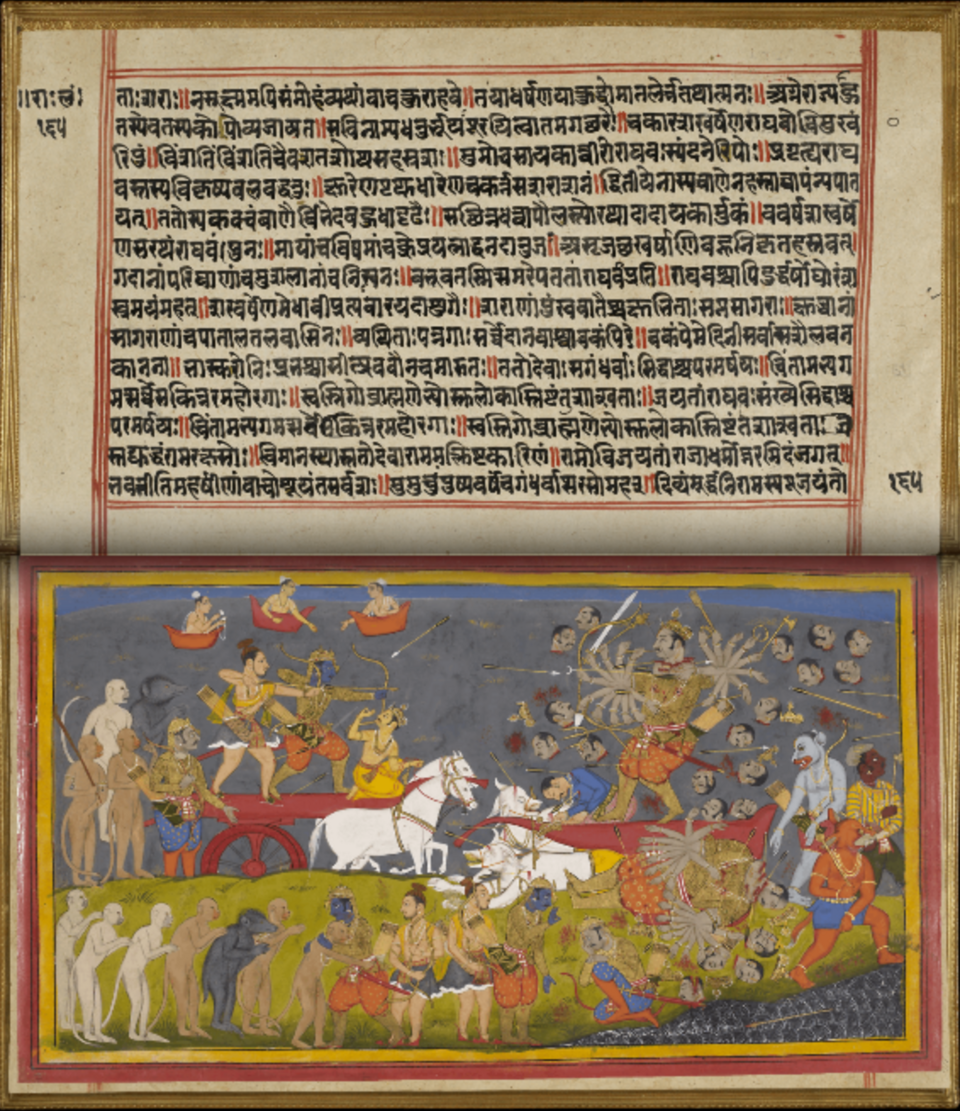
Ramayana
Valmiki; tr. Ralph T. H. Griffith · c. 500-100 BCE
The epic of Rama's war against Ravana. Ravana belongs here and not to the Rigveda, which is a thousand years older and does not know him.
1 entries contributed
The Mahabharata
Attributed to Vyasa; tr. Kisari Mohan Ganguli · c. 400 BCE – 400 CE
The longest poem in the world, and for this corpus the record of what the Vedic gods became once they were characters in stories rather than addressees of hymns. Yama argues and loses an argument, Indra schemes and is outmatched, and the old sovereign gods spend much of it subordinate to figures the Rigveda barely mentions. It also carries its own retelling of the Rama story, which makes it an independent witness to Ravana.
6 entries contributed
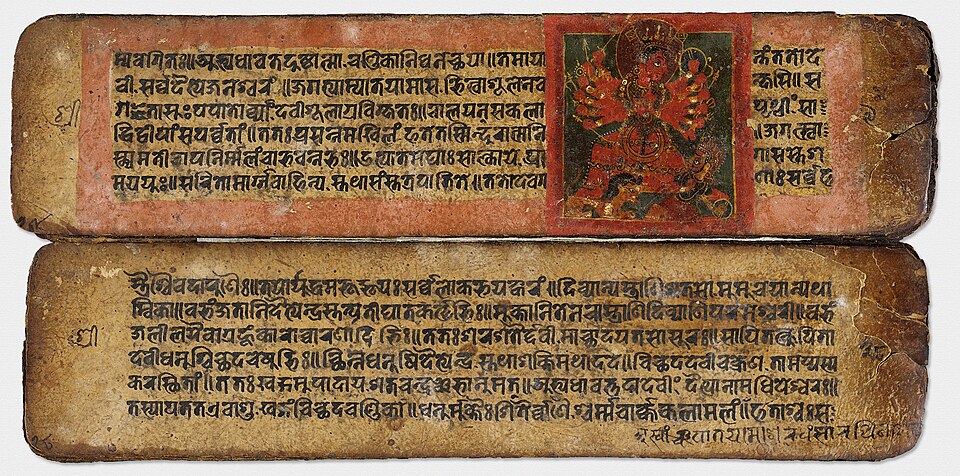
Devi Mahatmya
Anonymous; part of the Markandeya Purana · c. 400-600 CE
The text in which the Goddess becomes supreme in her own right, and where Kali steps out of Durga's brow on the battlefield. Kali is not a Vedic figure; she arrives roughly two thousand years after the Rigveda.
1 entries contributed
Which marks belong to it?
Oldest first. A mark used by several traditions appears on each of their pages — which is the point: the shapes crossed these boundaries far more easily than the names did.
The Swastika
from c. 2500 BCE
An auspicious mark used continuously for four and a half thousand years across most of the world, and destroyed as a public sign in the West by twelve years of one European party's use of it.
Om
from c. 1200 BCE
A syllable before it was ever a shape — recited at the opening and close of Vedic utterance, and only much later written as the mark everyone recognises.
The Vajra
from c. 1200 BCE
Indra's thunderbolt, forged from a sage's bones, and later the ritual sceptre of Tibetan Buddhism — a weapon that changed sides.
The Trishula
from c. 200 BCE
A three-pronged spear carried by Shiva and by the goddess in her killing aspect, with the three points read as everything that comes in threes.
Who is filed under Vedic & Hindu?
Ordered by attestation score — how early and how independent the texts that name each figure are, rather than how famous the figure has since become.
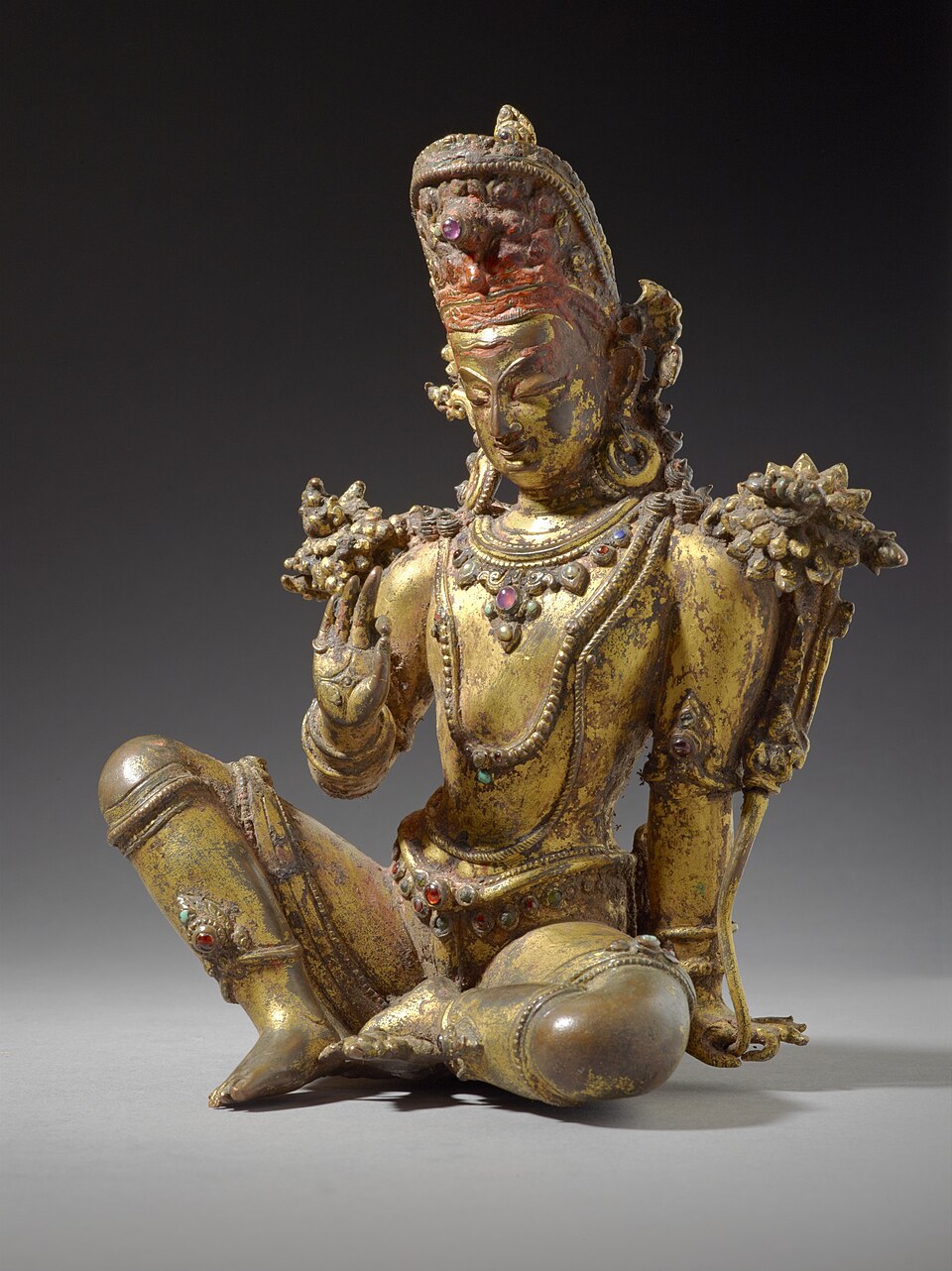
Indra
King of the Devas · Vedic
The thunderbolt-wielding king of the gods, who slays the serpent Vritra and releases the pent waters. It is the Indo-European form of the same combat myth as Baal against Yam.
Agni
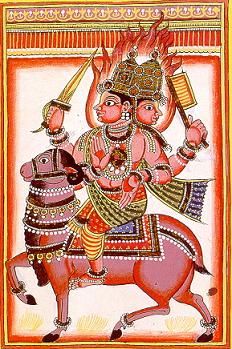
God of Fire · Vedic
Fire as the mouth of the gods — the one who carries offerings upward, and so the messenger of the Vedic system.
Rudra
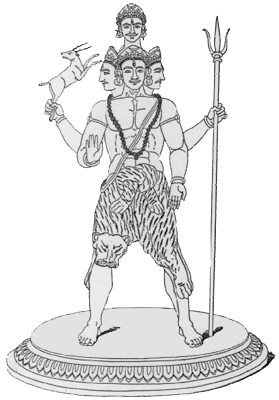
The Howler · Vedic
The fierce archer who sends disease and withholds it — addressed in the Rigveda with open fear, and later absorbed into Shiva.
The Asuras
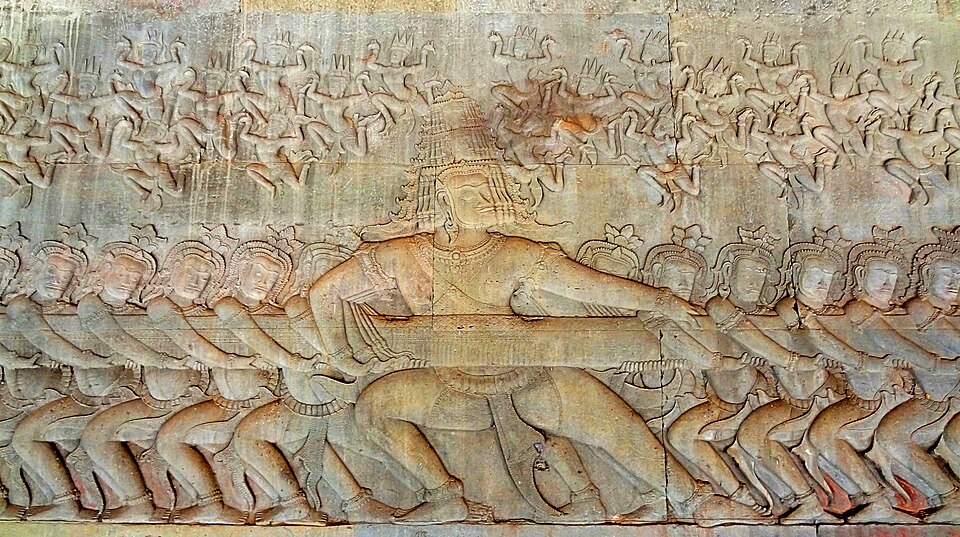
Class of Beings · Vedic
In the earliest Rigveda a title of honour for the highest gods; by the later Vedic period, the demonic opponents of the devas. The same word, inverted within one tradition.
Varuna
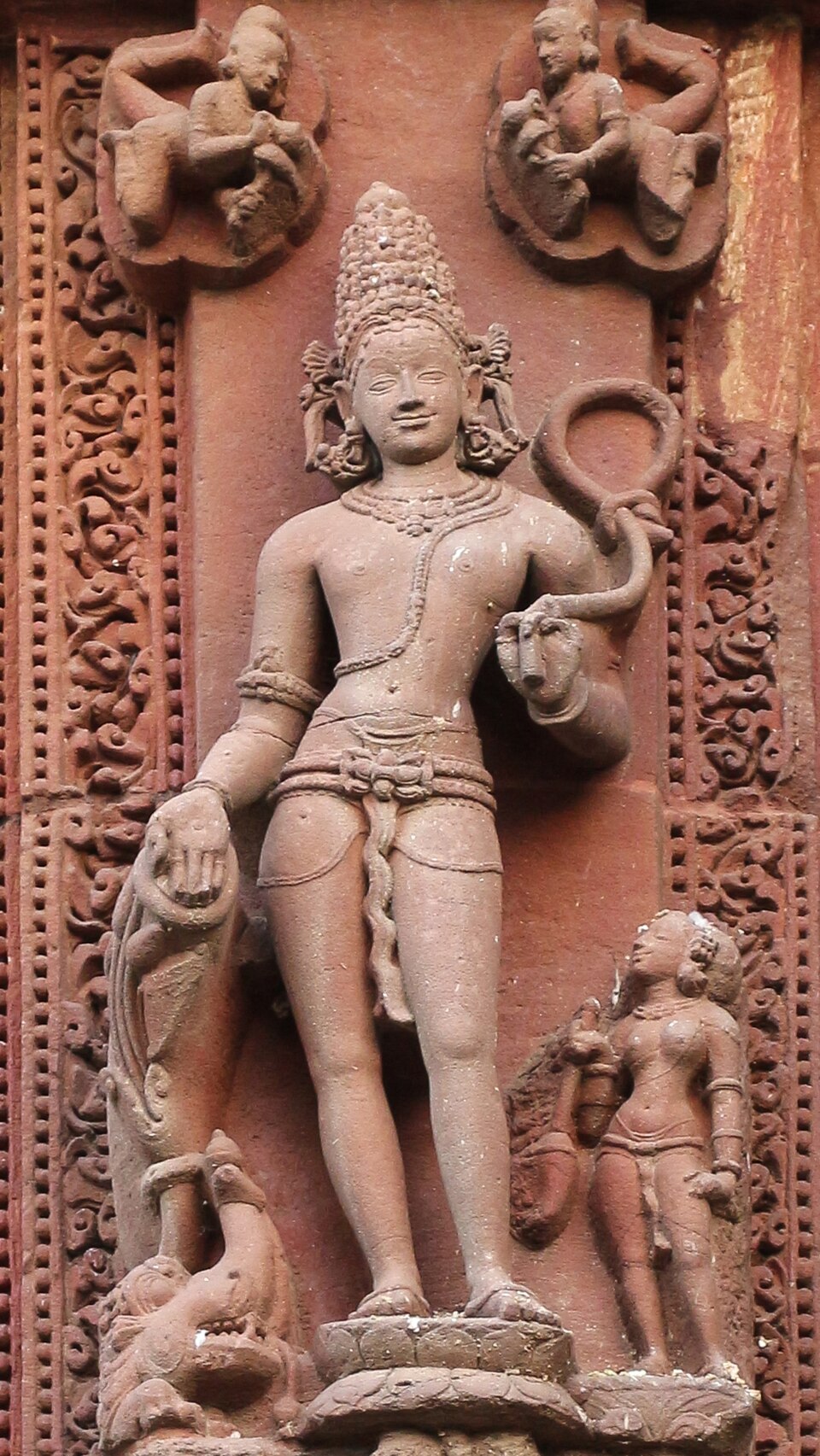
Keeper of Cosmic Order · Vedic
Binder of the oath-breaker with his noose. The earliest hymns call him *asura*, using the word as an honorific, long before it turned demonic.
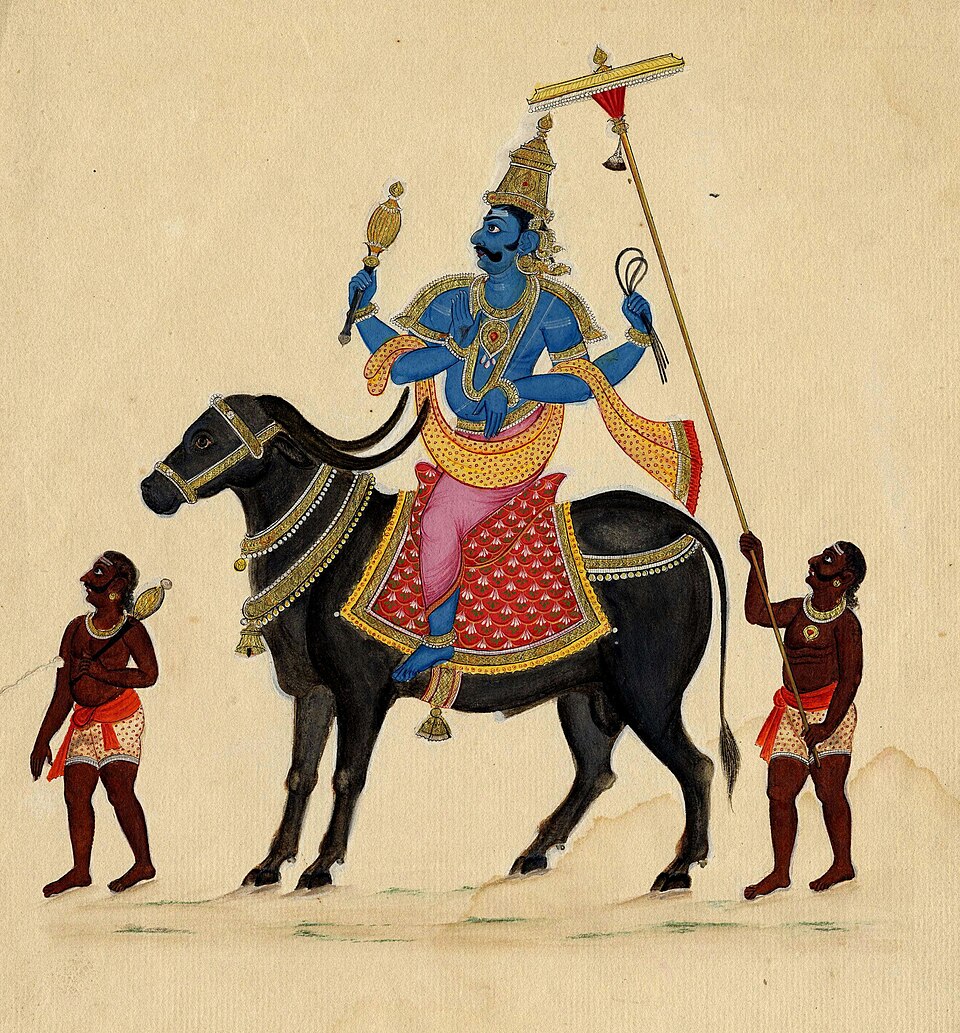
Yama
Lord of Death · Vedic
The first mortal to die, and so the king of the dead who judges those who follow. Azrael and Anubis hold the same office under other names.
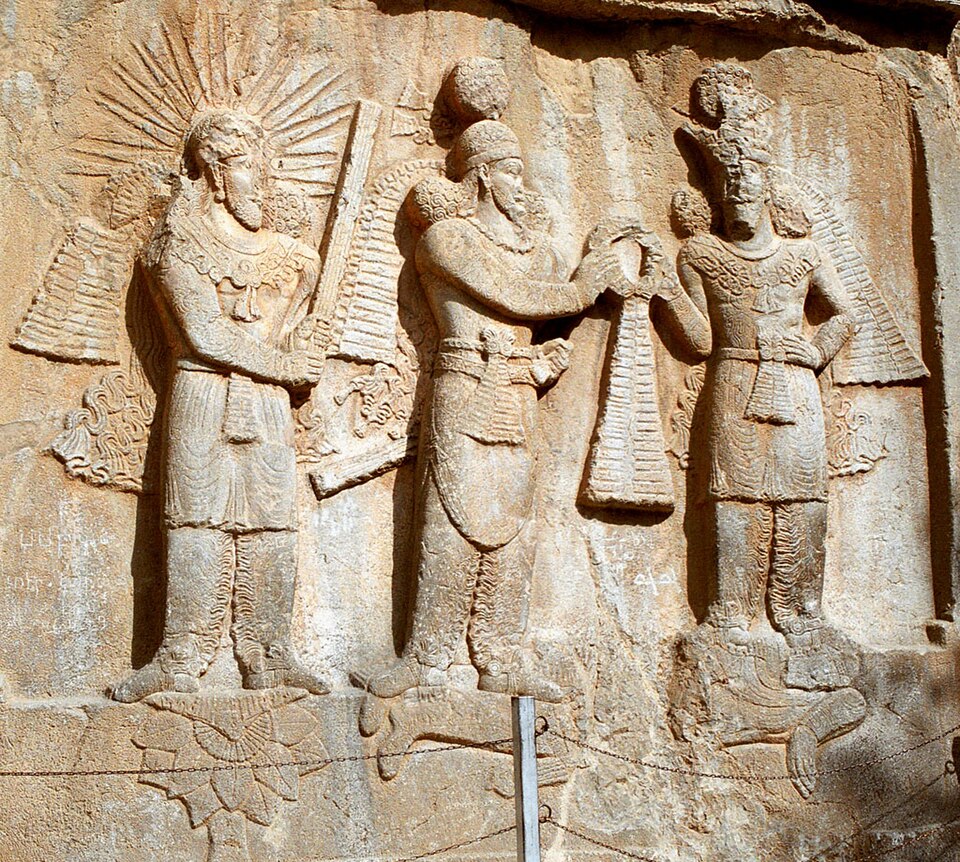
Mithra
Lord of Covenant · Persian
God of the binding contract, worshipped from India to Roman Britain. No other deity in this compendium can be traced across three civilisations so cleanly.
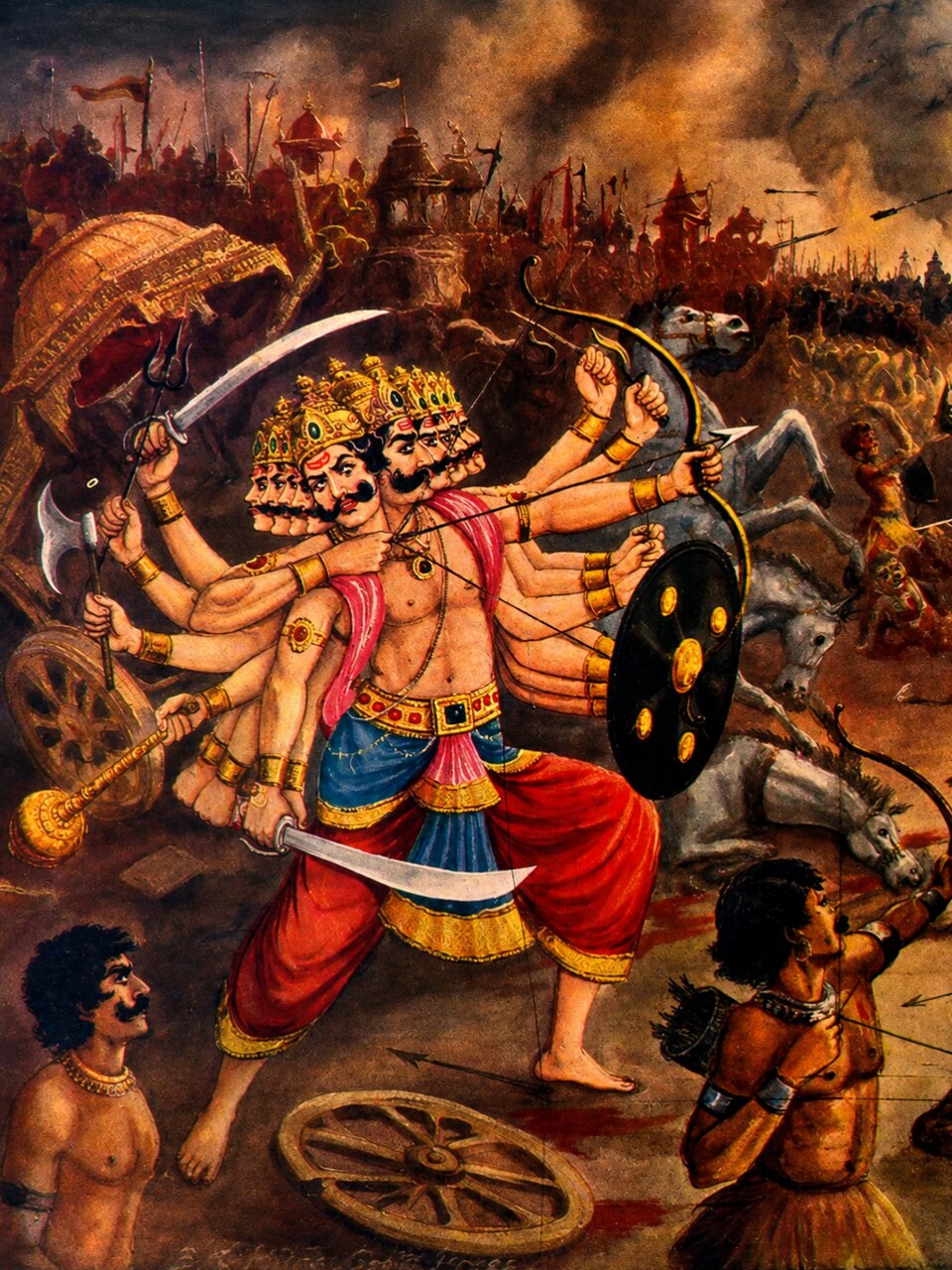
Ravana
Rakshasa King · Vedic
The ten-headed antagonist of the Ramayana — a devout scholar, musician and ascetic whose downfall is a single act of pride.
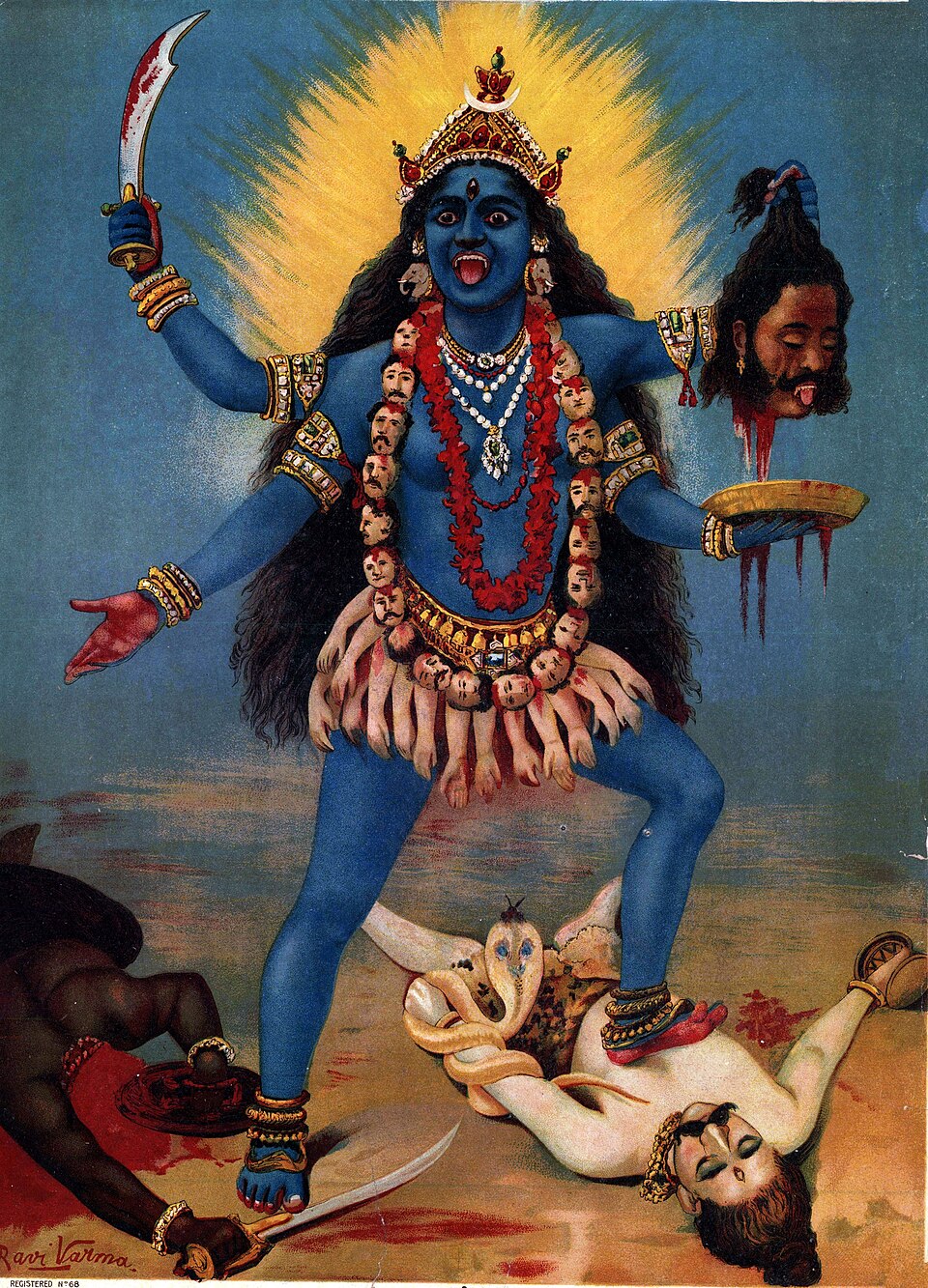
Kali
The Black One · Vedic
Terrifying and maternal at once — a goddess whose iconography reads as demonic to outsiders and as protective to those who worship her.
Vritra
Serpent of Drought · Vedic
The serpent who encloses the waters, slain by Indra — the Indo-European cousin of Lotan, Leviathan, Tiamat and Apep.