Deity · Vedic · c. 400 BCE
Kali
Also called Kalika · also recorded as Jagadaanandakaarinii, Jagadvighnasinii, Gaurii, Duhkhadaaridyanaashinii, Bhairavabhaavinii, Bhaavaanantaa, Saarasvaatapradaa, Chaturvargapradaa, Saadhvii, Sarvamangalamangalaa, Bhadrakaalii, Vilaakshii, Kaamadaatrii, Kalaatmikaa, Niilavaanii, Mahaagaurasarvaangaa, Sundariiparaa, Sarvasampatpradaa, Bhiimanaadinii, Varavarninii, Vaaraarohaa, Shivaruhaa, Mahishaasuradhaatinii, Shivapujyaa, Shivapritaa, Daanavendraprapujitaa, Sarvavidyaamayii, Sharvasarvabhishthaphalapradaa, Komalaangii, Vidhaatrii, Vidhaatrivaradaayinii, Purnenduvadanaa, Niilameghavarnaa, Kapaalinii, Kurukullaa, Prichittaa, Kaantachittaa, Madonmadaa, Mattangii, Madanapriitaa, Madaaghurnitalochanaa, Madottiirnaa, Kharparaasinaramundavilaasinii, Naramundasrajaa, Devii, Khagdahastaa, Bhayaanakaa, Attahaasayutaa, Padmaa, Padmaragopashobhitaa, Karaabhayapradaa, Kaalii, Kaalaraatrisvarupinii, Svadhaa, Svaahaa, Vashatkaaraa, Sharadindusamaprabhaa, Sharatjyotsnaa, Samhlaadaa, Vipariitarataaturaa, Muktakeshii, Chinnajataa, Jataajutavilaasinii, Sarvaraajayutaabhiimaa, Sarvaraajoparisthataa, Shmashaansthaa, Mahaanandistutaa, Samdiiptalochanaa, Shavaasanarataa, Nandaa, Siddhachaaranasevitaa, Balidaanapriyaa, Garbhaa, Bhūrbhuvasvahsvarūpinii, Gaayatrii, Saavitrii, Mahaaniilasarasvatii, Lakshmiirlakshanasamyuktaa, Sarvalakshanalakshitaa, Vyaaghracharmavritaa, Madhyaa, Trivaliivalayaanchitaa, Gandhairvah, Samstutaa, Mahaaparaa, Pavitraa, Paramaa, Maayaa, Mahaamaayaa, Mahodayaa, Mahākaalī, Jagadhātrī, Jagadambā, Jaganmayī, Jaganmātā, Jagatsārā, काली (per Wikidata)
Terrifying and maternal at once — a goddess whose iconography reads as demonic to outsiders and as protective to those who worship her.
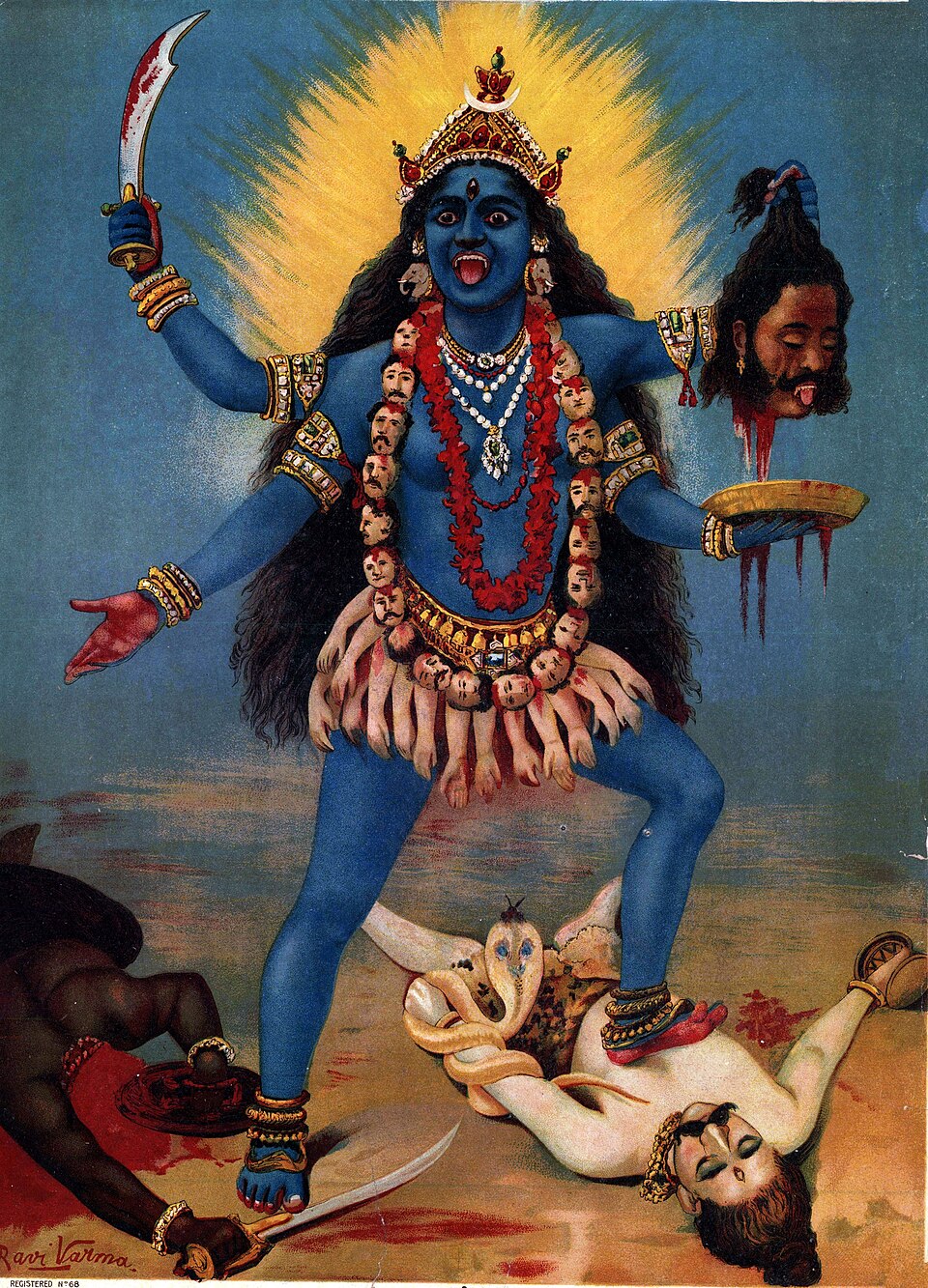
Well sourced
She arrives fully formed and the text says so: in the Devi Mahatmya she springs from the brow of the goddess in a rage, black, gaunt and armed, against an enemy that reproduces from its own spilled blood — and she wins by drinking the blood before it lands. That is a solution rather than a frenzy, and the distinction is what most later reception loses. An image of the same shape is older: the Mahabharata's night-massacre book has a black woman with a noose walking the camp and taking away the bound dead, and whether she is the goddess or that night personified is disputed. What is not disputed is that the tradition already had the picture when the Devi Mahatmya gave it a name and a theology.
Identity
Where does the name come from?
Where it was actually worshipped
Kalighat and Dakshineswar in Kolkata, both of them living cult and both crowded — and unusual on this list for being places you can visit on a Tuesday and find in use.
A figure with temples and a figure that only ever existed on a page are different kinds of thing, and the difference is easy to lose once both are entries in a list.
At a glance
Vitals
Vitals
Also known as
- First attested
- The Mahabharata · c. 400 BCE – 400 CE
- Named there as
- Kalaratri
- Rank
- The Black One
- Pantheon
- Vedic
- Order
- Vedic pantheon
- Base of operations
- Kalighat and Dakshineswar in Kolkata, both of them living cult and both crowded — and unusual on this list for being places you can visit on a Tuesday and find in use.
- Era
- c. 400 BCE
- Traditions
- Vedic & Hindu
- Placed in
- Devas and Asuras
Traits
- Domain
- Time, destruction, liberation, the battlefield
- Traditional form
- Dark, garlanded with heads, standing on Shiva
Stats
Known connections
Identified with
2 sites
Where was it worshipped?
Attested cult sites, located against the Pleiades gazetteer of the ancient world where it reaches and against Wikidata everywhere else. An absence here is not evidence that no cult existed: a good number of figures never had one, and the entry above says so where that is the case.
now Kolkata
One of the few sites on this map that is crowded on an ordinary weekday.
22.520, 88.342 · Wikidata Q535970
now Kolkata
22.655, 88.358 · Wikidata Q1157765
4 attributed
What is it said to do?
Where these powers cluster
The 4 offices attributed to Kali, grouped by kind. Segment width is the share of powers falling in each category.
A bar dominated by one colour means a specialist; an even spread means a figure the sources credit with almost anything.
- martial3
- malefic1
1 mark
Which marks is it attached to?
A mark a figure carries and a mark used against a figure are opposite claims, so each link says which it is.
2 texts
Which texts say so, and where do they disagree?
When these texts were written
Each dot is one of the 2 texts that names Kali, placed at that text's approximate date.
A wide spread means the figure was carried across many centuries and traditions; a tight cluster means a single period produced the whole record.
2 texts spanning roughly 600 years
Where the texts differ
- Name: given as Kalaratri, Kali
The night-massacre book has a black female figure with a noose walking the camp and taking away the bound dead, seen by the men as they are killed in their sleep. Whether she is the goddess or a personification of that night is disputed, and the corpus records the dispute rather than resolving it; what is not disputed is that the Devi Mahatmya's Kali arrives into a tradition where this image already existed.
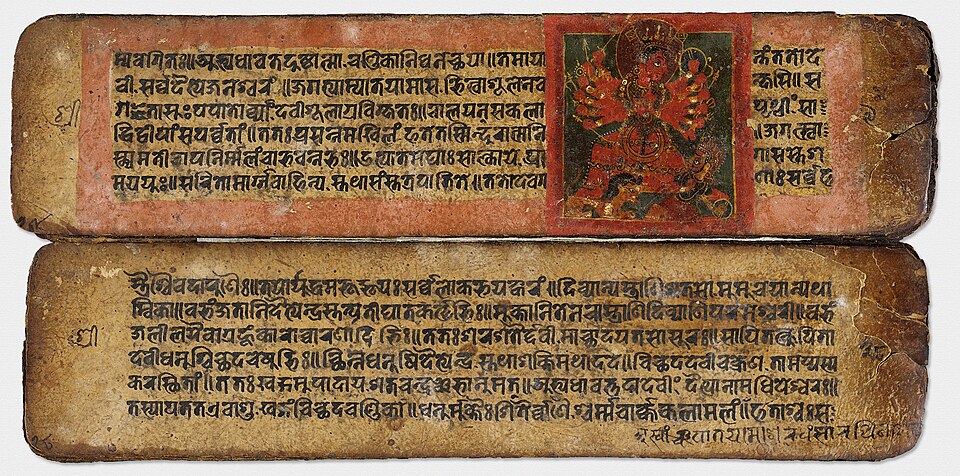
Steps out of Durga's brow on the battlefield. Her devotees read the fearsome form as compassion rather than malice. She is not a Vedic figure and arrives some two thousand years after the Rigveda.
Connections
What is it connected to?
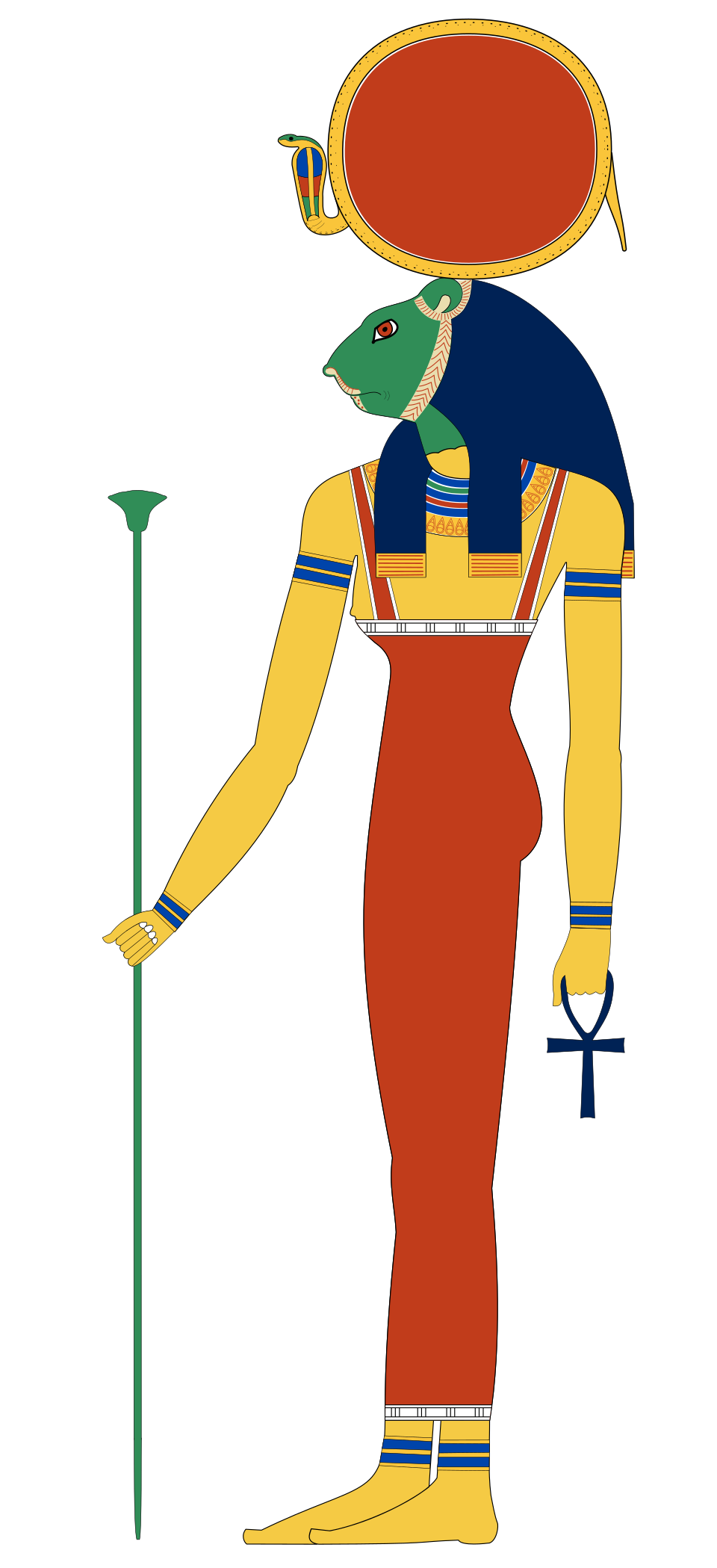
Placement
Where does it sit in the hierarchies?
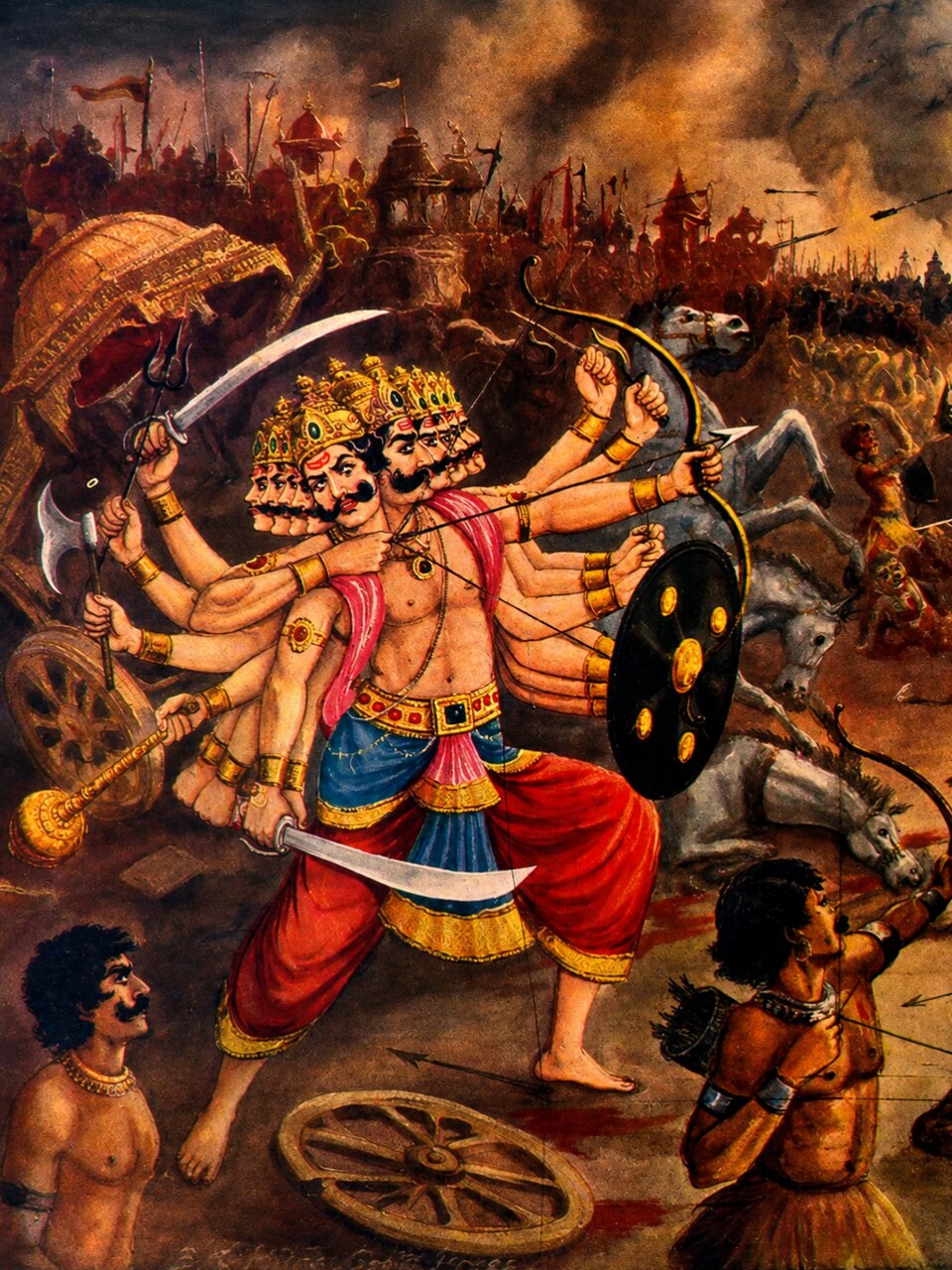
Afterwards
What did later readers make of it?
Two receptions, running in opposite directions. In Bengali devotion she is the mother, addressed with an intimacy that startles outsiders — Ramakrishna's relationship with her is the best-documented instance — and the terrifying iconography is understood as the mother's protection rather than as a threat. In British colonial writing she becomes the goddess of the Thuggee, an association built up in the nineteenth century and revived for a large audience by Indiana Jones and the Temple of Doom in 1984. The corpus notes which of the two is a devotional tradition and which is a literature about somebody else's religion.
Kept in its own section on purpose. Everything above is what the cited texts say; this is what was built on top of them afterwards, and blending the two is how most popular demonology goes wrong.
Answered from the sources
Common questions
Which texts mention Kali?
Is Kali the same as Sekhmet?
What rank is Kali?
How else is Kali spelled?
What is Kali said to do?
How old is Kali?
Nearest in the corpus
If Kali is what you came for, these are next
Chosen by proximity rather than by popularity: the same pantheon first, then the same rank, then the same kind of figure.
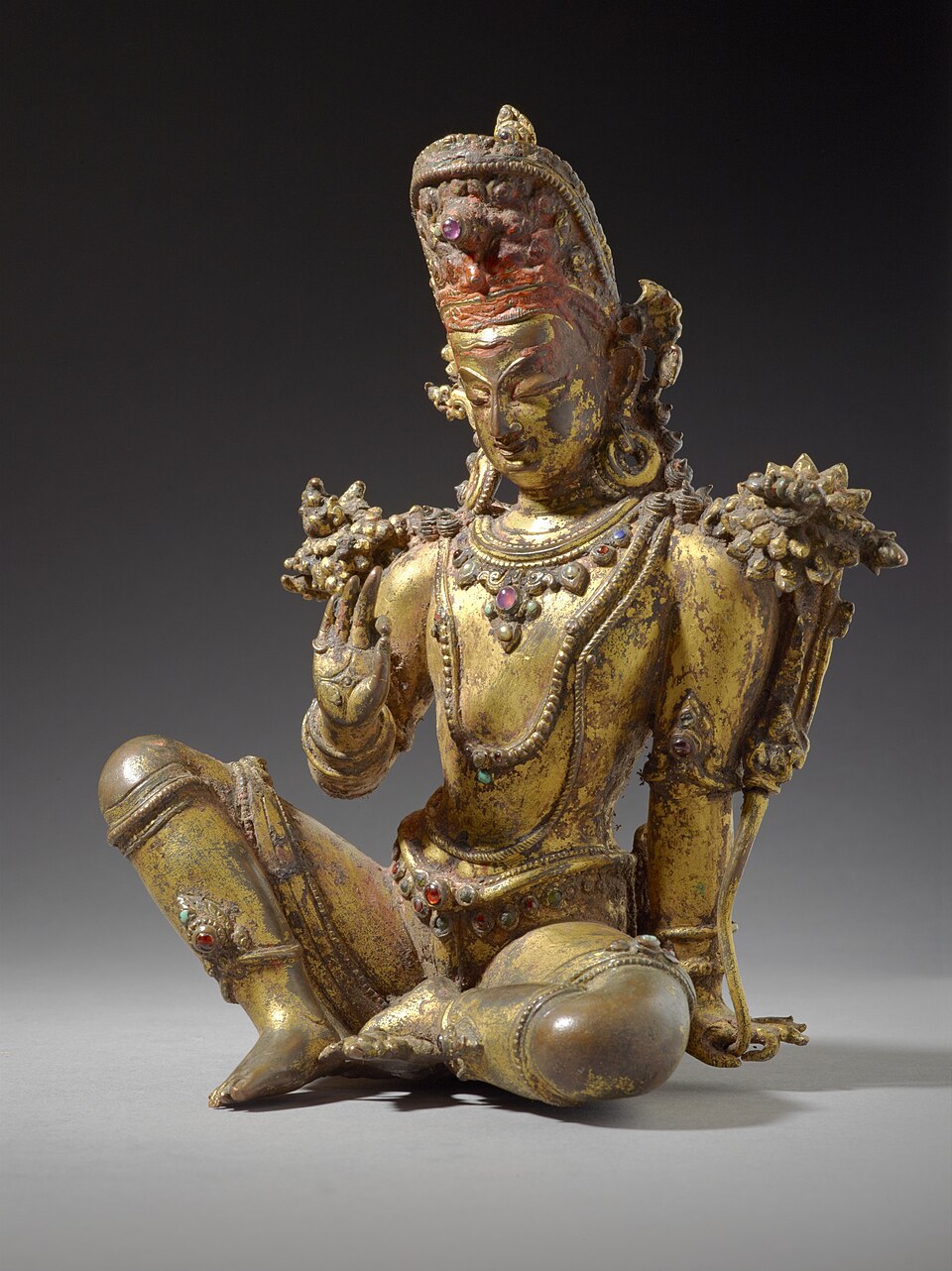
Indra
King of the Devas · Vedic
The thunderbolt-wielding king of the gods, who slays the serpent Vritra and releases the pent waters. It is the Indo-European form of the same combat myth as Baal against Yam.
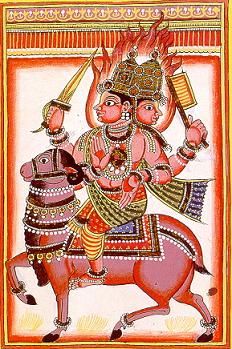
Agni
God of Fire · Vedic
Fire as the mouth of the gods — the one who carries offerings upward, and so the messenger of the Vedic system.
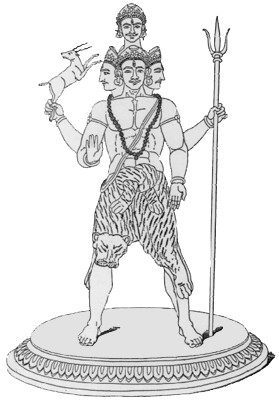
Rudra
The Howler · Vedic
The fierce archer who sends disease and withholds it — addressed in the Rigveda with open fear, and later absorbed into Shiva.
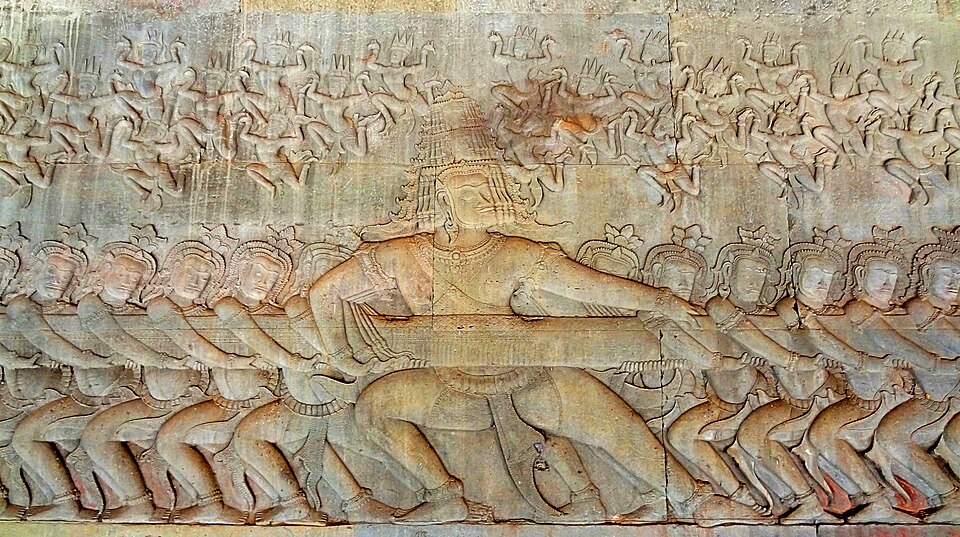
The Asuras
Class of Beings · Vedic
In the earliest Rigveda a title of honour for the highest gods; by the later Vedic period, the demonic opponents of the devas. The same word, inverted within one tradition.
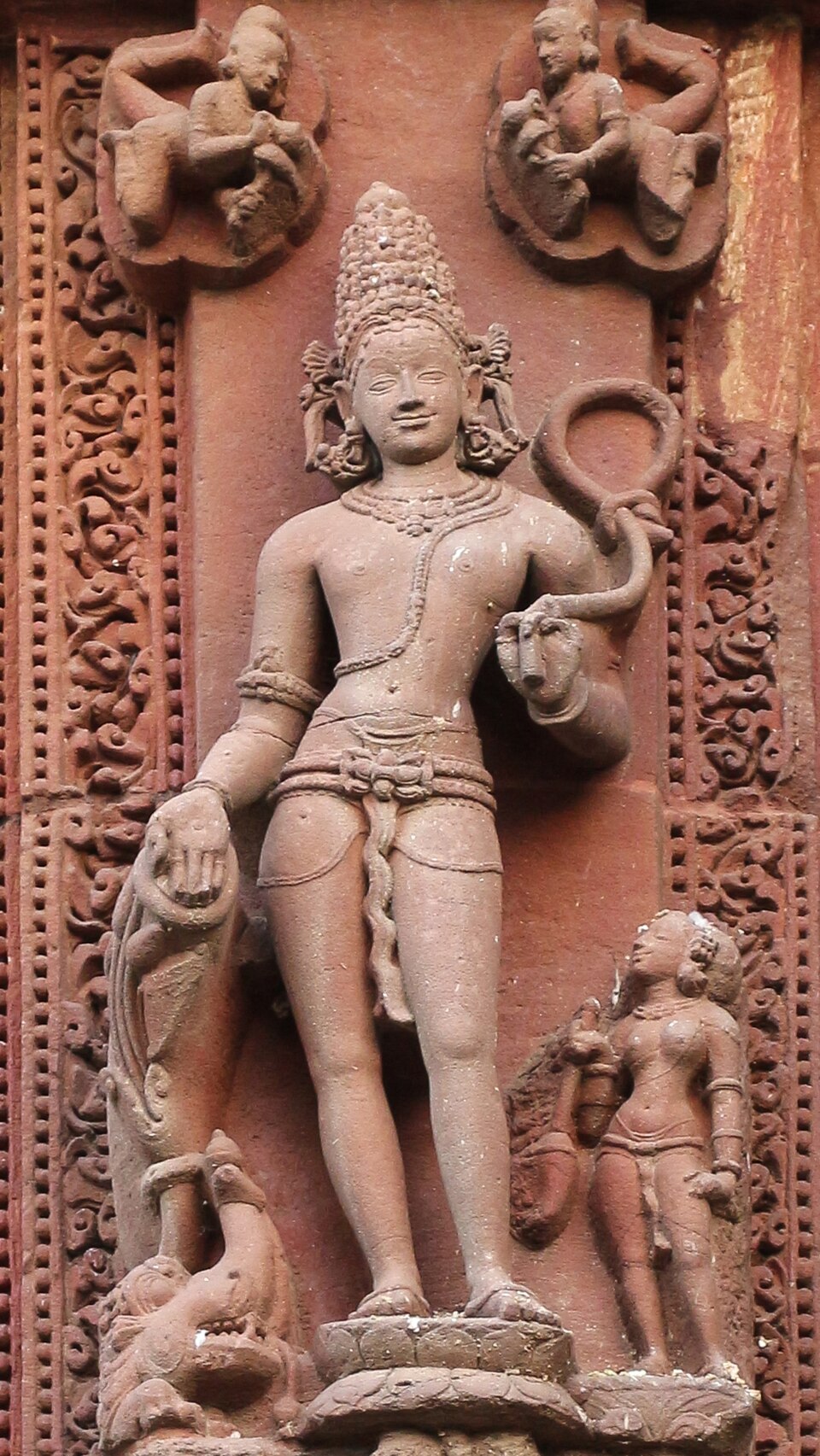
Varuna
Keeper of Cosmic Order · Vedic
Binder of the oath-breaker with his noose. The earliest hymns call him *asura*, using the word as an honorific, long before it turned demonic.
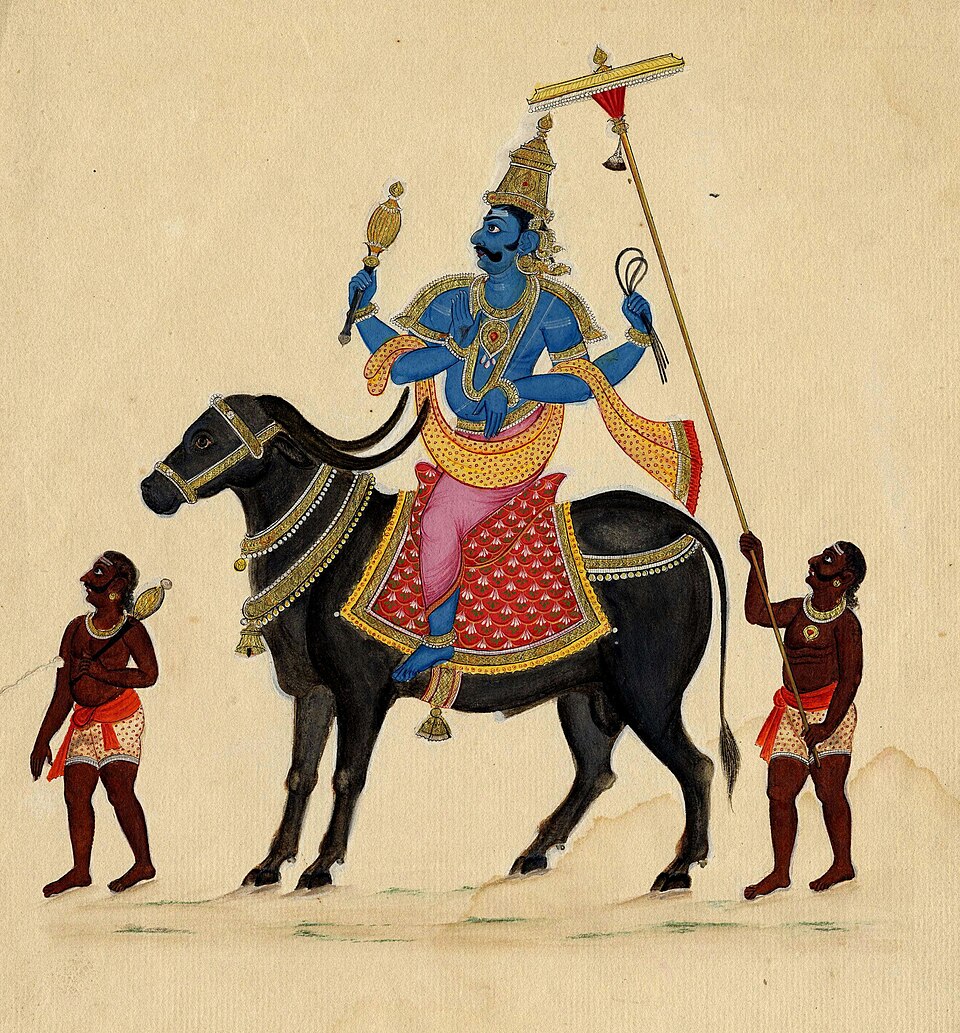
Yama
Lord of Death · Vedic
The first mortal to die, and so the king of the dead who judges those who follow. Azrael and Anubis hold the same office under other names.
The books behind Kali
Every claim on this profile is attributed to one of these. They are public domain, listed oldest first, and each links to a full text where one is freely available.
The Mahabharata
Attributed to Vyasa; tr. Kisari Mohan Ganguli · c. 400 BCE – 400 CE · Sanskrit
Read The Mahabharata in full ↗Devi Mahatmya
Anonymous; part of the Markandeya Purana · c. 400-600 CE · Sanskrit
Read Devi Mahatmya in full ↗Cover: Public domain · Image: Gallery: archive copy at the Wayback Machine · Wikimedia file page
Corpus last revised 29 August 2026. A reference site’s credibility rests on being maintained, so this is the date the sourced records last changed — not the date the page was rebuilt.