protective · from c. 200 BCE
The Trishula
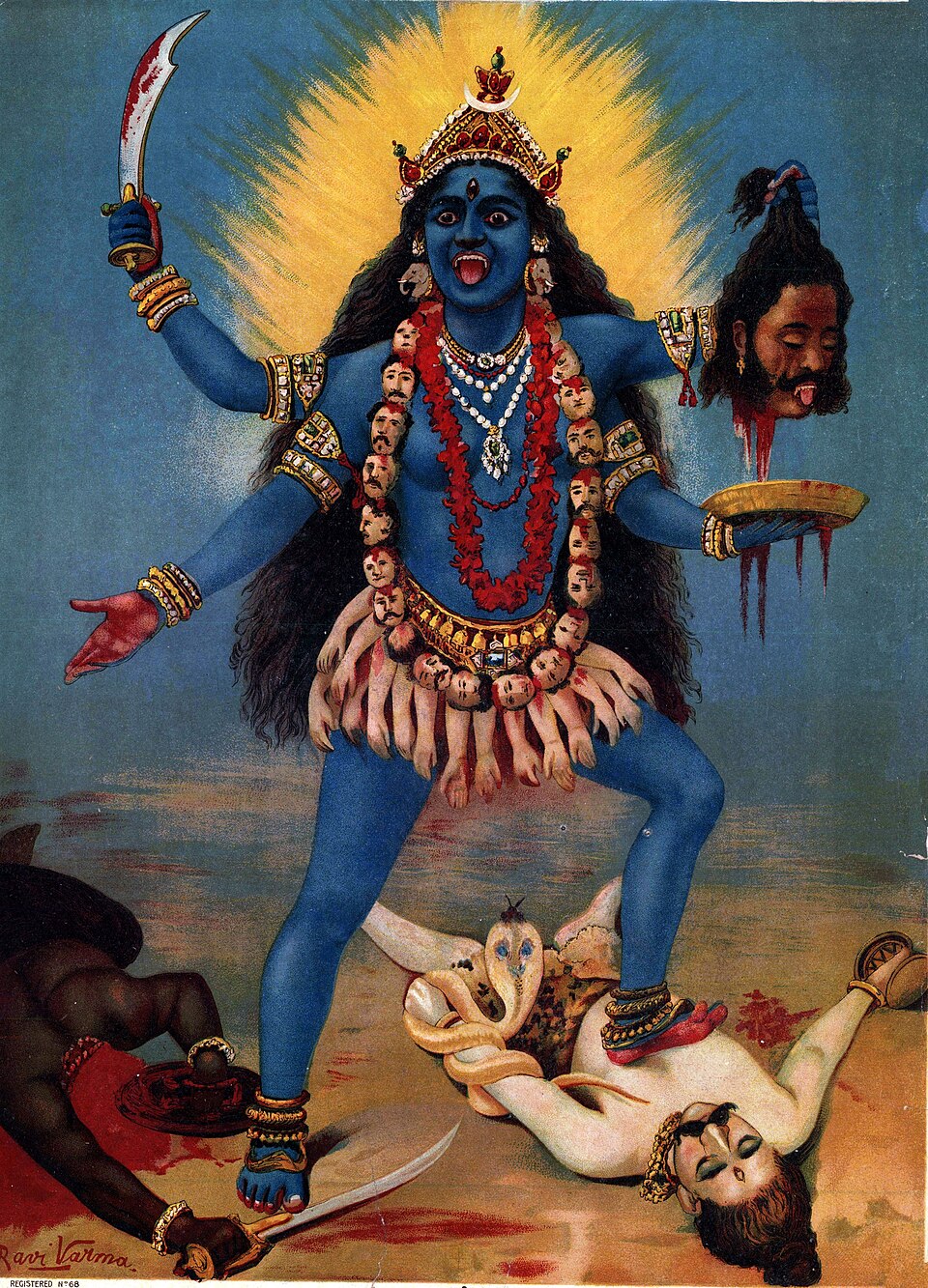
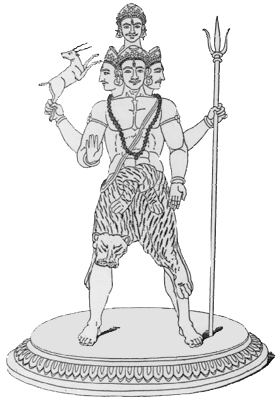
A three-pronged spear carried by Shiva and by the goddess in her killing aspect, with the three points read as everything that comes in threes.
What the sources claim for it
Destructive power held by whoever holds the three-fold whole; the specific triad is negotiable.
History
Where does the Trishula come from?
The trishula is Shiva's weapon and, in the Devi Mahatmya, the goddess's: Durga receives a trident from Shiva among the weapons the gods hand over, and uses it to kill the buffalo demon. It is carried by ascetics as a staff and planted at shrines as a marker.
Its three points are glossed variously — creation, preservation and destruction; the three gunas; past, present and future — and the multiplicity of readings is itself informative. A shape with three of anything attracts explanations, and the tradition has never settled on one, which is a healthier state than most symbols in this corpus manage.
2 figures
Who is it attached to?
Figures who carry it
An attribute rather than a signature — held, worn or associated in the texts and the images.
Afterwards
What did it turn into?
Also the shape of the Greek and Roman sea-god's trident, with no historical connection — a case of two traditions reaching the same fishing implement.
Which texts describe it?
Oldest first, with what each one does with the mark. A mark described in a Bronze Age incantation and a mark first drawn in a seventeenth-century manuscript are different kinds of claim, whatever the shape has in common.
Rigveda
Anonymous; multiple rishi families · c. 1500-1200 BCE · Vedic Sanskrit
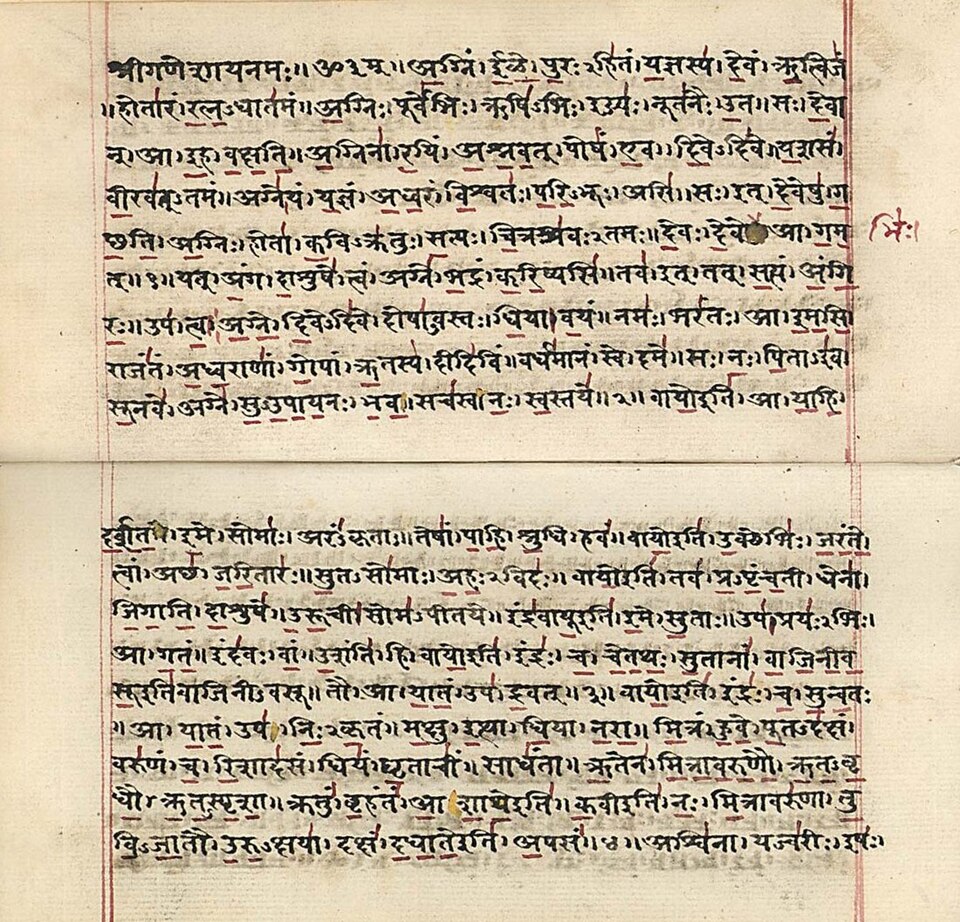
Rudra, the Vedic antecedent of Shiva, in the tradition's earliest layer.
Read Rigveda in full ↗Cover: Public domain · Unknown author · Wikimedia file page
Devi Mahatmya
Anonymous; part of the Markandeya Purana · c. 400-600 CE · Sanskrit
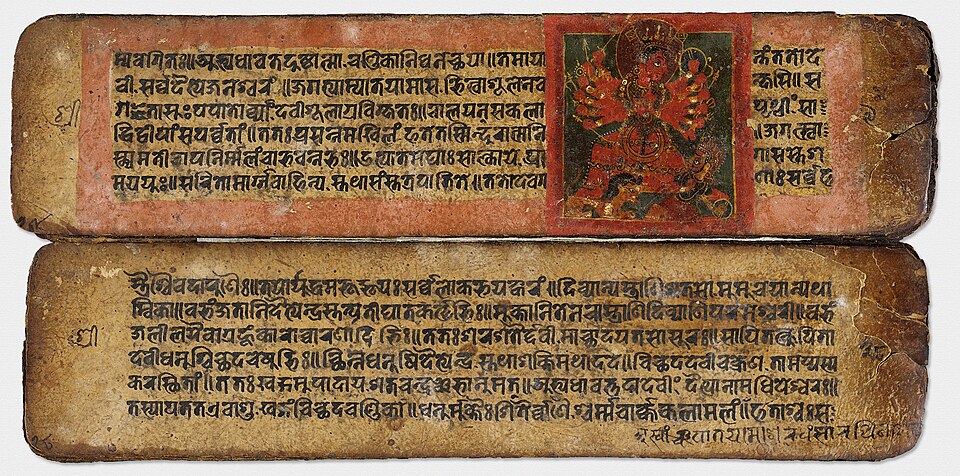
The goddess receives the trident among the weapons the gods give her, and kills with it.
Read Devi Mahatmya in full ↗Cover: Public domain · Image: Gallery: archive copy at the Wayback Machine · Wikimedia file page
Nearby
Related marks
The Swastika
An auspicious mark used continuously for four and a half thousand years across most of the world, and destroyed as a public sign in the West by twelve years of one European party's use of it.
Om
A syllable before it was ever a shape — recited at the opening and close of Vedic utterance, and only much later written as the mark everyone recognises.
The Vajra
Indra's thunderbolt, forged from a sage's bones, and later the ritual sceptre of Tibetan Buddhism — a weapon that changed sides.
The Ankh
The sign for 'life', held to the nose of a king by a god. Not an amulet first — a hieroglyph that got carried into three dimensions.
The Djed Pillar
A four-tiered column meaning stability, later read as the backbone of Osiris and raised upright at festival as a resurrection.
The Star of Ishtar
Eight points for the planet Venus, and the standard way of writing a goddess into a scene without drawing her.