Vedic & Hindu · Vedic Sanskrit · c. 1000 BCE
The Atharvaveda
Anonymous; attributed to the seers Atharvan and Angiras
The fourth Veda, and the one that took longest to be accepted as one. Where the Rigveda is public liturgy addressed to great gods, this is the domestic and medical layer underneath it — fever, snakebite, childbirth, rivals, kings. It is the best evidence in the corpus that the same religion which produced the sovereign hymns also had an everyday apparatus for handling misfortune, and it names the same gods in both registers. Described here and not quoted: it is a book of charms, and the rule that governs the Mesopotamian incantation series governs this too.
Read The Atharvaveda in full at the linked edition →What this text attests · 5
| Name here | Rank given | # | Powers described |
|---|---|---|---|
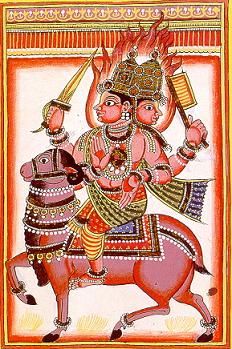
| — | — | Fire in the domestic register: the household hearth, the fire that carries the offering, and the fire invoked against what troubles a house. The Rigveda opens with Agni as the priest of the sacrifice; this text has him doing the same work at the scale of one family, which is the same god described from the floor rather than from the altar. | |
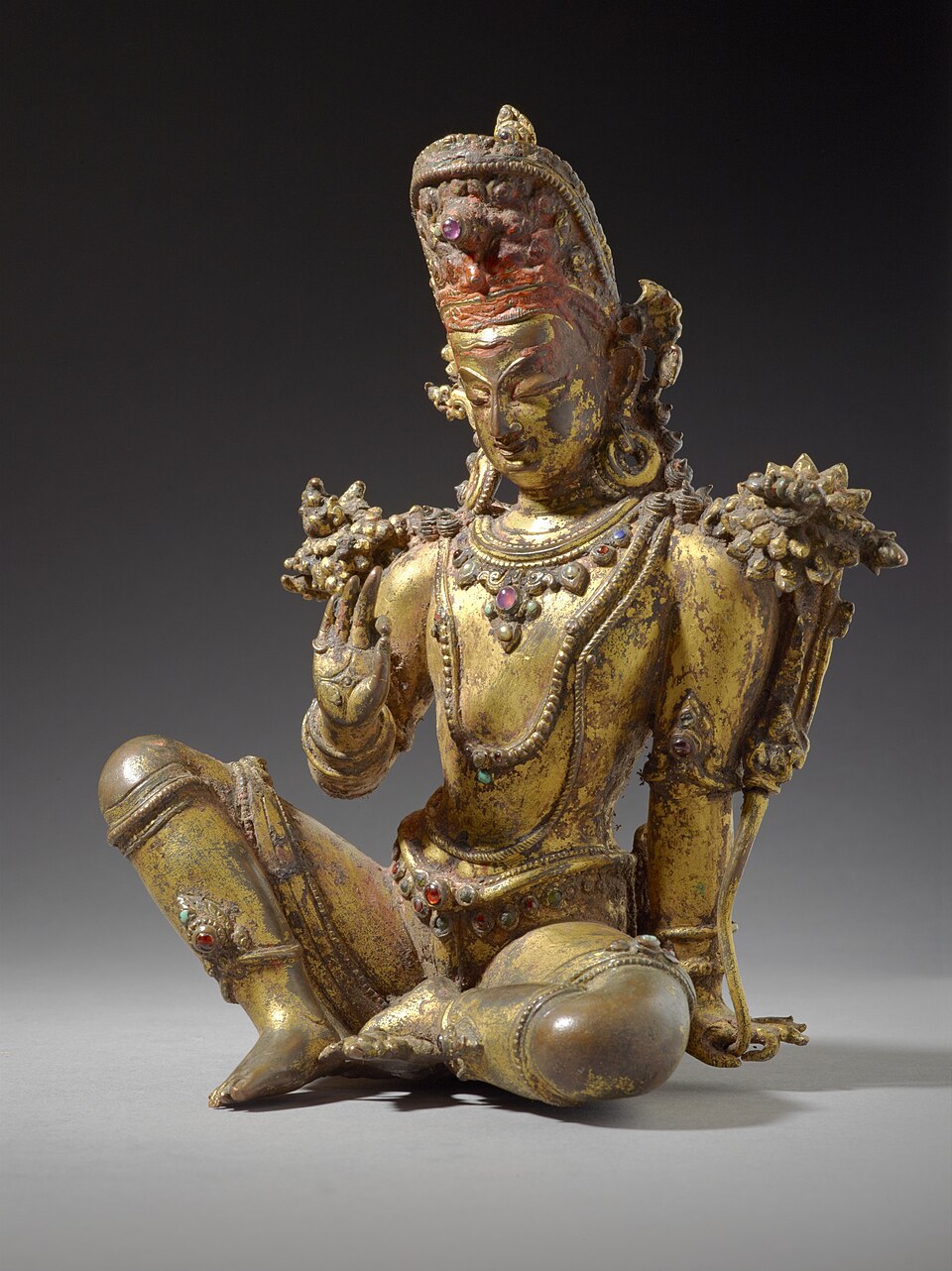
| — | — | Still the great fighter, and now enlisted: invoked for victory in the royal material and against the powers that afflict people in the domestic material. The dragon-slayer of the hymns being asked to intervene in a household quarrel is the beginning of the long descent this corpus's other Indra attestations complete. | |
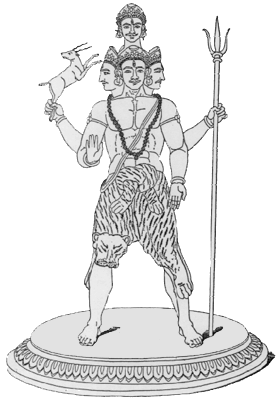 Rudra (Bhava, Sarva) = Rudra | — | — | The god you address in order to be spared, under names the Rigveda barely uses. His arrows are disease in cattle and in people, and the hymns ask him to shoot elsewhere. A god propitiated rather than praised is the immediate ancestor of the Shiva of later Hinduism, and this is where the propitiation is thickest. |
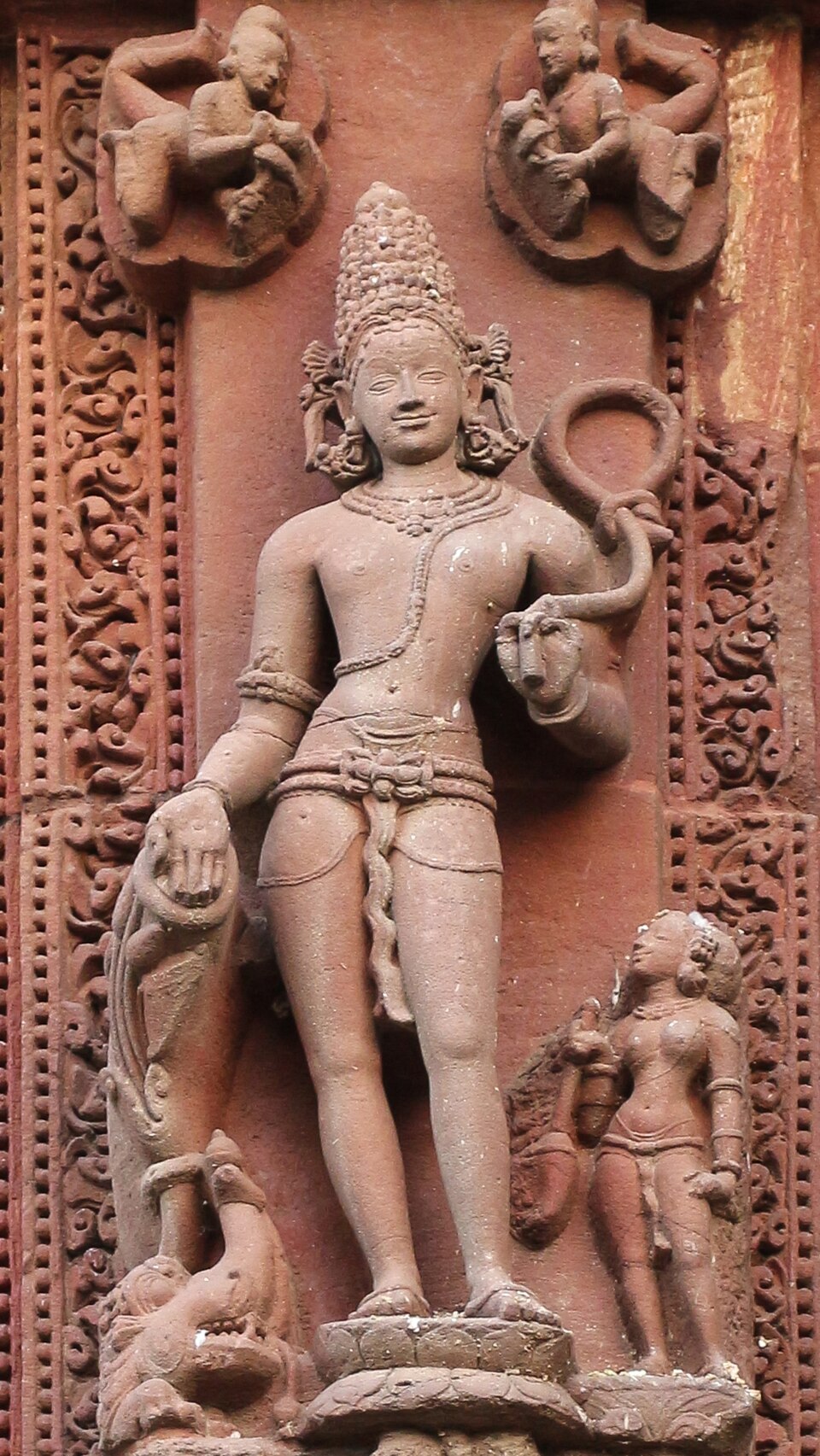
| — | — | The god of the binding oath, and of what happens when it is broken: his noose is a punishment, and the dropsy it causes is treated as his. His spies are described as standing in the world and watching, and nothing said in secret escapes them — a moral surveillance no other Vedic god exercises, and the reason his demotion to a water deity is such a strange fate. | |
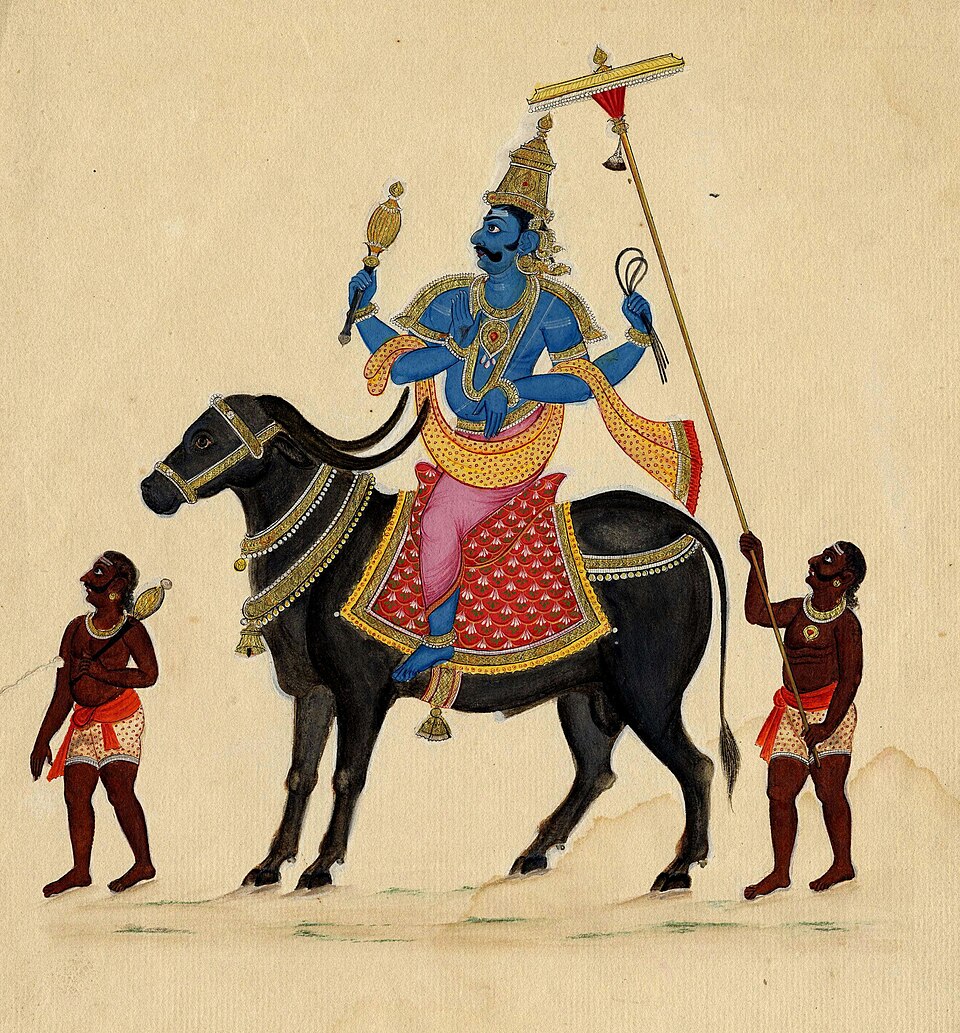
| — | — | The first man to die and therefore the one who found the road, addressed in the funeral material with the dead sent along a path he opened. His two four-eyed dogs guard it. The Vedic death god is a predecessor rather than a judge here, which is the older conception and the one later material replaces. |