Demonic · Mesopotamian · c. 1800 BCE
Harmful spirit — the sources' own term: Akkadian utukku, gallu, rābiṣu
The Utukku
Also called Utukku lemnutu, The evil utukku
The class the largest surviving body of Mesopotamian protective material is named for, and a spirit defined almost entirely by what it does rather than by who it is.
Well sourced
Udug-hul — evil utukku — is the title of a canonical series of sixteen tablets, which makes this the best attested class of harmful being anywhere in the corpus and one of the least individuated. The texts describe what an utukku does: it comes upon a person, it is present where it should not be, it is associated with waste ground and with the edges of settlement. It is not given a biography, a parentage or, in most cases, a name.
That is worth setting against the Goetia, where seventy-two spirits each have a name, a rank, a seal and a list of offices. Both traditions are cataloguing harmful spirits and they disagree completely about what a catalogue is for. One names individuals and their specialities; the other describes a category and how it behaves.
At a glance
Vitals
Vitals
Also known as
- First attested
- Udug-hul (Evil Utukku) · c. 1800–600 BCE
- Named there as
- utukku
- Rank
- A Class of Harmful Spirit
- Pantheon
- Mesopotamian
- Era
- c. 1800 BCE
- Traditions
- Mesopotamian
Stats
2 attributed
What is it said to do?
Where these powers cluster
The 2 offices attributed to The Utukku, grouped by kind. Segment width is the share of powers falling in each category.
A bar dominated by one colour means a specialist; an even spread means a figure the sources credit with almost anything.
- malefic2
2 texts
Which texts say so?
When these texts were written
Each dot is one of the 2 texts that names The Utukku, placed at that text's approximate date.
A wide spread means the figure was carried across many centuries and traditions; a tight cluster means a single period produced the whole record.
2 texts spanning roughly 300 years
The class the sixteen-tablet series is named against, described by its effects and its haunts rather than by identity. Recorded here as the series characterises it; the series' own remedies are not reproduced.

Named in the working material of amulets and spells rather than in the canonical series alone — which is the point about this whole class of being: they are known from what people did about them, not from any narrative in which they appear.
Connections
What is it connected to?
No relationship to another figure in this corpus is recorded in the texts cited above. Where an edge exists here it is because a source states it, so an empty section means the sources are silent rather than that the connection is unknown.
Answered from the sources
Common questions
Which texts mention The Utukku?
What rank is The Utukku?
How else is The Utukku spelled?
What is The Utukku said to do?
How old is The Utukku?
Nearest in the corpus
If The Utukku is what you came for, these are next
Chosen by proximity rather than by popularity: the same pantheon first, then the same rank, then the same kind of figure.
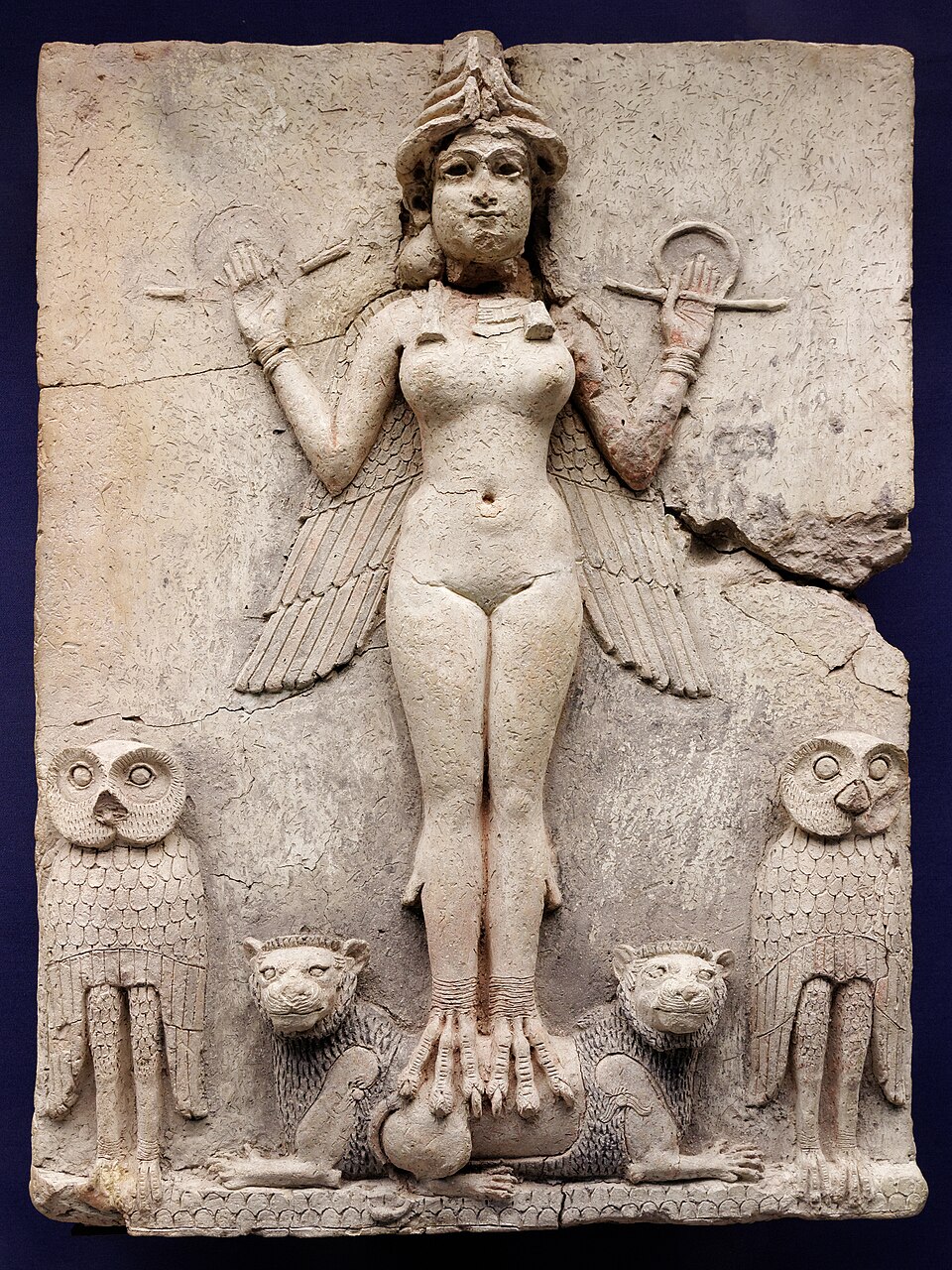
Ereshkigal
Queen of the Great Below · Mesopotamian
Sovereign of the underworld who strips Ishtar of a garment at each of the seven gates and hangs her on a hook.
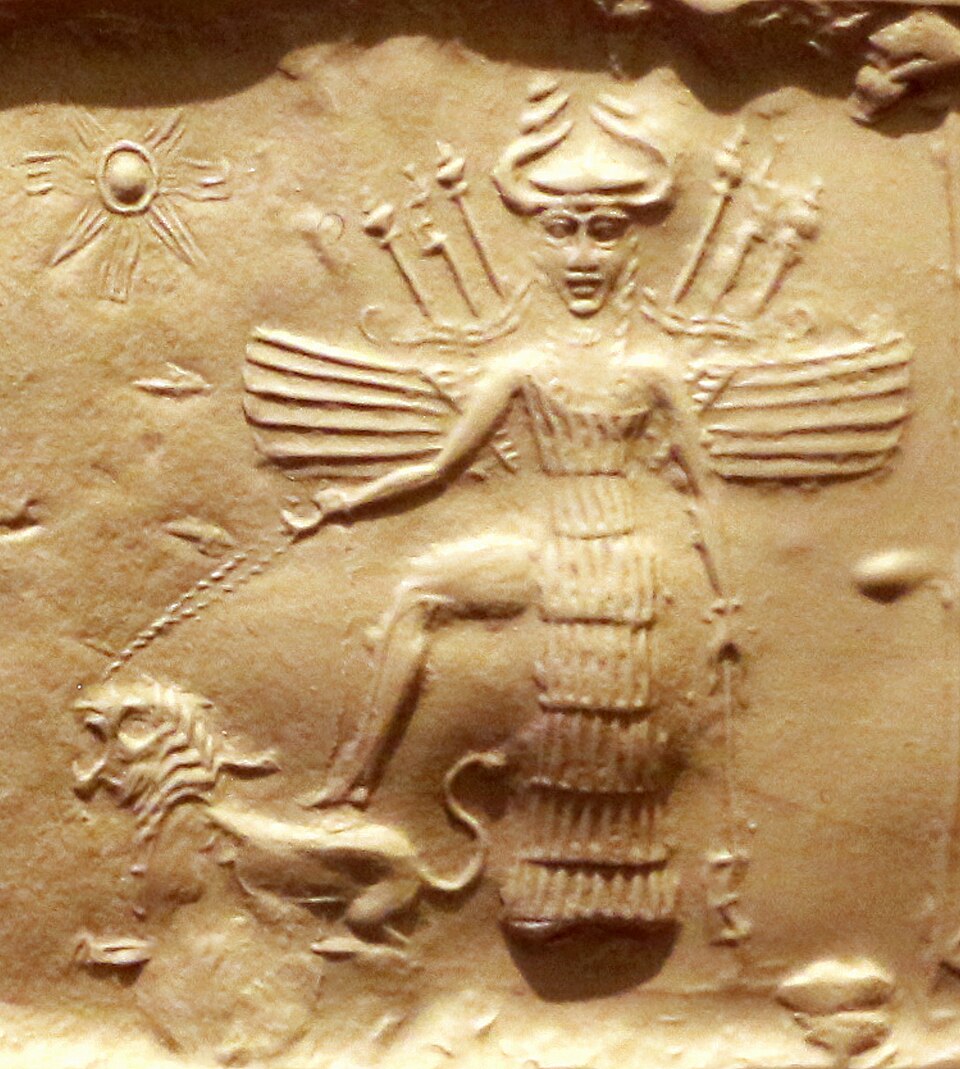
Ishtar
Queen of Heaven · Mesopotamian
Goddess of love, war and the planet Venus, whose descent into the underworld is among the oldest recorded narratives.
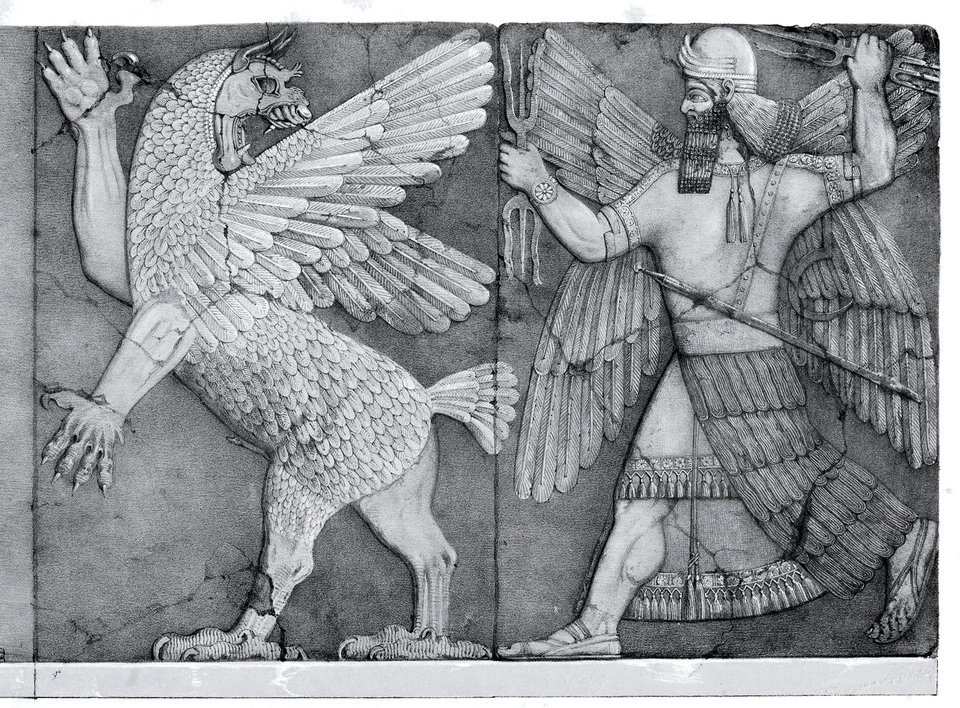
Marduk
King of the Gods · Mesopotamian
Splits Tiamat and builds the world from her body, and is voted fifty names and supreme authority for doing it.
Nergal
God of the Underworld · Mesopotamian
God of plague, war and the underworld, consort of Ereshkigal — and one of the few Mesopotamian gods the Bible names directly.
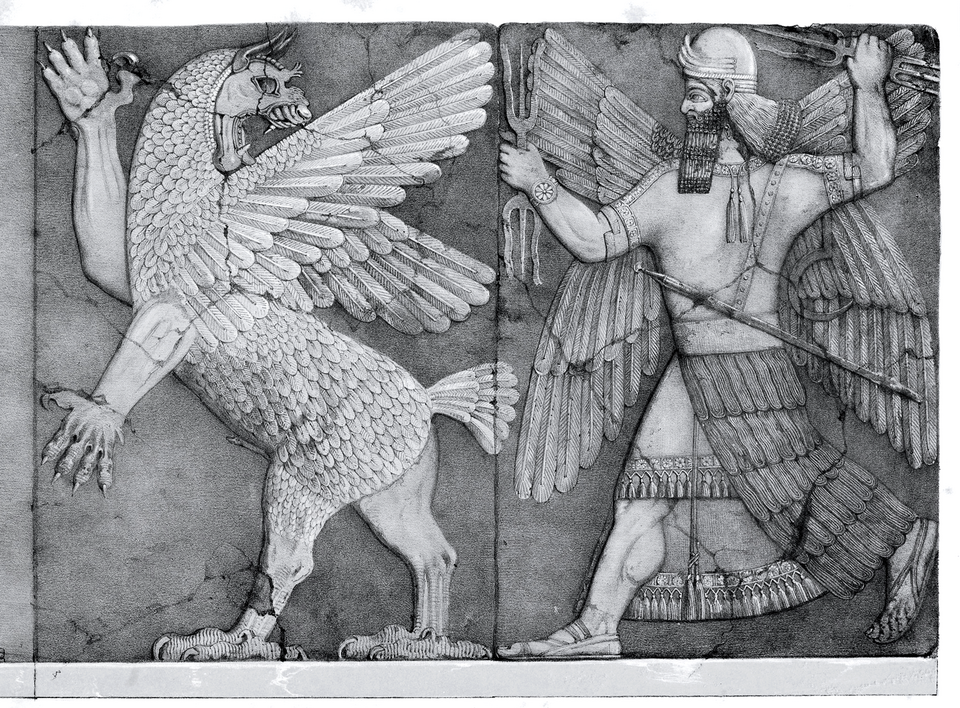
Anzu
Storm Bird · Mesopotamian
The lion-headed eagle who steals the Tablet of Destinies and is shot down for it — a rebellion against divine order predating any biblical account by a millennium.
Enki
Lord of the Sweet Waters · Mesopotamian
God of the abzu and of cunning, who repeatedly saves humanity by finding the loophole in another god's decree.
The books behind The Utukku
Every claim on this profile is attributed to one of these. They are public domain, listed oldest first, and each links to a full text where one is freely available.
Udug-hul (Evil Utukku)
Anonymous; canonical series of sixteen tablets · c. 1800–600 BCE · Sumerian and Akkadian
Read Udug-hul (Evil Utukku) in full ↗Akkadian Incantation Series & Amulet Inscriptions
Anonymous; recovered from Assyrian and Babylonian sites · c. 1800-600 BCE · Akkadian and Sumerian
Read Akkadian Incantation Series & Amulet Inscriptions in full ↗Cover: Public domain · Robert William Rogers (1864–1930) · Wikimedia file page
Corpus last revised 29 August 2026. A reference site’s credibility rests on being maintained, so this is the date the sourced records last changed — not the date the page was rebuilt.