Hybrid · Mesopotamian · c. 2100 BCE
King — the sources' own term: Sumerian lugal, Akkadian šarru, Hebrew melek
Gilgamesh
Also called Bilgames, Gilgameš
Two-thirds god and one-third man, king of Uruk in the Sumerian King List and the subject of the longest narrative surviving from the ancient Near East — a story about failing to escape death.
Well sourced
The epic opens with a tyrant and ends with a man reading his own city walls as the only thing he will leave behind. In between, Enkidu is made to check him, becomes his friend instead, and dies; Gilgamesh goes looking for the survivor of the flood to learn how to avoid the same end, is told plainly that he cannot, fails a test of sleeplessness, loses the plant of renewal to a snake, and comes home.
His divine parentage is stated and does not help him. That is the point the text keeps making, and it is why this corpus files him as hybrid on parentage rather than on outcome: the fraction is in the text, the mortality is the subject, and the two coexist without contradiction.
He also stands in the Sumerian King List as a king of Uruk with a reign of a hundred and twenty-six years, which places him in a document that is not a story at all. A figure attested both in an epic and in an administrative list is unusual here, and the difference between the two records is itself worth seeing.
At a glance
Vitals
Vitals
Also known as
- First attested
- The Sumerian King List · c. 2000 BCE
- Named there as
- Bilgames
- Rank
- King of Uruk
- Pantheon
- Mesopotamian
- Era
- c. 2100 BCE
- Traditions
- Mesopotamian
2 attributed
What is it said to do?
Where these powers cluster
The 2 offices attributed to Gilgamesh, grouped by kind. Segment width is the share of powers falling in each category.
A bar dominated by one colour means a specialist; an even spread means a figure the sources credit with almost anything.
- material1
- martial1
material
- Builds & DestroysThe Epic of Gilgamesh
The walls of Uruk are what he offers at the end in place of immortality.
martial
2 texts
Which texts say so, and where do they disagree?
When these texts were written
Each dot is one of the 2 texts that names Gilgamesh, placed at that text's approximate date.
A wide spread means the figure was carried across many centuries and traditions; a tight cluster means a single period produced the whole record.
2 texts spanning roughly 800 years
Where the texts differ
- Name: given as Bilgames, Gilgamesh
- Rank: given as King of Uruk; King of Uruk, two-thirds god
Listed among the kings of the first dynasty of Uruk with a reign given in the hundreds of years, his father recorded as a phantom or lillu-spirit.
Refuses Ishtar and is answered with the Bull of Heaven; loses Enkidu, crosses the waters of death to reach Utnapishtim, and is told that the life he seeks he will not find.
Connections
What is it connected to?
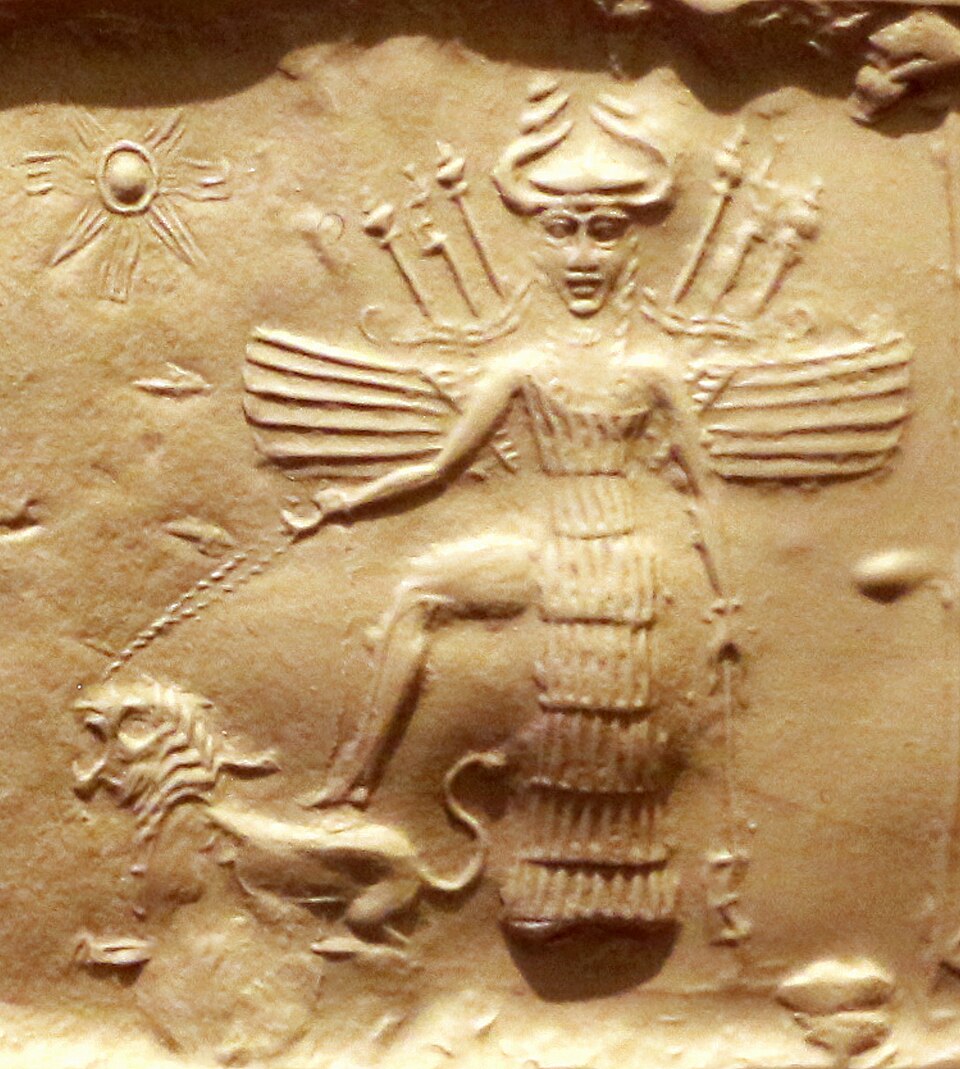
Opposes Ishtar
He refuses her proposal and recites what became of her previous lovers; she answers by demanding the Bull of Heaven from Anu.
Served by Enkidu
Made as a counterweight to him and becomes his companion instead. The kind understates it — the corpus has no vocabulary for a friendship, and this is the closest available.
Afterwards
What did later readers make of it?
The flood tablet read to the Society of Biblical Archaeology in 1872 caused a public sensation for its resemblance to Genesis, and the relationship between the two accounts has been argued over ever since. Modern proposals identifying Gilgamesh with Nimrod rest on a resemblance rather than on any text and are recorded on Nimrod's entry as proposals.
Kept in its own section on purpose. Everything above is what the cited texts say; this is what was built on top of them afterwards, and blending the two is how most popular demonology goes wrong.
Answered from the sources
Common questions
Which texts mention Gilgamesh?
What rank is Gilgamesh?
How else is Gilgamesh spelled?
What is Gilgamesh said to do?
How old is Gilgamesh?
Nearest in the corpus
If Gilgamesh is what you came for, these are next
Chosen by proximity rather than by popularity: the same pantheon first, then the same rank, then the same kind of figure.
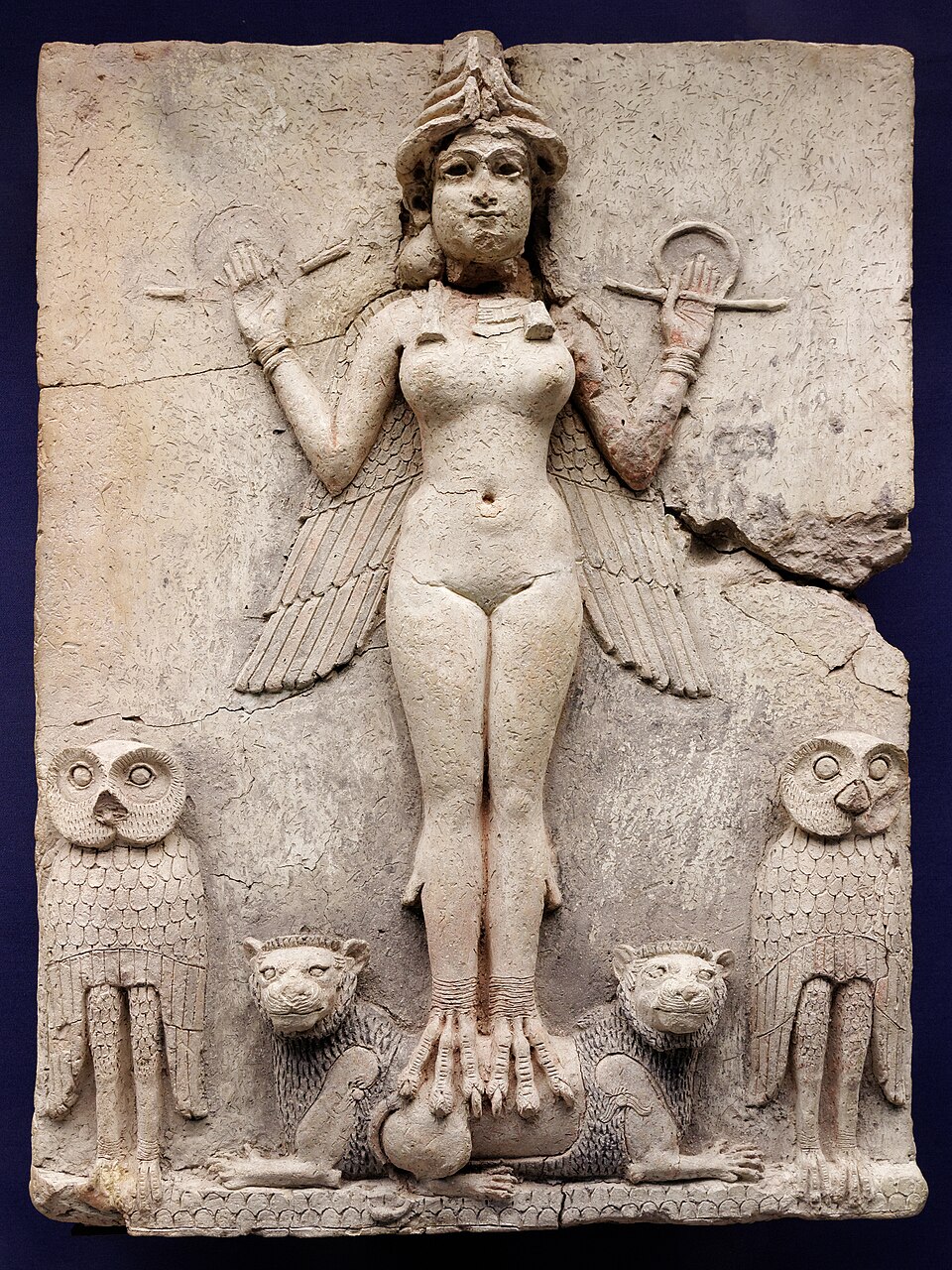
Ereshkigal
Queen of the Great Below · Mesopotamian
Sovereign of the underworld who strips Ishtar of a garment at each of the seven gates and hangs her on a hook.
Ishtar
Queen of Heaven · Mesopotamian
Goddess of love, war and the planet Venus, whose descent into the underworld is among the oldest recorded narratives.
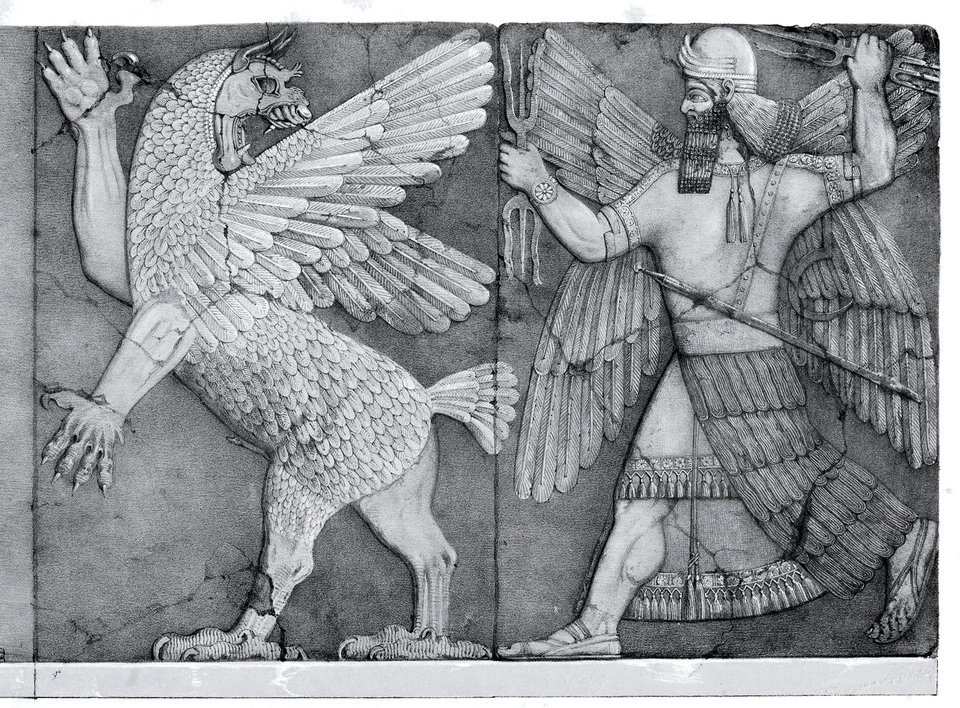
Marduk
King of the Gods · Mesopotamian
Splits Tiamat and builds the world from her body, and is voted fifty names and supreme authority for doing it.
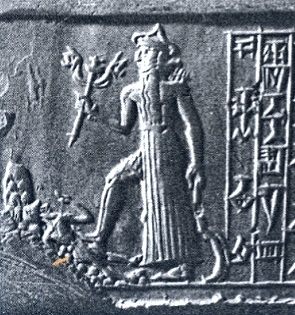
Nergal
God of the Underworld · Mesopotamian
God of plague, war and the underworld, consort of Ereshkigal — and one of the few Mesopotamian gods the Bible names directly.
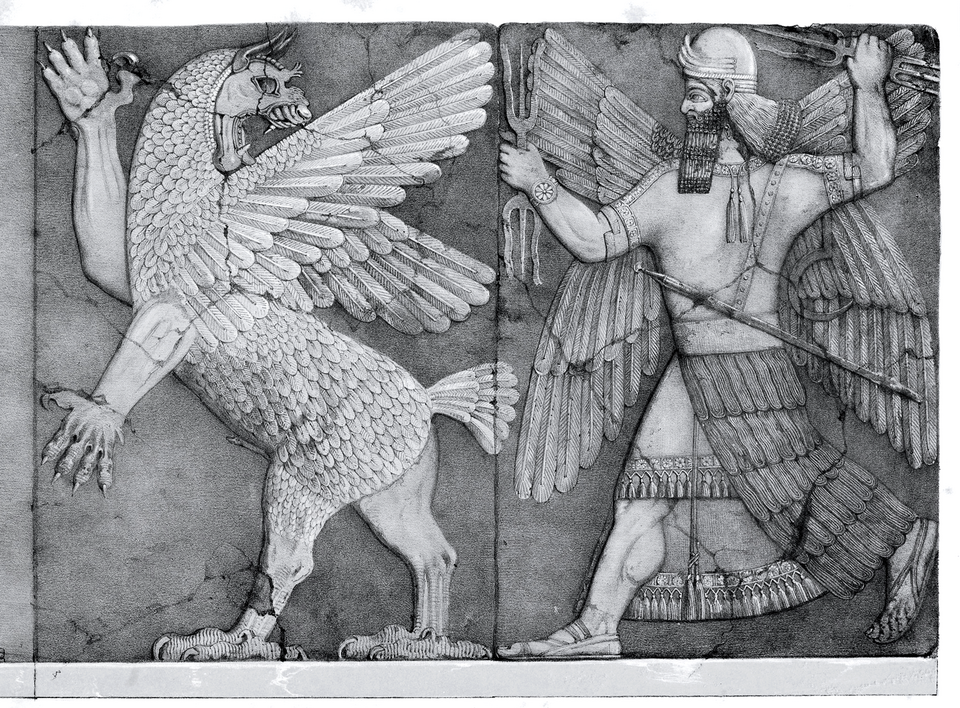
Anzu
Storm Bird · Mesopotamian
The lion-headed eagle who steals the Tablet of Destinies and is shot down for it — a rebellion against divine order predating any biblical account by a millennium.
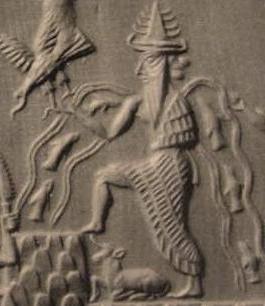
Enki
Lord of the Sweet Waters · Mesopotamian
God of the abzu and of cunning, who repeatedly saves humanity by finding the loophole in another god's decree.
The books behind Gilgamesh
Every claim on this profile is attributed to one of these. They are public domain, listed oldest first, and each links to a full text where one is freely available.
The Sumerian King List
Anonymous; many recensions, the fullest being the Weld-Blundell prism · c. 2000 BCE · Sumerian
Read The Sumerian King List in full ↗The Epic of Gilgamesh
Standard Babylonian version, attributed to Sin-leqi-unninni · c. 1200 BCE, from older Sumerian material · Akkadian
Read The Epic of Gilgamesh in full ↗
Corpus last revised 29 August 2026. A reference site’s credibility rests on being maintained, so this is the date the sourced records last changed — not the date the page was rebuilt.