protective · c. 400–700 CE
The Incantation Bowl
A plain clay bowl with writing spiralling inward across the inside, buried upside down under the floor of a house. Around two thousand survive, and they name demons by name.
What the sources claim for it
A legal instrument in ceramic form: the demon is not driven off but served notice, under a named authority, at a named address.
What is it made of?
A fixed formula whose parts are the parts of a writ — a number of bowls are drafted literally as writs of divorce served on a demon.
The spiral
The client named
The demon named
The authority
Incantation Bowl
- 01
The spiral — Text running inward from rim to centre. The bowl is buried inverted, so the writing closes over what it names.
- 02
The client named — The household, named with its matronymic — the address the protection applies to.
- 03
The demon named — Lilith above all, and often in the plural. Naming the target is what makes the instrument enforceable.
- 04
The authority — Angels, divine names, and the oath or judgement being cited. Nothing on these bowls is a request.
History
Where does the Incantation Bowl come from?
The bowls are ordinary domestic ware, written in Jewish Babylonian Aramaic, Syriac or Mandaic, and buried inverted at thresholds, in corners and under doorways — often in matched sets at the four corners of a room. The text runs in a spiral from the rim to the centre, and frequently a bound demon is drawn at the middle, chained at the wrists and ankles.
What they contain is not prayer but procedure. The formulae name the household being protected, name the entity being excluded — Lilith above all, but also named liliths in the plural, Bagdana, and unnamed 'tormentors' — cite the authority under which the exclusion is made, and in a striking number of cases take the form of a writ of divorce served on the demon. They are the largest body of everyday demonological practice surviving from anywhere in antiquity, and they predate every grimoire on this site.
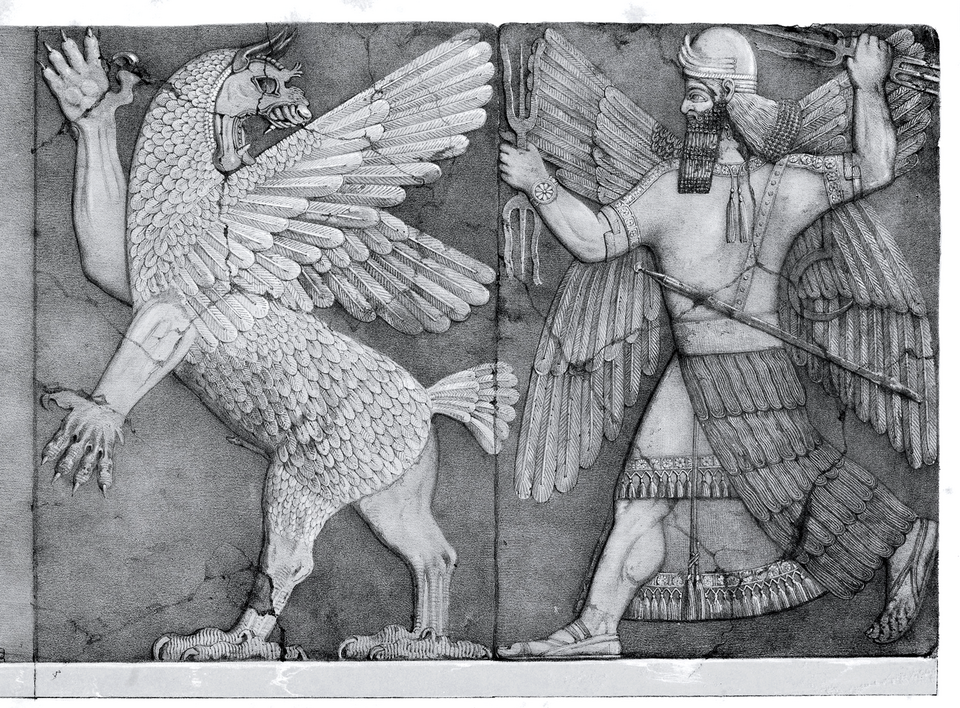
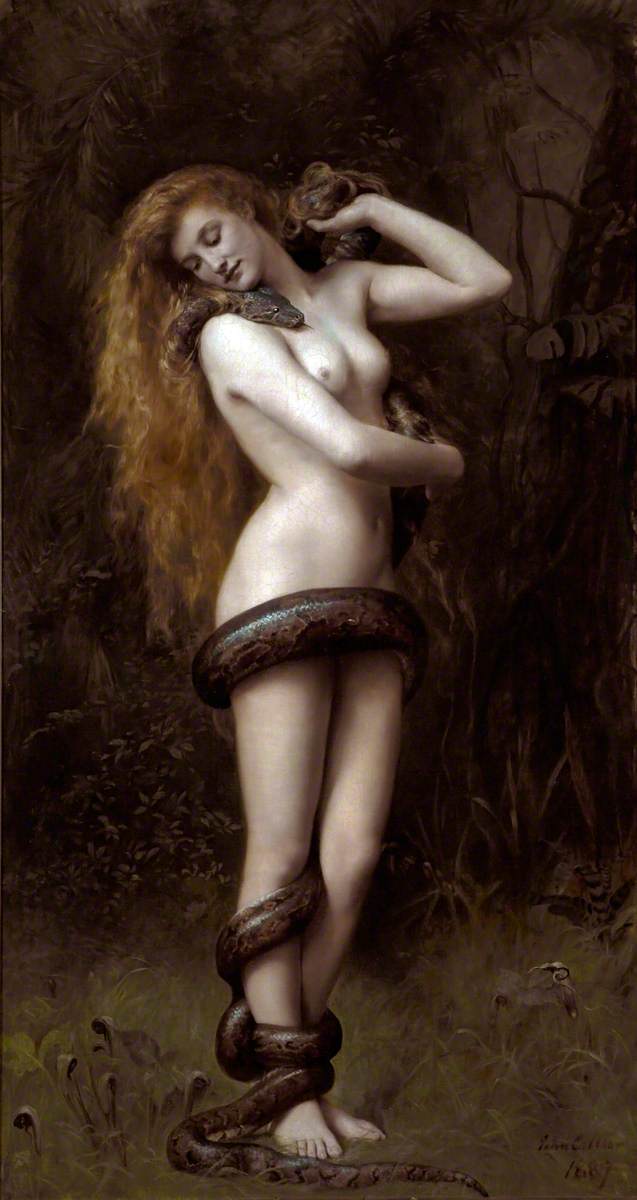
2 figures
Who is it attached to?
Figures it is used against
The mark is aimed at them. A ward names its target, which makes these the sharpest attributions on the page.
The larger argument
Why is it in a corpus about spirits?
Two thousand of these survive, and they predate every grimoire on the site by a thousand years. What they show is that the whole compulsion apparatus — named spirit, cited authority, binding instrument, burial at a threshold — was ordinary domestic practice long before anyone wrote a book about it. The Solomonic tradition is a professionalisation of this, not an invention of it.
Afterwards
What did it turn into?
Excavated in quantity from the nineteenth century onward and long treated as folk curiosity rather than evidence. They are now the primary witness for what people actually did about demons before the grimoire tradition existed.
Which texts describe it?
Oldest first, with what each one does with the mark. A mark described in a Bronze Age incantation and a mark first drawn in a seventeenth-century manuscript are different kinds of claim, whatever the shape has in common.

Akkadian Incantation Series & Amulet Inscriptions
Anonymous; recovered from Assyrian and Babylonian sites · c. 1800-600 BCE · Akkadian and Sumerian
The Mesopotamian incantation tradition the bowls inherit their formulae and their targets from.
Read Akkadian Incantation Series & Amulet Inscriptions in full ↗Cover: Public domain · Robert William Rogers (1864–1930) · Wikimedia file page
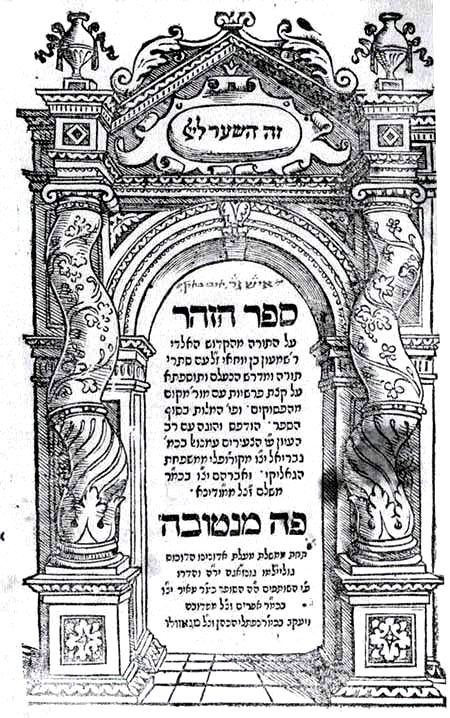
The Zohar & Kabbalistic Literature
Attributed to Shimon bar Yochai; likely Moses de León · c. 1280 · Aramaic
The later Jewish literature in which the same figures, Lilith above all, are systematised.
Read The Zohar & Kabbalistic Literature in full ↗Cover: Public domain · Possibly Simeon bar Yochai · Wikimedia file page
Nearby
Related marks
The Winged Disc
A sun with wings, borrowed by every empire in the region in turn — and the direct ancestor of the Persian faravahar.
The Standing Stone
An upright unworked stone marking a place where something happened — the oldest kind of monument, and one the Bible both erects and forbids.
The Pazuzu Head
A demon's face worn to keep a demon out — the clearest surviving case of a malevolent spirit hired as a doorman.
The Lilith Amulet
Hung over a birthing bed, naming three angels — a ward that works by holding a demon to something she agreed to.
The Hamsa
An open hand against the evil eye, claimed in nearly identical form by Jewish, Muslim and Christian communities across the same geography.
AGLA
An acronym, not a word: Atah Gibor Le-olam Adonai, 'Thou art mighty forever, Lord', compressed to four letters and written on almost everything.