Tradition
Zoroastrian
Amesha Spentas and daevas, an early source of dualist structure.
What is the Zoroastrian tradition?
Zoroastrian religion is the clearest case on this site of a tradition whose influence vastly exceeds its surviving textual footprint. The Avesta gives a cosmos of two opposed principles, an army of beneficent immortals against an army of daevas, a final judgement, and a resurrection — and it gives them centuries before the Jewish and Christian material that contains the same architecture.
The lexical evidence is the hard part of the argument. Asmodeus is Aeshma-daeva, the demon of wrath, and the borrowing is visible in the consonants. Where a name can be traced across languages like that, the transmission is not a matter of interpretation.
The reversal against Vedic religion is the other thing worth noticing. The Iranian daevas and the Indian devas are the same word, and so are the ahuras and the asuras — with the moral polarity exactly inverted. Whatever happened between the two traditions, it was not a disagreement about vocabulary.
Which texts does this tradition rest on?
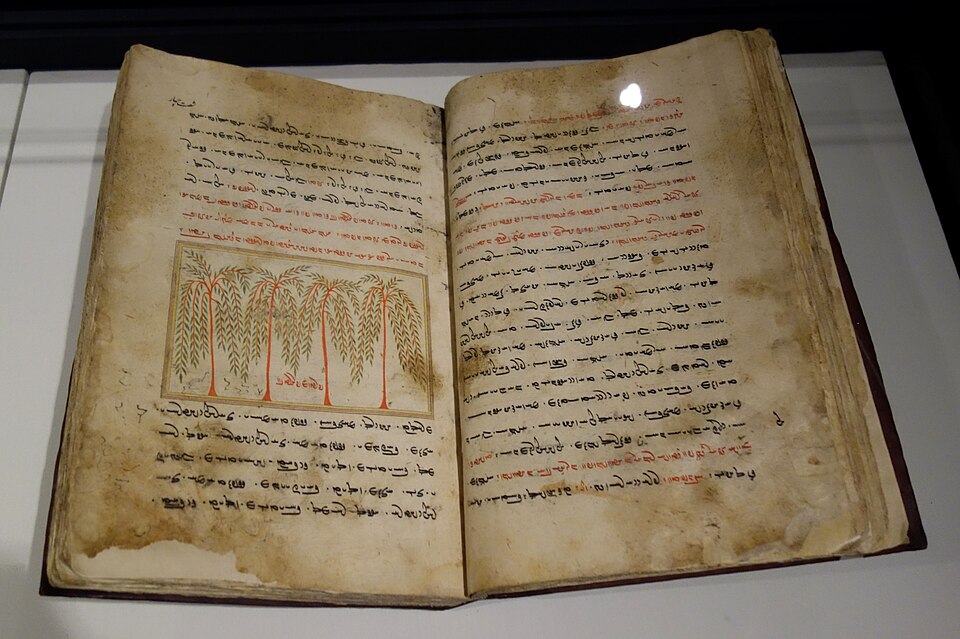
The Avesta
Attributed to Zarathustra and later priests · c. 1000-400 BCE
The Zoroastrian scriptures. Their two-principle cosmology — Ahura Mazda against Angra Mainyu, each with an army — is the most likely source of the dualist structure Judaism and Christianity later adopt.
9 entries contributed
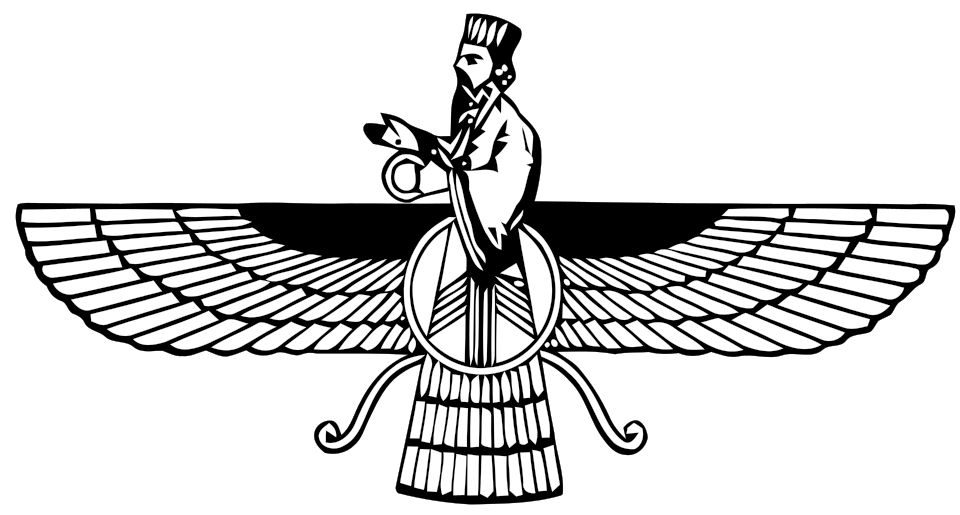
Bundahishn
Anonymous Zoroastrian; tr. E. W. West · 9th c. CE, from older material
The Zoroastrian account of creation, the assault of Angra Mainyu and the final renovation. Far more systematic on the demons than the Avesta, and the fullest statement anywhere of a cosmos organised as two matched armies.
7 entries contributed
Which marks belong to it?
Oldest first. A mark used by several traditions appears on each of their pages — which is the point: the shapes crossed these boundaries far more easily than the names did.
The Winged Disc
from c. 2500 BCE
A sun with wings, borrowed by every empire in the region in turn — and the direct ancestor of the Persian faravahar.
The Fire Altar
from c. 1000 BCE
A stepped stone plinth with fire on top — the only image on Sasanian coinage for four centuries, and not an object of worship in Zoroastrian terms.
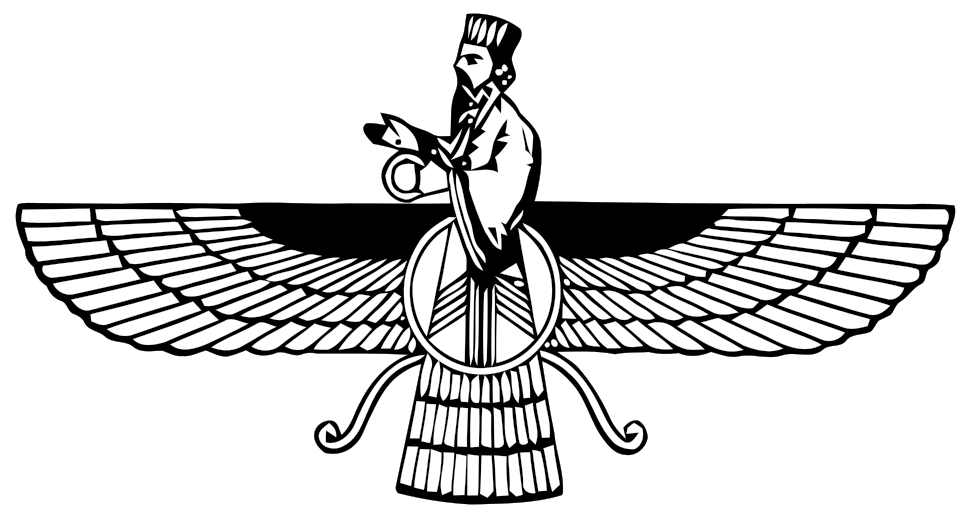
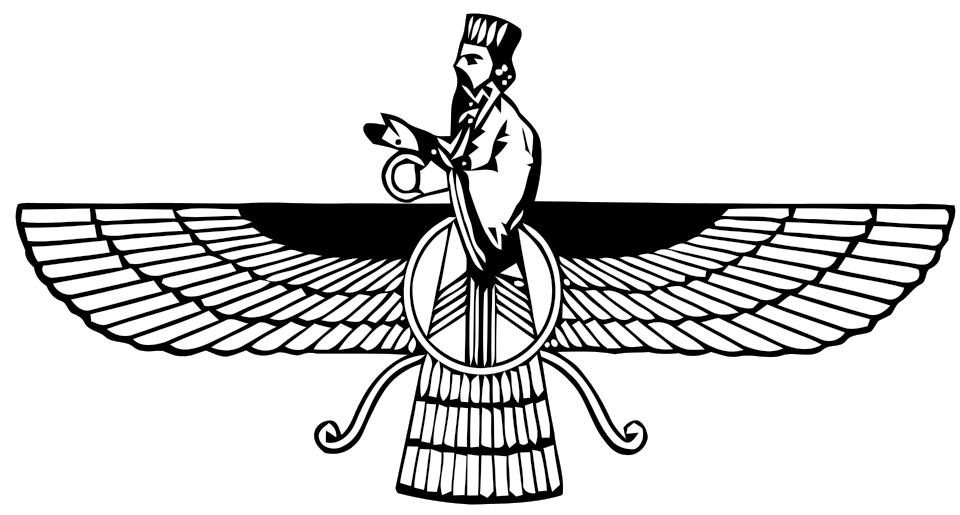
The Faravahar
c. 550–330 BCE
A man in a winged disc, carved above Persian kings and identified as Ahura Mazda by nearly everyone except the inscriptions.
The Incantation Bowl
c. 400–700 CE
A plain clay bowl with writing spiralling inward across the inside, buried upside down under the floor of a house. Around two thousand survive, and they name demons by name.
Who is filed under Zoroastrian?
Ordered by attestation score — how early and how independent the texts that name each figure are, rather than how famous the figure has since become.
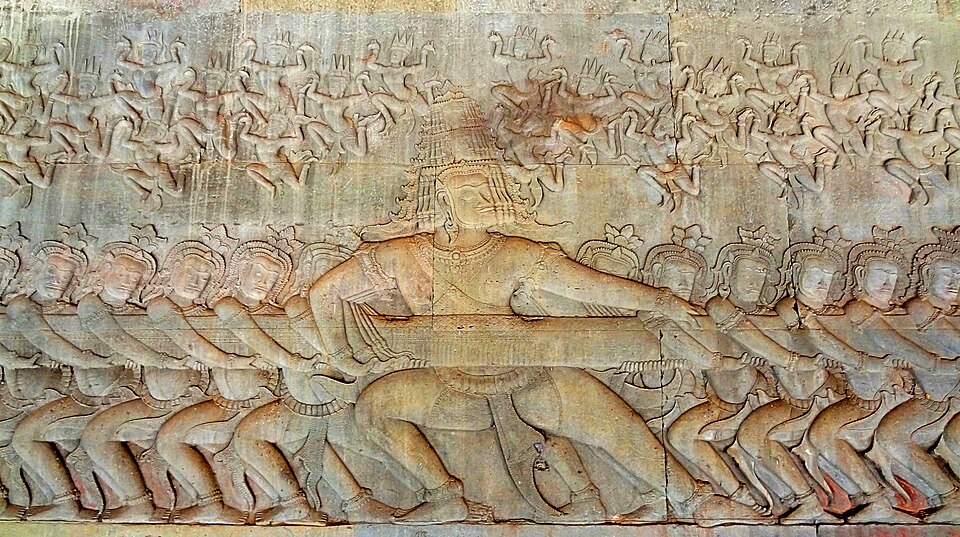
The Asuras
Class of Beings · Vedic
In the earliest Rigveda a title of honour for the highest gods; by the later Vedic period, the demonic opponents of the devas. The same word, inverted within one tradition.
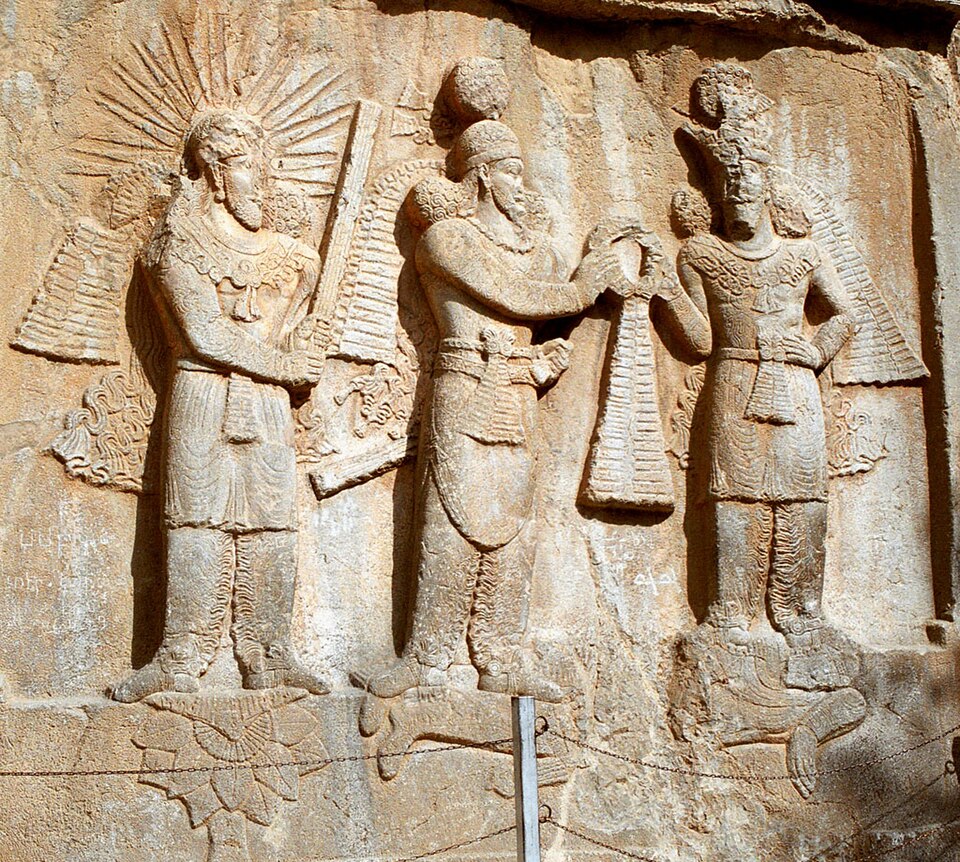
Mithra
Lord of Covenant · Persian
God of the binding contract, worshipped from India to Roman Britain. No other deity in this compendium can be traced across three civilisations so cleanly.
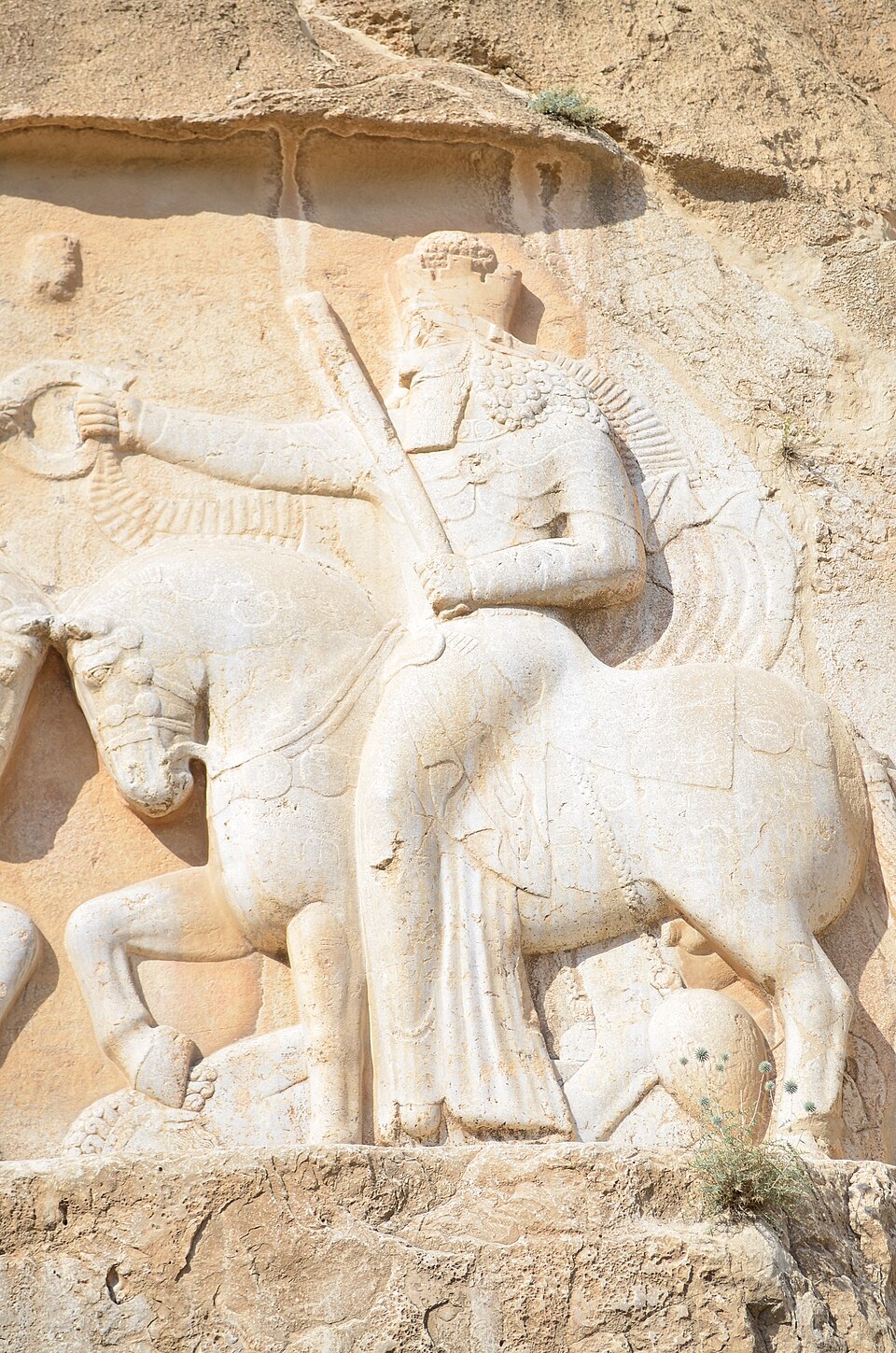
Aeshma
Daeva of Wrath · Persian
The demon of wrath and of the bloody club. He also supplies the most defensible etymology for Asmodeus: *Aeshma-daeva* to *Ashmedai* to *Asmodeus*.
Ahura Mazda
The Wise Lord · Persian
The uncreated god of Zoroastrianism, opposed by Angra Mainyu — the pairing that probably gave Judaism and Christianity their two-sided cosmos.
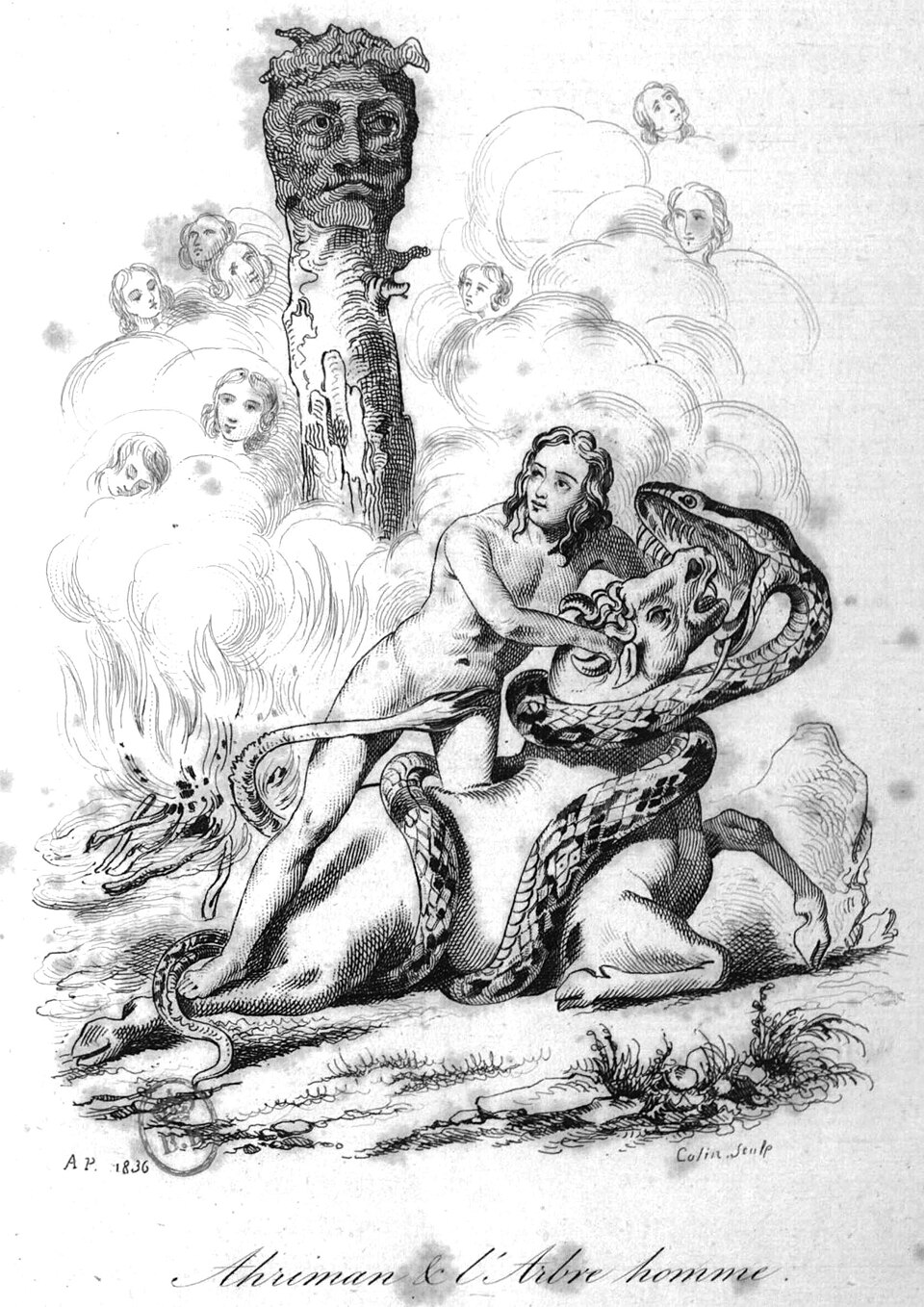
Angra Mainyu
The Destructive Spirit · Persian
The hostile principle, with his own army of daevas — the first fully developed adversary in the record, and the likely structural template for Satan.
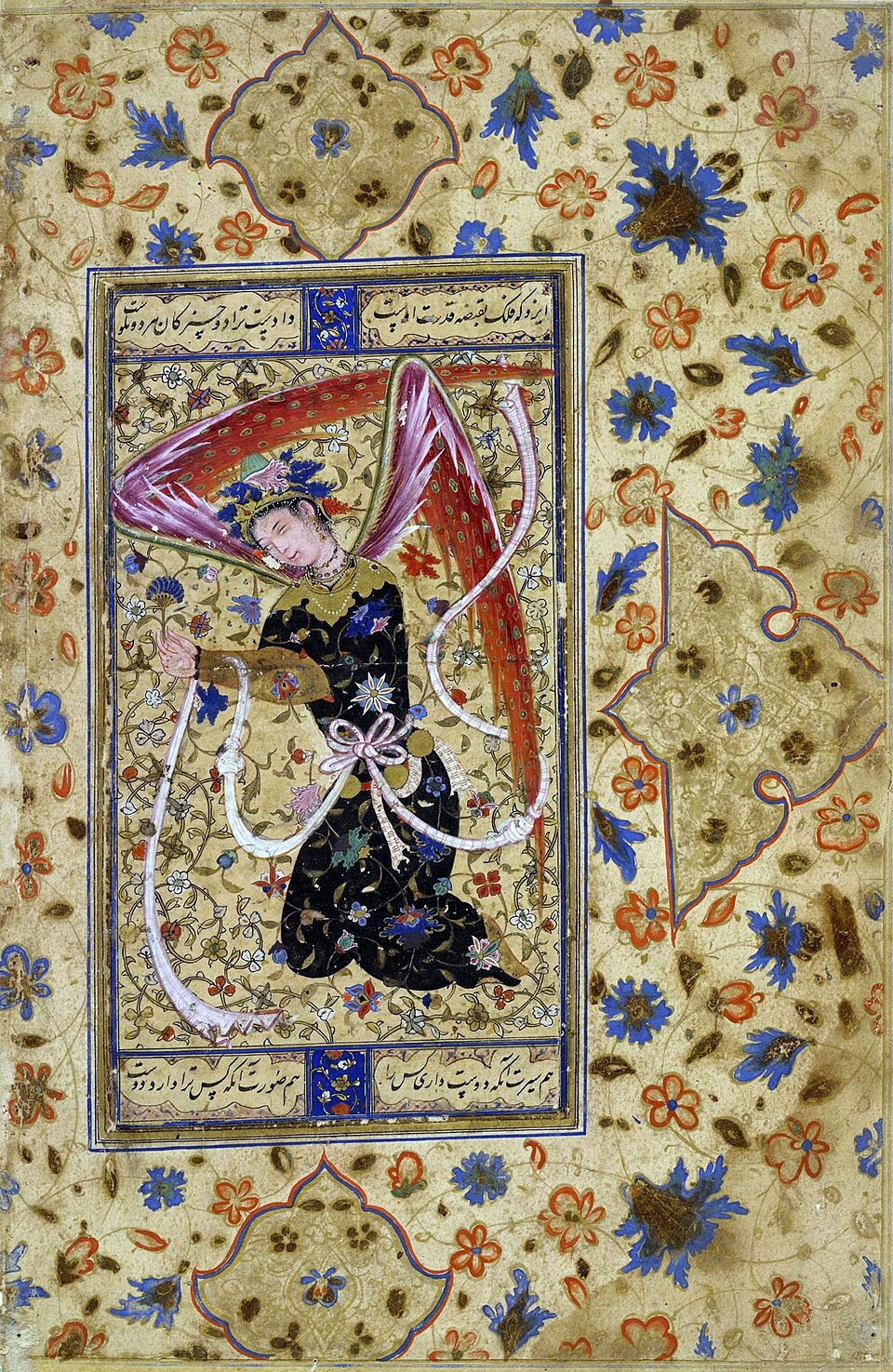
Sraosha
Yazata of Obedience · Persian
He guards the soul for three nights after death and stands directly opposed to Aeshma. It is an angel's job description, written before there were angels.
The Amesha Spentas
Six Great Emanations · Persian
Six emanations of Ahura Mazda, each paired against a specific demon — the earliest ranked, functionally-paired hierarchy of spirits anywhere.
Zahhak
The Serpent King · Persian
The three-headed serpent of the Avesta, who becomes in the Shahnameh a tyrant with snakes on his shoulders fed on human brains, chained beneath a mountain until the end.