protective · c. 550–330 BCE
The Faravahar
A man in a winged disc, carved above Persian kings and identified as Ahura Mazda by nearly everyone except the inscriptions.
What the sources claim for it
Disputed. Most likely the divine glory attending kingship, on the evidence available.
What is it made of?
Achaemenid royal iconography, with elements that Zoroastrian tradition later assigns meanings the reliefs themselves never state.
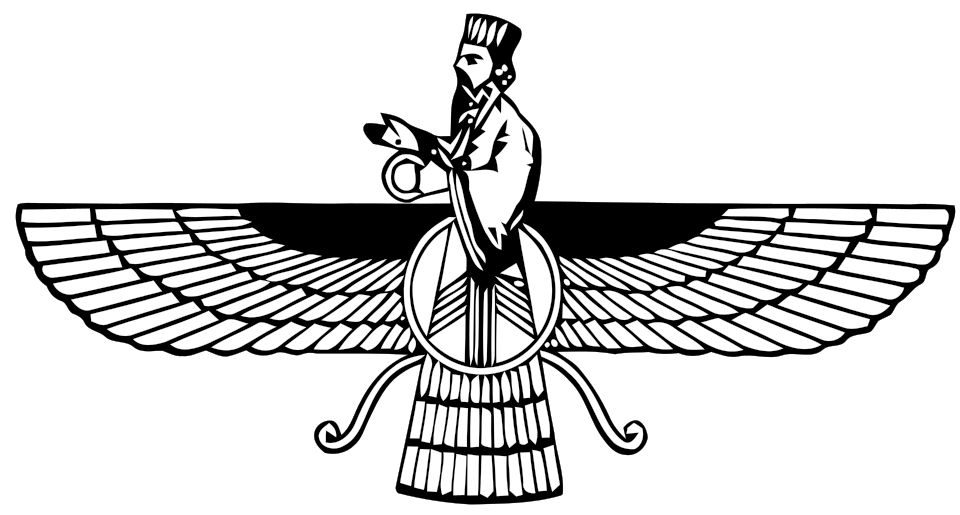
The figure in the disc
The wings
The ring
The tail
Faravahar
- 01
The figure in the disc — A bearded man, one hand raised. Identified as a fravashi, or as khvarenah, royal glory — the ancient sources do not say.
- 02
The wings — Three rows of feathers, read in modern tradition as good thoughts, good words, good deeds.
- 03
The ring — Held in the figure's hand: a contract-ring, the same object Mesopotamian gods hold in the rod-and-ring.
- 04
The tail — Three rows again, read as the bad thoughts, words and deeds beneath.
History
Where does the Faravahar come from?
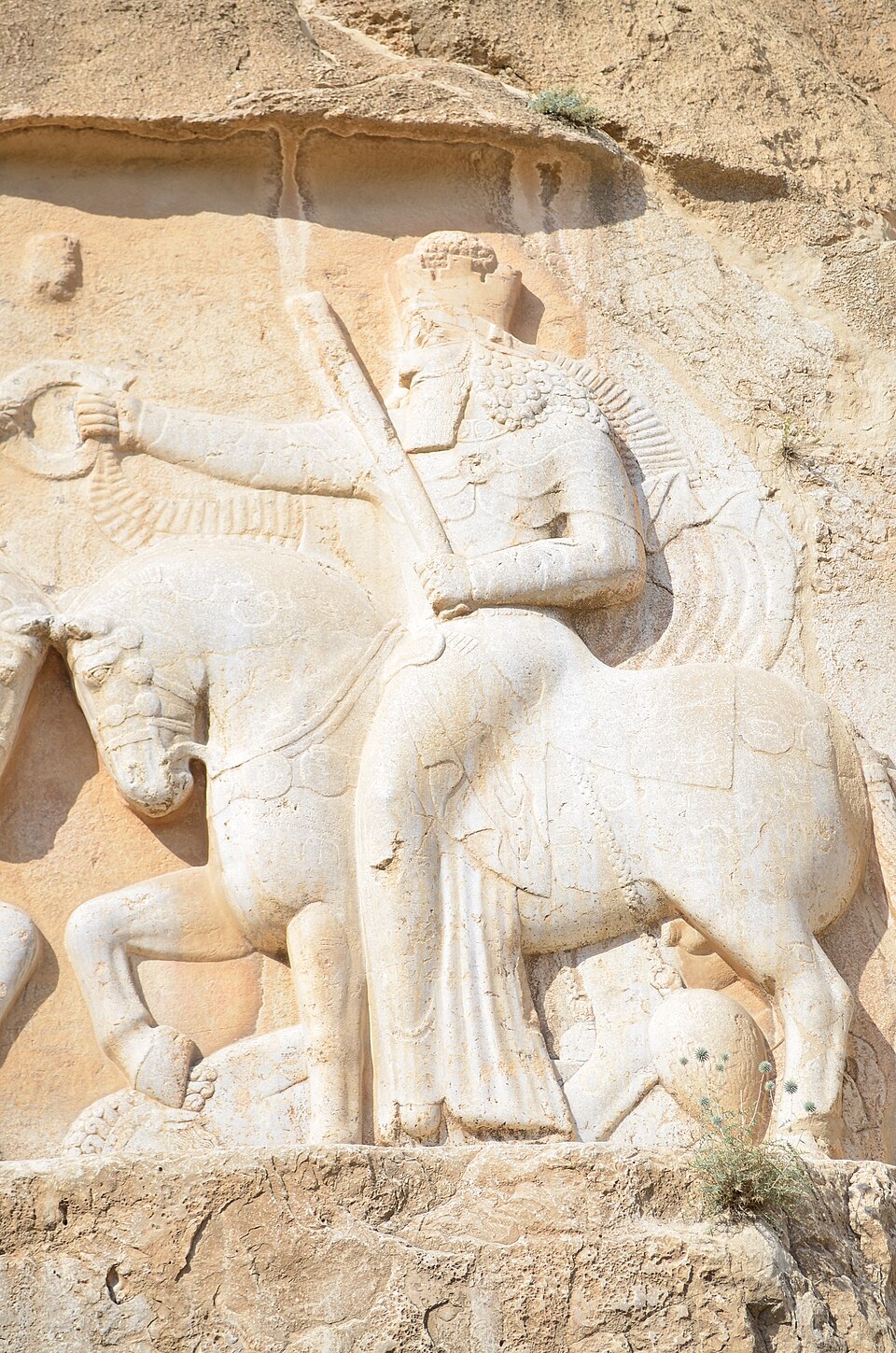
The figure is standard in Achaemenid royal relief — Persepolis, Naqsh-e Rostam, Behistun — and derives visually from the Assyrian and Egyptian winged disc that precedes it by centuries. What it is not is labelled. No Achaemenid inscription identifies it, and the three main readings, each defended by serious scholars, are Ahura Mazda himself, the royal khvarenah or divine glory, and the fravashi or guardian spirit of the individual.
The Avesta, meanwhile, describes fravashis at length as protective spirits of the dead and the unborn, and never mentions this image. So the corpus has a well-attested image with no text and a well-attested doctrine with no image, and the join between them is a nineteenth-century identification that stuck.
1 figure
Who is it attached to?
Figures who carry it
An attribute rather than a signature — held, worn or associated in the texts and the images.
The larger argument
Why is it in a corpus about spirits?
Zoroastrian cosmology is upstream of a great deal that this corpus treats as standard: a genuinely dualist universe, ranked spirits on both sides, and a final judgement. The mark is here because the argument it belongs to — two opposed camps of named beings — is the frame the later demonologies inherit without acknowledging where they got it.
Afterwards
What did it turn into?
Adopted in the twentieth century as the emblem of Zoroastrian identity worldwide, and separately as a secular emblem of Iranian national heritage.
Which texts describe it?
Oldest first, with what each one does with the mark. A mark described in a Bronze Age incantation and a mark first drawn in a seventeenth-century manuscript are different kinds of claim, whatever the shape has in common.
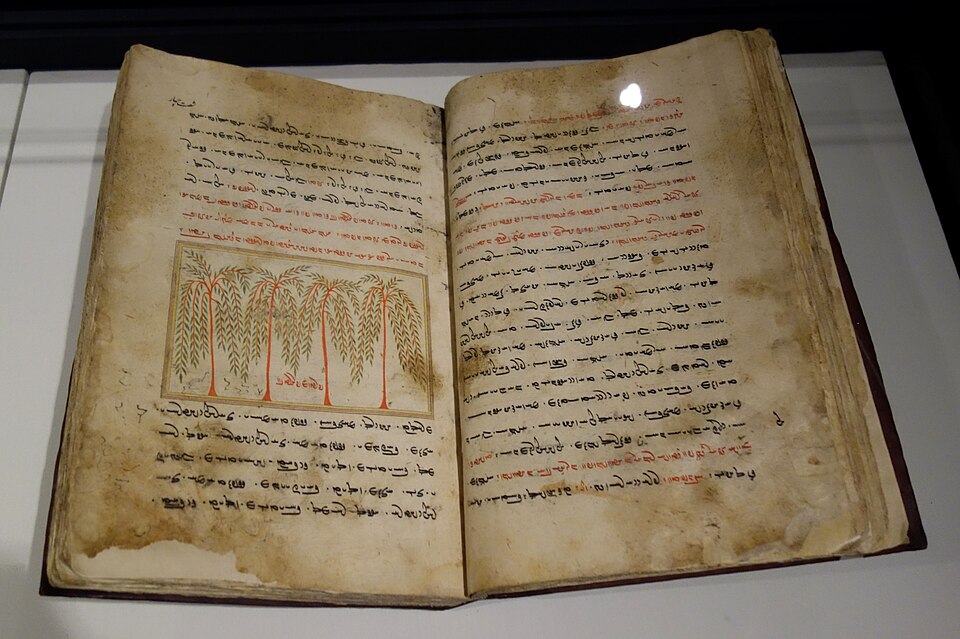
The Avesta
Attributed to Zarathustra and later priests · c. 1000-400 BCE · Avestan
Describes the fravashis as guardian spirits — without reference to any image.
Read The Avesta in full ↗Cover: CC0 · Daderot · Wikimedia file page
Bundahishn
Anonymous Zoroastrian; tr. E. W. West · 9th c. CE, from older material · Middle Persian
Later systematising of the same doctrine.
Read Bundahishn in full ↗Cover: CC BY-SA 3.0 · The original uploader was Ploxhoi at English Wikipedia · Wikimedia file page
Nearby
Related marks
The Winged Disc
A sun with wings, borrowed by every empire in the region in turn — and the direct ancestor of the Persian faravahar.
The Fire Altar
A stepped stone plinth with fire on top — the only image on Sasanian coinage for four centuries, and not an object of worship in Zoroastrian terms.
The Incantation Bowl
A plain clay bowl with writing spiralling inward across the inside, buried upside down under the floor of a house. Around two thousand survive, and they name demons by name.
The Ankh
The sign for 'life', held to the nose of a king by a god. Not an amulet first — a hieroglyph that got carried into three dimensions.
The Djed Pillar
A four-tiered column meaning stability, later read as the backbone of Osiris and raised upright at festival as a resurrection.
The Star of Ishtar
Eight points for the planet Venus, and the standard way of writing a goddess into a scene without drawing her.