protective · from c. 3000 BCE
The Standing Stone
An upright unworked stone marking a place where something happened — the oldest kind of monument, and one the Bible both erects and forbids.
What the sources claim for it
Witness. The stone remembers what happened at that spot on behalf of people who will forget.
History
Where does the Standing Stone come from?
A massebah is a standing stone set up as a witness: to an oath, to a divine encounter, to a burial. The Hebrew Bible has Jacob set one up at Bethel and pour oil on it, and Joshua set one up as a witness against the people — and elsewhere commands that they be smashed, because the same object serves Canaanite cult.
The ambivalence is the interesting part, and it is the same ambivalence that later attaches to the bronze serpent. An object erected under God's own instruction becomes forbidden once it is treated as the thing itself rather than the marker of an event.
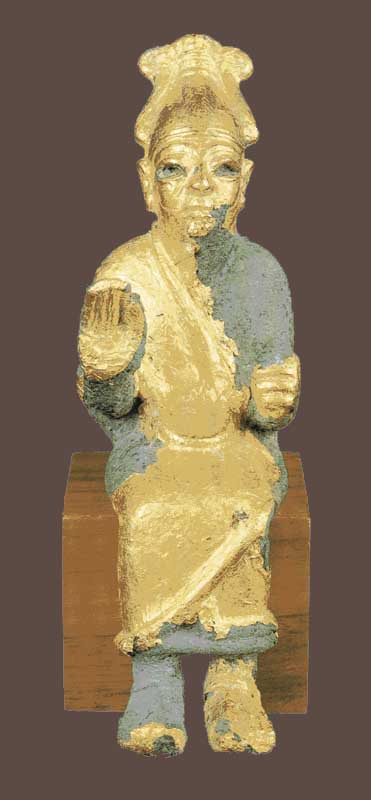
1 figure
Who is it attached to?
Figures who carry it
An attribute rather than a signature — held, worn or associated in the texts and the images.
Afterwards
What did it turn into?
The Greek baetyl and the Semitic betyl belong to the same practice, and the black stone set in the corner of the Kaaba is the most-visited surviving object of this type.
Which texts describe it?
Oldest first, with what each one does with the mark. A mark described in a Bronze Age incantation and a mark first drawn in a seventeenth-century manuscript are different kinds of claim, whatever the shape has in common.
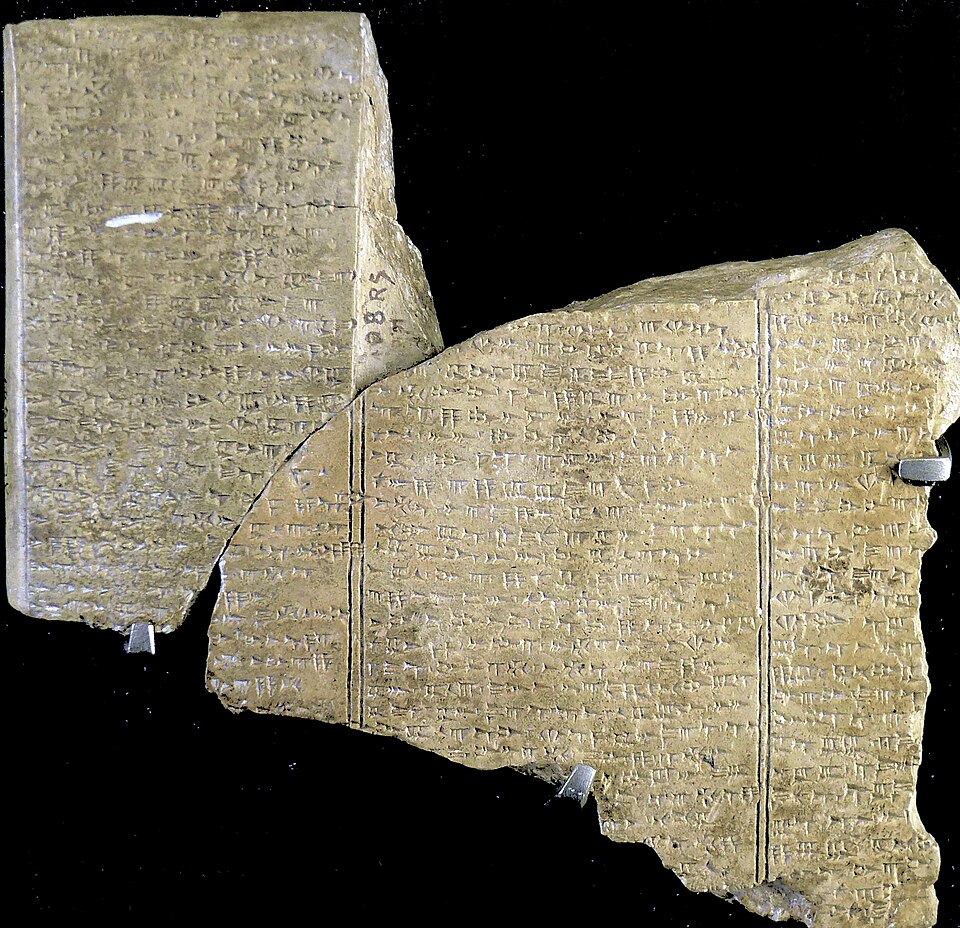
The Baal Cycle (Ugaritic Tablets)
Anonymous; recovered at Ras Shamra · c. 1400-1200 BCE · Ugaritic
Belongs to the Canaanite cult apparatus the biblical writers are reacting against.
Read The Baal Cycle (Ugaritic Tablets) in full ↗Cover: CC BY-SA 3.0 · Unknown artist · Wikimedia file page
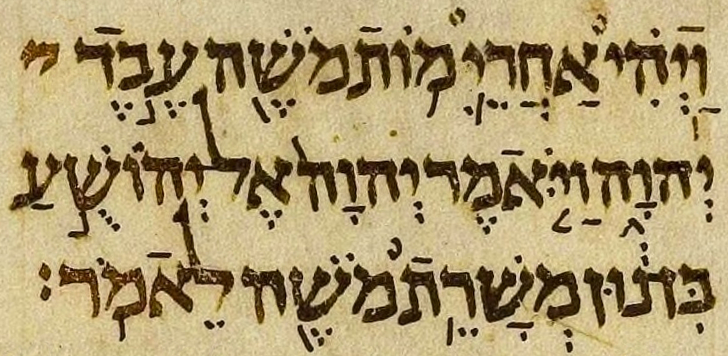
Hebrew Bible & Deuterocanon
Various · c. 900–100 BCE · Hebrew, Aramaic, Greek
Erected by Jacob and by Joshua; ordered destroyed in the legal material.
Read Hebrew Bible & Deuterocanon in full ↗Cover: Public domain · see en:Aleppo Codex; scanned by · Wikimedia file page
Nearby
Related marks
The Bull
The standard way of saying a god is strong — and, at Sinai and at Bethel, the standard way of getting it wrong.
The Asherah Pole
A wooden pole or stylised tree beside an altar, mentioned about forty times in the Hebrew Bible and almost always in the course of ordering its destruction.
The Lilith Amulet
Hung over a birthing bed, naming three angels — a ward that works by holding a demon to something she agreed to.
The Incantation Bowl
A plain clay bowl with writing spiralling inward across the inside, buried upside down under the floor of a house. Around two thousand survive, and they name demons by name.
The Hamsa
An open hand against the evil eye, claimed in nearly identical form by Jewish, Muslim and Christian communities across the same geography.
AGLA
An acronym, not a word: Atah Gibor Le-olam Adonai, 'Thou art mighty forever, Lord', compressed to four letters and written on almost everything.