protective · attested c. 1200–600 BCE
The Asherah Pole
A wooden pole or stylised tree beside an altar, mentioned about forty times in the Hebrew Bible and almost always in the course of ordering its destruction.
What the sources claim for it
A goddess, or her emblem, standing beside the altar of another god — which is precisely what the reformers objected to.
History
Where does the Asherah Pole come from?
The asherah is a cult object — a living tree, a planted pole, or a carved image — standing next to an altar. Nearly everything the Hebrew Bible says about it is prohibitive, which is itself the evidence that it was normal: reforms under Hezekiah and Josiah cut down asherim, and the fact that the reforms recur means they did not take the first time.
Outside the Bible the picture fills in. Asherah is a major Canaanite goddess in the Ugaritic material, and the inscriptions at Kuntillet Ajrud from around 800 BCE bless by 'YHWH and his asherah', which is either the goddess or her cult object depending on the reading. The debate is live; what is not in doubt is that the object was widespread in Israel and Judah.
2 figures
Who is it attached to?
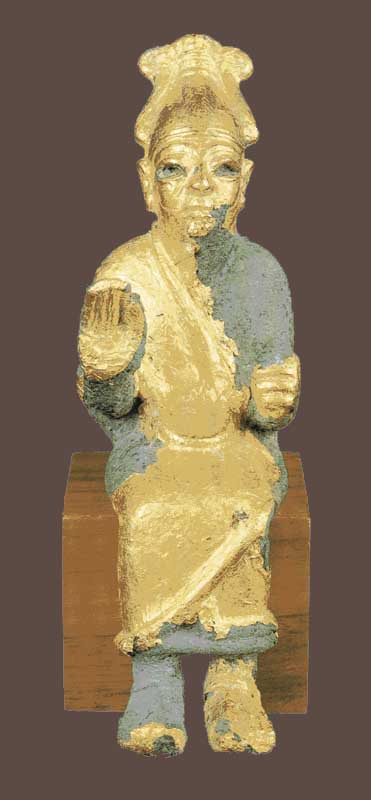
Figures who carry it
An attribute rather than a signature — held, worn or associated in the texts and the images.
Afterwards
What did it turn into?
Central to modern scholarly argument about Israelite religion before monotheism was consolidated, and to popular writing about a 'suppressed goddess' that runs well past what the evidence supports.
Which texts describe it?
Oldest first, with what each one does with the mark. A mark described in a Bronze Age incantation and a mark first drawn in a seventeenth-century manuscript are different kinds of claim, whatever the shape has in common.
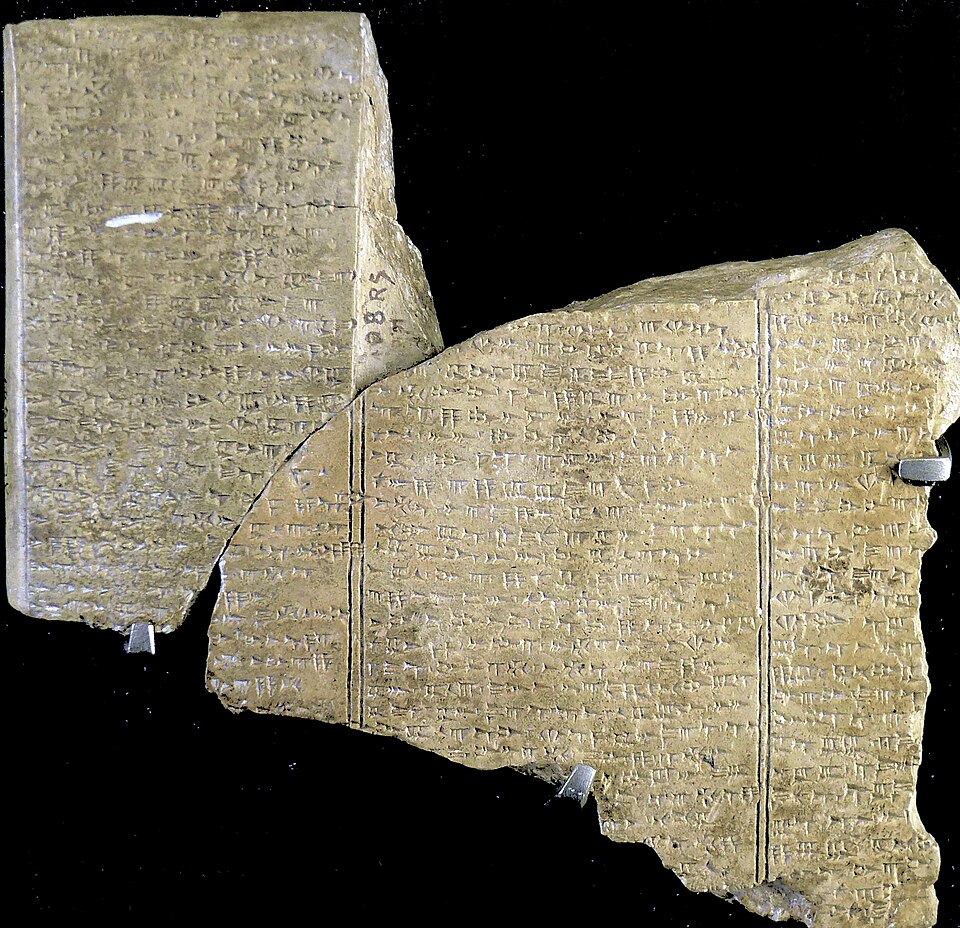
The Baal Cycle (Ugaritic Tablets)
Anonymous; recovered at Ras Shamra · c. 1400-1200 BCE · Ugaritic
Athirat, the Ugaritic form of the goddess, in her own literature.
Read The Baal Cycle (Ugaritic Tablets) in full ↗Cover: CC BY-SA 3.0 · Unknown artist · Wikimedia file page
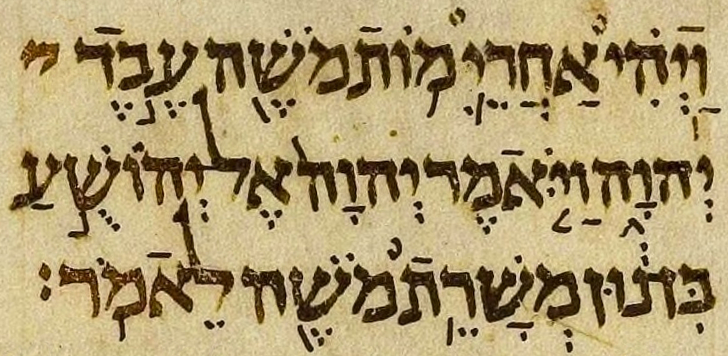
Hebrew Bible & Deuterocanon
Various · c. 900–100 BCE · Hebrew, Aramaic, Greek
Named around forty times, overwhelmingly in commands to cut it down.
Read Hebrew Bible & Deuterocanon in full ↗Cover: Public domain · see en:Aleppo Codex; scanned by · Wikimedia file page
Nearby
Related marks
The Standing Stone
An upright unworked stone marking a place where something happened — the oldest kind of monument, and one the Bible both erects and forbids.
The Bull
The standard way of saying a god is strong — and, at Sinai and at Bethel, the standard way of getting it wrong.
The Tetragrammaton
Four letters that stopped being pronounced and became, in consequence, the most powerful thing you could write on a piece of equipment.
The Bronze Serpent
A healing standard that stood in the Temple for centuries until a reforming king smashed it — the Hebrew Bible's own account of a symbol going wrong.
The Menorah
A seven-branched lampstand specified to the almond blossom in Exodus, and carved on a Roman arch as loot.
The Sign of Tanit
A triangle, a bar and a disc — a schematic figure with raised arms, cut into thousands of Punic stelae and mosaics across the western Mediterranean.