protective · described c. 500 BCE; carved 81 CE
The Menorah
A seven-branched lampstand specified to the almond blossom in Exodus, and carved on a Roman arch as loot.
What the sources claim for it
The light kept burning in the sanctuary — and, after 70 CE, what was taken from it.
History
Where does the Menorah come from?
Exodus gives the menorah in unusual detail — pure hammered gold, a central shaft with six branches, cups shaped like almond blossoms — and it stood in the Tabernacle and then the Temple. It is one of very few objects in the Hebrew Bible whose construction is specified closely enough to build from.
Its most famous image is a defeat. The Arch of Titus in Rome, put up in 81 CE, shows the menorah being carried in triumph after the destruction of the Second Temple, and that relief is the main evidence for what the Temple lampstand actually looked like. A Jewish tradition of not reproducing the seven-branched form outside the Temple grew up alongside; the nine-branched hanukkiah used at Hanukkah is a different object.
Afterwards
What did it turn into?
The emblem of the State of Israel since 1949, in a design based directly on the Arch of Titus relief — a nation's emblem taken from its conqueror's victory monument.
Which texts describe it?
Oldest first, with what each one does with the mark. A mark described in a Bronze Age incantation and a mark first drawn in a seventeenth-century manuscript are different kinds of claim, whatever the shape has in common.
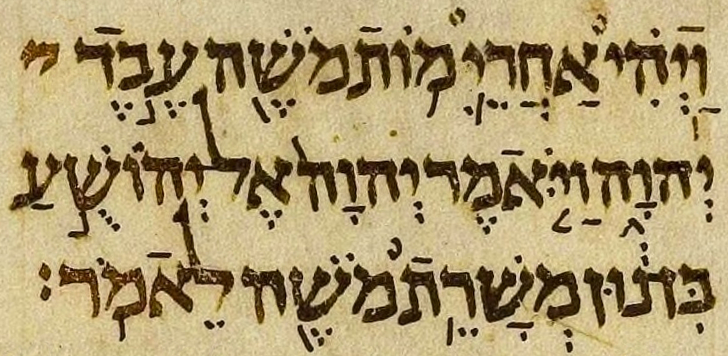
Hebrew Bible & Deuterocanon
Various · c. 900–100 BCE · Hebrew, Aramaic, Greek
Exodus 25 gives the specification; later books track the lampstand's fate.
Read Hebrew Bible & Deuterocanon in full ↗Cover: Public domain · see en:Aleppo Codex; scanned by · Wikimedia file page
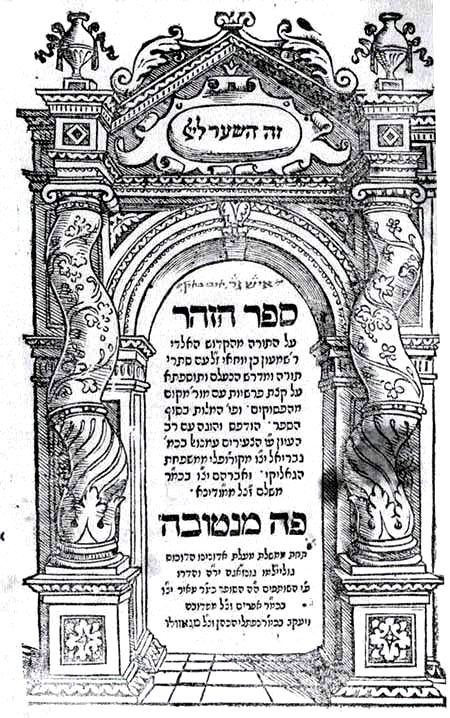
The Zohar & Kabbalistic Literature
Attributed to Shimon bar Yochai; likely Moses de León · c. 1280 · Aramaic
The lampstand read as a structure with meaning in each branch.
Read The Zohar & Kabbalistic Literature in full ↗Cover: Public domain · Possibly Simeon bar Yochai · Wikimedia file page
Nearby
Related marks
The Standing Stone
An upright unworked stone marking a place where something happened — the oldest kind of monument, and one the Bible both erects and forbids.
The Bull
The standard way of saying a god is strong — and, at Sinai and at Bethel, the standard way of getting it wrong.
The Asherah Pole
A wooden pole or stylised tree beside an altar, mentioned about forty times in the Hebrew Bible and almost always in the course of ordering its destruction.
The Tetragrammaton
Four letters that stopped being pronounced and became, in consequence, the most powerful thing you could write on a piece of equipment.
The Bronze Serpent
A healing standard that stood in the Temple for centuries until a reforming king smashed it — the Hebrew Bible's own account of a symbol going wrong.
The Mezuzah
A rolled parchment in a case on a doorpost, containing the verses that instruct you to put it there.