What the sources claim for it
The name whose presence obliges. In the operative texts, writing it is the act that gives an instrument standing.
What is it made of?
Four letters, three of them distinct — yod, he, vav, he — written right to left. Ancient and medieval readers also heard three words in them: the Hebrew verb 'to be' in its past, present and future forms, hayah, hoveh and yihyeh, which is the reading Exodus 3:14 sets up with ehyeh asher ehyeh, 'I am that I am'.
Yod
Y
He
H
Vav
W, later V
He
H again
Tetragrammaton
- 01
Yod · Y — The smallest letter in the alphabet, and the one every later mystical reading starts from. Numerical value 10.
- 02
He · H — Value 5. In kabbalistic readings the letter that receives — the same letter added to Abram and Sarai when their names change.
- 03
Vav · W, later V — Value 6, and a word in its own right: the letter that means 'and', joining whatever stands on either side of it.
- 04
He · H again — The same letter repeated. That repetition is what lets the Zohar read the name as a structure with an upper half and a lower half rather than as a word.
History
Where does the Tetragrammaton come from?
The four-letter name of the God of Israel is attested epigraphically from the ninth century BCE and thousands of times in the Hebrew Bible. During the Second Temple period its pronunciation narrows to the high priest on the Day of Atonement, and after the destruction of the Temple it stops being said at all; readers substitute Adonai or, later, simply ha-Shem, the Name.
What happens next is what puts it in this section. A name that may not be spoken can still be written, and the written form becomes the load-bearing element of Jewish and then Christian ritual magic: inscribed on the circle, on the pentacles, on the borders of the triangle, on amulets and on the sword. By the time it reaches the Ars Goetia it is being used as a component by operators with no Hebrew at all.
The larger argument
Why is it in a corpus about spirits?
This is the hinge of the whole corpus. A name is a handle; a name that may not be spoken but may be written turns into equipment; and equipment is what the compulsion texts are made of. Every circle, pentacle, lamen and triangle in the Solomonic material carries these four letters somewhere on it, and the claim being made by writing them is always the same one — that the operator is presenting a warrant rather than issuing an order. Take the Tetragrammaton off the instruments and the Ars Goetia has no standing to compel anything.
Afterwards
What did it turn into?
Rendered 'Jehovah' by medieval and early modern Christian scholars who read the vowels of Adonai onto the consonants of YHWH — a misreading that produced a name now used by whole denominations.
Which texts describe it?
Oldest first, with what each one does with the mark. A mark described in a Bronze Age incantation and a mark first drawn in a seventeenth-century manuscript are different kinds of claim, whatever the shape has in common.
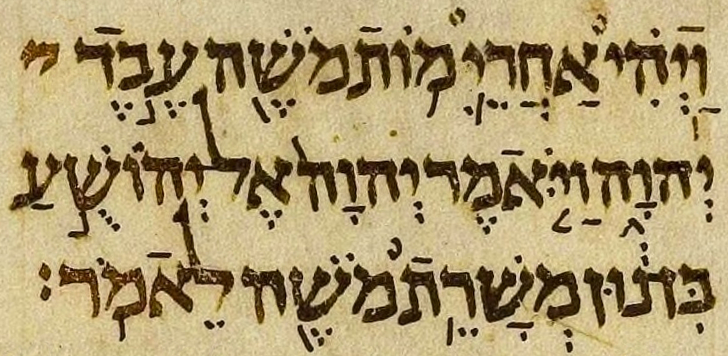
Hebrew Bible & Deuterocanon
Various · c. 900–100 BCE · Hebrew, Aramaic, Greek
The name in its scriptural setting, thousands of occurrences.
Read Hebrew Bible & Deuterocanon in full ↗Cover: Public domain · see en:Aleppo Codex; scanned by · Wikimedia file page
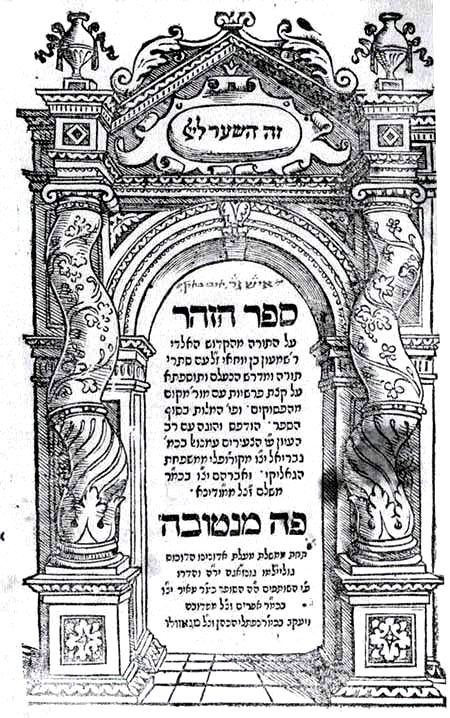
The Zohar & Kabbalistic Literature
Attributed to Shimon bar Yochai; likely Moses de León · c. 1280 · Aramaic
Treated as a structure to be contemplated, its letters mapped onto the sefirot.
Read The Zohar & Kabbalistic Literature in full ↗Cover: Public domain · Possibly Simeon bar Yochai · Wikimedia file page
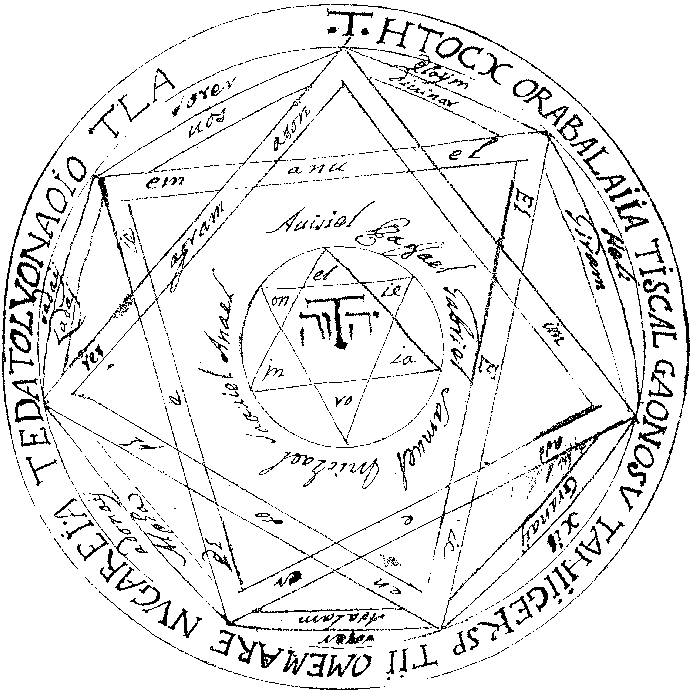
The Key of Solomon (Clavicula Salomonis)
Anonymous; ed. S. L. MacGregor Mathers · 15th-16th c. · Latin and Italian
Inscribed on the circle, the knife and the pentacles as a matter of construction.
Read The Key of Solomon (Clavicula Salomonis) in full ↗Cover: Public domain · Unknown author · Wikimedia file page
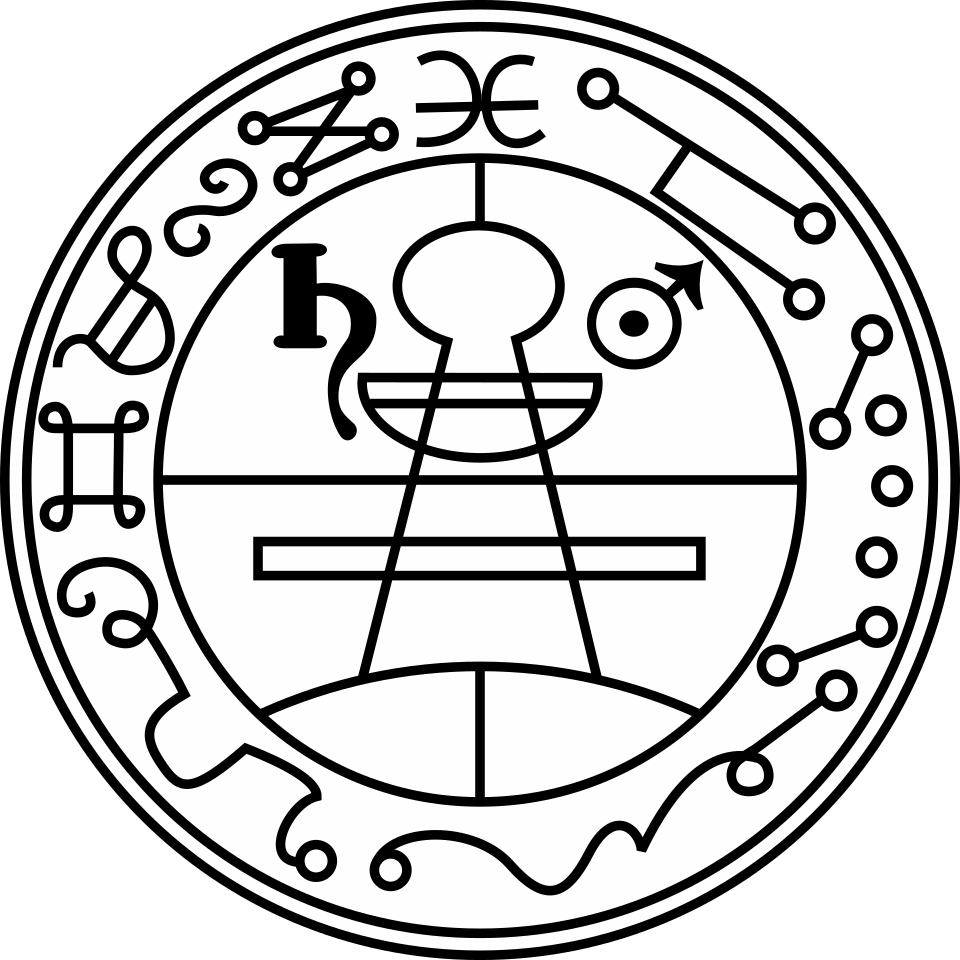
The Lesser Key of Solomon, Book I: Ars Goetia
Anonymous; ed. S. L. MacGregor Mathers & A. E. Waite · 17th c.; ed. 1904 · English (from Latin)
Written along the borders of the triangle of art.
Read The Lesser Key of Solomon, Book I: Ars Goetia in full ↗Cover: Public domain · anonymous design, redrawn by User:Fuzzypeg · Wikimedia file page
Nearby
Related marks
The Brass Vessel
The container the legend says Solomon sealed the spirits into, thrown into a lake and opened by Babylonians who expected treasure. It is where the Ars Goetia says its seventy-two came from.
AGLA
An acronym, not a word: Atah Gibor Le-olam Adonai, 'Thou art mighty forever, Lord', compressed to four letters and written on almost everything.
The Lamen
The one piece of Solomonic equipment worn rather than drawn: a disc at the breast carrying the divine names, and the operator's own credential rather than the spirit's.
The Celestial Alphabets
Three alphabets Agrippa prints for writing the names of angels — Hebrew letters redrawn with rings at the joints, so that a script becomes a set of sigils.
The Pentagram
A five-pointed star drawn in one unbroken line — an accounting mark, a Pythagorean password, a Christian emblem of the five wounds, and only recently a sign of evil.
The Bronze Serpent
A healing standard that stood in the Temple for centuries until a reforming king smashed it — the Hebrew Bible's own account of a symbol going wrong.