seal · story attested from c. 300 CE
The Brass Vessel
The container the legend says Solomon sealed the spirits into, thrown into a lake and opened by Babylonians who expected treasure. It is where the Ars Goetia says its seventy-two came from.
What the sources claim for it
Confinement as the final sanction. Every other instrument in the tradition compels a spirit to appear or to leave; this one is what happens if it will do neither.
What is it made of?
A story with a fixed set of parts, each of which the Ars Goetia converts into an instruction.
The vessel
The seal on the lid
The spirits inside
The lake
Brass Vessel
- 01
The vessel — Brass, wide-bodied, with a lid. The Goetia gives a construction for one to be made and used.
- 02
The seal on the lid — Solomon's seal closing it. Without the seal it is a pot; the seal is the entire mechanism.
- 03
The spirits inside — The frame story's explanation for why a list of seventy-two exists to be published at all.
- 04
The lake — Sunk in deep water, found by Babylonians expecting treasure, broken open. The release is the reason the book is needed.
History
Where does the Brass Vessel come from?
The frame story arrives long before the seventy-two do. Solomon binds the spirits, shuts them in a vessel of brass sealed with his seal, and sinks it; a later people find the vessel, break it open expecting a hoard, and let the spirits out. Versions circulate in Jewish, Christian and Arabic material — the jinn sealed in jars by Sulayman are the same motif — and the Ars Goetia inherits it as the explanation for why its list exists at all.
The Goetia then turns the story into a procedure. It gives instructions for a vessel of the same kind, with the seal of the spirit made in the appropriate metal and set inside, for use when a spirit refuses to depart: the operator threatens to seal it up, and the threat has force only because the story is assumed true. The object is at once a piece of legendary furniture and a live instrument.
The larger argument
Why is it in a corpus about spirits?
The vessel is the corpus's origin myth for its own contents, and it is a live threat as well: the Goetia's operator warns a stubborn spirit that it will be sealed up, which has force only if the story is believed. It is the clearest case of a narrative doing procedural work — the same move the Testament of Solomon makes when it tells you the ring came from an archangel.
Afterwards
What did it turn into?
The jar-of-genies image is now the best-known thing about this whole tradition and almost nobody meets it in this form. It reaches modern audiences through the Thousand and One Nights and the lamp, with Solomon and the seal removed.
Which texts describe it?
Oldest first, with what each one does with the mark. A mark described in a Bronze Age incantation and a mark first drawn in a seventeenth-century manuscript are different kinds of claim, whatever the shape has in common.
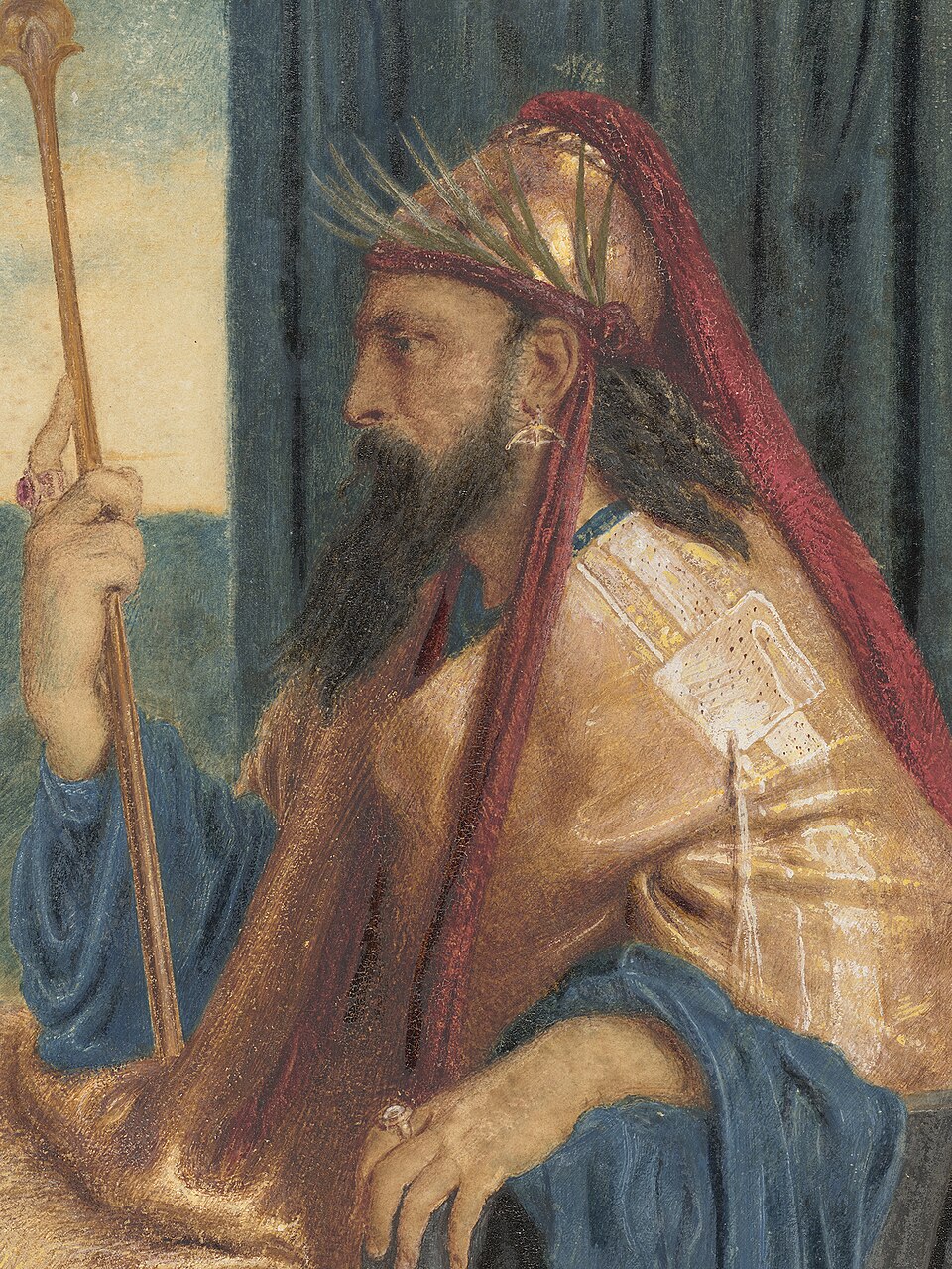
The Testament of Solomon
Anonymous; tr. F. C. Conybeare · c. 100–400 CE · Greek
Spirits bound and confined by the ring; the vessel motif in its earliest setting.
Read The Testament of Solomon in full ↗Cover: CC0 · Simeon Solomon · Wikimedia file page
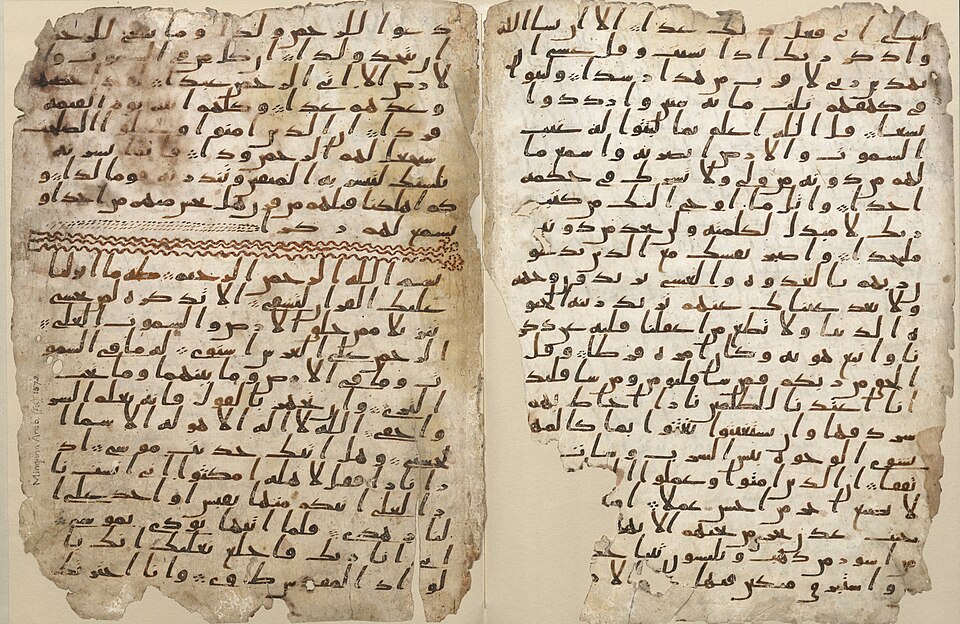
Qur'an & Hadith
Various · 7th c. CE onward · Arabic
Sulayman's authority over the jinn, the tradition the sealed-jar stories grow around.
Read Qur'an & Hadith in full ↗Cover: Public domain · AnonymousUnknown author · Wikimedia file page
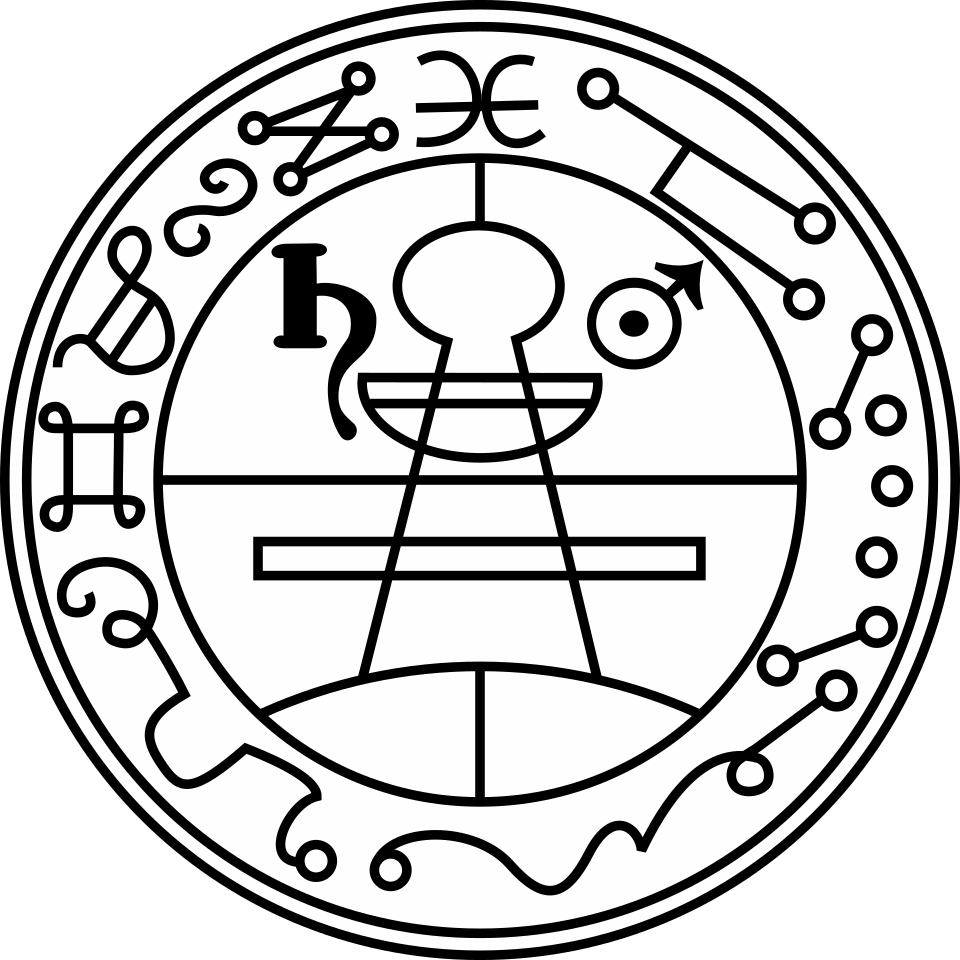
The Lesser Key of Solomon, Book I: Ars Goetia
Anonymous; ed. S. L. MacGregor Mathers & A. E. Waite · 17th c.; ed. 1904 · English (from Latin)
Supplies the frame story and then the instructions for making one.
Read The Lesser Key of Solomon, Book I: Ars Goetia in full ↗Cover: Public domain · anonymous design, redrawn by User:Fuzzypeg · Wikimedia file page
Nearby
Related marks
The Tetragrammaton
Four letters that stopped being pronounced and became, in consequence, the most powerful thing you could write on a piece of equipment.
The Seal of Solomon
A signet ring, not a shape. The Testament of Solomon makes it the instrument by which every demon in the book is compelled to give its name.
AGLA
An acronym, not a word: Atah Gibor Le-olam Adonai, 'Thou art mighty forever, Lord', compressed to four letters and written on almost everything.
The Hexagram
Two interlocked triangles that were ornament almost everywhere before they were a Jewish emblem anywhere — and a spirit-binding seal in between.
The Lamen
The one piece of Solomonic equipment worn rather than drawn: a disc at the breast carrying the divine names, and the operator's own credential rather than the spirit's.
The Celestial Alphabets
Three alphabets Agrippa prints for writing the names of angels — Hebrew letters redrawn with rings at the joints, so that a script becomes a set of sigils.