Deity · Mesopotamian · c. 800 BCE
Pazuzu
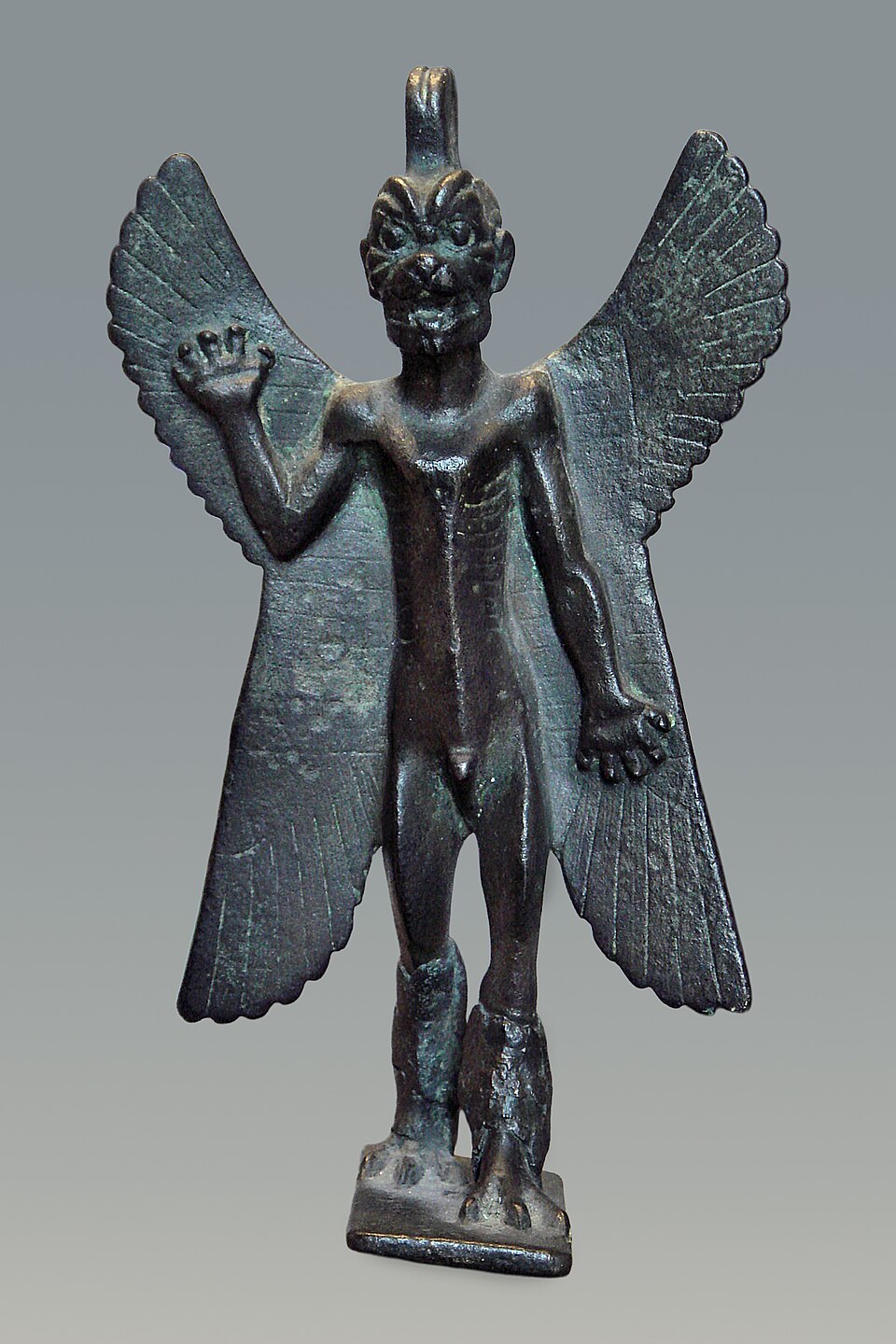
A wind demon of the first millennium BCE, worn as an amulet. He was invoked *against* Lamashtu, which makes him that rare thing: a protective evil.
Well sourced
Pazuzu is genuinely malevolent — bringer of the west wind and of famine — and was set to guard against a worse power for precisely that reason. Pregnant women wore his head as a pendant to drive Lamashtu from the birth chamber. The category — a hostile spirit deliberately employed as a ward — has no clean equivalent in the Christian scheme, where every spirit must fall on one side.
Identity
Where does the name come from?
Where it was actually worshipped
None. He is worn rather than worshipped — a head on an amulet hung at a doorway or a bed, set against Lamashtu rather than petitioned for himself.
A figure with temples and a figure that only ever existed on a page are different kinds of thing, and the difference is easy to lose once both are entries in a list.
At a glance
Vitals
Vitals
- First attested
- The Lamashtu Series · c. 1800–600 BCE
- Rank
- Demon King of the Wind
- Pantheon
- Mesopotamian
- Order
- Mesopotamian demons
- Base of operations
- None. He is worn rather than worshipped — a head on an amulet hung at a doorway or a bed, set against Lamashtu rather than petitioned for himself.
- Era
- c. 800 BCE
- Traditions
- Mesopotamian
- Placed in
- The Assembly of the Gods
Traits
- Domain
- The west wind, famine, warding
- Traditional form
- Lion-dog face, scaled body, taloned feet, four wings, a serpent-headed phallus
4 attributed
What is it said to do?
Where these powers cluster
The 4 offices attributed to Pazuzu, grouped by kind. Segment width is the share of powers falling in each category.
A bar dominated by one colour means a specialist; an even spread means a figure the sources credit with almost anything.
- martial2
- malefic2
martial
malefic
1 mark
Which marks is it attached to?
A mark a figure carries and a mark used against a figure are opposite claims, so each link says which it is.
2 texts
Which texts say so?
When these texts were written
Each dot is one of the 2 texts that names Pazuzu, placed at that text's approximate date.
A wide spread means the figure was carried across many centuries and traditions; a tight cluster means a single period produced the whole record.
2 texts spanning roughly 200 years
Named in the Lamashtu material as the figure set against her rather than as a target of it — the one case in this corpus of a demon appearing on the defending side. His head is the form the object usually takes. Described and not quoted, as the series is throughout.

Known from amulets and plaques rather than from any narrative text. Worn as a pendant or fixed above a door, to drive Lamashtu out.
Connections
What is it connected to?
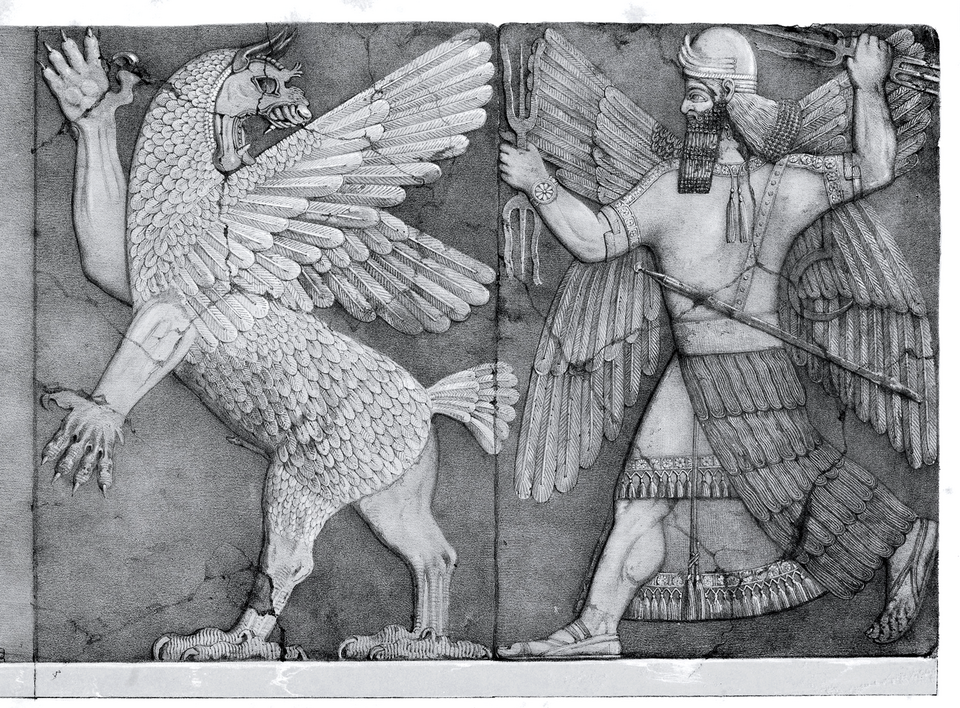
Thwarts Lamashtu
Not an angel and not benevolent: a wind demon used against a worse one, which is the whole logic of the amulets bearing his head.
Identified with Resheph
Plague-bringers deliberately invoked as wards against worse powers.
Identified with Taweret
Composite guardians of the birth chamber, frightening by design and pointed outward.
Identified with Bes
Household apotropaic figures that work by being uglier than the threat.
Placement
Where does it sit in the hierarchies?
Afterwards
What did later readers make of it?
Almost everything the general public knows about Mesopotamian demons comes from one prop. The Exorcist opens in northern Iraq with a statue of Pazuzu, and the film's poster and its final confrontation return to it, which made a minor apotropaic figure the most recognisable demon of the ancient Near East. The irony is total and worth stating: in the material the corpus actually cites he is the figure set against Lamashtu — a demon employed on the protective side, whose head is worn as a defence — so the film gave him the role his own cult existed to prevent.
Kept in its own section on purpose. Everything above is what the cited texts say; this is what was built on top of them afterwards, and blending the two is how most popular demonology goes wrong.
Answered from the sources
Common questions
Which texts mention Pazuzu?
Is Pazuzu the same as Resheph?
What rank is Pazuzu?
What is Pazuzu said to do?
How old is Pazuzu?
Nearest in the corpus
If Pazuzu is what you came for, these are next
Chosen by proximity rather than by popularity: the same pantheon first, then the same rank, then the same kind of figure.
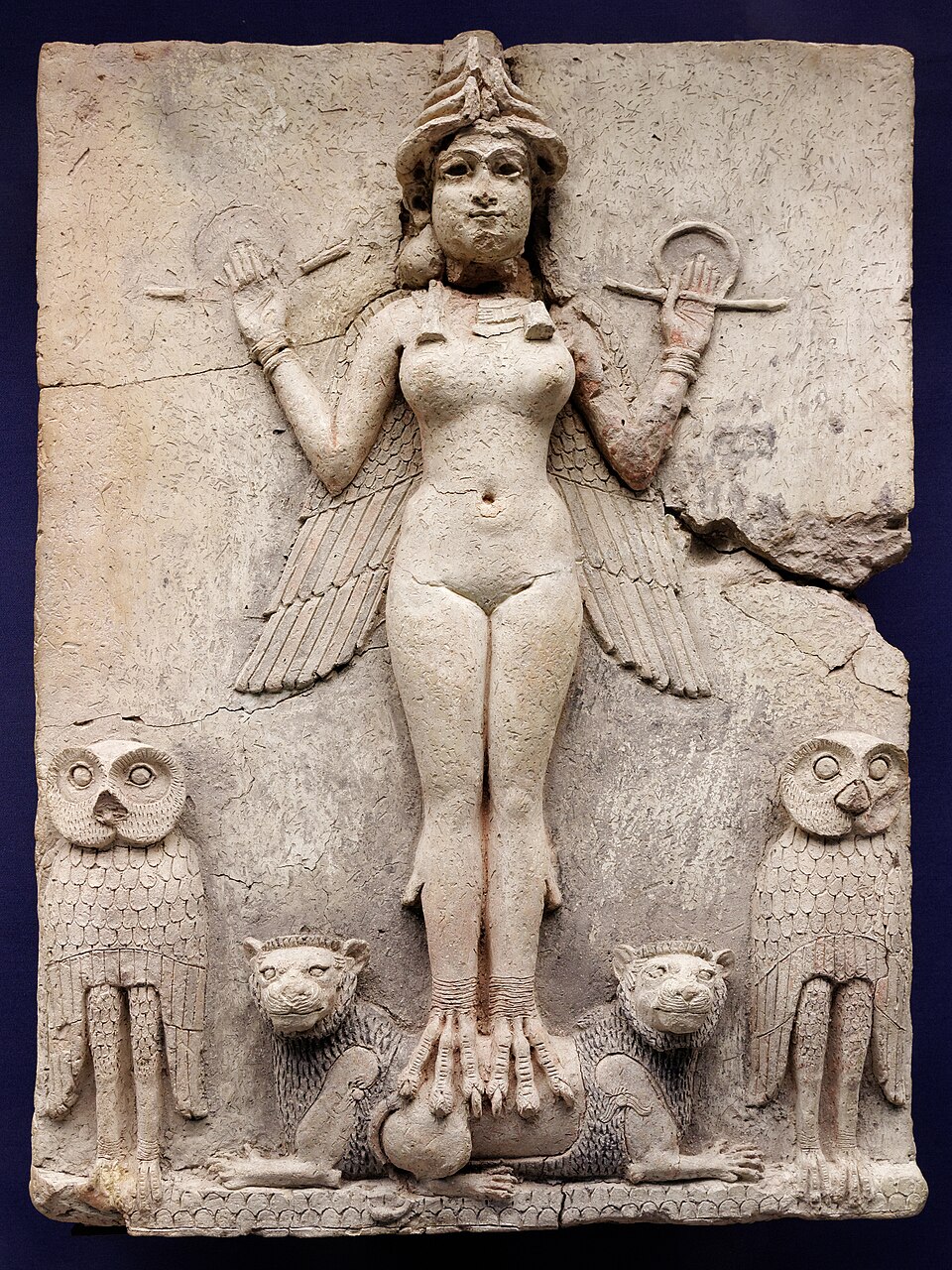
Ereshkigal
Queen of the Great Below · Mesopotamian
Sovereign of the underworld who strips Ishtar of a garment at each of the seven gates and hangs her on a hook.
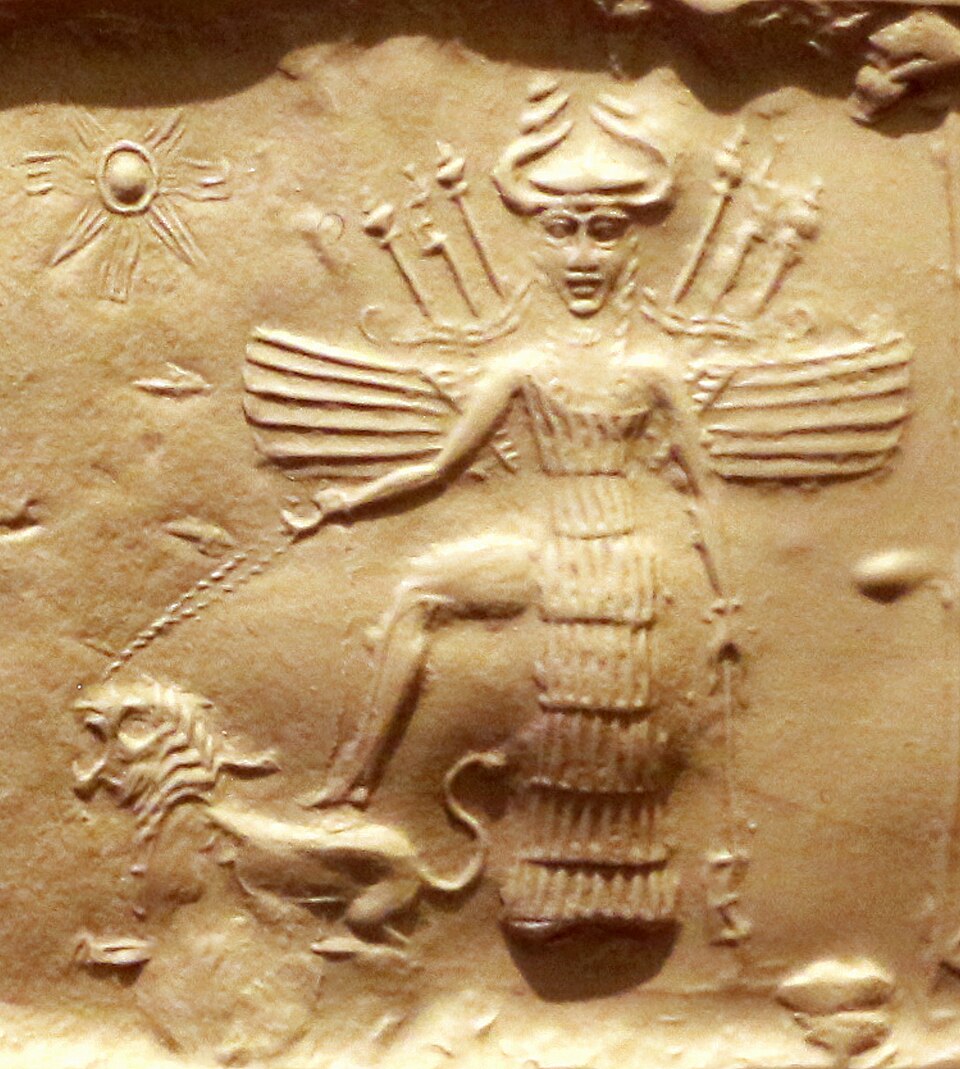
Ishtar
Queen of Heaven · Mesopotamian
Goddess of love, war and the planet Venus, whose descent into the underworld is among the oldest recorded narratives.
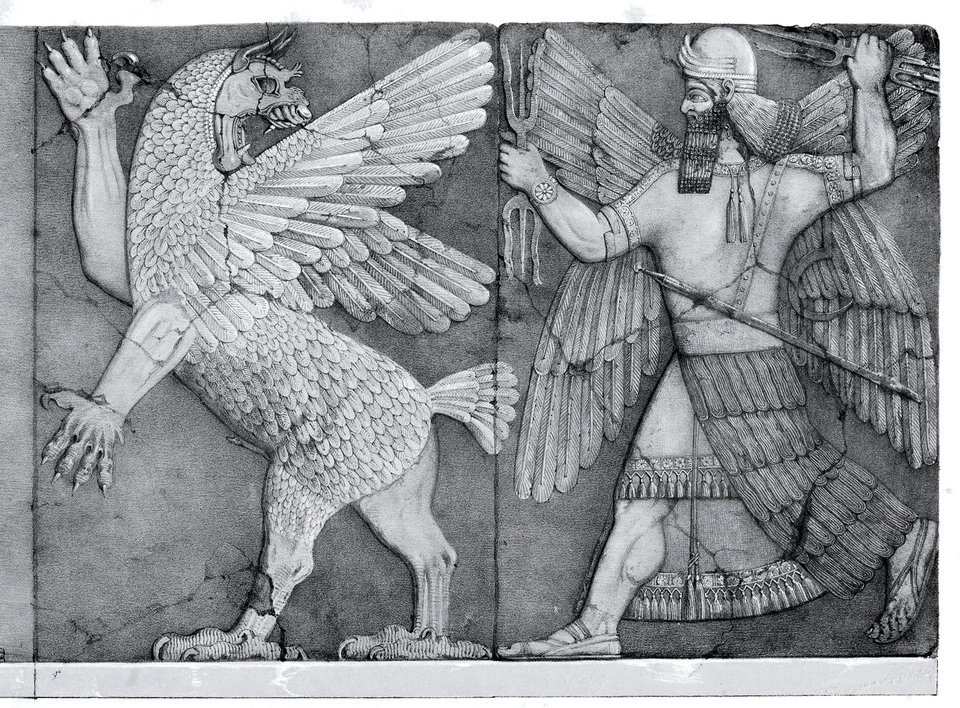
Marduk
King of the Gods · Mesopotamian
Splits Tiamat and builds the world from her body, and is voted fifty names and supreme authority for doing it.
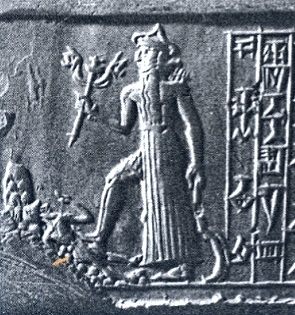
Nergal
God of the Underworld · Mesopotamian
God of plague, war and the underworld, consort of Ereshkigal — and one of the few Mesopotamian gods the Bible names directly.
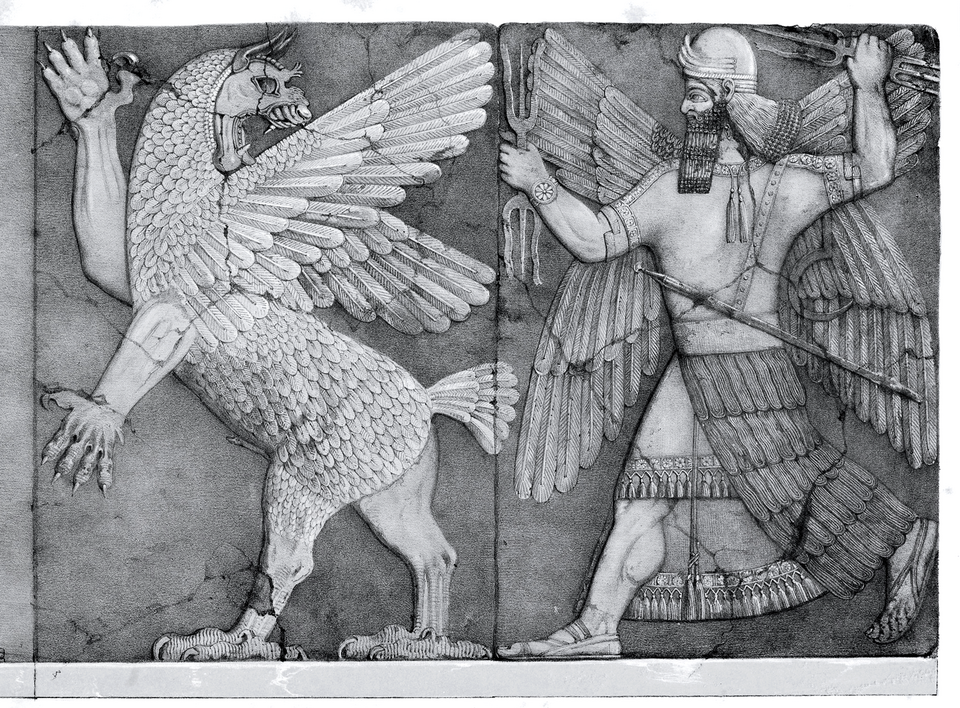
Anzu
Storm Bird · Mesopotamian
The lion-headed eagle who steals the Tablet of Destinies and is shot down for it — a rebellion against divine order predating any biblical account by a millennium.
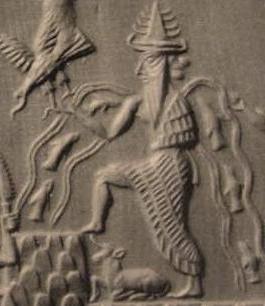
Enki
Lord of the Sweet Waters · Mesopotamian
God of the abzu and of cunning, who repeatedly saves humanity by finding the loophole in another god's decree.
The books behind Pazuzu
Every claim on this profile is attributed to one of these. They are public domain, listed oldest first, and each links to a full text where one is freely available.
The Lamashtu Series
Anonymous; canonical series of three tablets · c. 1800–600 BCE · Akkadian
Read The Lamashtu Series in full ↗Akkadian Incantation Series & Amulet Inscriptions
Anonymous; recovered from Assyrian and Babylonian sites · c. 1800-600 BCE · Akkadian and Sumerian
Read Akkadian Incantation Series & Amulet Inscriptions in full ↗Cover: Public domain · Robert William Rogers (1864–1930) · Wikimedia file page
Corpus last revised 29 August 2026. A reference site’s credibility rests on being maintained, so this is the date the sourced records last changed — not the date the page was rebuilt.