Tradition
Norse
The Aesir, the Jotnar, and Loki, whose gradual demonisation under Christian redaction parallels Satan's.
What is the Norse tradition?
Norse religion reaches us almost entirely through Christian hands. The Eddas were written down in thirteenth-century Iceland, two centuries after conversion, by authors who were preserving poetry they valued while writing from inside a religion that had replaced the one they were describing.
Loki is the figure where that shows most. His gradual movement from ambiguous trickster to bound adversary awaiting a final battle parallels Satan's development closely enough that the parallel is hard to dismiss as coincidence — and the direction of influence is not something the sources settle.
The Jotnar are worth attention because they resist the categories this site is otherwise organised around. They are not evil, they are not demons, and they intermarry with the gods constantly. A tradition whose antagonists are in-laws is describing something other than a war between good and evil.
Which texts does this tradition rest on?
Gesta Hammaburgensis Ecclesiae Pontificum
Adam of Bremen · c. 1075
A German cleric's history of the archbishopric of Hamburg-Bremen, and the earliest description anyone has of Norse worship as a going concern rather than as remembered poetry. Its account of the temple at Uppsala — three statues, a nine-yearly festival, sacrifices hung in the grove — is second-hand, hostile and the only contemporary evidence of its kind, which is a combination that has kept archaeologists arguing about it for a century.
2 entries contributed
Gesta Danorum
Saxo Grammaticus; tr. Oliver Elton · c. 1200
The Danish history, written in Latin at about the moment Snorri was writing in Icelandic and drawing on different material. Saxo's gods are men: magicians who deceived the credulous into worshipping them, and who can be shamed, exiled and replaced. The euhemerism is not a stray remark but the frame of the whole first half, which makes this the corpus's fullest example of a pantheon being disposed of by explanation rather than by condemnation.
3 entries contributed
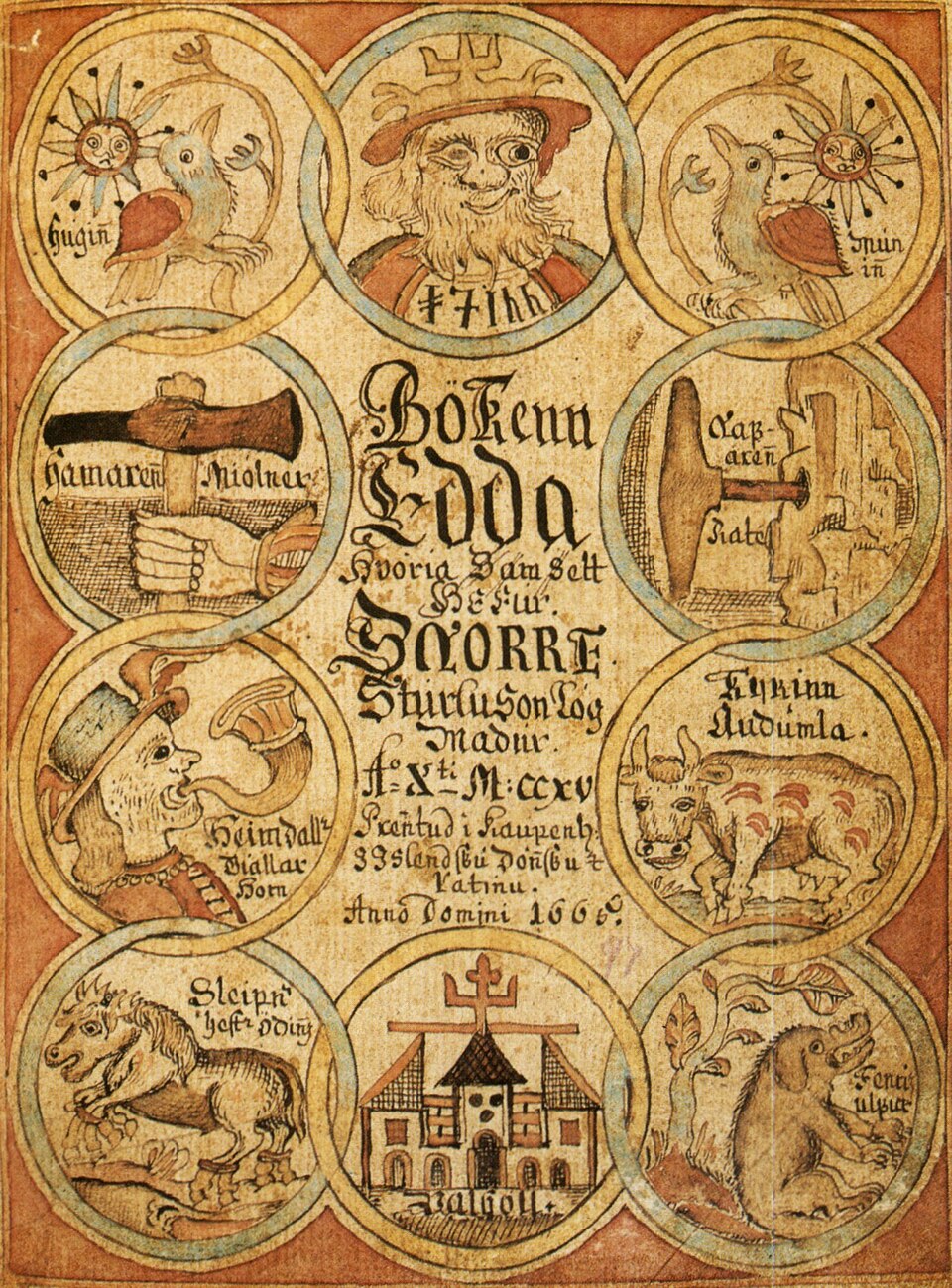
The Prose Edda
Snorri Sturluson; tr. Arthur Gilchrist Brodeur · c. 1220
Snorri's handbook for poets, and the most orderly account of Norse cosmology we have — which is also the problem with it. He was a Christian writing two centuries after conversion, and how much of the tidiness is his is an open question.
7 entries contributed
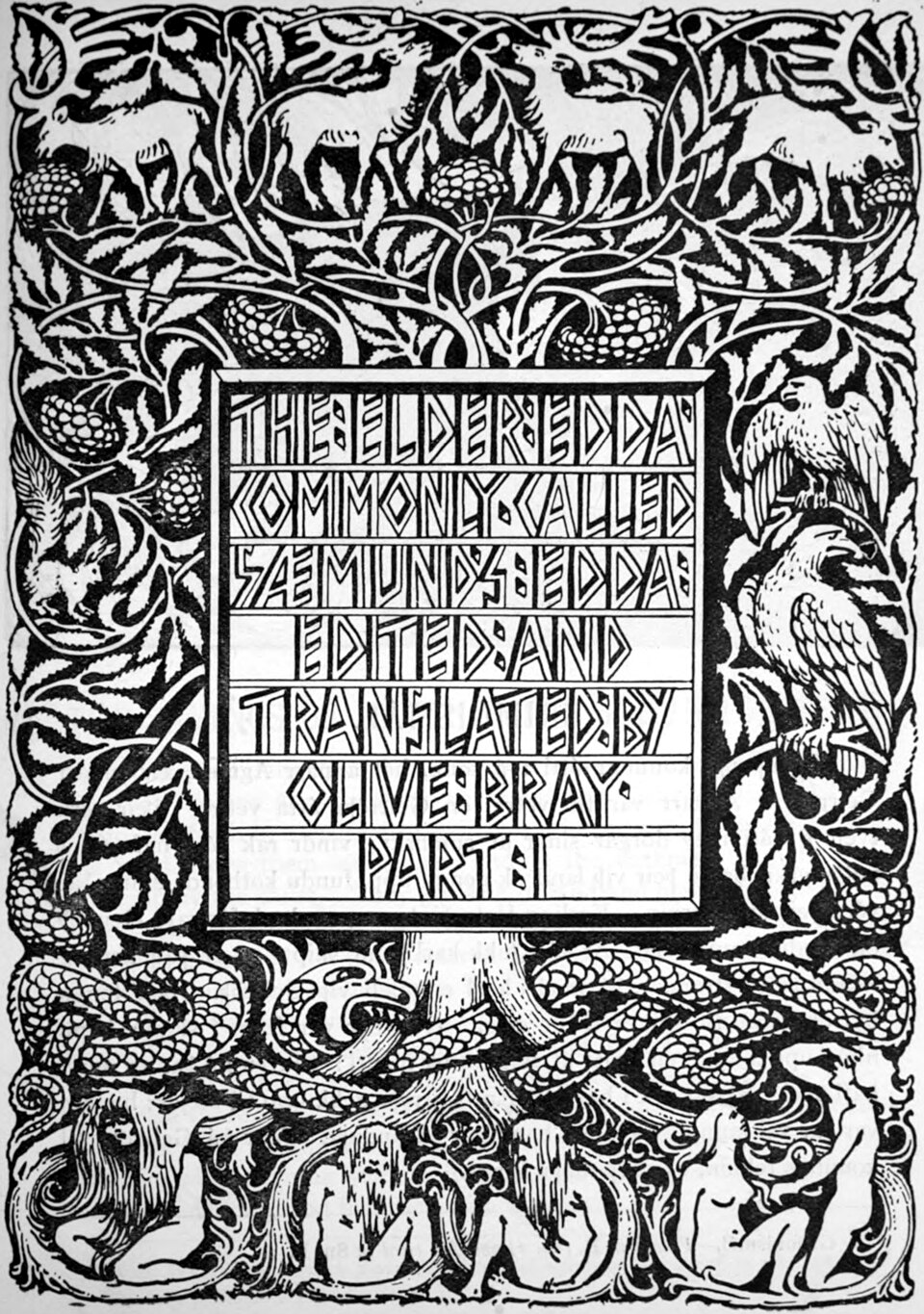
The Poetic Edda
Anonymous; compiled in Iceland · 13th c., from older oral material
The Norse mythological poems. Loki's transformation across them — from awkward companion to bound enemy who leads the forces of Ragnarok — is a demonisation caught partly in progress.
7 entries contributed
Which marks belong to it?
Oldest first. A mark used by several traditions appears on each of their pages — which is the point: the shapes crossed these boundaries far more easily than the names did.
The Runes
from c. 150 CE
An alphabet that the poems say Odin obtained by hanging himself on a tree for nine nights — writing acquired as an ordeal.
The Triquetra
Christian manuscript use from c. 700 CE
Three interlaced arcs from Insular manuscript art — read as the Trinity by the people who drew it, and as pre-Christian by nearly everyone since.
The Valknut
c. 700–1000 CE
Three interlocking triangles on picture stones and ship burials, always near Odin, and never once explained by a surviving text.
Mjölnir
Viking age; worn from c. 900 CE
The hammer that hallows — worn as silver pendants in exactly the century Christian cross pendants were spreading through the same region.
The Helm of Awe
drawn form from the 17th century
Eight tridents radiating from a point, drawn between the eyebrows before a fight — an Icelandic magical stave with an Eddic name attached to it.
Who is filed under Norse?
Ordered by attestation score — how early and how independent the texts that name each figure are, rather than how famous the figure has since become.
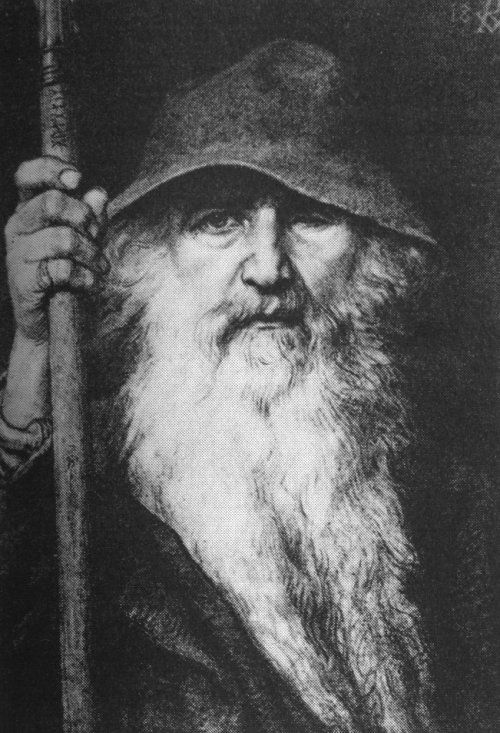
Odin
Allfather · Norse
Hangs himself on the world tree for nine nights to win the runes — a sovereign god who is also a liar, a sorcerer and a chooser of the slain.
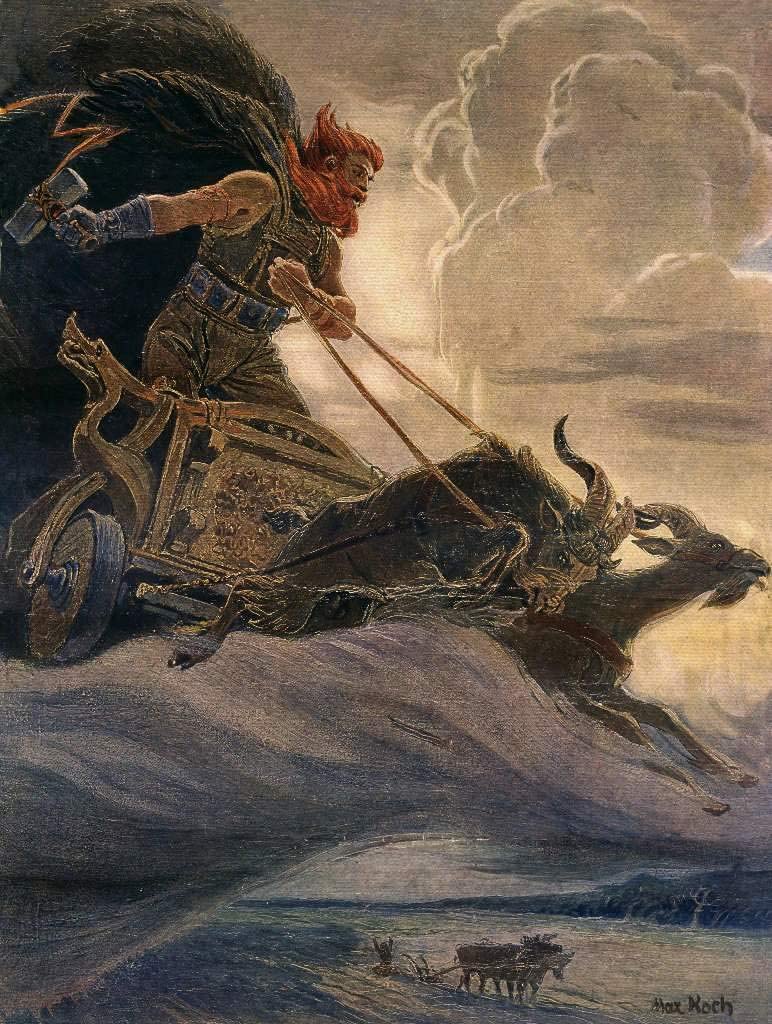
Thor
Thunderer · Norse
The defender who kills giants and will meet Jormungandr at Ragnarok. Whatever the poems give Odin, Thor was by far the more widely worshipped.
Loki
Trickster · Norse
Companion of the Aesir and their eventual destroyer — a figure whose slide toward the demonic is visible within the surviving texts themselves.
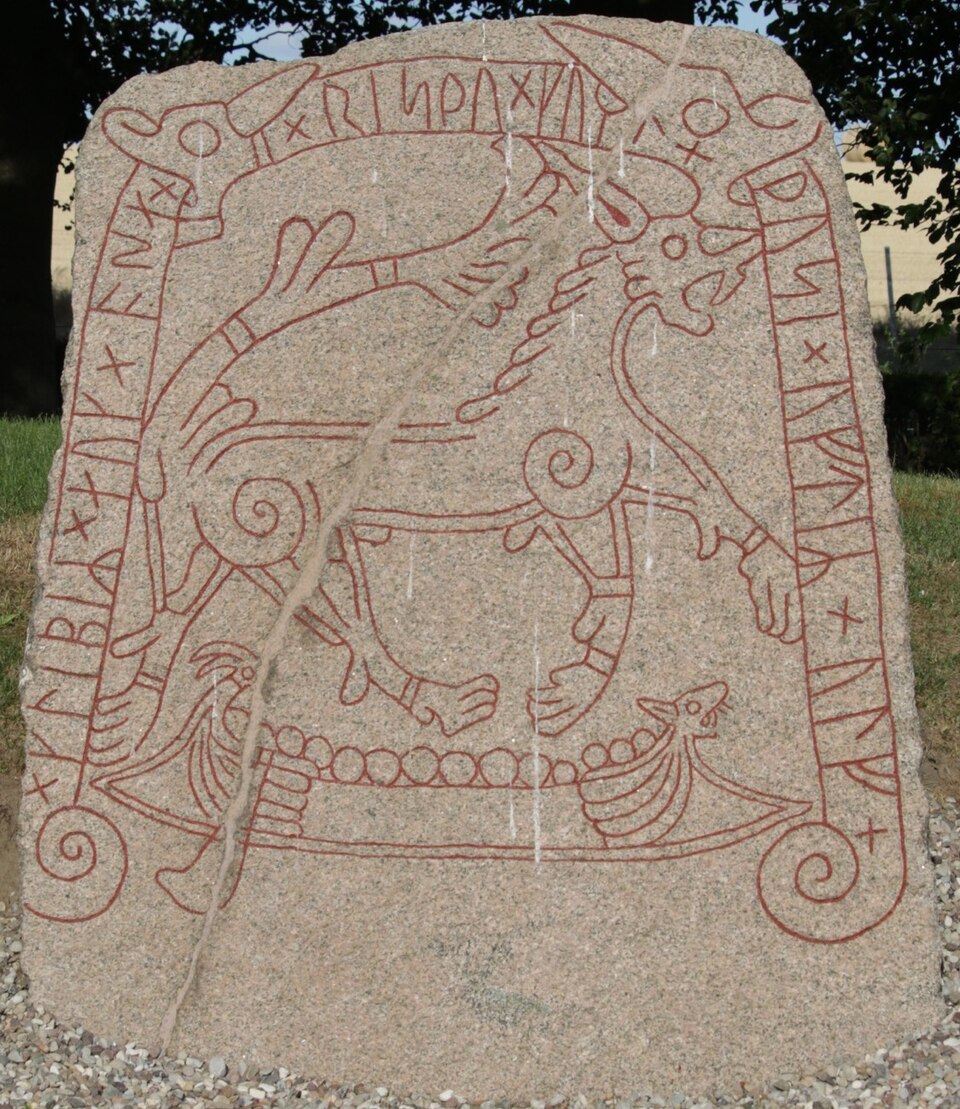
Fenrir
The Bound Wolf · Norse
Loki's son, bound by a fetter made of impossible things at the cost of Tyr's hand, and fated to kill Odin when the binding fails.
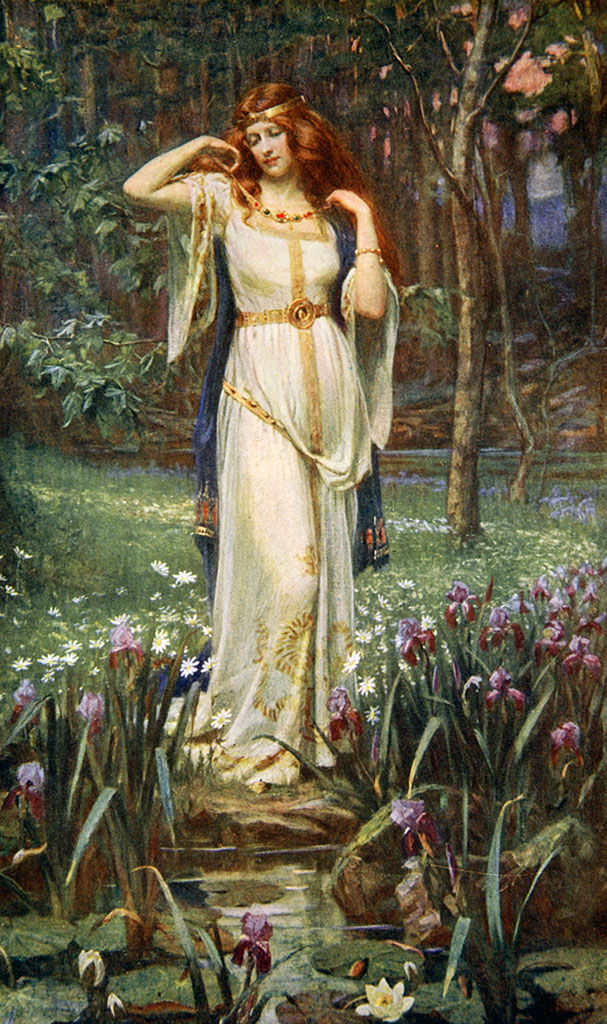
Freyja
Lady of the Vanir · Norse
Goddess of love and of sorcery who takes half the slain — the other half, not Odin's, which is rarely remembered.
Hel
Ruler of the Dead · Norse
Daughter of Loki, and ruler of the realm that gave English the word 'hell'. Hers is cold, and nobody in it is being punished.
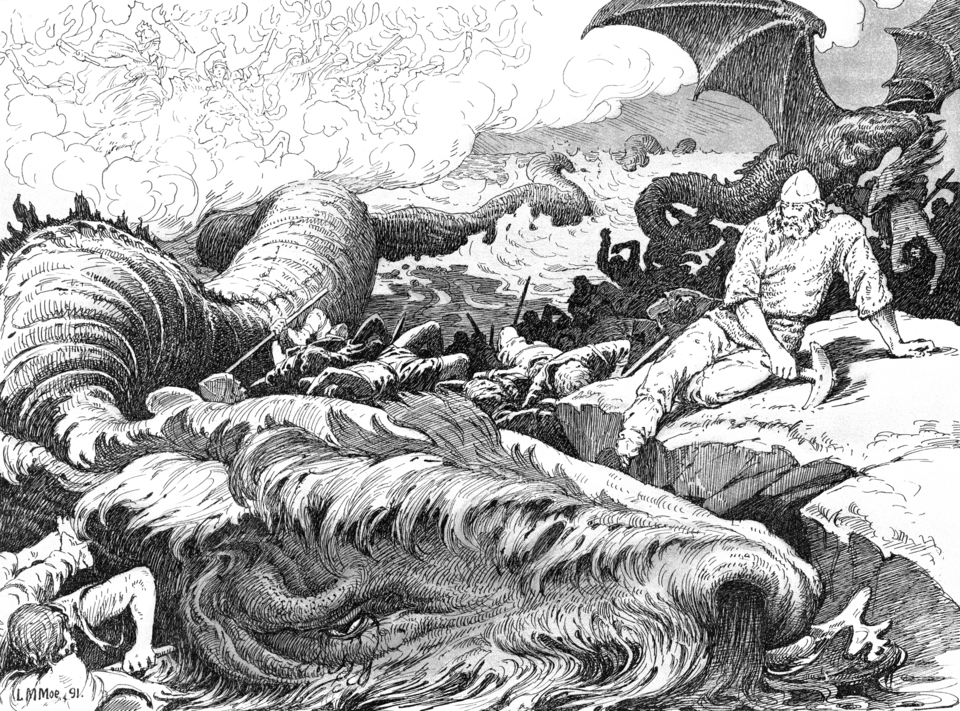
Jormungandr
World Serpent · Norse
The serpent that rings the world and bites its own tail — the Norse entry in the chaos-serpent pattern that runs from Tiamat to Leviathan.