protective · drawn form from the 17th century
The Helm of Awe
Eight tridents radiating from a point, drawn between the eyebrows before a fight — an Icelandic magical stave with an Eddic name attached to it.
What the sources claim for it
Terror projected outward, so that whoever faces the wearer is the one who loses their nerve.
History
Where does the Helm of Awe come from?
Two things share this name and should not be confused. In the Eddas, the ægishjálmr is something the dragon Fáfnir wears or possesses, which makes all who see him afraid; nothing there is drawn. The eight-armed figure everyone now recognises comes from seventeenth- and eighteenth-century Icelandic grimoires such as the Galdrabók, alongside dozens of other magical staves, with instructions to draw it in lead, blood or saliva on the forehead.
That is a gap of six hundred years, and the corpus should say so. The stave tradition is a real and well-documented one; it is early modern, Christian-era, and shares a great deal with continental grimoire practice — which is a more interesting fact than a false Viking pedigree would be.
1 figure
Who is it attached to?
Figures it is used against
The mark is aimed at them. A ward names its target, which makes these the sharpest attributions on the page.
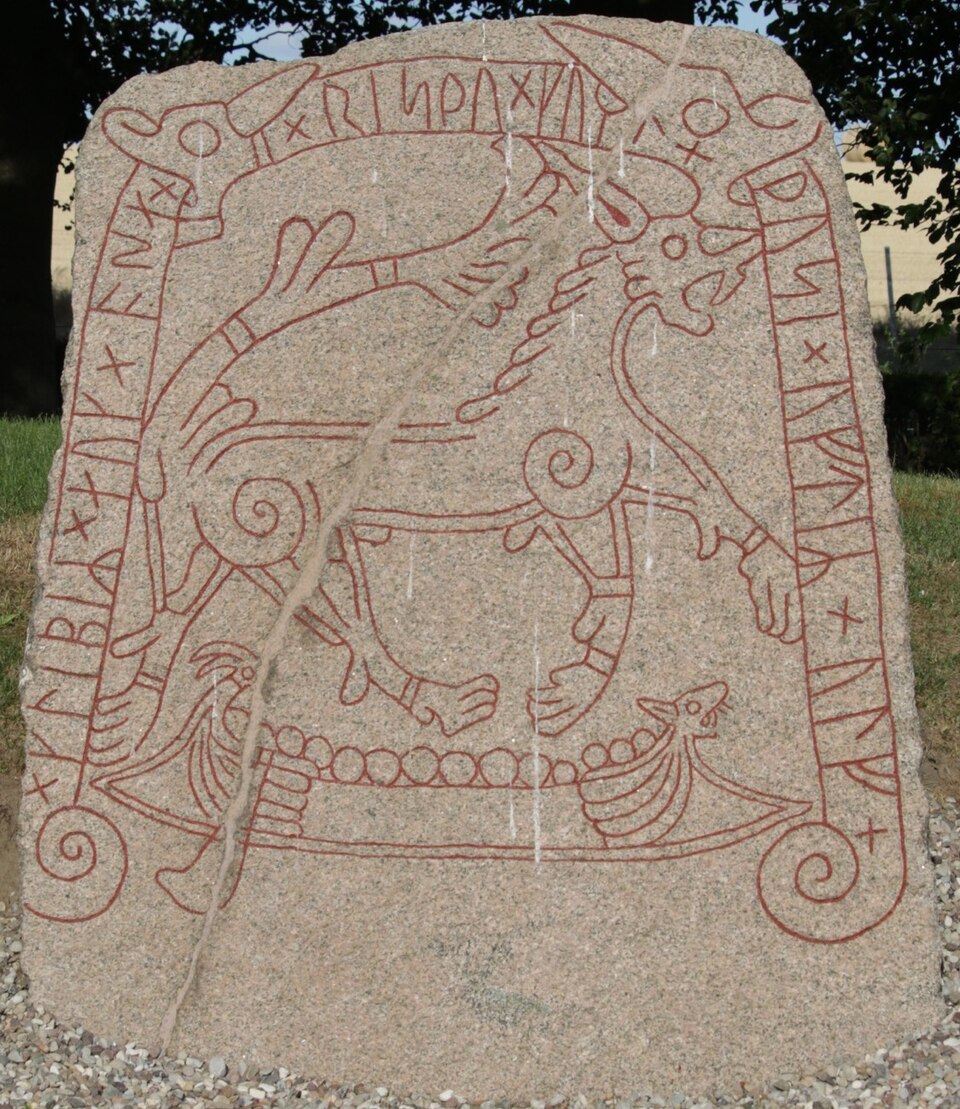
Afterwards
What did it turn into?
Now the most-tattooed 'Viking' symbol worldwide, generally dated in popular sources to the Viking age, which the manuscript record does not support.
Which texts describe it?
Oldest first, with what each one does with the mark. A mark described in a Bronze Age incantation and a mark first drawn in a seventeenth-century manuscript are different kinds of claim, whatever the shape has in common.
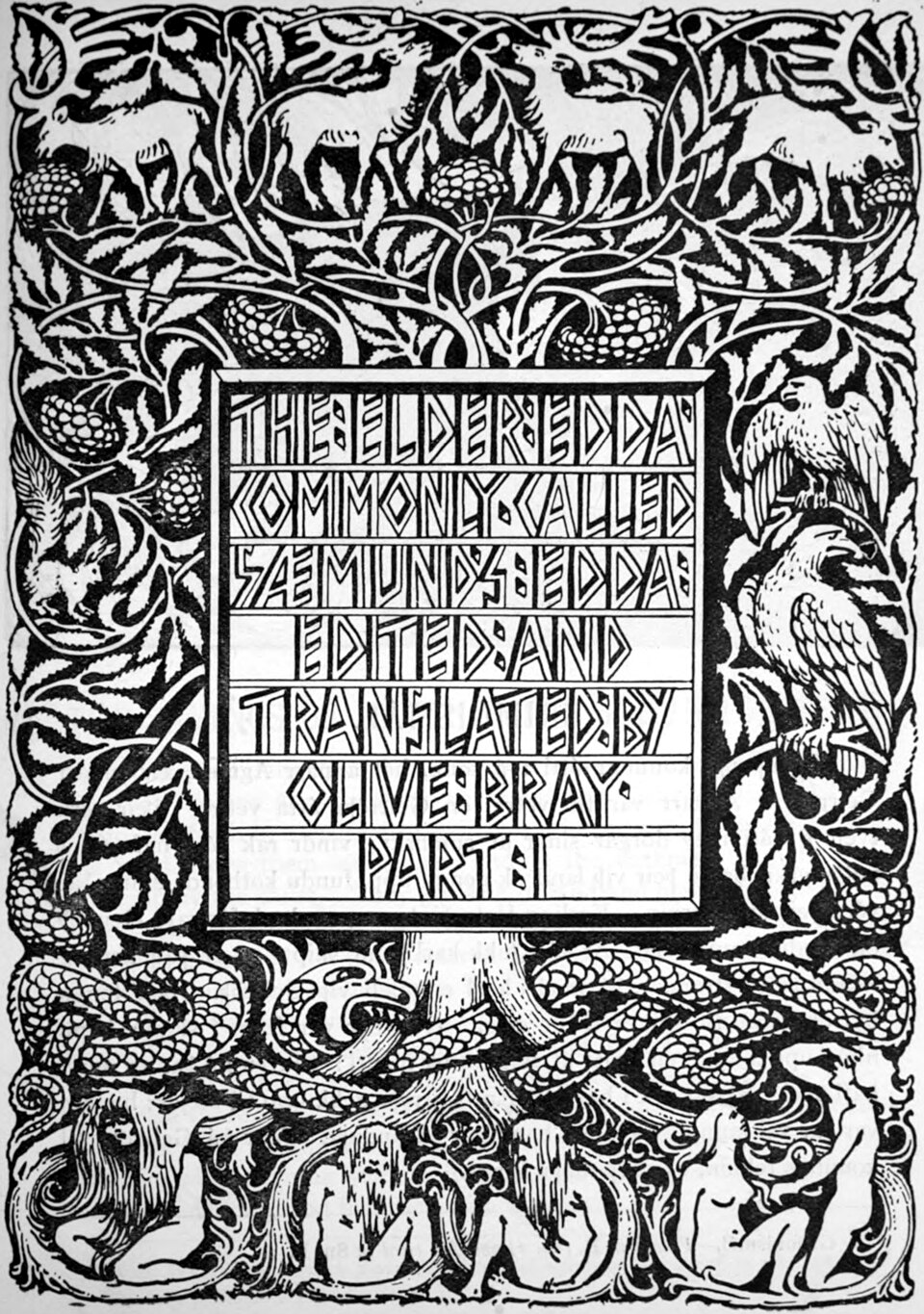
The Poetic Edda
Anonymous; compiled in Iceland · 13th c., from older oral material · Old Norse
Fáfnismál has the dragon wear the helm of awe — the name, six centuries before the drawing.
Read The Poetic Edda in full ↗Cover: Public domain · The Elder or Poetic Edda; commonly known as Sæmund's Edda. Edited and translated with… · Wikimedia file page
Nearby
Related marks
The Pentagram
A five-pointed star drawn in one unbroken line — an accounting mark, a Pythagorean password, a Christian emblem of the five wounds, and only recently a sign of evil.
The Swastika
An auspicious mark used continuously for four and a half thousand years across most of the world, and destroyed as a public sign in the West by twelve years of one European party's use of it.
The Standing Stone
An upright unworked stone marking a place where something happened — the oldest kind of monument, and one the Bible both erects and forbids.
The Nazar
Blue glass with a white and black eye at its centre, worn on the theory that a look can be sent back.
The Pazuzu Head
A demon's face worn to keep a demon out — the clearest surviving case of a malevolent spirit hired as a doorman.
The Gorgoneion
A severed monster's face on a shield, a roof tile, an oven and a coin — the most-produced apotropaic image of the ancient Mediterranean.