divine name · from c. 150 CE
The Runes
An alphabet that the poems say Odin obtained by hanging himself on a tree for nine nights — writing acquired as an ordeal.
What the sources claim for it
In ordinary use, writing. In the poems, knowledge obtained by ordeal, with specific runes cut for specific outcomes.
History
Where does the Runes come from?
The Elder Futhark is a working writing system, used from the second century for names, ownership marks and memorials, and its angular letterforms suit cutting into wood and stone. Most surviving inscriptions are mundane; some are not, and a handful are explicitly protective or curse formulas.
What the literature adds is the acquisition story. In Hávamál, Odin hangs on the windy tree nine nights, wounded with a spear, given to himself, and takes up the runes screaming. The tradition presents literacy as something won at cost by a god, not as a convenience — and separately, Sigrdrífumál lists runes to be cut for victory, for childbirth and for ale.
1 figure
Who is it attached to?
Figures who carry it
An attribute rather than a signature — held, worn or associated in the texts and the images.
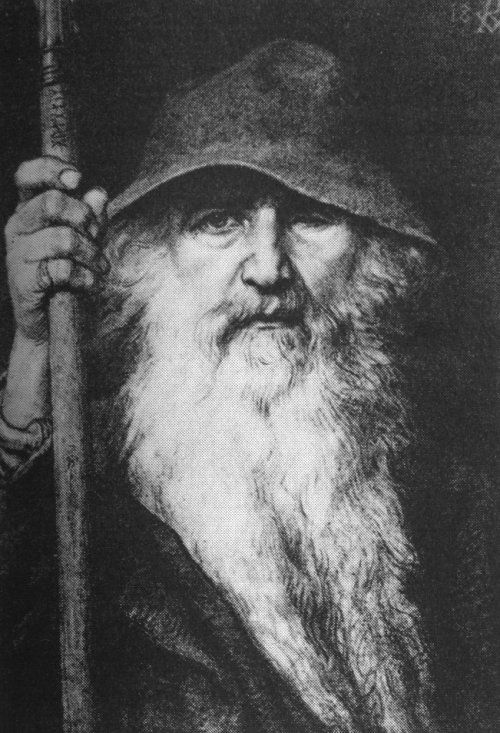
Afterwards
What did it turn into?
Subject to heavy twentieth-century distortion: the Armanen 'runes' invented by Guido von List in 1902 have no historical basis, and Nazi use of two of the letterforms has made parts of the alphabet unusable in public for reasons unrelated to their history.
Which texts describe it?
Oldest first, with what each one does with the mark. A mark described in a Bronze Age incantation and a mark first drawn in a seventeenth-century manuscript are different kinds of claim, whatever the shape has in common.
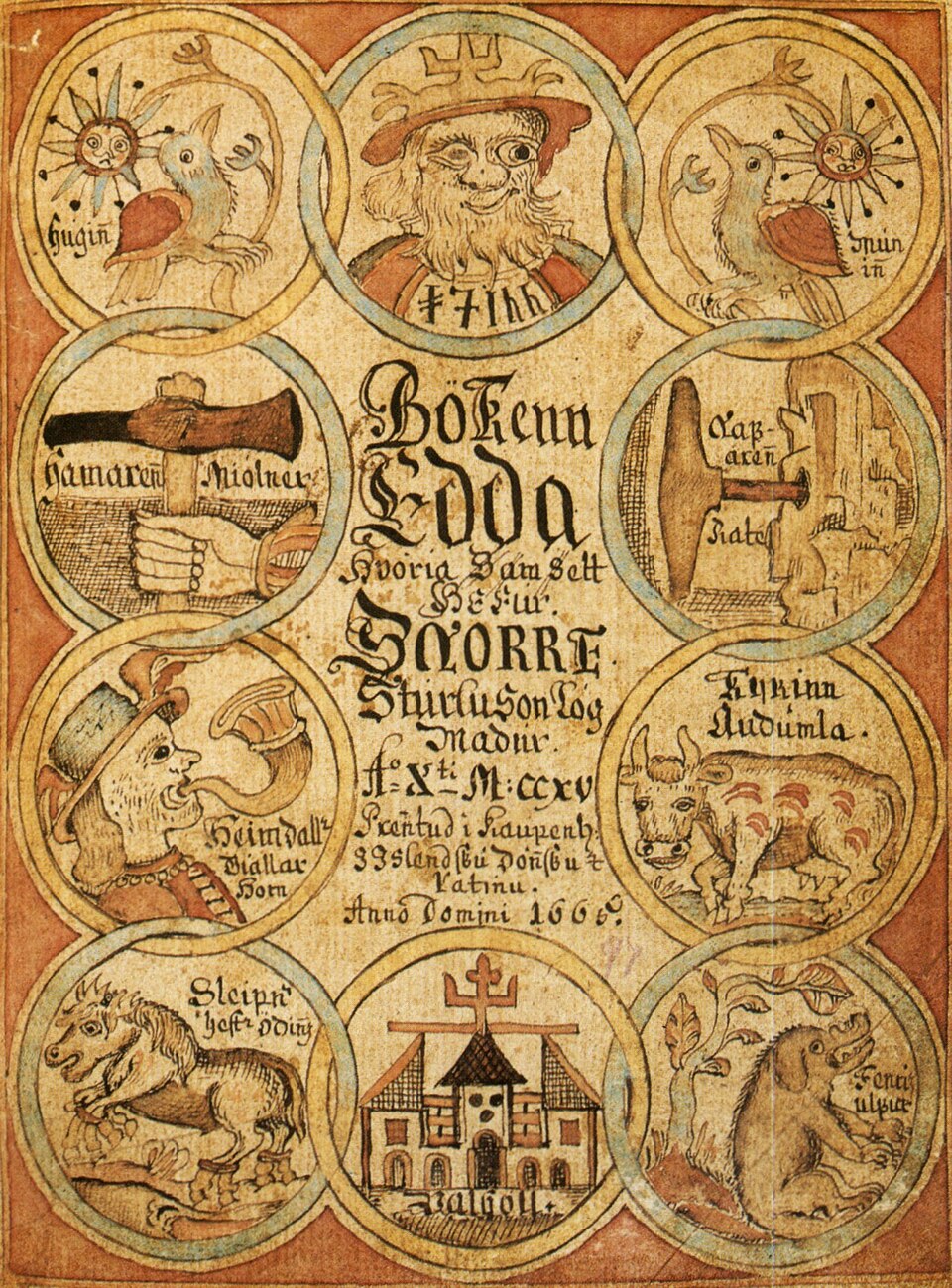
The Prose Edda
Snorri Sturluson; tr. Arthur Gilchrist Brodeur · c. 1220 · Old Norse
Snorri's systematising of the same material.
Read The Prose Edda in full ↗Cover: Public domain · Unknown author · Wikimedia file page
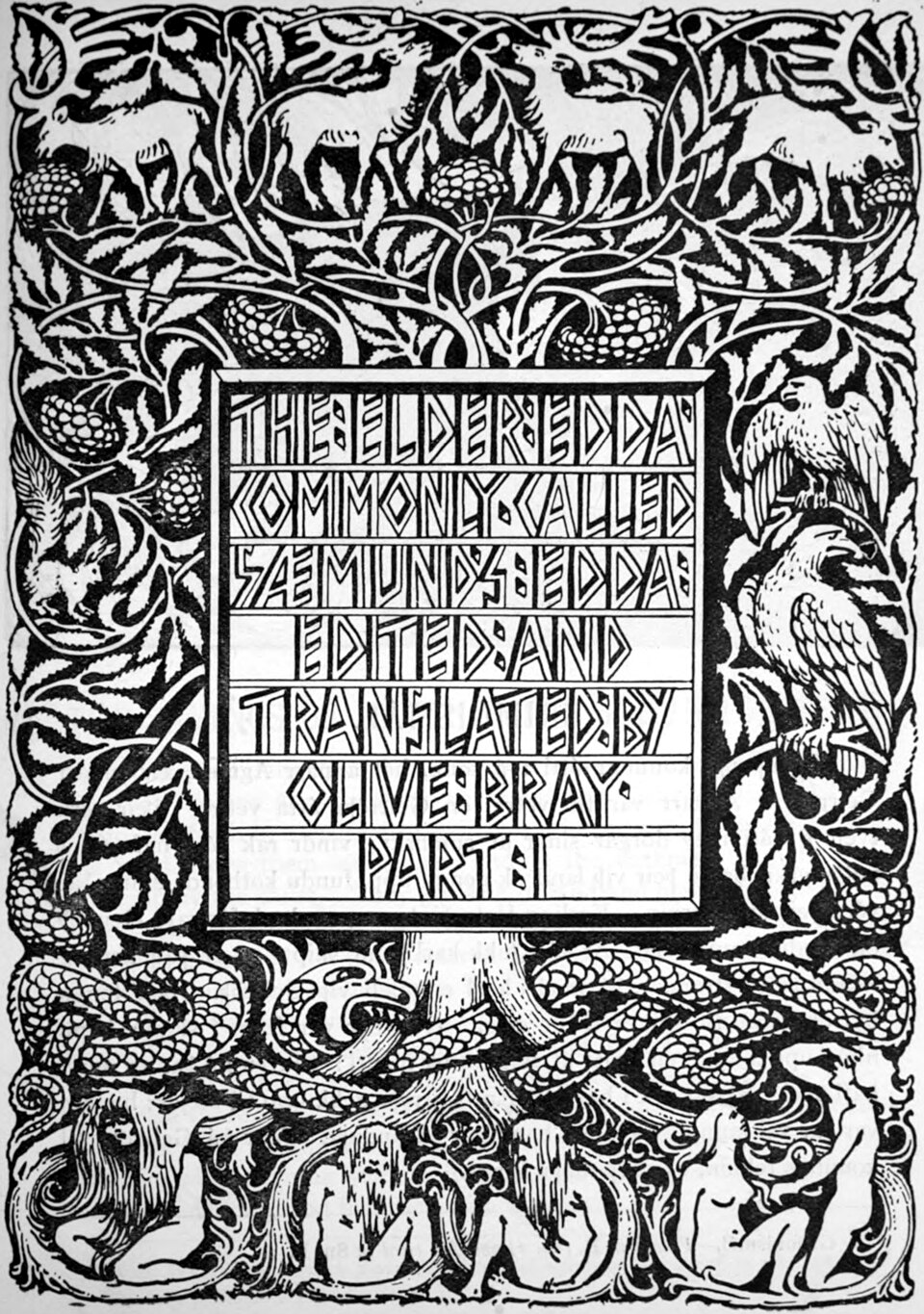
The Poetic Edda
Anonymous; compiled in Iceland · 13th c., from older oral material · Old Norse
Hávamál on Odin's nine nights; Sigrdrífumál on runes cut for particular purposes.
Read The Poetic Edda in full ↗Cover: Public domain · The Elder or Poetic Edda; commonly known as Sæmund's Edda. Edited and translated with… · Wikimedia file page
Nearby
Related marks
The Triquetra
Three interlaced arcs from Insular manuscript art — read as the Trinity by the people who drew it, and as pre-Christian by nearly everyone since.
The Valknut
Three interlocking triangles on picture stones and ship burials, always near Odin, and never once explained by a surviving text.
Mjölnir
The hammer that hallows — worn as silver pendants in exactly the century Christian cross pendants were spreading through the same region.
The Helm of Awe
Eight tridents radiating from a point, drawn between the eyebrows before a fight — an Icelandic magical stave with an Eddic name attached to it.
Om
A syllable before it was ever a shape — recited at the opening and close of Vedic utterance, and only much later written as the mark everyone recognises.
The Tetragrammaton
Four letters that stopped being pronounced and became, in consequence, the most powerful thing you could write on a piece of equipment.