protective · c. 700–1000 CE
The Valknut
Three interlocking triangles on picture stones and ship burials, always near Odin, and never once explained by a surviving text.
What the sources claim for it
Unrecorded. Every published interpretation is inference from archaeological context.
History
Where does the Valknut come from?
The valknut appears on Gotlandic picture stones, on the Oseberg ship burial, and on a handful of other Viking-age objects. The contexts share a theme — death, burial, and scenes involving Odin — and that is the entire basis for associating it with him. No Norse text names it, describes it, or says what it does.
Even the name is modern: valknut is a Norwegian coinage meaning knot of the slain, not a word from the sources. It is here as an honest limit case. The corpus can say with confidence where the mark was carved and what it was carved near, and can say nothing at all about what its makers thought it meant.
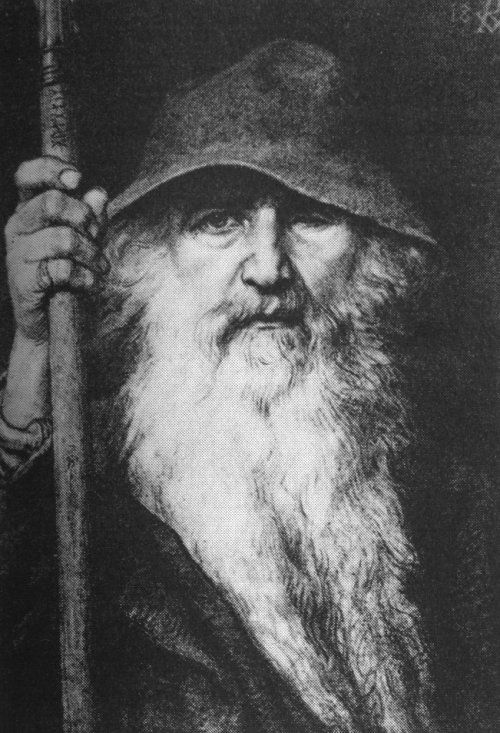
1 figure
Who is it attached to?
Figures who carry it
An attribute rather than a signature — held, worn or associated in the texts and the images.
Afterwards
What did it turn into?
In wide modern use as a general Norse emblem and, like the hammer, subject to extremist appropriation that the communities using it contest.
Which texts describe it?
None, and here is why
A modern name for an ancient shape. The three interlocked triangles appear on Gotland picture stones and on ship burials, and no surviving Norse text names the design or explains it — the word valknut itself is a nineteenth-century coinage. The associations with Odin and with the slain are inferred from what the stones depict around it. Citing the Eddas here would attribute to them something they do not contain.
Nearby
Related marks
The Runes
An alphabet that the poems say Odin obtained by hanging himself on a tree for nine nights — writing acquired as an ordeal.
The Triquetra
Three interlaced arcs from Insular manuscript art — read as the Trinity by the people who drew it, and as pre-Christian by nearly everyone since.
Mjölnir
The hammer that hallows — worn as silver pendants in exactly the century Christian cross pendants were spreading through the same region.
The Helm of Awe
Eight tridents radiating from a point, drawn between the eyebrows before a fight — an Icelandic magical stave with an Eddic name attached to it.
The Ankh
The sign for 'life', held to the nose of a king by a god. Not an amulet first — a hieroglyph that got carried into three dimensions.
The Djed Pillar
A four-tiered column meaning stability, later read as the backbone of Osiris and raised upright at festival as a resurrection.