Norse · Old Norse · c. 1220
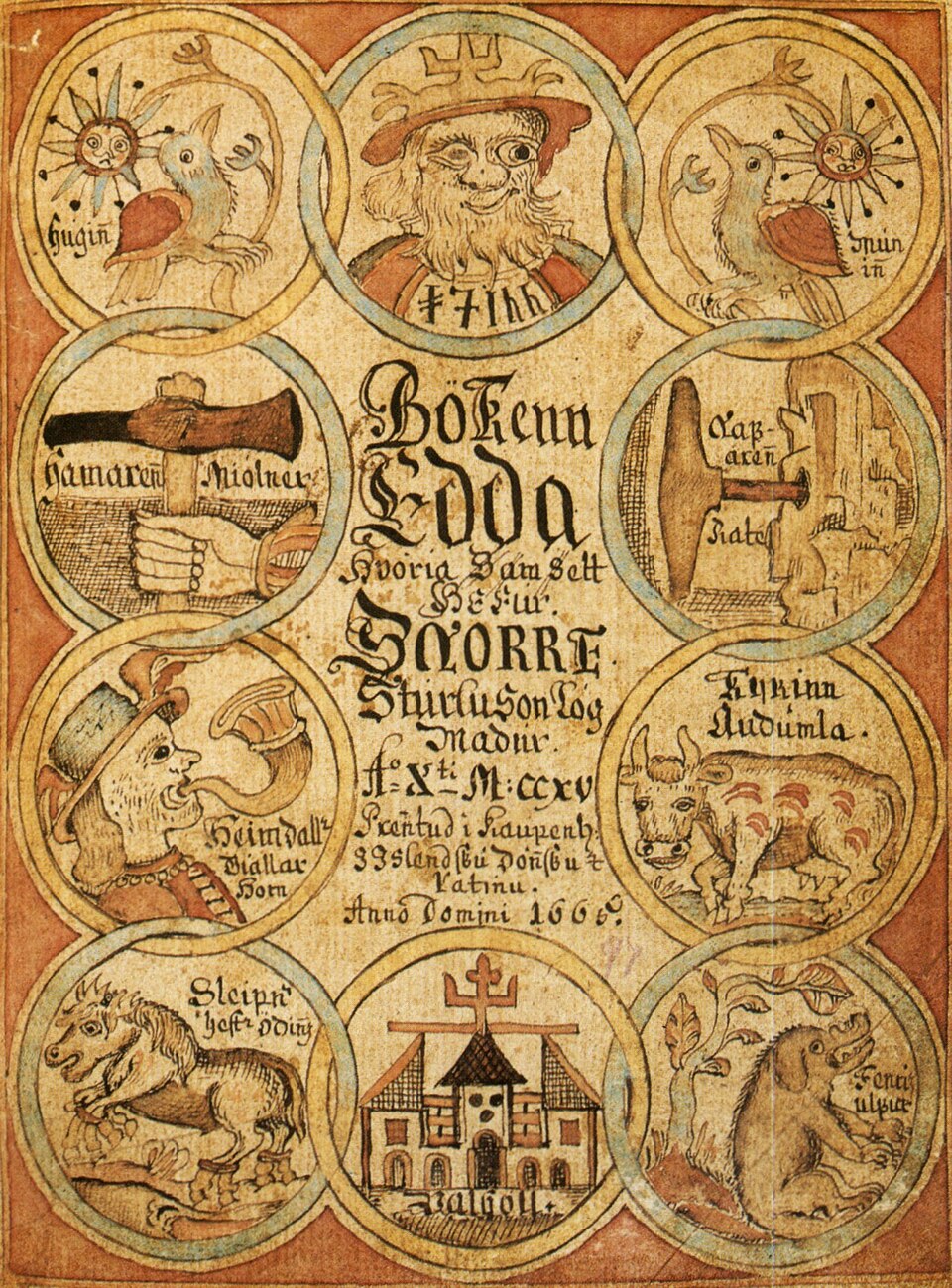
The Prose Edda
Snorri Sturluson; tr. Arthur Gilchrist Brodeur
Snorri's handbook for poets, and the most orderly account of Norse cosmology we have — which is also the problem with it. He was a Christian writing two centuries after conversion, and how much of the tidiness is his is an open question.
Read The Prose Edda in full at the linked edition →What this text attests · 7
| Name here | Rank given | # | Powers described |
|---|---|---|---|
| — | — | The binding, in full and only here: the two chains he breaks for the pleasure of breaking them, the third made of impossible things, and Tyr's hand in his mouth as the pledge that the gods are dealing honestly, which they are not. The gods bind the wolf by perjury, and Snorri does not soften it. | |
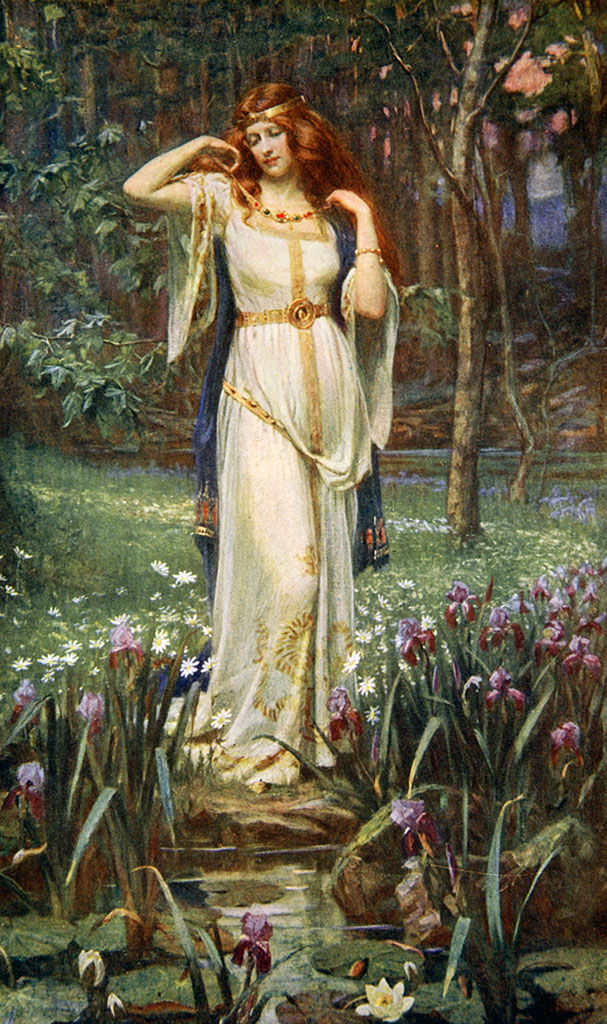
| — | — | The Vanir hostage settled among the Aesir, owner of the Brísingamen and of a hall where she takes half the slain — Odin takes the other half, which is a division of the war dead the Poetic Edda states and Snorri explains. He also calls her the last of the gods to remain known, which is a claim about survival rather than about worship, and worth recording as his. | |
| — | — | Given a description, a hall and a jurisdiction: half-livid and half-flesh-coloured, thrown into Niflheim by Odin and granted authority over those who die of sickness and old age. She is also the one who sets the condition for releasing Baldr and is cheated of it — a ruler of the dead who keeps to a bargain while the gods do not. | |
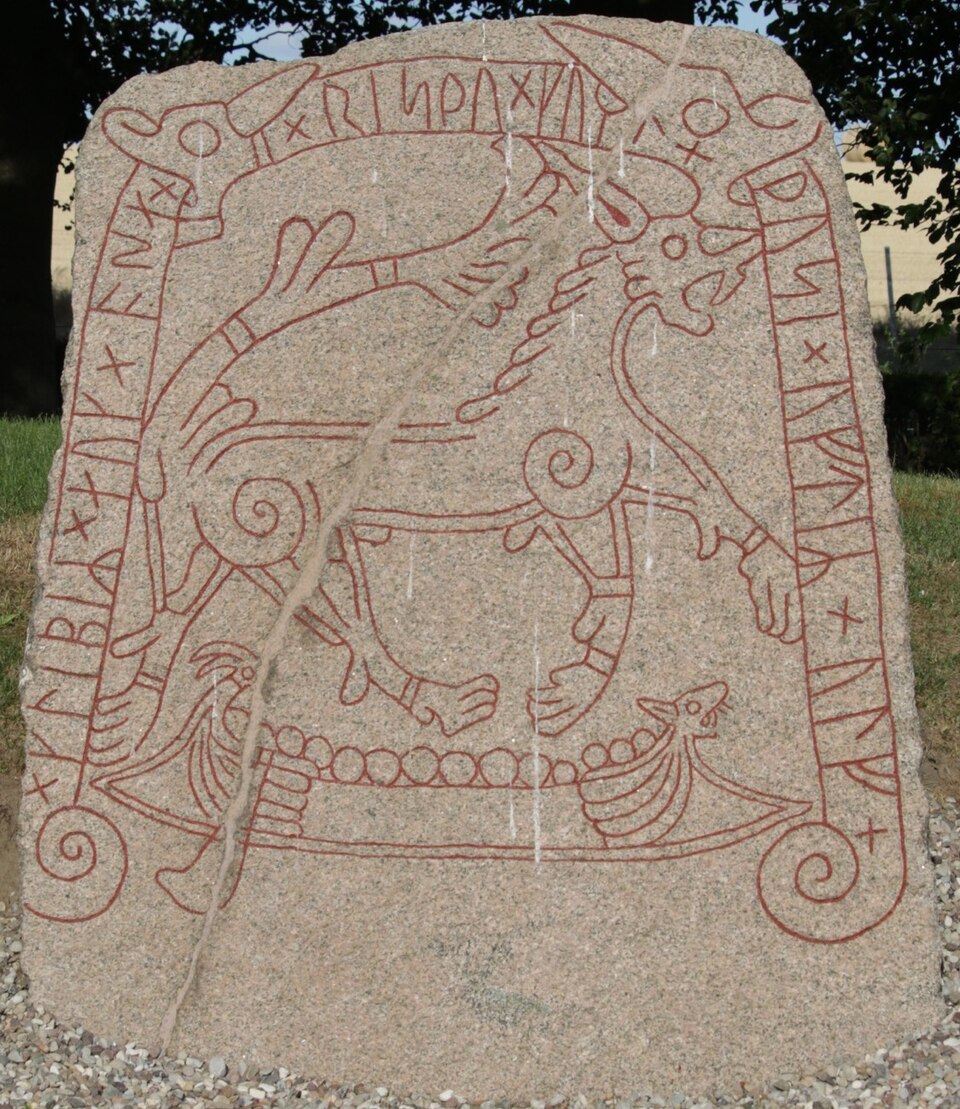
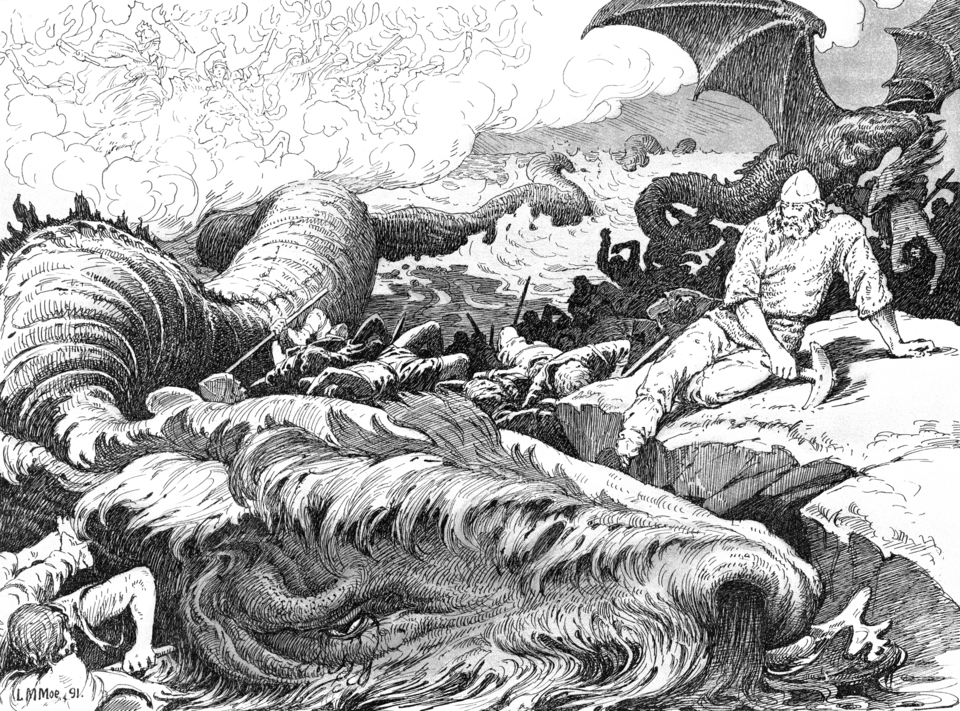 Jörmungandr = Jormungandr | — | — | Thrown into the sea by Odin, grown until it circles the world and bites its own tail, and hooked by Thor on an ox head in the fishing episode — the only time anything nearly kills it before Ragnarok, when they kill each other. Snorri also reports it standing in for a cat in a giant's illusion, which is the same figure treated as a joke. |
| — | — | Where the biography is assembled: the companion who solves the problems he caused, the father of Hel, Fenrir and Jörmungandr by the giantess Angrboda, and finally the bound enemy under the dripping serpent with Sigyn holding the bowl. Snorri puts the arc in one place, and the arc is the demonisation. | |
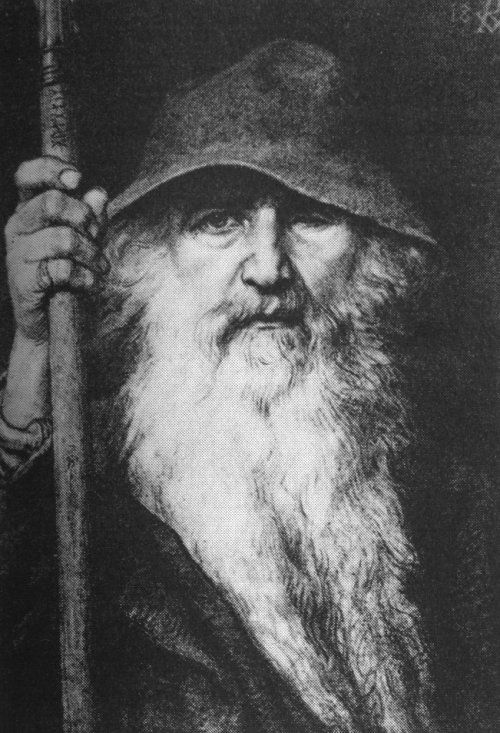
| — | — | The systematic account: the Allfather at the head of a cosmology Snorri sets out in order, with the world made from Ymir's body and the names of Odin listed as a poet's resource. The tidiness is the thing to watch — Snorri is a Christian antiquarian arranging material that the poems leave ragged, and the corpus holds both so the arrangement can be seen as his. | |
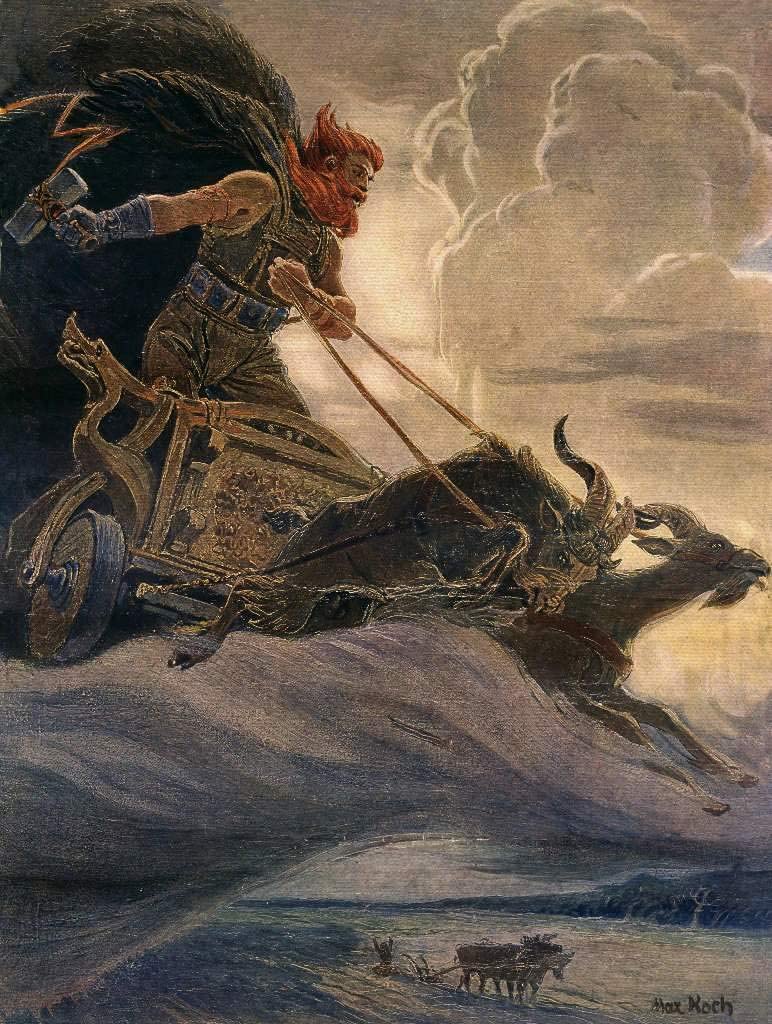
| — | — | The god the anecdotes are about. Snorri gives the journey to Útgarða-Loki, where Thor loses three contests to a giant's illusions — the drinking horn that is the sea, the cat that is the world serpent, the old woman who is old age — and is told afterwards that he did better than anyone should have. It is the fullest surviving Norse story of a god being defeated by trickery and told so. |