Norse · Latin · c. 1075
Gesta Hammaburgensis Ecclesiae Pontificum
Adam of Bremen
A German cleric's history of the archbishopric of Hamburg-Bremen, and the earliest description anyone has of Norse worship as a going concern rather than as remembered poetry. Its account of the temple at Uppsala — three statues, a nine-yearly festival, sacrifices hung in the grove — is second-hand, hostile and the only contemporary evidence of its kind, which is a combination that has kept archaeologists arguing about it for a century.
Read Gesta Hammaburgensis Ecclesiae Pontificum in full at the linked edition →What this text attests · 2
| Name here | Rank given | # | Powers described |
|---|---|---|---|
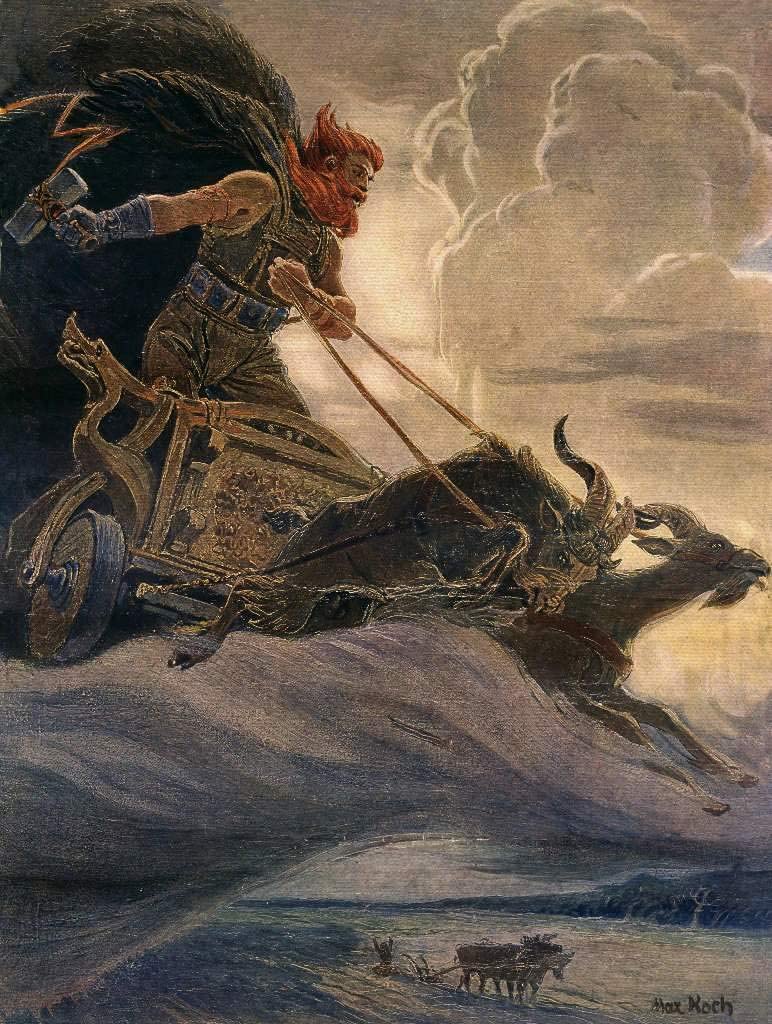
| — | — | Placed at the centre of the temple with a god on either side, and described as the one who governs thunder, weather and crops, invoked against famine and plague rather than in battle. An outsider reporting which god is asked for what is a different class of evidence from a poem, and it puts the sky god at the head of the cult where the literature puts Odin. | |
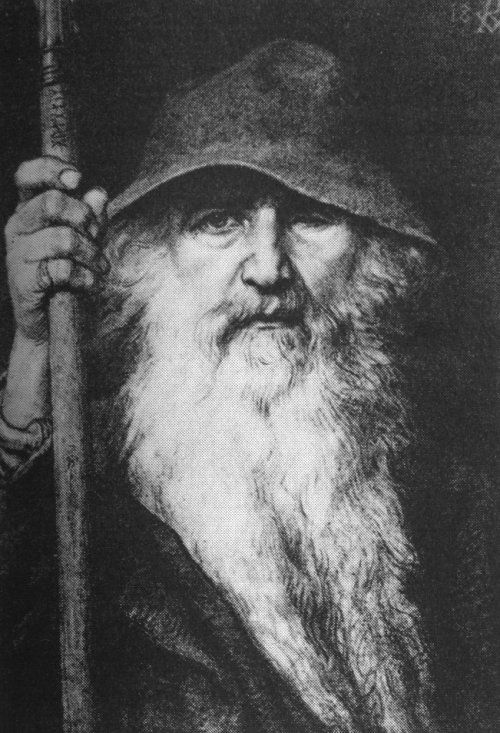 Wodan = Odin | — | — | The earliest description in this corpus of Norse worship as a going concern. Adam has three statues in the temple at Uppsala and glosses this one as fury — the god invoked for war, given the middle place in his account after Thor. He is writing from hearsay, a century and a half before either Edda, and calling the whole business the rite of demons while he describes it. |