What the sources claim for it
The structure of emanation: how an unbounded source becomes a finite world, in ten steps.
What is it made of?
Ten nodes and twenty-two paths — the paths being the twenty-two letters of the Hebrew alphabet, which is what makes the diagram a way of reading rather than a picture.
Sefirot
Paths
Pillars
Worlds
Tree of Life
- 01
Sefirot — Ten emanations, from Keter at the top to Malkhut at the bottom. Named in the Sefer Yetzirah long before anyone draws them as a tree.
- 02
Paths — One per Hebrew letter, connecting the nodes. Later systems attach a tarot trump and an astrological sign to each; no Hebrew source does.
- 03
Pillars — Severity on the left, mercy on the right, the middle pillar between them — the balance the whole diagram argues for.
- 04
Worlds — The tree repeated at four levels, which is how the same ten names cover everything from the divine to the material.
History
Where does the Tree of Life come from?
The ten sefirot — the emanations through which the infinite becomes the created — are set out in the Sefer Yetzirah and elaborated at length in the Zohar. What is not there is the picture. The arrangement everyone now draws, three columns and twenty-two connecting paths mapped to the Hebrew alphabet, is an early modern rendering; it enters print in the sixteenth century and is fixed for the wider world by Christian kabbalists and later by the Golden Dawn.
Its inverse belongs to the same system. The qliphoth, the shells or husks, are the disordered residue of the sefirot in Lurianic teaching, and later demonology assigns rulers to them — the direct route by which a diagram of divine emanation ends up as an ordering of demons.
3 figures
Who is it attached to?
Figures who carry it
An attribute rather than a signature — held, worn or associated in the texts and the images.
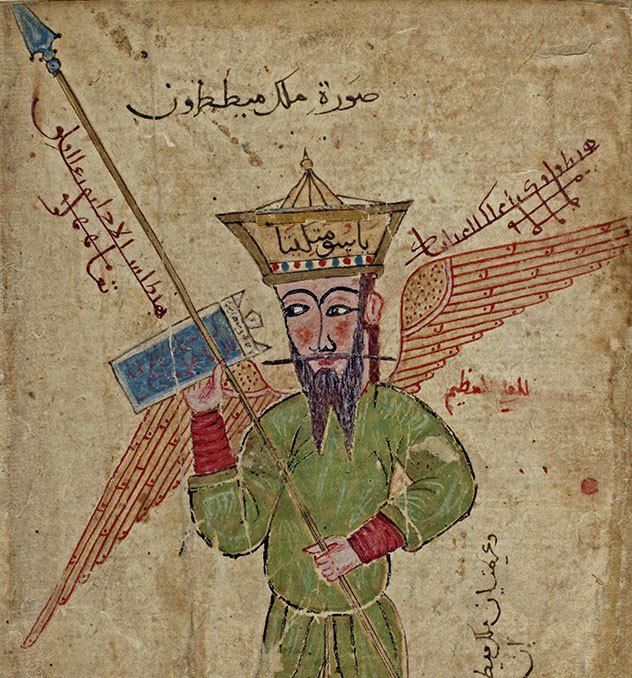
Metatron
emblemAssociated with the highest reaches of the structure in later kabbalistic writing.
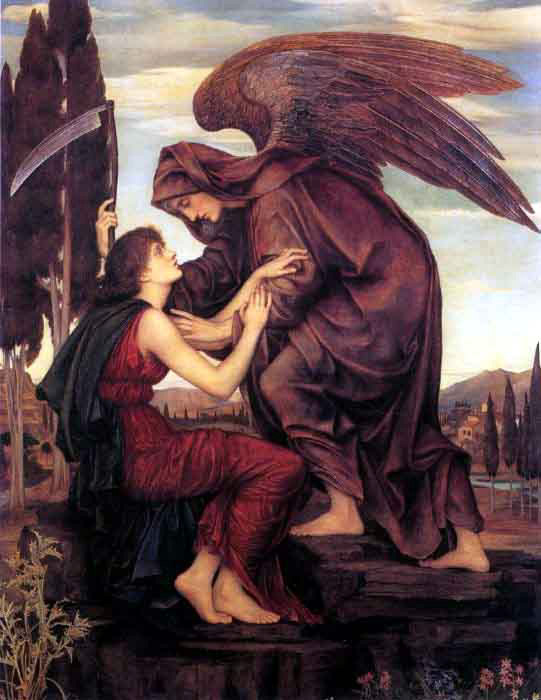
Samael
emblemNamed as a ruling power over the shells in later kabbalistic demonology.
The Qliphoth
emblemThe shells — the tree's inverse, and the point where the diagram becomes demonology.
The larger argument
Why is it in a corpus about spirits?
The Tree is the reason the demonic hierarchies on this site look the way they do. Once Renaissance Christian readers had a diagram in which every rank of being sits at a fixed address, the mirror image — an inverted tree of qliphoth, a court of demons with matching offices — became easy to build and hard to resist. Those hierarchies are structured by this diagram rather than by any text that describes demons.
Afterwards
What did it turn into?
The most-borrowed structure in modern Western esotericism — attached to tarot, astrology and ceremonial grades in ways no Jewish source proposes, and often taught with no reference to the tradition it comes from.
Which texts describe it?
Oldest first, with what each one does with the mark. A mark described in a Bronze Age incantation and a mark first drawn in a seventeenth-century manuscript are different kinds of claim, whatever the shape has in common.
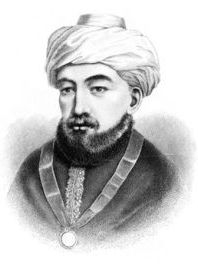
Mishneh Torah, Yesodei ha-Torah
Moses Maimonides · c. 1180 · Hebrew
Maimonides' ten ranks of angels run parallel to the ten-step structure without being it.
Read Mishneh Torah, Yesodei ha-Torah in full ↗Cover: Public domain · Blaisio Ugolino · Wikimedia file page
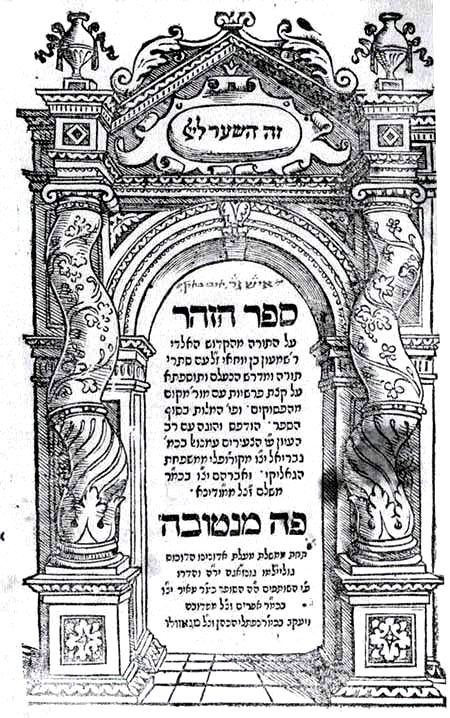
The Zohar & Kabbalistic Literature
Attributed to Shimon bar Yochai; likely Moses de León · c. 1280 · Aramaic
The sefirot elaborated at length, without the printed diagram.
Read The Zohar & Kabbalistic Literature in full ↗Cover: Public domain · Possibly Simeon bar Yochai · Wikimedia file page
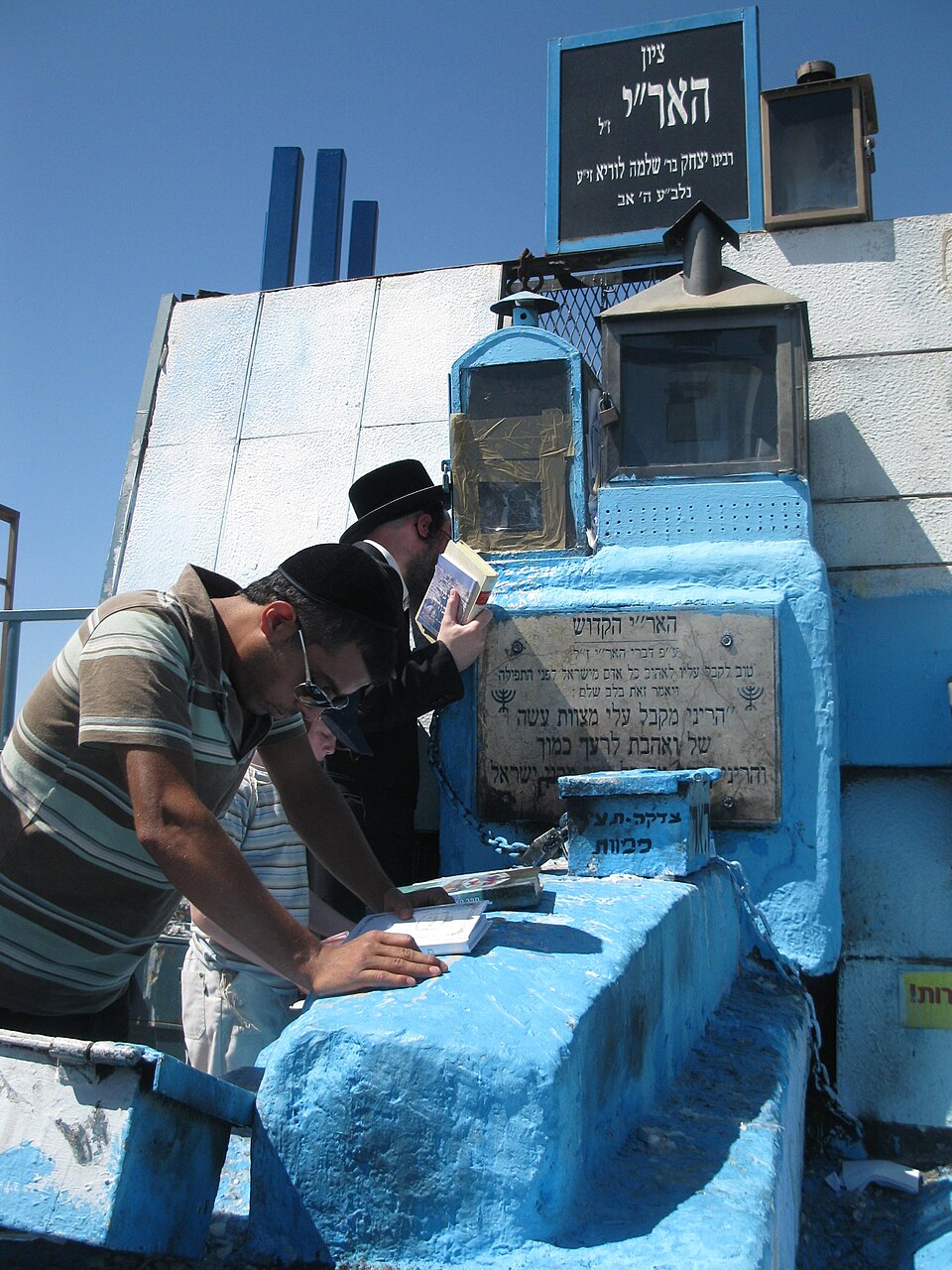
Etz Chaim & Lurianic Kabbalah
Isaac Luria, recorded by Chaim Vital · 16th c. · Hebrew
Adds the breaking of the vessels and the shells that fall from it.
Read Etz Chaim & Lurianic Kabbalah in full ↗Cover: CC BY-SA 3.0 · Louski1 · Wikimedia file page
Nearby
Related marks
The Tetragrammaton
Four letters that stopped being pronounced and became, in consequence, the most powerful thing you could write on a piece of equipment.
The Seal of Solomon
A signet ring, not a shape. The Testament of Solomon makes it the instrument by which every demon in the book is compelled to give its name.
The Brass Vessel
The container the legend says Solomon sealed the spirits into, thrown into a lake and opened by Babylonians who expected treasure. It is where the Ars Goetia says its seventy-two came from.
The Seventy-Two-Letter Name
Seventy-two three-letter names extracted from three verses of Exodus — and the reason the number seventy-two keeps appearing on both sides of this corpus.
AGLA
An acronym, not a word: Atah Gibor Le-olam Adonai, 'Thou art mighty forever, Lord', compressed to four letters and written on almost everything.
The Hexagram
Two interlocked triangles that were ornament almost everywhere before they were a Jewish emblem anywhere — and a spirit-binding seal in between.