divine name · developed c. 200–1300 CE
The Seventy-Two-Letter Name
Seventy-two three-letter names extracted from three verses of Exodus — and the reason the number seventy-two keeps appearing on both sides of this corpus.
What the sources claim for it
The divine name in its extended, operable form — the version with enough parts to assign.
What is it made of?
Three consecutive verses of Exodus, each exactly seventy-two letters long, written one above another — the first in order, the second reversed, the third in order — and then read downwards in columns of three.
First verse
72 letters
Second verse
72 letters, reversed
Third verse
72 letters
The columns
three letters each
Seventy-Two-Letter Name
- 01
First verse · 72 letters — 'And the angel of God … removed and went behind them.' Written in its normal order.
- 02
Second verse · 72 letters, reversed — The reversal is the whole technique: it is what makes the columns read as new words rather than as the verses themselves.
- 03
Third verse · 72 letters — 'And Moses stretched out his hand over the sea.' Normal order again.
- 04
The columns · three letters each — Seventy-two three-letter names, one per column, each of which later tradition assigns an angel.
History
Where does the Seventy-Two-Letter Name come from?
Exodus 14:19–21 has three consecutive verses of exactly seventy-two letters each. The rabbinic and later kabbalistic technique writes them in a grid — first forwards, second reversed, third forwards — and reads off seventy-two three-letter names in columns. Kabbalistic tradition then attaches an angel to each, producing the seventy-two angels of the Shem HaMephorash.
The number's reappearance elsewhere in this corpus is not coincidence, and should not be overstated either. Seventy-two angels of the Name, seventy-two spirits in the Ars Goetia, seventy-two spirits in Weyer's earlier list: the Renaissance Christian kabbalists who read Jewish sources are the transmission point, and the demonological seventy-two is best read as a mirror built deliberately rather than as an independent tradition arriving at the same count.
The larger argument
Why is it in a corpus about spirits?
Seventy-two is the number that gives this corpus its shape on both sides. Seventy-two angels of the Name, seventy-two spirits in Weyer's list, seventy-two in the Ars Goetia: the demonological count is a deliberate mirror built by Renaissance readers of Jewish sources, not an independent tradition that happened to arrive at the same total. Anyone counting the Goetia and finding significance in the number is finding significance somebody put there.
Afterwards
What did it turn into?
Popularised outside Judaism first by Renaissance Christian kabbalah and then by nineteenth-century French occultism, where the seventy-two angels acquire a calendar and a set of correspondences no Hebrew source gives them.
Which texts describe it?
Oldest first, with what each one does with the mark. A mark described in a Bronze Age incantation and a mark first drawn in a seventeenth-century manuscript are different kinds of claim, whatever the shape has in common.
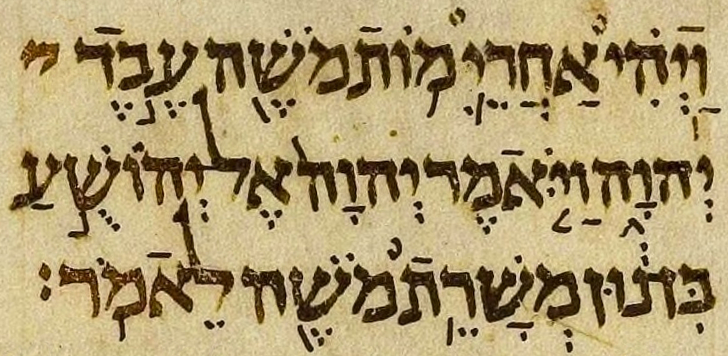
Hebrew Bible & Deuterocanon
Various · c. 900–100 BCE · Hebrew, Aramaic, Greek
Exodus 14:19–21 supplies the three seventy-two-letter verses.
Read Hebrew Bible & Deuterocanon in full ↗Cover: Public domain · see en:Aleppo Codex; scanned by · Wikimedia file page
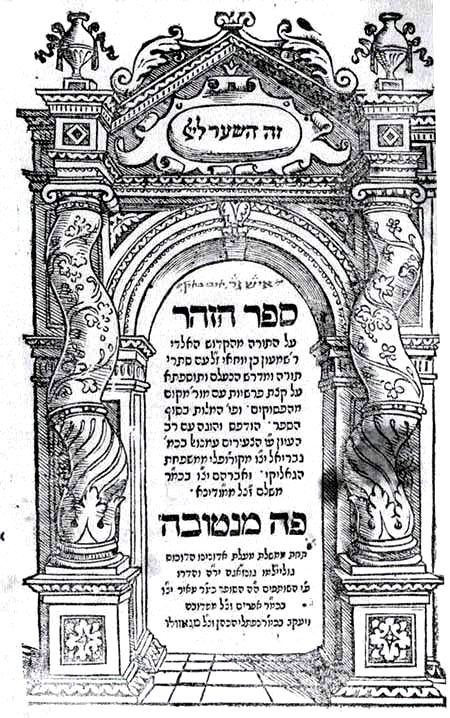
The Zohar & Kabbalistic Literature
Attributed to Shimon bar Yochai; likely Moses de León · c. 1280 · Aramaic
Works with the extracted names as a structure.
Read The Zohar & Kabbalistic Literature in full ↗Cover: Public domain · Possibly Simeon bar Yochai · Wikimedia file page
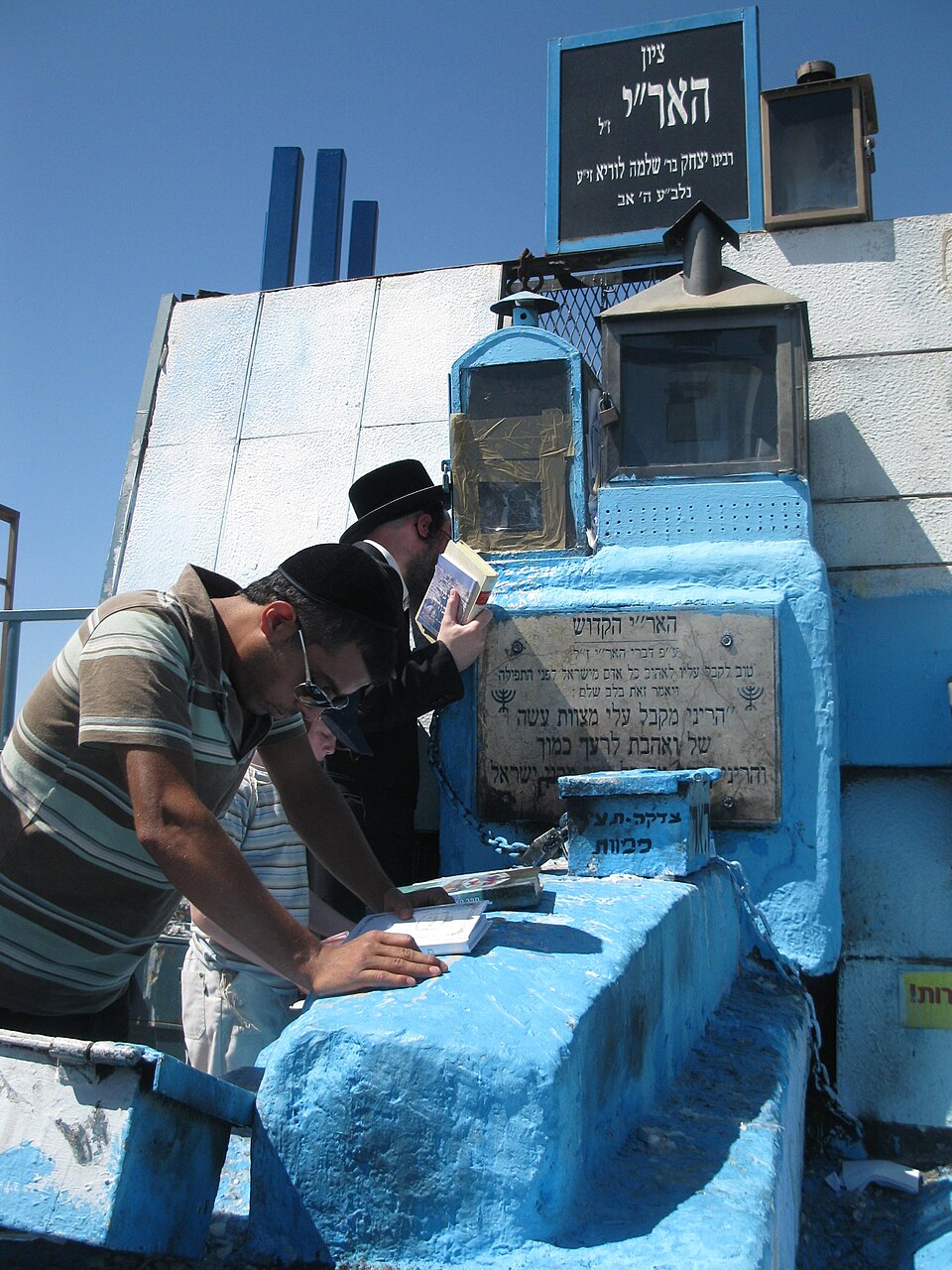
Etz Chaim & Lurianic Kabbalah
Isaac Luria, recorded by Chaim Vital · 16th c. · Hebrew
Systematised in the Safed school and transmitted westward from there.
Read Etz Chaim & Lurianic Kabbalah in full ↗Cover: CC BY-SA 3.0 · Louski1 · Wikimedia file page
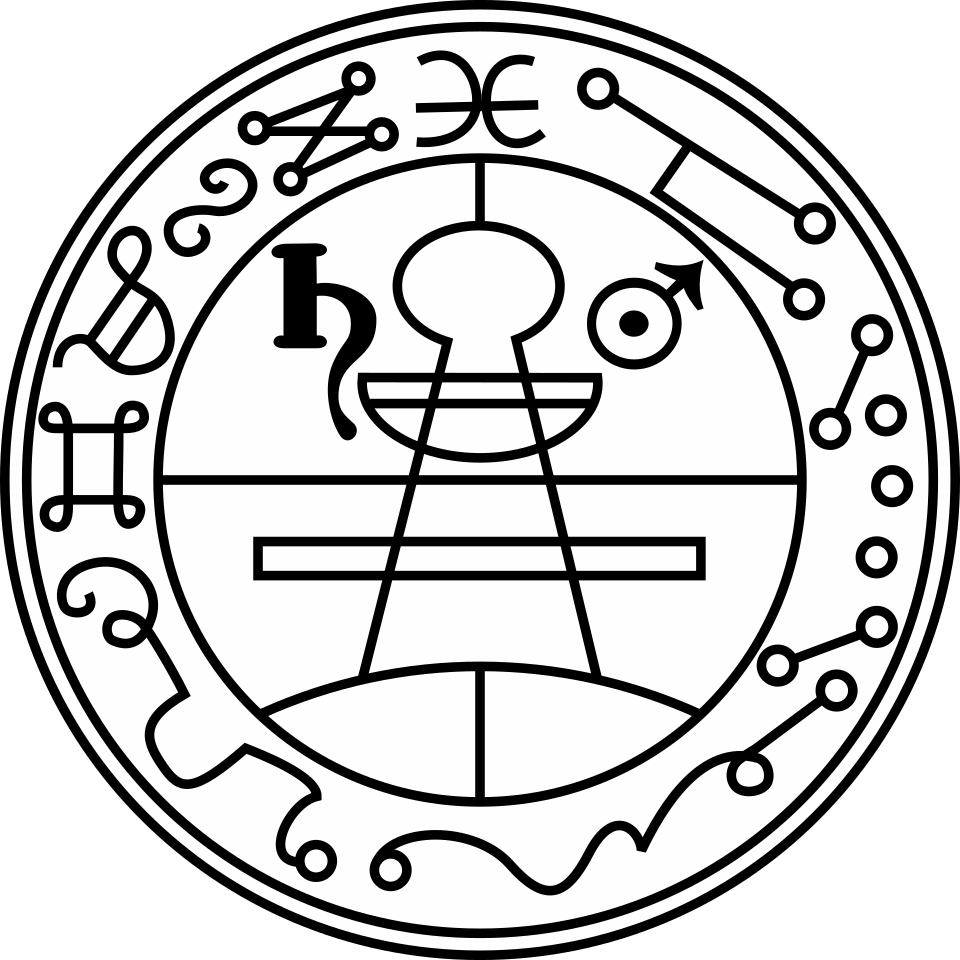
The Lesser Key of Solomon, Book I: Ars Goetia
Anonymous; ed. S. L. MacGregor Mathers & A. E. Waite · 17th c.; ed. 1904 · English (from Latin)
Seventy-two spirits on the demonic side — the count that mirrors the names.
Read The Lesser Key of Solomon, Book I: Ars Goetia in full ↗Cover: Public domain · anonymous design, redrawn by User:Fuzzypeg · Wikimedia file page
Nearby
Related marks
The Tetragrammaton
Four letters that stopped being pronounced and became, in consequence, the most powerful thing you could write on a piece of equipment.
The Seal of Solomon
A signet ring, not a shape. The Testament of Solomon makes it the instrument by which every demon in the book is compelled to give its name.
The Brass Vessel
The container the legend says Solomon sealed the spirits into, thrown into a lake and opened by Babylonians who expected treasure. It is where the Ars Goetia says its seventy-two came from.
AGLA
An acronym, not a word: Atah Gibor Le-olam Adonai, 'Thou art mighty forever, Lord', compressed to four letters and written on almost everything.
The Hexagram
Two interlocked triangles that were ornament almost everywhere before they were a Jewish emblem anywhere — and a spirit-binding seal in between.
The Lamen
The one piece of Solomonic equipment worn rather than drawn: a disc at the breast carrying the divine names, and the operator's own credential rather than the spirit's.