seal · in the chronicles by 712 CE
The Three Sacred Treasures
A mirror, a curved jewel and a sword — each one a prop from a specific myth, and together the objects that make an emperor.
What the sources claim for it
Legitimate rule, delegated from the sun goddess through three objects that each record an event.
History
Where does the Three Sacred Treasures come from?
The regalia are not generic symbols of office; each is a particular object with a story. The mirror and the jewel are the items hung outside the cave to lure Amaterasu back into the world after she seals herself in. The sword, Kusanagi, is the one Susanoo finds in the tail of the eight-headed serpent he kills, and gives to his sister.
The chronicles then have Amaterasu hand all three to her descendant as the warrant of rule. Their present state is deliberately unverifiable — they are held at separate shrines, not displayed, and reportedly not seen even by the emperor at accession, where sealed boxes are used. A regalia nobody may inspect is a strong statement about where authority is understood to come from.
3 figures
Who is it attached to?
Figures who carry it
An attribute rather than a signature — held, worn or associated in the texts and the images.
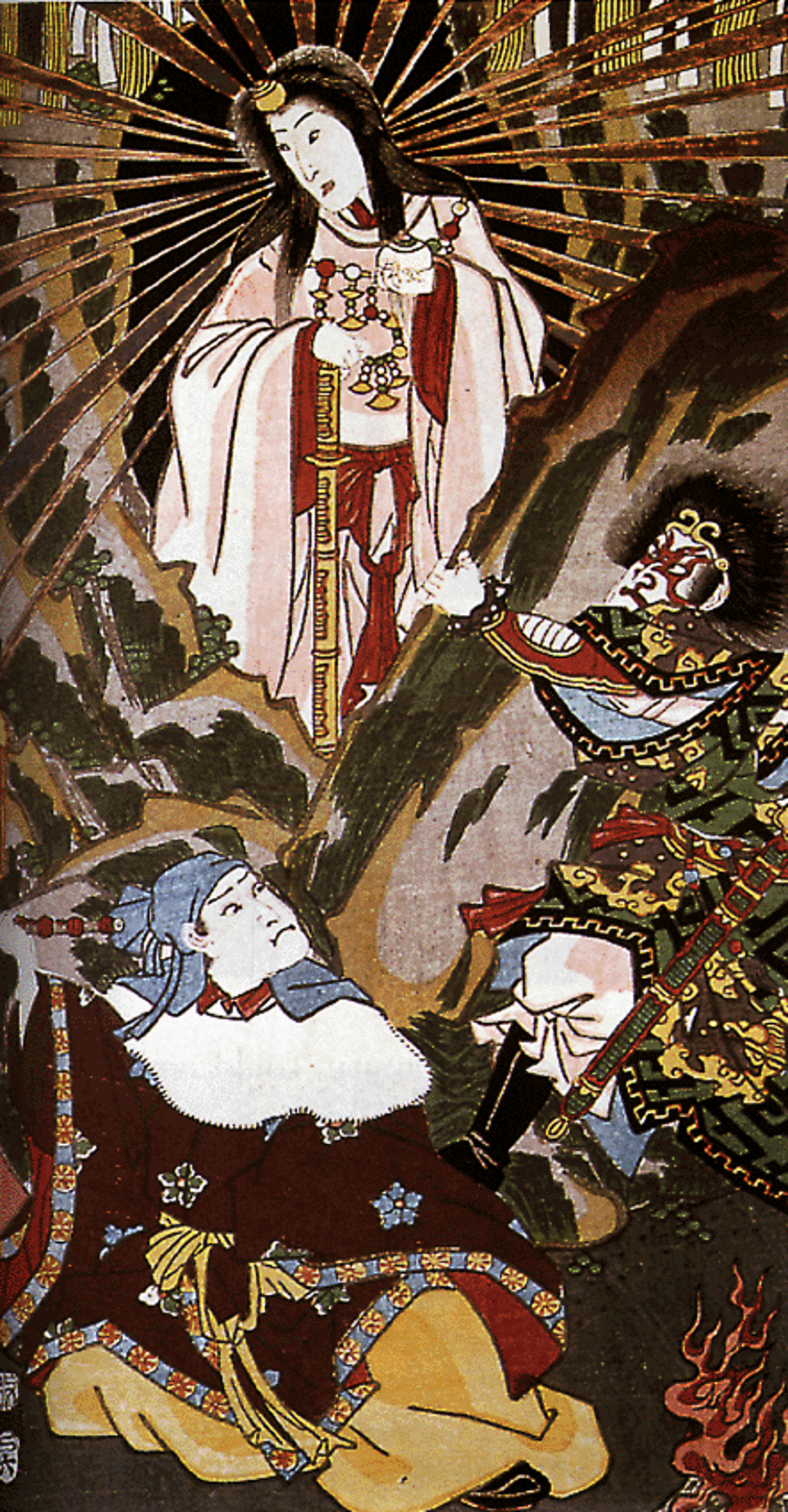
Figures it is used against
The mark is aimed at them. A ward names its target, which makes these the sharpest attributions on the page.
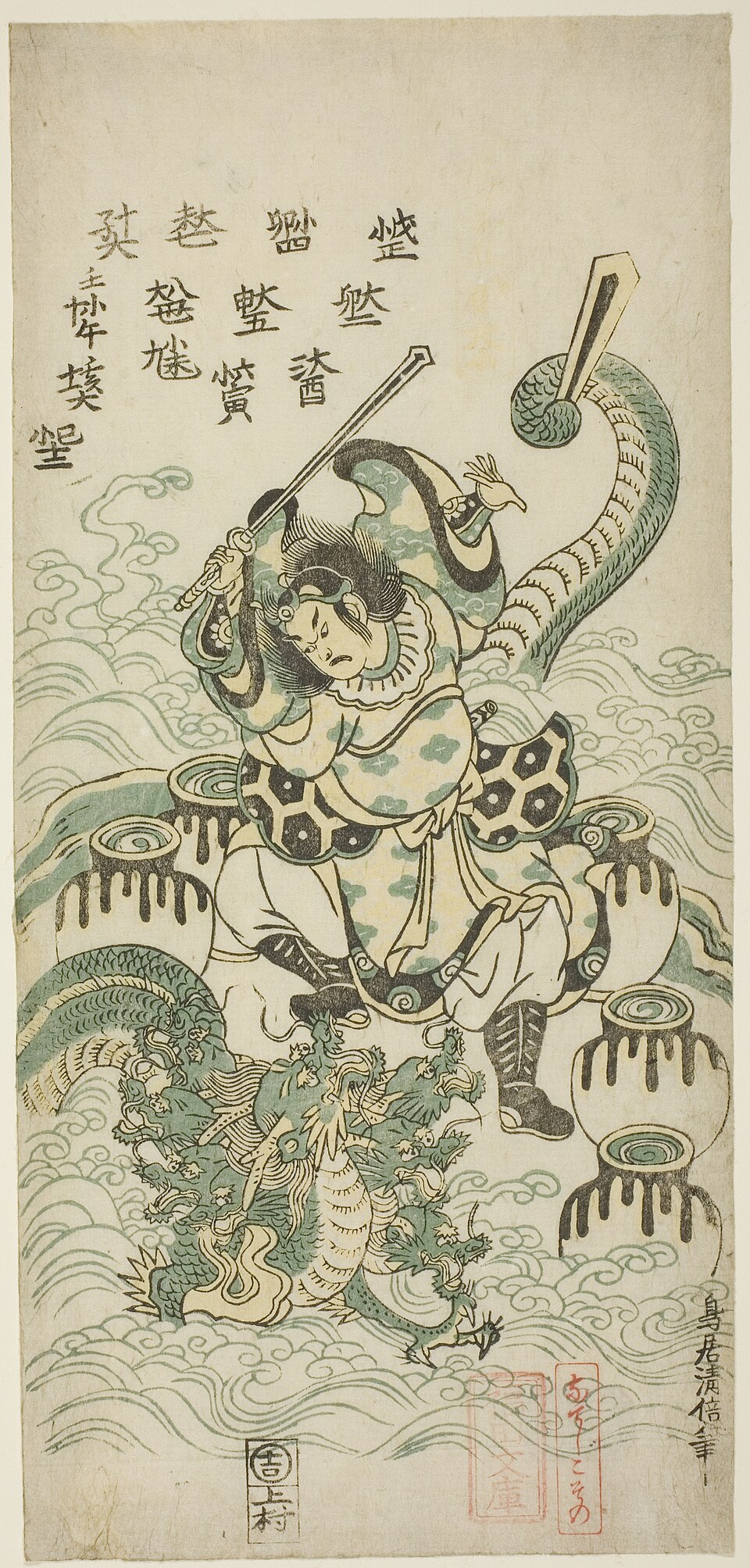
Afterwards
What did it turn into?
Still used in Japanese accession ceremonies, most recently in 2019, with the boxes presented unopened; the sword at Atsuta and the mirror at Ise are, on the tradition's own account, not to be looked at.
Which texts describe it?
Oldest first, with what each one does with the mark. A mark described in a Bronze Age incantation and a mark first drawn in a seventeenth-century manuscript are different kinds of claim, whatever the shape has in common.
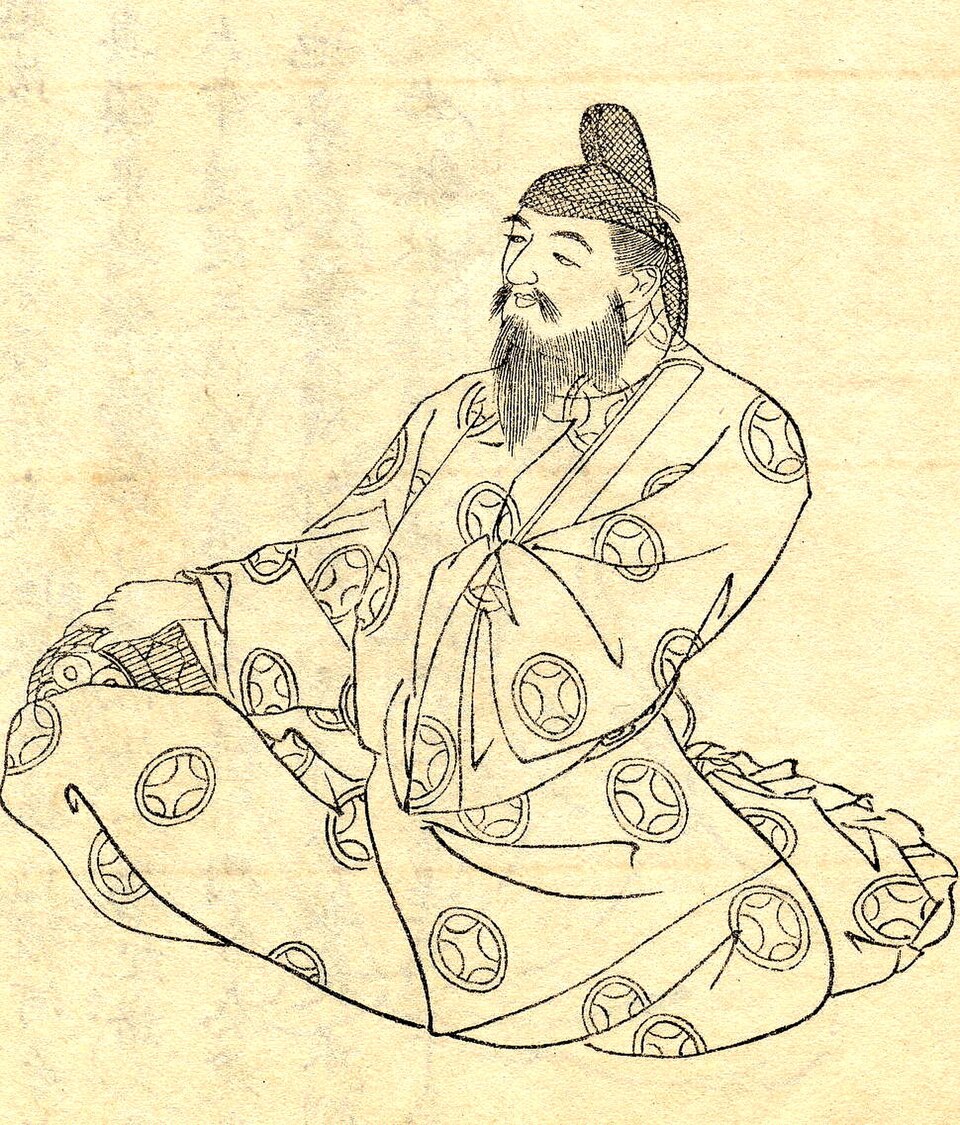
Kojiki (Records of Ancient Matters)
Ō no Yasumaro · 712 CE · Old Japanese
The cave episode supplies the mirror and jewel; the serpent episode supplies the sword.
Read Kojiki (Records of Ancient Matters) in full ↗Cover: Public domain · Wikimedia file page
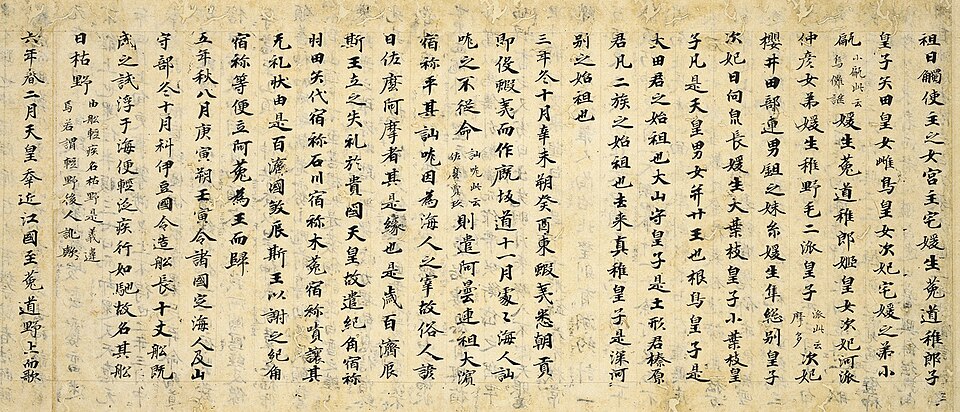
Nihongi (Nihon Shoki)
Prince Toneri and others; tr. W. G. Aston · 720 CE · Classical Japanese
The parallel account, with variant details on the same three objects.
Read Nihongi (Nihon Shoki) in full ↗Cover: Public domain · Unknown author · Wikimedia file page
Nearby
Related marks
The Shimenawa
A twisted rice-straw rope with folded paper streamers, tied around a tree, a rock, a wrestler or a doorway to mark it as not ordinary.
The Torii
Two uprights and two crossbars marking where ordinary ground stops — a gate with no door, no wall and nothing to keep out.
The Was Sceptre
A straight staff with a forked foot and an animal head — and the animal, on the best reading, is Set's.
The Rod and Ring
The objects a seated god hands to a standing king at the top of Hammurabi's stele — most likely a measuring rod and a coiled line.
The Delphic Tripod
A three-legged bronze stand and the seat of the Pythia — the piece of furniture that authorised more Greek political decisions than any assembly.
The Seal of Solomon
A signet ring, not a shape. The Testament of Solomon makes it the instrument by which every demon in the book is compelled to give its name.