Tradition
Shinto & Japanese
The kami of the Kojiki and Nihon Shoki, and the yokai and oni of later folk tradition.
What is the Shinto & Japanese tradition?
The Kojiki and Nihon Shoki were compiled in the eighth century as state projects, which shapes what they contain. They are cosmogony and dynastic legitimation together, and the kami they record are organised to arrive at a ruling line.
Kami do not map onto either "god" or "spirit" in the senses the rest of this site uses. The category includes deities, ancestors, forces and places, and it is defined less by what a thing is than by what it commands — which makes any table putting kami alongside Goetic dukes a translation exercise before it is a comparison.
The yokai and oni of later folk tradition are a separate layer again, mostly medieval and early-modern, and much closer to the European folk material in kind: locally attested, visually specific, and elaborated by illustration as much as by text.
Which texts does this tradition rest on?
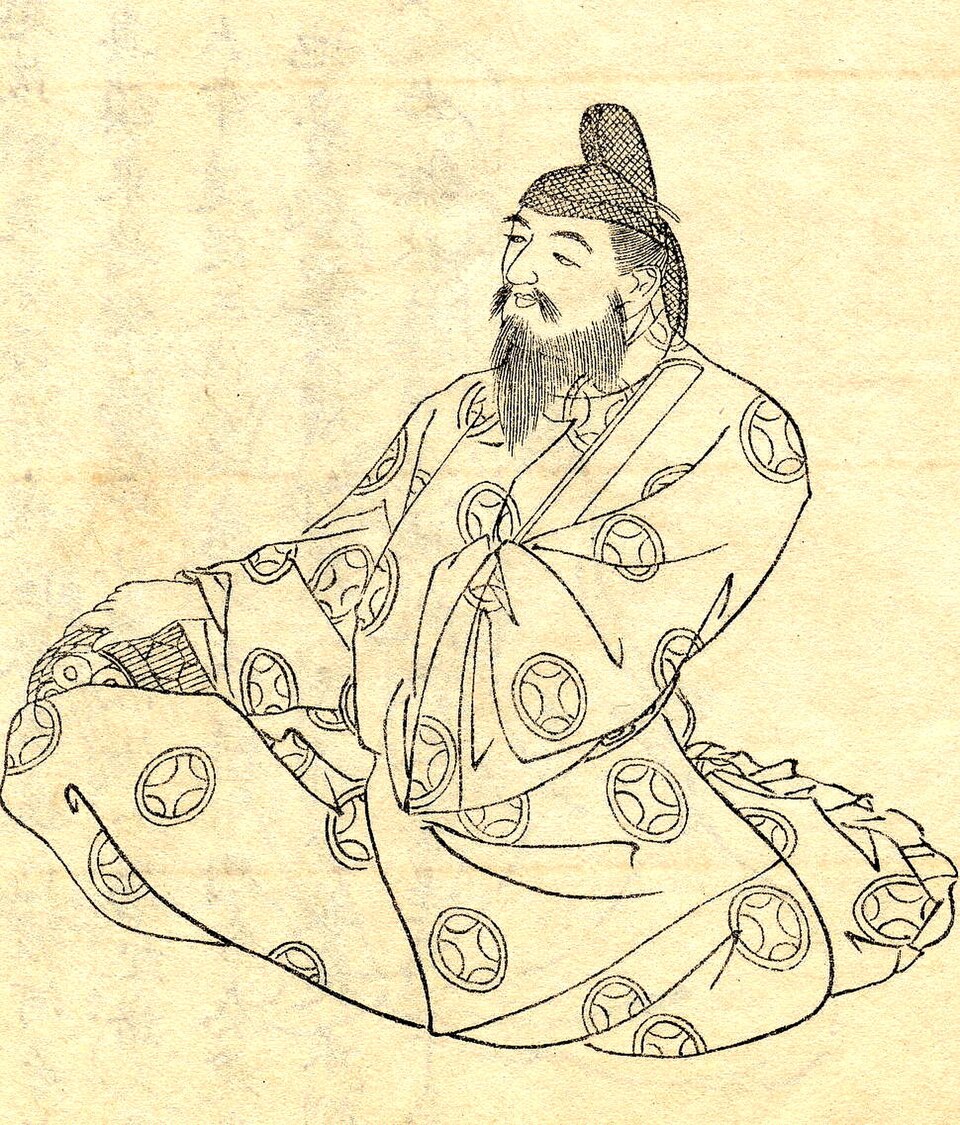
Kojiki (Records of Ancient Matters)
Ō no Yasumaro · 712 CE
Japan's oldest chronicle, compiled to fix an official genealogy descending from Amaterasu. Its kami are neither good nor evil by nature — a category the Abrahamic scheme has no room for.
6 entries contributed
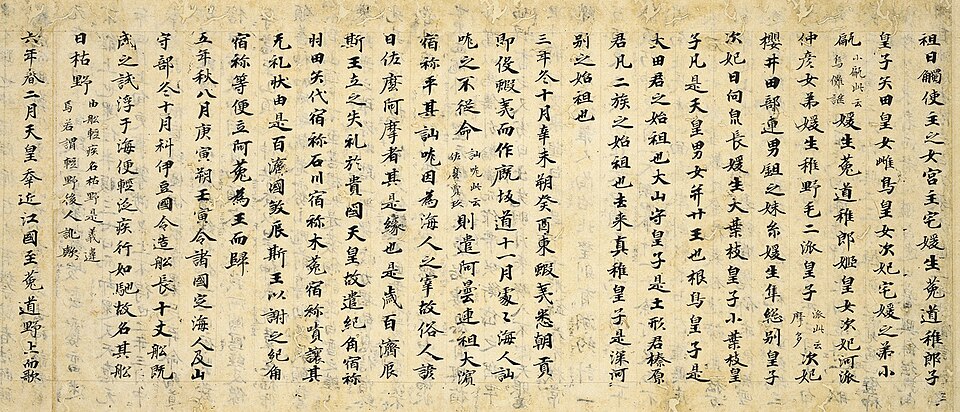
Nihongi (Nihon Shoki)
Prince Toneri and others; tr. W. G. Aston · 720 CE
The second Japanese chronicle, compiled eight years after the Kojiki and often giving several variant versions of the same episode side by side without choosing between them.
6 entries contributed
Which marks belong to it?
Oldest first. A mark used by several traditions appears on each of their pages — which is the point: the shapes crossed these boundaries far more easily than the names did.
The Three Sacred Treasures
in the chronicles by 712 CE
A mirror, a curved jewel and a sword — each one a prop from a specific myth, and together the objects that make an emperor.
The Shimenawa
in the chronicles by 712 CE
A twisted rice-straw rope with folded paper streamers, tied around a tree, a rock, a wrestler or a doorway to mark it as not ordinary.
The Torii
attested from c. 900 CE
Two uprights and two crossbars marking where ordinary ground stops — a gate with no door, no wall and nothing to keep out.
Who is filed under Shinto & Japanese?
Ordered by attestation score — how early and how independent the texts that name each figure are, rather than how famous the figure has since become.
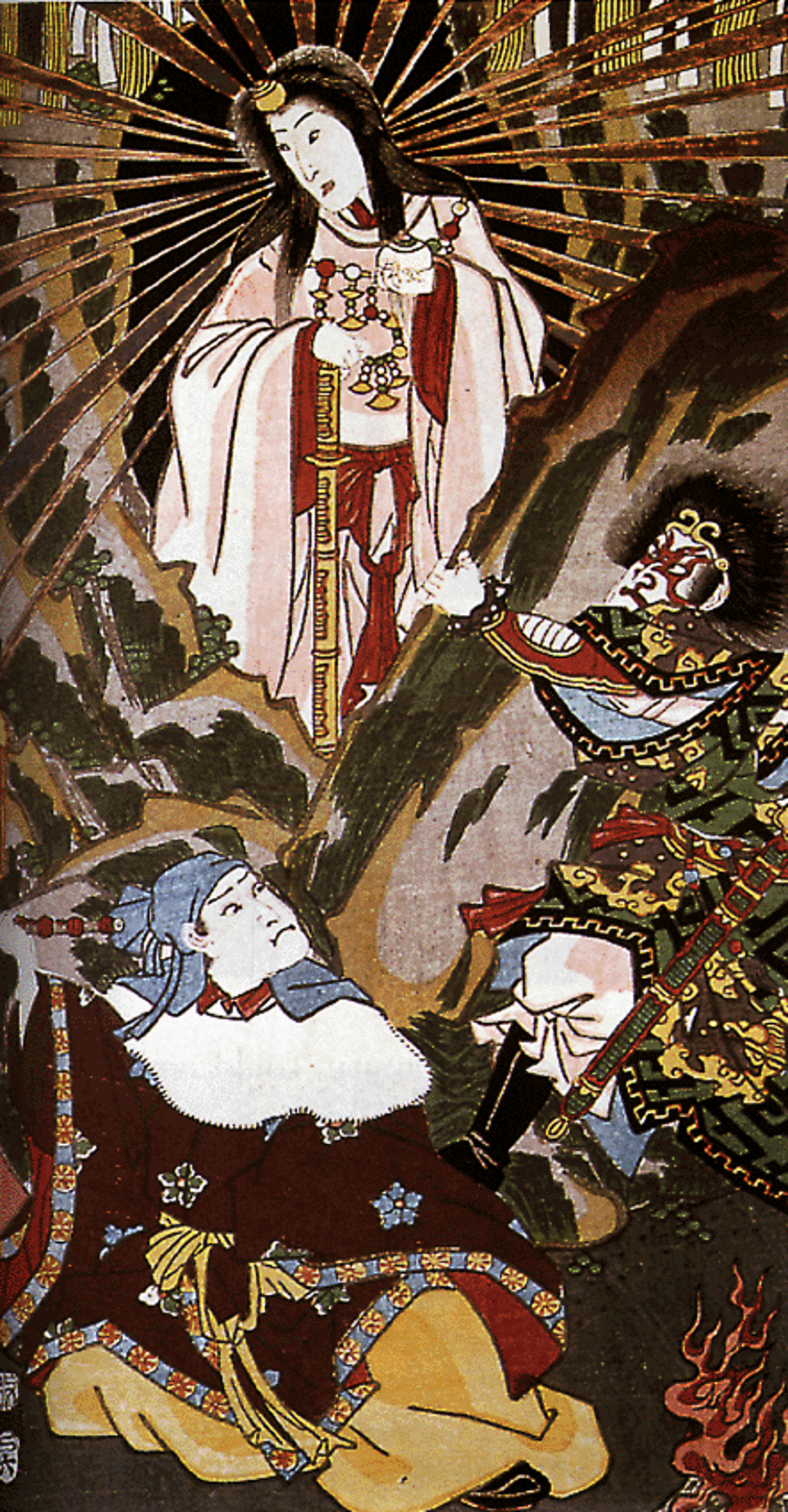
Amaterasu
Sun Goddess · Japanese
Sun goddess who hides in a cave and must be lured out — and from whom the Japanese imperial house claimed descent until 1946.
Izanagi
He Who Invites · Japanese
The Japanese god who stirs the sea into land with a spear, goes into Yomi after his wife and looks at her against her word, and washes afterwards — producing Amaterasu and Susanoo from the washing.
Izanami
She Who Invites · Japanese
The Japanese goddess who makes the islands with her husband, dies giving birth to fire, and becomes the ruler of Yomi — where she promises to kill a thousand people a day for the insult of being seen.
Susanoo
Storm Kami · Japanese
Expelled from heaven for wrecking his sister's rice fields, and then immediately kills the eight-headed serpent and becomes a hero.
Tsukuyomi
The Moon Reckoner · Japanese
The Japanese moon god, born from Izanagi's washing beside Amaterasu — and the reason the sun and moon are never in the sky together, having killed the food goddess at dinner and been refused his sister's company ever since.
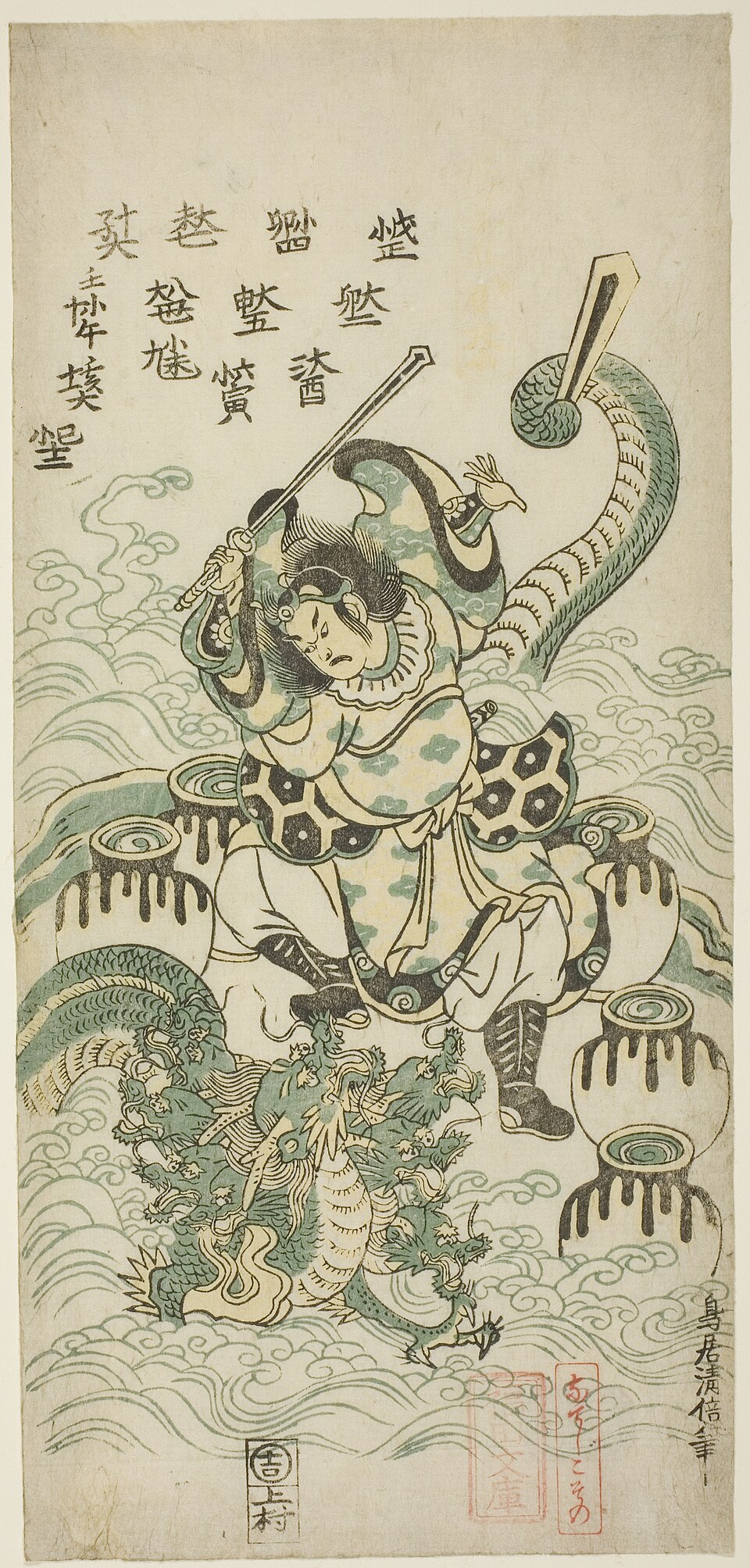
Yamata-no-Orochi
Eight-Forked Serpent · Japanese
The eight-headed serpent given a daughter to eat each year, until Susanoo made it drunk and cut it apart. Japan's branch of the serpent-slaying pattern.