Shinto & Japanese · Classical Japanese · 720 CE
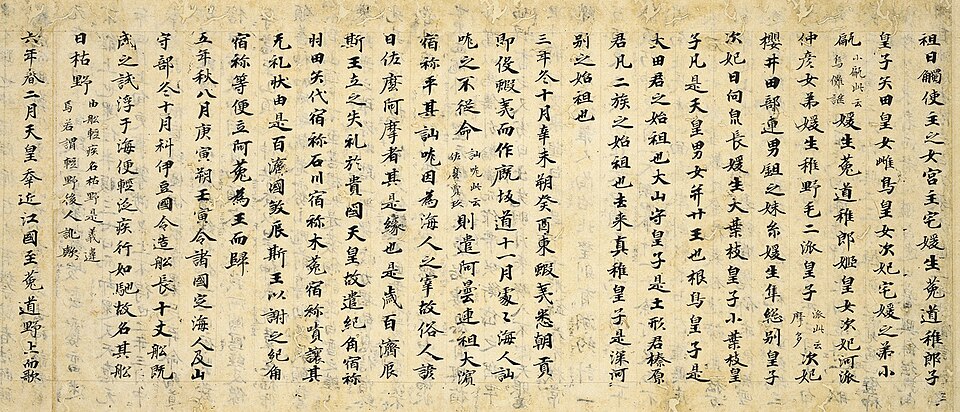
Nihongi (Nihon Shoki)
Prince Toneri and others; tr. W. G. Aston
The second Japanese chronicle, compiled eight years after the Kojiki and often giving several variant versions of the same episode side by side without choosing between them.
Read Nihongi (Nihon Shoki) in full at the linked edition →What this text attests · 6
| Name here | Rank given | # | Powers described |
|---|---|---|---|
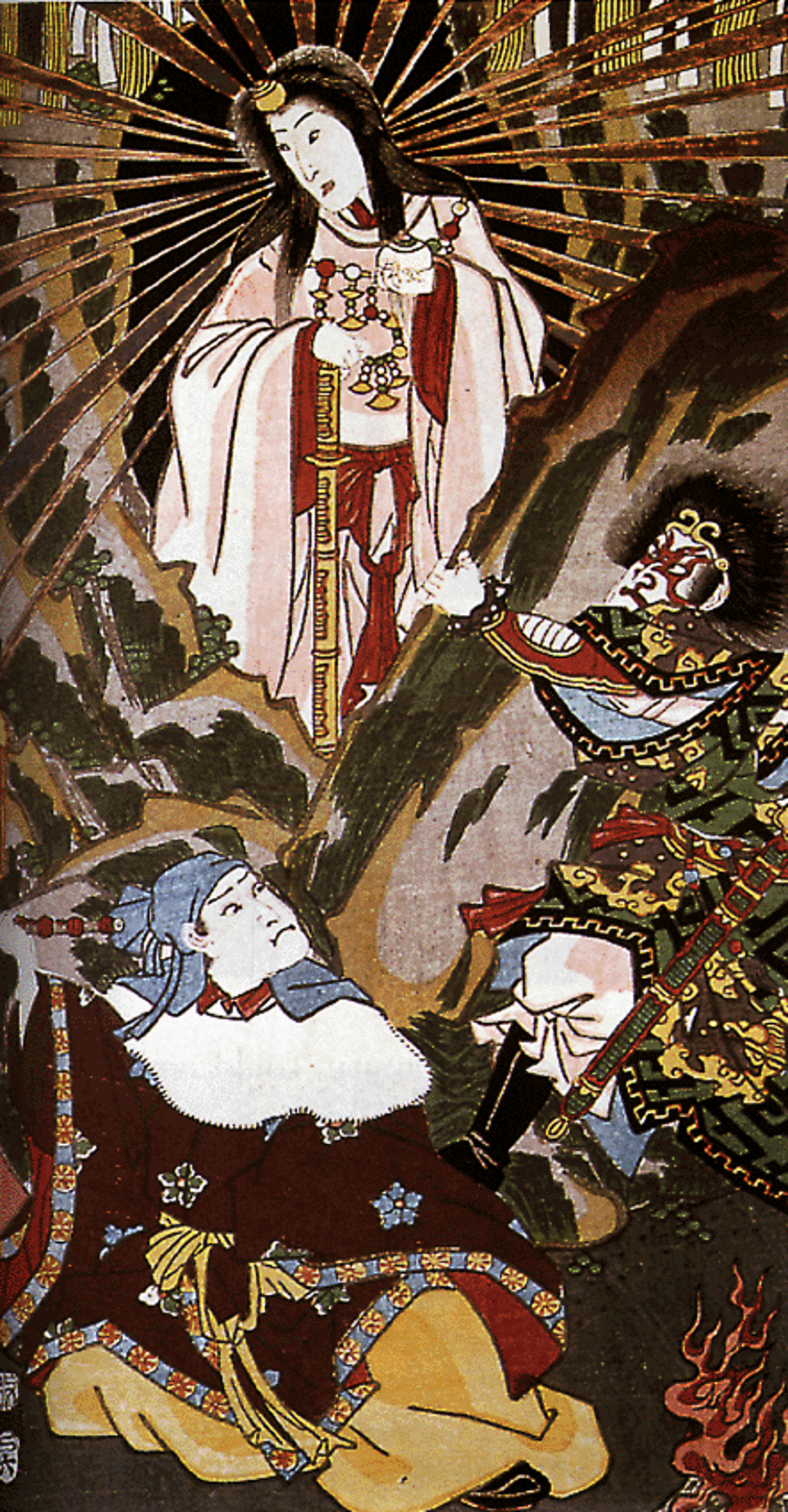 Amaterasu Ōmikami = Amaterasu | — | — | The same withdrawal into the cave, told with the chronicle's habit of giving several variant versions side by side and choosing none of them. That is the reason to have it: a corpus that carries only the Kojiki reads one recension as the myth, and this text demonstrates in its own layout that there was never a single authorised version. |
Izanagi no Mikoto = Izanagi | Male deity of the pair | — | The same sequence with variants: in one version the three great gods are produced by the purification, in another they are borne by the pair directly. |
Izanami no Mikoto = Izanami | Female deity of the pair | — | The chronicle gives several variant accounts of the separation side by side, differing in who says what at the pass and agreeing on the outcome. |
Susanoo no Mikoto = Susanoo | — | — | Expelled for his offences against his sister and going on to kill the serpent — the god the court chronicle cannot decide about, alternately a criminal and a hero within a few pages. He is the corpus's clearest case of a figure whose demonisation was begun and then abandoned by his own tradition. |
Tsukuyomi no Mikoto = Tsukuyomi | The moon deity | — | Kills Ukemochi over the manner in which she produces food; Amaterasu refuses to meet him again, which is why sun and moon are apart. |
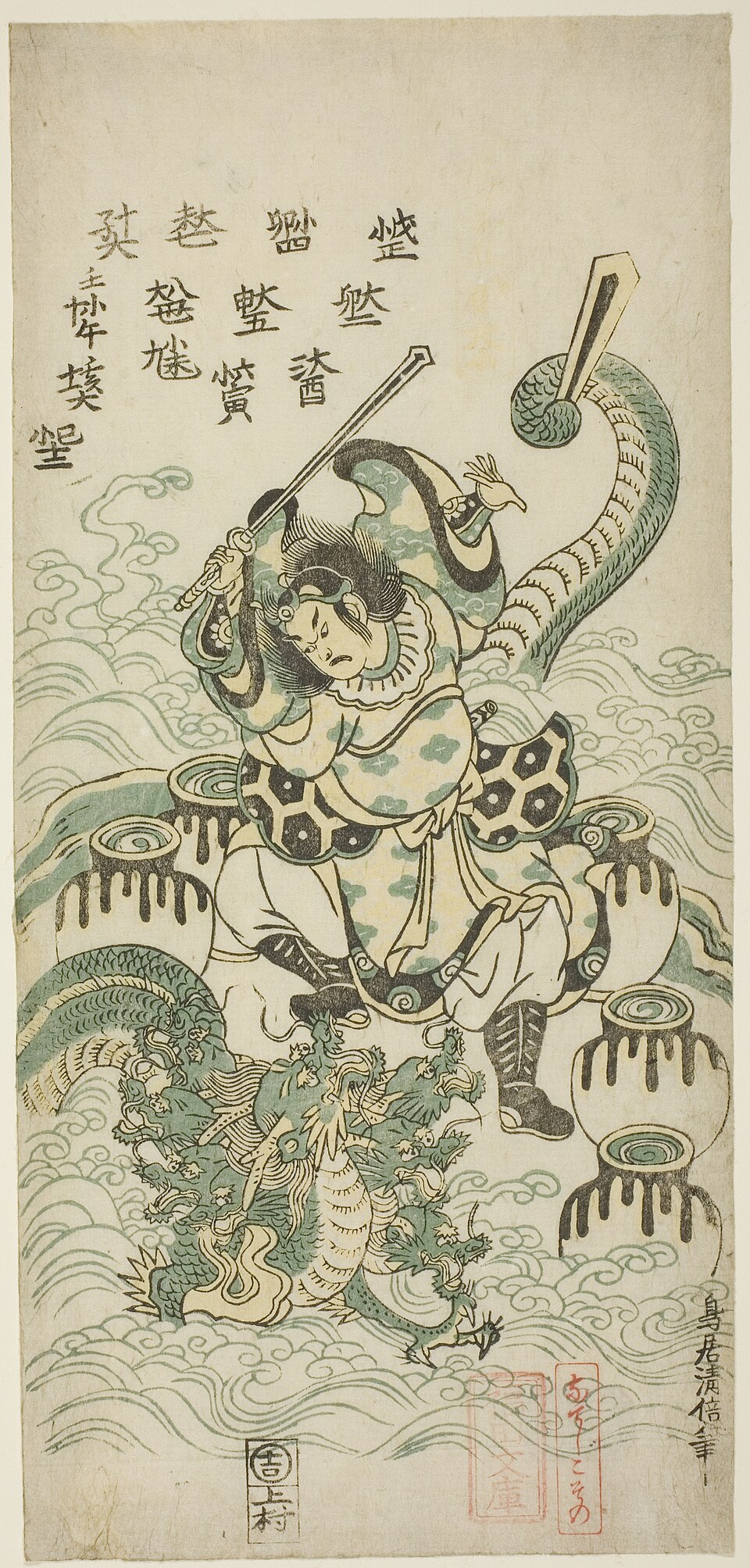 Yamata no Orochi = Yamata-no-Orochi | — | — | Eight heads, eight tails, moss and trees growing on its back, killed with sake and a sword found in its body. The chronicle's variants differ in the details of the killing and agree on the sword, which then becomes one of the imperial regalia — a monster whose corpse supplies a dynasty's legitimacy. |